EY helps clients create long-term value for all stakeholders. Enabled by data and technology, our services and solutions provide trust through assurance and help clients transform, grow and operate.
At EY, our purpose is building a better working world. The insights and services we provide help to create long-term value for clients, people and society, and to build trust in the capital markets.
As India pursues its net-zero ambitions and manages rising electricity demand, nuclear energy is re-emerging as a critical pillar of the country’s clean energy transition. In this episode of Energy Transition Dialogues, Kapil Bansal, Partner, Energy Transition and Decarbonization, EY-Parthenon India explores the potential of nuclear power to provide reliable, low-carbon energy while complementing renewable energy sources. The discussion also examines India's ambitious capacity expansion plans, the growing role of small modular reactors (SMRs), evolving policy support and opportunities for private-sector participation.
Key takeaways
Energy security, decarbonization and economic competitiveness increasingly depend on building a diverse mix of reliable low-carbon technologies.
Achieving India's clean energy ambitions could require accelerating nuclear deployment through policy reforms, investment and ecosystem collaboration.
With India targeting 100 GW of nuclear capacity by 2047, SMRs have the potential to unlock scalable clean power for hard-to-abate industries.
India's nuclear ambition extends beyond capacity addition, creating opportunities across manufacturing, financing, engineering and technology services.
Meeting India's projected 800 GW power demand by 2047 will require not only reactors, but a robust nuclear ecosystem to support long-term growth.
As India’s energy demand accelerates, nuclear power can help deliver the reliability, security and decarbonization needed for growth.
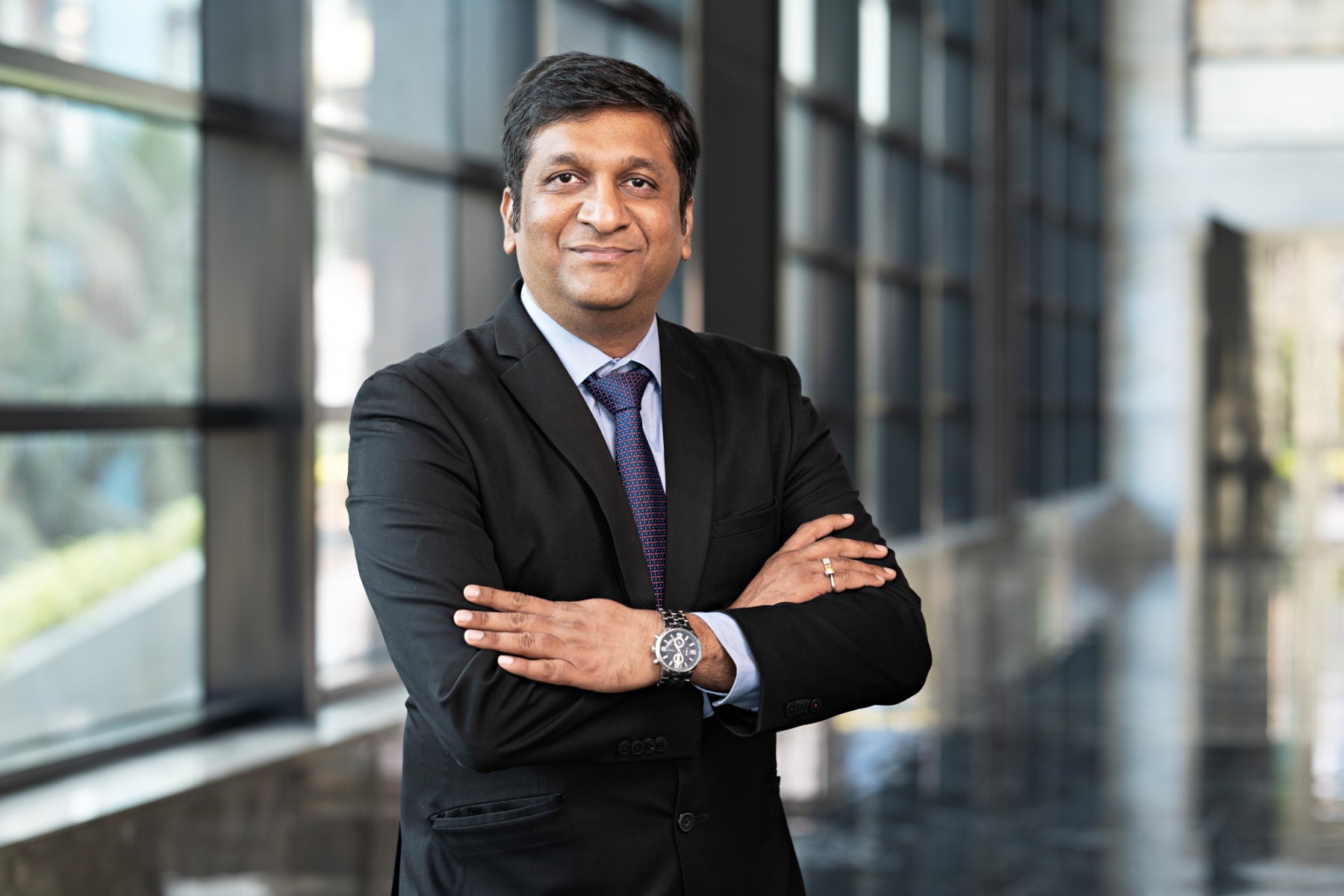
Kapil Bansal
Partner, Energy Transition and Decarbonization, EY-Parthenon India
For your convenience, a full text transcript of this podcast is available on the link below:
Hello and welcome to the EY Insights podcast series. I am Pallavi, your host for today. India has an ambitious goal of expanding its nuclear capacity to 100 GW by 2047, positioning nuclear energy as a key enabler of reliable, low-carbon power. Today, we are joined by Kapil Bansal, Partner, Energy Transition and Decarbonization, EY-Parthenon India to discuss what this means for India's clean energy future.
Hi, Kapil. Thank you for joining us once again and welcome to the podcast.
Kapil
Thank you. Pleasure is all mine.
Pallavi
India has a target of reaching 100 GW of nuclear capacity by 2047. What is driving this renewed focus on nuclear energy and how does it fit into India's broader energy transition strategy?
Kapil
If you look from a nuclear energy point of view, India currently has 8.7 GW of nuclear operational assets, which have been running seamlessly for the last 25 years. So, when you look from the current to the future growth, from 8.8 (GW) to 100 (GW), which is almost 11x growth, it is driven by a lot of factors.
Firstly, with our growing population and growing GDP, there is a continuous rise in demand for energy. With the ongoing geopolitical issues, we have to ensure our energy security. And then finally, we have taken a target of becoming net zero by 2070, so nuclear provides a mechanism towards decarbonizing. India needs more energy in a most dependable, affordable and low-carbon mechanism.
When we look at economic and industrial activities that are expanding, energy transition should support the growth without compromising on reliability and affordability. We do have alternatives of using renewable energy, but there are challenges of securing them in a reliable and round-the-clock basis. We also have to ensure that whatever we produce has least supply chain issues, which we are emerging from the current global challenges, whether in the form of fossil fuels or other critical minerals.
To facilitate India's continuous growth, we need to have a clear imperative to diversify our energy mix, for which nuclear is indeed emerging as a strategic pillar to provide low-carbon electricity over a long-term basis. In terms of the overall focus, this ambition has now been reignited because of the policy reforms and the dedicated innovation push. The first thing is the SHANTI Act, 2025 (The Sustainable Harnessing and Advancement of Nuclear Energy for Transforming India Act, 2025) and the INR2,000 crore Nuclear Energy Mission, which became the foundation of broader participation of the private sector, building indigenous reactors or Small Modular Reactors (SMRs).
And then given that we have an existing nuclear ecosystem, the localization of almost at the level of 67% to 70% is in existence, which we have provided in our report (India's 100 GW nuclear build-out: Market entry for international players). Putting all this together, we are looking at a shift towards nuclear usage, both at a large grid-scale and SMR/small reactors-scale directly for industrial demand and expanding the role from pure electricity generation to overall industrial decarbonization.
India not only needs more nuclear power; it an energy mix that can help it to continuously grow faster and have a sustained GDP growth. It should be in the most reliable manner, providing energy security and decarbonization together, whereby nuclear plays an important mix for that.
Pallavi
As renewable energy capacity continues to grow, what role can nuclear power play in providing reliable and round-the-clock clean energy for industries and consumers?
Kapil
Clean capacity and dependable clean supply are not the same thing. As we have seen, nuclear capacities are continuously growing. Commercial/industrial customers require electricity on a continuous, reliable and firm, dispatchable manner. But what happens is that renewable – solar and wind – have certain reliability challenges. This is where nuclear comes in. It provides the firm and low-carbon base load power, supporting reliable electricity, along with India's expanding solar and wind portfolio, which is what currently 70% of coal thermal power plants are doing. So, nuclear can replace the current coal-based thermal generation, which is where grid stability, less infrastructure investments and decarbonization can continue to play a role.
Consumers play an important role of ensuring that they get clean energy at a broader portfolio of suppliers, where our transmission sectors are going through various variations. So the consumer has the power of choosing the power mix that they want; they can also choose to not just be the consumer but become pro-consumer. That is where renewable can play a role at the consumer level.
But at the larger business and industry level, nuclear can definitely create more value from the perspective of high reliability, round-the-clock availability and zero emissions, making it one of the most efficient power supplies to industries such as data centers, metals and mining, chemicals, sports and high energy intensive facilities like refineries, glass manufacturing and ceramics.
For example, when we look at India's data center capacity, it is expected to grow from almost current 1.7 GW to almost 9-10 GW in the next four to five years. India is going to reach its peak load demand from the current 270 GW to almost 325 GW, for which we need such large nuclear stations to provide dependable, low-carbon electricity through the grid.
Additionally, we can have microgrids from the smaller reactors, which can be built on a captive, co-located basis. When we look from an economic perspective, our report indicates that the levelized cost of energy for Bharat Small Reactor (BSR) or SMR could be in a range of US$50–US$120/MWh. While it is higher on a standalone solar/wind basis, it definitely stands comparable from a cost parity perspective when we are looking for a firm, clean power on a reliable basis against the fossil fuel-based power generation.
Hence, nuclear can help shift from ‘how much clean capacity is installed’ to ‘how reliably clean electricity is delivered’, which will play an important role for India to differentiate itself in manufacturing, data centers and building a continuous portfolio of affordable and clean energy mix.
Pallavi
To add to the previous question, the report did highlight emerging technologies such as SMRs and BMRs. How can these technologies create new opportunities for industrial decarbonization and energy security?
Kapil
Nuclear is often perceived in the form of large nuclear power plants of 2 to 3 GW-level and year-on-year they are expanding. But small modular reactors or Bharat Small Reactors can expand where nuclear power cannot reach from a grid perspective. They can provide dependable, co-located, round-the-clock, low-energy carbon for the industries. We can already see such development through India's 220 megawatt (MWe) Pressurized Heavy Water Reactor (IPHWR-220) platform.
In an industrial setup or a data center setup, these reactors provide usable process heat and that supports the industrial requirement of steam evaporations, which are particularly relevant for captive applications in various hard to beat industries. When we combine the firm electricity and process usable heat – these factors can make Bharat Small Reactors particularly relevant for sectors such as data centers, metals and mining, chemicals and hard to abate sectors.
While you may say that 220 MW is a lot of baseload power, research and discussions are underway to build small and micro SMRs, which can range from 2 to 50 MW at off-grid mines to large 80 to 400 MW at larger grid connected operations.
From an energy security viewpoint, these technologies can provide a continuous energy supply chain for years, where we can use India's indigenous reactor capabilities, bring the cost down with localized supply chain and localization towards our domestic nuclear ecosystem. Such an opportunity can then create opportunities for technology partnership, co-development, equipment manufacturing and life cycle services, which will add additional value pool for both domestic and international players to play a role.
The current goal is to have five indigenously developed SMRs by 2030, which is an important milestone to demonstrate that capital demand, co-location, localization and lifecycle can work together. So practically, if I want to summarize, these technologies can turn nuclear from a centralized generation option into a practical industrial decarbonization platform while supporting India's long term energy security.
Pallavi
What opportunities could India's nuclear expansion create for global investors, technology providers, Engineering, Procurement, and Construction (EPC) players and the broader nuclear value chain?
Kapil
The key point is that India's nuclear expansion will take place from the current levels to 800 GW in the coming years. This creates an ecosystem opportunity, not just from the reactor supply opportunity, but also participating across the value chain, through financial ownership, equity ownership and supplying critical equipment that are needed. So, there are a lot of broader aspects that can be covered in technology, financing and self-consumption for global operations. Hence, if we look into each ecosystem player, for a technology provider, the opportunity spans across reactor technology, design, engineering, technology licensing or even co-development for the Indian reactor usage.
For EPC players which already exist, this opportunity translates into larger capacity ambition into executable project, including structural work, nuclear turbine islands, balance of plant delivery for important build out. For equipment manufacturers and specialized suppliers, expansion and localization can create an opportunity to participate in India's nuclear supply chain opportunity. They can also look at simple individual projects to build capabilities that are repeatable at a national program as the scale is humongous. And from a broader ecosystem also, there could be various aspects of operations maintenance, specialized services, capacity building, skill set development, where they can play a different set of sustained engagement roles for the industrial and the fleet growth that is expected. For global investors and capital providers, in our report, we have provided various financing mechanisms and options that exist for such long gestational infrastructure projects, which can provide bankable structure, visible cash flows, sovereign support, ECB-backed financing and also intuition capital that can play a complementary role.
From a holistic view, there are roles for everyone to play. To summarize, the strongest partnership proposition in my opinion is: global technology, capital, execution capabilities, combined with India's manufacturing, local delivery and consumption. These provide a strategic advantage to collaborate with international players towards creating value for the overall execution of the tall ask of generating 100 GW by 2047.
Pallavi
Looking ahead, what are the key policy, financing and execution priorities that will determine the success of India's nuclear ambition over the coming decades?
Kapil
We will look at three things closely – the regulatory clarity, the execution readiness and the project bankability. From a regulatory standpoint, there is momentum because of the SHANTI Act but even then, there is limitation of up to 49% for foreign investment, which has been discussed but not yet notified. There is a need for clarity on how foreign capital can come and participate, particularly in such licensed activity.
When we look from the overall perspective of growth in our report, India is looking to expand nuclear capacity from 8.9 GW to almost 22.5 GW by 2032. This period is an important testimonial towards the execution capability before the larger acceleration happens from 22.5 GW to 100 GW.
To do that, India should develop its indigenous technologies because technologies from outside come at a cost. And for that, India has taken a significant step by introducing the national Nuclear Energy Mission. Finally, the BSR model has to be adopted by credible industrial development model, something that we have seen in the renewable space of group captive open access or looking into the energy exchange markets, through which this program will become more bankable and repeatable through the available financings.
Additionally, for clear participation or entry of global players, we need to see how the licensing boundaries, the engagement with the compliant Indian entities and contracting structures are built. We have also described in our white paper that we need to look into various global models that exist to enable private-public participation, technology transfers and global capital deployment. Adding to that, localized manufacturing should be adopted to create a repeatable project, compliant partnership, bankable financing and demonstrable industrial use.
The final point that I want to make is that India's nuclear opportunity is not merely about adding more GW; it is about building an ecosystem in which policy, technology, industrial capital – all have to scale together within the defined timelines.
Pallavi
Thank you, Kapil. Now that brings us to the end of this episode. Thank you once again for joining us and sharing all your insights with us today. To all our listeners, India's nuclear ambitions have the potential to play a significant role in the country's clean energy transition and long-term energy security. Thank you all for listening to the EY India Insights Podcast series. We look forward to having you join us for our next episode. Until next time, this is Pallavi, signing off.
How India’s nuclear ambition can power the next global clean energy push
India’s nuclear reset could unlock fresh nuclear sector opportunities, bringing technology, capital and localized execution together to support reliable, low-carbon growth.