Across boardrooms, leadership teams and HR functions, one question continues to dominate discussions about the future of work: what should we be building?
For many organisations, the answer appears straightforward. Artificial intelligence, automation and digital transformation are reshaping work at pace, creating an urgent need for new skills. As a result, organisations are investing heavily in upskilling and reskilling initiatives.
This year's EY Malta Work Reimagined Survey reflects this trend. The proportion of respondents who indicated they require some form of training increased from 69% to 76% over the past year. Most notably, demand for Digital Skills and AI training rose from 26% to 41%, highlighting the speed at which emerging technologies are becoming embedded in the workplace.
Yet these findings raise a more fundamental question.
If technology continues to evolve at its current pace, can organisations realistically train their workforce for every new skill that will emerge?
Perhaps the greater challenge is not identifying the skills people need today, but developing their capacity to learn the skills they will need tomorrow.
According to the World Economic Forum's Future of Jobs Report 2025, employers expect 39% of workers' core skills to change by 2030. In such an environment, resilience becomes about far more than technical capability. It becomes about adaptability.
Beyond Skills
For decades, workforce planning has focused on identifying skills gaps and closing them through recruitment, training and development. This remains important. Organisations cannot compete if their people lack the technical capabilities required to perform effectively.
However, skills have a shelf life. Many of today's most sought-after capabilities barely existed a decade ago, while others that were once considered essential have declined in relevance. The challenge for organisations is that the cycle of change continues to accelerate.
A resilient workforce therefore cannot be defined solely by what it knows. It must also be defined by how quickly it can learn.
Why Mindsets Matter
Mindset shapes how individuals respond to learning, uncertainty and change.
It influences whether employees see emerging technologies as opportunities or threats. Whether they experiment with new approaches or hold on to familiar ways of working. Whether they actively develop themselves or wait for change to happen around them.
Recent EY Research reinforces this point. The research found that successful transformation depends on three interconnected elements: mindset, skillset and toolset. While AI adoption is increasing rapidly, only 28% of organisations have created the conditions necessary to generate transformational business value from it.
The differentiator is not technology alone. It is an organisation's ability to combine technology with learning, leadership, culture and change capability. In other words, the organisations best positioned for the future are not simply building skillsets. They are cultivating mindsets that support continuous learning and adaptation: Curiosity. Learning agility. Resilience. Adaptability.
A Challenge Closer to Home
This conversation is particularly relevant in Malta. As a country, we have long focused on developing qualifications, technical competence and specialist expertise. These remain important. However, if the pace of change continues to accelerate, we must also ask whether we are developing the curiosity, adaptability and learning agility needed to navigate an increasingly uncertain future.
Are we creating environments that encourage curiosity?
Are we rewarding experimentation and continuous learning?
Are we helping people develop the confidence to navigate uncertainty?
If organisations want future-ready talent, they must create environments where continuous learning is valued and supported.
The Real Answer: Both
The title of this article poses a choice between skillsets and mindsets. In reality, organisations need both.
Skills enable people to perform effectively today. Mindsets enable them to remain relevant tomorrow.
A workforce with the right mindset but insufficient capability will struggle to deliver results. Equally, a highly skilled workforce that resists change may quickly find its knowledge becoming outdated.
The most resilient organisations understand that these are not competing priorities. Mindsets drive the acquisition of new skills, while the successful application of new skills reinforces confidence, curiosity and adaptability.
Building a Resilient Workforce
Organisations have invested heavily in technology and are increasingly investing in skills. Yet the organisations that will thrive in the years ahead will be those that combine technical capability with curiosity, expertise with adaptability, and learning with action.
Because resilience is not built through what people know today.
It is built through their capacity to keep learning tomorrow.
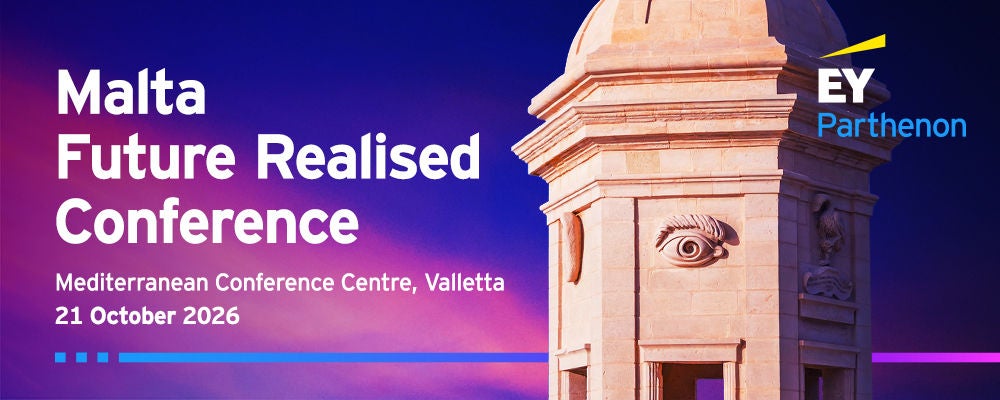
EY Malta's Work Reimagined 2026 Survey results will be presented and discussed during the Future Realised Conference on 21 October 2026. The findings will explore how employee expectations, workforce trends and emerging technologies are reshaping the workplace, and what this means for leaders seeking to build resilient, future-ready organisations.
To learn more and register for the conference, visit Future Realised 2026.