







Looking towards blue sky in the city. Concept of female leadership and entrepreneurship. Woman's empowerment. Career achievement and success

How can telcos reinvent the core and build their next growth engine?

Related topics

To thrive amid uncertainty, telcos must reinvent operating models, strengthen the core and unlock new sources of value.


In brief

  • Telcos are not short of growth opportunities – they are short of the agility, skills and strategic clarity to capture them.
  • AI is becoming the defining lever of telco transformation, but its value will depend on operating model redesign, not technology deployment alone.
  • The winners will reinvent core capabilities, make sharper choices in adjacent markets and build ecosystem positions where they have a credible right to play.

The telecoms industry is approaching a strategic reset. The sector’s growth outlook remains resilient, but the sources of value are shifting fast. A changing operating environment co-exists with new opportunities for AI-infused transformation, underlining a sector landscape that is increasingly nonlinear, accelerated, volatile and interconnected (NAVI). Taking advantage of these complex forces requires operators to rethink what they redesign, where they grow and how they organize.

The latest EY-Parthenon Telco of Tomorrow study, based on interviews with more than 90 telecom C-suite leaders worldwide, shows that the next phase of transformation will be less about choosing between the core and adjacencies, and more about redesigning the operating model that connects them. The winners will be those that use AI to improve execution, make sharper choices beyond connectivity and build more compelling ecosystem positions where they have a credible right to win.

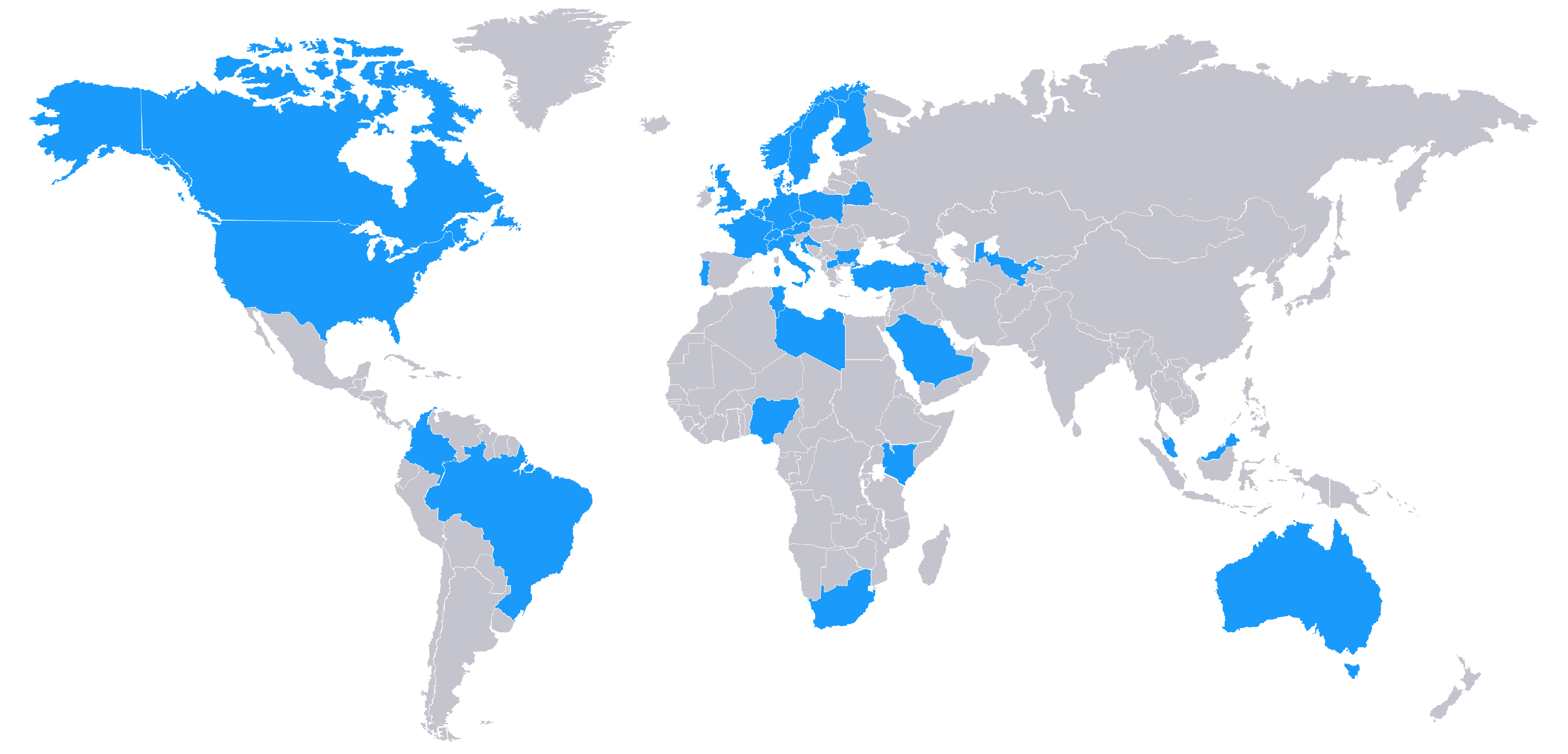
Location of respondents organizations worldwide

Location of respondent organizations worldwide

Navigating a nuanced landscape of growth challenges

The growth outlook for the industry remains solid: Most executives predict growth ranging from 1% to 5% over the next three years. A significant minority (16%) believe growth will exceed 5%, although such confidence is markedly more apparent outside Europe. While growth ambitions vary between regions, the forces constraining them are consistent globally, with regulatory pressure and disruptive competition the chief pain points. Mindful of the AI super-cycle, industry leaders also point to a lack of organizational agility that could prevent them from taking advantage of technology-enabled efficiencies – a concern that has grown in prominence in the last two years.1

Yet even leading challenges evoke mixed perspectives. While limited clarity around future consolidation scenarios is driving anxiety around the regulatory agenda, industry executives also stress that geopolitical fracturing spurs new opportunities for telcos as national infrastructure champions. Looking ahead, the ability to carefully delineate the upside potential and downside risks associated with new rules and directives will help telcos optimize their relationships with governments and policymakers, helping to build greater certainty into their growth agenda.


Geopolitical disruption is both a threat and an opportunity for us.

Satellite sharply in focus as a future competitive threat

The competitive landscape is the top risk to growth – and here industry leaders see substantial change in the years to come. Satellite players stand out as a growing source of anxiety, with 66% of executives viewing them as a leading disruptor in five years. While telco-satco relationships that provide back-up connectivity are a dominant industry theme today, some executives believe low Earth orbit (LEO) satellite could act as a pure alternative to terrestrial networks in the future – especially in rural areas. Leading satcos are already broadening their addressable market ambitions,2 underlining their disruptive potential.

Telcos view competitors in the B2B space with unease, notably hyper-scalers, who are nevertheless also viewed as the most valuable strategic partners in years to come, as demand for AI infrastructure prompts further strategic alignment. In the consumer market, content providers and virtual operators tend to be perceived as declining competitive threats; however, the number of mobile virtual network operators (MVNOs) operating worldwide continues to grow,3 with eSIM technology lowering barriers to entry. For telcos, the ability to strengthen customer relationships will become more important as disruptive forces continue to emerge beyond sector boundaries.


Hyper-scalers are the OTTs of the B2B space – but are they disruptors? What they bring is better described as glass ceilings for growth.

Improved operating models and execution drive strategy, with renewed appetite for adjacent growth

As telcos move forward, operating model overhaul and maximizing growth and execution in the core business lead as five-year strategic imperatives. AI is firmly in focus as a catalyst for both: 78% of executives believe AI will double efficiency levels in the next five years, with some pointing to even greater positive impact. Accompanying this, reskilling and refocusing the AI-enabled workforce is no less critical. Creating new differentiators also scores well, with superior customer understanding ranking ahead of network quality as a critical lever – and another domain where AI can enhance capabilities.

Meanwhile, adjacent services growth via new business models is rising up the boardroom agenda. This year, 50% of executives highlight non-core services as a leading growth catalyst, up from 34% in 2024. Key services in scope include sovereign cloud, cybersecurity and AI-as-a-service, alongside well-established domains such as TV and financial services. Reviewing asset strategies is essential for some – with consolidation opportunities top of mind. That said, industry sentiment is shifting beyond an asset-light mindset: Expectations of full netco-servco separation across the sector are more muted than before, given the potential for increased risk profiles for separated entities.4


We have an AI strategy from three perspectives, what can I grow with AI, how can I deliver commercial excellence, and how can I improve productivity.

Obstacles accompany the road to transformation

The drive towards new levels of efficiency, supported by innovative operating and business models, is clear, but executives face persistent challenges that undermine the pace of transformation. Budget constraints (54%) and insufficient skills (43%) lead as inhibitors, but lack of alignment between technology and business strategy and lack of clarity around a strategic “north star” are also prominent. The former underlines the importance of ensuring that AI adoption is clearly tied to better business outcomes, while the latter points to fluidity in strategic visions, with a range of organizational and market structure hypotheses in play, from “telco to techco” transformation outlooks to asset-light infrastructure assumptions.

Confidence in resolving these pain points is, in some cases, limited. The ability to access the very best talent remains a cause for concern: Only 31% of executives believe the telco sector will be one of the most attractive to employees in five years. There are also doubts that telcos will be able to significantly differentiate themselves over the same period, suggesting that strategic outlooks require further fine-tuning, especially as new growth opportunities appear in sovereign and AI infrastructure provision.

Monetizing adjacent markets will also require a change in mindset: Most believe that the approach to non-core revenue growth in five years will be radically different from the past. Taken together, these views of the future state of the sector suggest that telcos need to progress much further in terms of delivering differentiated value propositions – whether for customers, partners or employees.

The state of the telecom sector in five years’ time

31%
31%
CXOs that believe telecoms will be one of the most attractive sectors to work in.
37%
37%
CXOs that believe telcos will not be able to differentiate significantly from each other.
55%
55%
CXOs that believe the approach to non-core revenue growth will be radically different from the past.
I think everyone needs more talent and more skills. A lot of our problems lie in 20 years of IT debt that sits in the organization – IT that has been patched together, bandaged together.

Advancing more confidently into the future

For telco leadership teams, the question is no longer whether the sector will change, but how deliberately they can shape that change. The winners will be those that translate AI investment into an operating model advantage, convert customer insight into measurable value, and make bolder — but more selective — choices about where to grow beyond traditional connectivity.


Five questions for telco leaders to bring to the boardroom

  1. Where can AI materially change your cost base and customer experience — and what operating model changes are required to capture that value?
  2. Which parts of the workforce need to be reskilled, redesigned or replaced to support the next phase of transformation?
  3. Where do you have a differentiated right to play beyond connectivity – and how can you enhance and sustain it?
  4. Which assets are truly core in a world of digital infrastructure, sovereign cloud and AI demand?
  5. How will you measure progress beyond revenue growth — including business agility, ecosystem relevance, talent readiness and customer value creation?

With these questions in mind – and considering the five strategic imperatives that leaders agree they must act on decisively – telcos should keep the following actions in mind as they maximize transformation opportunities ahead.


Overhaul the operating model

Improved operating models will occupy significant leadership time and attention from now on. As telcos move ahead with their talent agendas, it will be important to balance reskilling with securing access to new talent. While customer-facing roles alongside networks and IT functions are clear priorities for new capabilities, executives cannot overlook the need for more effective repurposing of workforce activities across all corporate functions. Looking ahead, leadership roles should actively embrace new competencies, while organizational structures must adapt to ensure that process reengineering is delivered at scale.

Execute on core business services

High expectations of AI’s transformational capabilities are clear but pressure to deliver is mounting, with many executives believing that AI-centric processes will become business-as-usual over the same period. To meet these expectations, prioritize agentic AI’s impact in the network alongside more established front office use cases, paving the way for opex reductions that will be an essential complement to future capex commitments. The ability to quantify the scope of process agentification – within and across lines of business – will be vital in the near-term if AI is to deliver improvements at the pace and scale industry leaders envisage.

Differentiate positioning and capabilities

Telco leaders now rank superior customer insight and software-based skills ahead of network quality as differentiation levers, as agentic AI redefines the horizon for service personalization. To stand out in the market, evolve commercial models and sales motions further to maximize the conversion of customer insight into immediate and sustainable value. In the longer-term, strategic “north stars” will require ongoing refinement, particularly as new value chain roles for telcos emerge in areas such as cybersecurity and AI infrastructure orchestration. This will become more important as traditional performance advantages between competing infrastructures erode and as LEO satellite players and other information and communication technology (ICT) providers extend their own value propositions for consumers and business customers.

Improve business models

Our research suggests a growing emphasis on revenue diversification opportunities. Here, the ability to identify new service opportunities, co-creating and jointly delivering them with partners where appropriate, is increasingly prized. Telcos that can successfully prioritize and deliver ecosystem strategies will have better opportunities to unlock growth in adjacent markets with composite value chains, such as sovereign cloud and AI infrastructure. Credibility will also hinge on telcos’ ability to pursue a “client zero” approach where they can illustrate the business outcomes of new technologies they have adopted internally. Meanwhile, engaging with new buyer groups in the enterprise – where CEOs are increasingly involved in ICT supplier choices – will also help them transcend customer perceptions as connectivity-only specialists.


Explore inorganic growth opportunities

Leadership attitudes towards asset strategies are changing fast: consolidation opportunities are now top of mind, while executives increasingly question network separation strategies. As new consolidation scenarios appear, integration capabilities are assuming greater importance, with the ability to echo the voice of the customer from the outset of a merger now critical to effective deal execution. This means elevating the focus on simple ordering journeys, consistent services and transparent pricing as integration principles. Looking ahead, hyper-scalers stand out as essential partners, particularly as combinations of connectivity and compute drive enterprise purchasing decisions, while telcos can also collaborate more closely with public sector organizations to scale sovereign and cybersecurity offerings.


Summary

The telecom industry is approaching a strategic reset. The Telco of Tomorrow study shows that the next generation of industry leaders will not be defined by network assets alone, but by their ability to harness AI, redesign operating models and create new sources of value beyond connectivity. Drawing on insights from more than 90 telecom executives globally, the research highlights a clear mandate: reinvigorate the core business, accelerate transformation and build differentiated positions in emerging markets such as cybersecurity, sovereign infrastructure and AI-enabled services.

Related articles

How do you engage connected consumers who crave simplicity and choice?

Consumers are seeking higher trust and clearer value in the digital home services they buy — and providers can deliver on these demands through five steps.

How can telcos navigate a world of evolving risks?

As the risks facing communications operators continue to evolve and expand, here’s our ranking of the 10 top telecommunications risks for 2026. Learn more.

Are leaders ready for the telco of tomorrow?

To thrive in the future, telcos must seek differentiators beyond network quality, and adapt to changing ecosystems and market structures.


About this article

Authors

Contributors