EY refers to the global organization, and may refer to one or more, of the member firms of Ernst & Young Global Limited, each of which is a separate legal entity. Ernst & Young Global Limited, a UK company limited by guarantee, does not provide services to clients.
Insights
Discover the insights you need to make better decisions today, to shape the future with confidence.
See more
Highlights
Services
EY helps clients create long-term value for all stakeholders. Enabled by data and technology, our services and solutions provide trust through assurance and help clients transform, grow and operate.
- See All
- 1||About EY-Parthenon
- 2||About EY-Parthenon
Spotlight
- 1||##
- 2||##
- 3||##
- 4||##
- 5||##
- 6||##
- 7||##
- 8||##
- 9||##
Case studies
About us
At EY, our purpose is building a better working world. The insights and services we provide help to create long-term value for clients, people and society, and to build trust in the capital markets.
Search for insights, services and people...
Recent Searches
Trending
-

How can CEOs turn AI productivity gains into lasting value?
Learn why CEOs are investing in AI, talent and portfolio transformation to convert productivity gains into growth and long-term value.
01 Oct 2026 CEO agenda -

How will AI redefine resilience for risks not yet imagined?
AI’s speed, scale and insight drives resilient growth in today’s complex risk environment. Learn more.
23 Jun 2026 Corporate culture -

As AI moves from advice to authority, who defines its limits?
Find out how the use of AI is shifting from assistive to autonomous, led by the choices of everyday people.
26 Mar 2026 Technology
How real-time liquidity can help treasury unlock capital and drive value
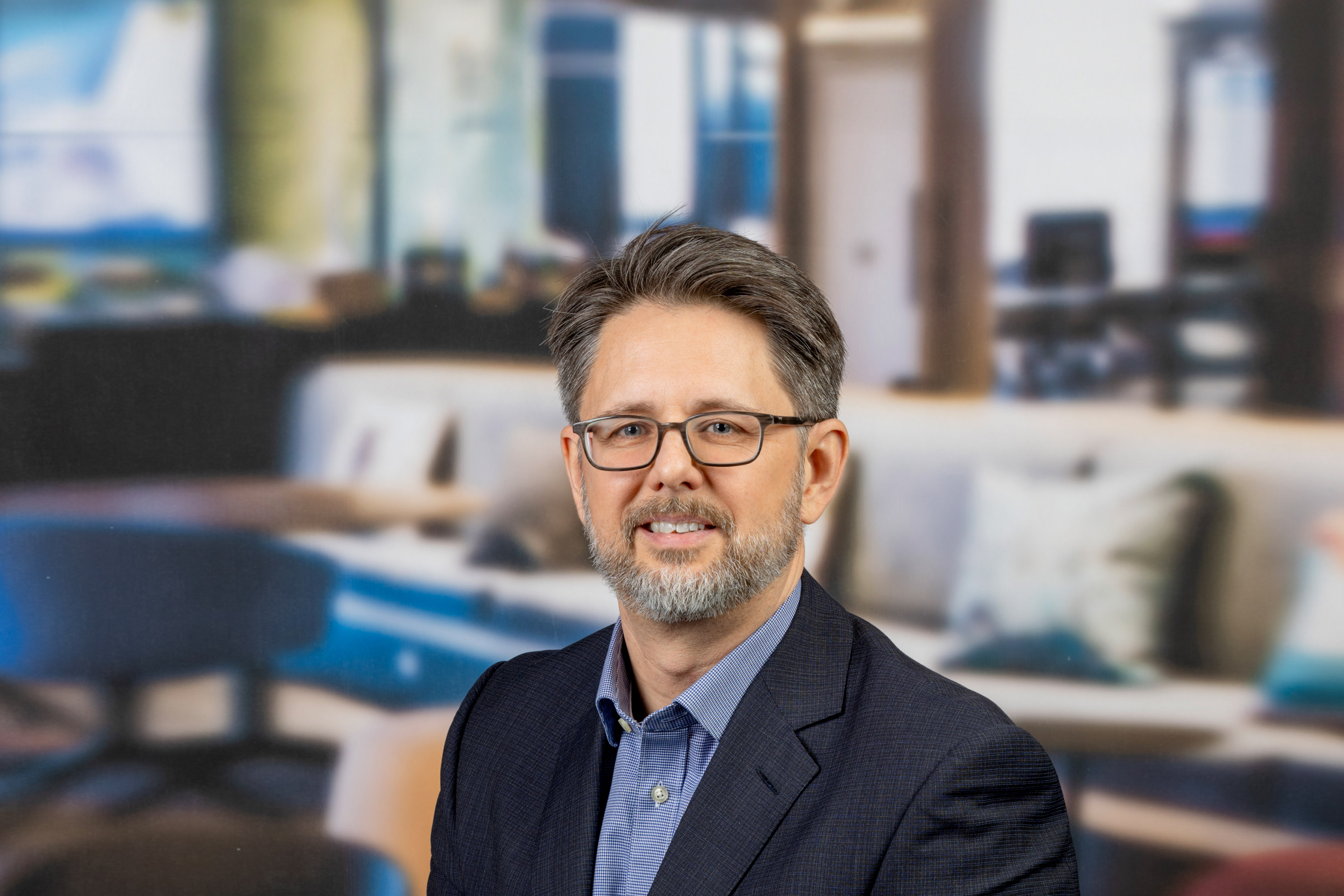
In this episode of the Better Finance: CFO Insights podcast, Citigroup’s Stephen Randall explains how always-on treasury, powered by real-time liquidity and automation, can deliver resilience and unlock enterprise value.
Related topics
In this episode of the Better Finance: CFO Insights podcast, host Myles Corson speaks with Stephen Randall, Global Head of Liquidity Management Services at Citigroup, about how treasury is adapting to an always-on, real-time global economy and becoming central to enterprise value creation.
Stephen shares insights from Citigroup’s research and client experience on what differentiates high‑performing treasury functions. He highlights the importance of strong fundamentals, high‑quality data, automation and the role of programmable, rules-based cash management in enabling more efficient and resilient operations. He explains how always‑on treasury models help CFOs and treasurers respond faster to disruption, reduce operational risk and make better informed balance sheet decisions.
The conversation also focuses on the implications for capital efficiency and balance‑sheet strategy. They discuss how real‑time funding, selective use of blockchain‑enabled liquidity and advanced analytics are giving CFOs improved visibility and control over cash flows. By reducing the need for excess buffers and pre‑funding across entities and markets, treasury teams can release trapped liquidity, lower funding costs and deploy capital more effectively. This shift can help CFOs and treasurers move from holding cash defensively to actively optimizing liquidity in support of investment, growth and shareholder value.
Key takeaways:
- Understand why forecasting accuracy alone is no longer sufficient to support confident finance decision-making.
- Recognize how treasury can enable confidence through real‑time liquidity, visibility and control.
- Explore how leading organizations are redesigning treasury operating models for an always‑on environment.
- Identify the role of real‑time liquidity and automation in reducing reliance on manual intervention.
- Understand how treasury’s evolving role can support resilience, agility, unlock capital and support enterprise value creation.
For your convenience, full text transcript of this podcast is also available.
Myles Corson
Welcome. You’re listening to the EY Better Finance: CFO Insights podcast — a series that explores the changing dynamics of the business world and what it means for finance leaders of today and tomorrow. I’m your host, Myles Corson, from EY.Today I am delighted to be joined by Stephen Randall, Global Head of Liquidity Management services at Citigroup, so Stephen, welcome.
Stephen Randall
Hi Myles. It's great to be here. Thanks very much for the invite.Corson
So Stephan, earlier this season we explored findings from two surveys that highlighted a persistent challenge for many organizations: that despite advances in technology and automation, confidence in short-term forecasts remains low, which is often due to fragmented data and siloed teams, which continue to hinder treasury effectiveness.You work closely with CFOs and treasurers who are creating treasury functions that are agile, resilient and equipped to operate in an always-on, volatile global environment.
So, let me start by asking you, you've put out some quite interesting research in terms of the correlation between high performing treasury organizations and enterprise value creation. So what does a high performing treasury function look like for you and why is it so important in the period of sustained volatility that we're experiencing?
Randall
We work with a lot of global clients at various stages across their treasury journey. And a lot of them complete some of what we call Citi (Citigroup) Treasury Diagnostics, which is work that we do with them on sort of benchmarking them against their peers, but also against the broader best practices that we see across treasury functions. And what we did is we actually took a correlation of where our clients were across that journey and correlated it to the performance of their overall organizations. And it was interesting that there was a correlation between what we saw was the more advanced, the more sophisticated and top performing treasury functions to those that are performing well as an overall business model.And I think what some of those items demonstrated. I mean, first of all, to be top performing, you've got to get the fundamentals right, etc.. But there's a few other things in there. You've got to make sure that you've got the systems and infrastructure. You are deploying liquidity efficiently, you are managing your working capital, and you're identifying and mitigating risks in the business. And very often those top performing treasuries are very much interlinked with the broader business that that organization is doing. And so seeing those building blocks come together on top of the fundamentals having well-defined processes, not people dependent processes. Making sure that they're applying technology to digitalize and automate processes really were at the cutting edge of those clients that were also performing very well. And I think what if you think about what that results in a very productive and healthy treasury is you get stronger financial performance and that should drop to the bottom line from a financial performance.
But also to your point about volatility, it's resiliency when there is market volatility because they're able to respond quicker, they're able to have managed those risks more efficiently. But also what we saw is as you have market volatility, clients with those more advanced treasuries, higher performing treasury functions were able to rebound more quickly than some of their peers. They were able to make sure that those business models have to get adjusted. They are much more agile in being able to rebound or to adjust as some of those market conditions change. So as we think about, I think, the overall changing nature of globalization, we think about as different trade policies changes. There's different macro events occur. Those businesses with treasuries that are high performing will really help them adapt and drive their client approach in those types of environment.
Corson
You mentioned globalization, and I'm sure one of the things that you're seeing with global clients is this need to be always on. What does that mean for treasury functions and finance day to day, and how is it changing how they operate?Randall
It's something that we've been working on at Citi now for a good number of years, in identifying that clients are becoming more global. They are looking at where they operate and they're diversifying, but generally they're operating in multiple geographies. And as a result of that, their treasury functions have to grow with those business models. And what we're seeing with instant payment mechanisms changing with regulation, changing with general market evolution, and moving more into e-commerce or direct to consumer business models. We're seeing our clients not only be global, but become always on from a treasury perspective.What do we mean by always on? Rather than just taking the bank account and the treasury function, looking at that and making sure it's got enough balance at the end of the day or on a periodic basis, flows are moving a lot more frequently. They're collecting from clients on a much more real time basis through instant payment networks. They're paying out suppliers on a more real time basis because their suppliers are demanding it. And as a result, the treasury function has to effectively do that. Now, we operate in ninety plus markets across eighty five different currencies. And so,; therefore, what we have is the ability in at least fifty of those markets around the world to help our clients be able to move their money.
And if you think about what we were talking about earlier, about those high performing treasuries having the visibility, but also having the ability to move that money around the organization to reduce working capital usage and to optimize liquidity is very important. So having that always on treasury function, what it's saying is that at some extreme, it's a twenty four by seven requirement to be always on because that's when your business model requires it. Others, it just means that you are speeding up the velocity of your treasury function, and you're being able to move money quicker, and you're being able to optimize that liquidity in different pockets and moving it to more instant or real time. So that's what it means in terms of how we think about it. It's allowing our clients the optionality to be able to move their money where they want to, when they need to, in order to make payments, or to be able to optimize the debt that they need to raise.
Corson
So in that always on world, are you seeing different measures becoming more important? Is there a shift in how decisions are getting made and what decisions are getting focused on? How has it changed the way management systems and operations work?Randall
There's a couple of things there. As you move to a more always on type treasury function, I think there's a data element that we unpack that a little bit later, but there's also that visibility element and therefore the volume of information and decision making that you need to make, as you see your data in a more real time basis. So we are seeing clients invest in technology. We are seeing them invest, as I said, in the data aspect of that. And therefore, there are changes that rather than leaving liquidity in certain markets, that is as a buffer, you're able to utilize that, make decisions on that and be able to move that out on a more real time basis.But one of the other aspects, with a sort of always on and a more programmable type treasury function, is back to my earlier point about being less reliant on people. If you can set up a treasury function that actually takes some of that decision making at a tactical level out of the treasury function and elevates it to a more strategic level to manage the more strategic risks, then you end up with a much more, I think, powerful treasury organization.
So if you can create a cash management function that is much more automated, not reliant on people moving money when they need to move it, and they can rely on some of the capabilities that we can offer to be able to move that money as and when they need it on a more automated basis or programmable basis. Then there's decision making sort of changes to be a bit more strategic than tactical day in, day out. And I think that is a good win for the treasury functions.
Corson
You hit on this point a couple of times around automation and how you redesign processes, particularly around cash management. And this idea of resilience, which I think is so important. Again, given the volatile environment, as you think about redesigning those processes, perhaps relying more on automation, less on the human involvement, how do you maintain things like controls? And I think we're at this point where this debate around how much human in the loop do you need, particularly in the context of AI [Artificial Intelligence] versus how much do you trust the machines? How do you see that trade off? How do you get the balance right in terms of automation with control?Randall
It's one of those topics where you've got to take the risks and you've got to balance those risks off. I think about this in terms of the way we've developed some of our solutions, is that you set the rules and you set the programs. And so you know what the controls are that you're building into those processes. And as we've developed some of our capabilities in real time funding, that allows clients to be able to set those thresholds. So it's the control of the client. The control of the treasury function. Be able to set those thresholds, to be able to move money across those accounts on an automated basis based upon those predefined rules.What that does in some respects actually de-risks the proposition, because you don't rely on someone that's having to then monitor accounts and to be able to move money and make sure it ends up at the right place at the right time. You can make that a little bit more programmable and put that on a process. So we have that real time funding where clients are able to program that money to move across on a real time basis during the day, which actually reduces the risk for that treasury function, you know, missing a critical payment or not being able to settle a balance in an account, etc., or to cover an overdraft on time. So we have that across thirty-eight markets from a real-time funding perspective.
Corson
So it's really about building the design, what we call the prevent control rather than the detect on the back end. So any best practices you could share that you've seen clients adopt in terms of lessons learned as you're moving money with that pace and that consistency. What are some of the key lessons?Randall
A number of our clients, they've adopted some of the real time cash management solutions, it's not that they move all of their functions to real time straight away. They take it on a corridor by corridor basis. And that's how we follow. And we've built a lot of our capabilities at Citi following those client demands. So what we've seen is certain clients have certain pain points across certain corridors, certain jurisdictions. And so it's a question of utilizing those solutions across those corridors. And for other parts of the treasury process, it might be fully acceptable not to utilize that always on real time solutioning, because it's just not required, given the size and scale of that business.So what we have seen is, as we've co-developed some of these ideas with our clients, is effectively looking at the pain point. Understanding what the challenge is and then developing the solution that fits that client need, and then implementing it in a thoughtful manner. So I don't think it's like a big bang approach. It's a much more augmented into the treasury function, which then obviously then means that the implementation risk is reduced and they can work through it on a corridor-by-corridor strategy.
Corson
That makes sense. You build some experience, build the muscle memory, and then scale up. That's helpful. And obviously one of the things we talk about a lot is just the importance of data quality. And so interested in terms of how you're using data. Are there areas where data is really accelerating what you do? Other areas where you're seeing clients have challenges because of data issues, and what do they need to be doing to clean that data to be able to unlock some of the opportunities that you're describing?Randall
It's interesting as we see clients in different parts of that data journey and to defining what the data standards are, then making sure those data standards are rolled out. But most clients, they don't stand still. They continue to either acquire new businesses, set up new businesses. So making sure that as they bring businesses together, the data across those different legal entities, across those different business models is standardized. Because for the treasury function, having that standardization allows them to then be able to put certain analytics on top of those data sets. Once they're standardized, if they're different data sets that have got different data points across different parts of their organization, it's much, much harder. So it's that consistency, which we're seeing clients drive through and then obviously they get the benefits on top of that.Now what we try to do is make sure that data that our clients access to have to have visibility on what their bank accounts are doing on that close to real time basis that they're able to then utilize that, be able to bring that into their treasury management systems, to be able to then make those informed decisions on that. So big part of what we work on is making sure that there's that visibility, there's that consistency across the network that they operate with us. So they can then take that data in, analyze that data, then make the decisions that they need to do across their funding profile, and then they can complete that longer term analytics. It's always one of those, you've got to get the base data right. It's always harder to go back and say, oh, I need to add another attribute into my database. Getting that done up front and making that very closely, working with the rest of the finance team and the rest of the organization. Treasury can't really be operating in that silo. It's really got to use that firm wide data source and make sure it's pulling a standard data source to understand everything that's going on from a cash and liquidity perspective.
Corson
So we've talked about some of the data and automation and technology aspects. What does this mean for treasury talent? Are you seeing the skills and the experiences? The treasury professionals in enterprises needing to adapt to this new world?Randall
There's a couple of things that I see in this space. Clearly, some of the core treasury fundamental understanding that is still core. And I think that's table stakes. I think what we're seeing is digital assets, understanding that a little bit more into the benefits of that from a treasury perspective. Understanding how the market is evolving and understanding the capabilities of what's possible. I think that's where you're seeing that talent having to develop to understand what the capabilities are that are out there, what the opportunities are out there. As I said, from both the digital asset space, the AI space, to be able to take the treasury function to the next level.It’s about making sure you have the basic fundamental understanding of what treasury organization needs to do, how to manage the risk that sit within that treasury book. But then to be able to grasp that there are a lot of changes that are happening out there. And we've touched on one which is moving more to a real time, always on type environment. How the treasury function can keep up with that and be able to develop itself, to be able to stay current and relevant in what is a fast moving world.
Corson
And I think one of the things we talked about previously is that obviously creates opportunities for treasurers in the future to expand into broader commercial roles as well. We've seen the increases in the number of people who play the treasury role moving into CFO roles, for example, because I think that experience is very powerful. One of the key things with real time data is the ability to make better decisions faster. As you look at this from a liquidity perspective, what is changing in the way CFOs and treasurers are using this information to run their businesses?Randall
We've talked about resiliency, so I won't go on and talk about that too much more. But what we are seeing is that as our CFOs and treasurers are getting more data at their fingertips, they're being able to see it in a more real time basis. There is being able to see it across their organization. They are then able to make sure that they are taking the decisions as to how they need to position the balance sheet of that entity, and that might be the next five days. It might be further out, but it also might be for that day and that optimization. So there is a strong business case.Back to your point. I think my treasurers can evolve through organizations. There is a very strong business case as to how treasurers are actually really adding value and creating value through making sure that the cash that the firm has is working hard. And so I do think that what it's doing is that it is slightly changing the nature of what the treasury function does. In the past, it was just make sure that the money is in the account and we can pay it out when we need to pay it out, and we're okay. I think it becomes a different proposition. It's now making sure that we are able to connect direct to customer flows. We are able to bring cash in from a subsidiary that was just sitting out there to offset some funding that we were borrowing from another entity.
So you can see as you pull all of this together, the decisions that are made become more strategic. And when they become more strategic, they also add value to the bottom line of the overall organization, which sort of ties us back to that opening conversation about those high performing treasury functions, creating that value add, linking through to those higher-performing organizations.
Corson
If you've got the confidence in your cash flow forecasting, you don't need to retain some of the cushions you may have held on to historically, because you had that concern about where cash flows were coming in, how certain you were about them. And yeah, that gives you more confidence to then make the investments in the business. So that makes sense.Randall
So let me pick out one thing, which is if we come back to we touched on data, we touched on a few other things. But if I think about blockchain technology and how that sort of is evolving in the real time space, the way we think about it, where I think about it is effectively we're trying to solve a client's problem, which is being able to make sure that they have all the benefits, which we've just discussed.One of those potential technology opportunities is to use blockchain technology. We've been experimenting and using that and rolled out products over the last three years. And we roll out a product called Citi Token Services for Cash, which allows our clients to be able to effectively move their cash using our private permissioned blockchain across the key corridors. It sort of picks up the point earlier around making sure that it's the key corridors that our clients have these pain points around. But if I take that back to that point you were making about if they have more certainty and they can then manage their liquidity slightly differently. One of the things that we have seen with this particular capability is you're able to effectively not have to prefund certain balances in certain locations on the basis that you're not sure what the balance is going to be, because you can do it on a more real time basis. So we have seen clients that effectively get a margin call, or they have an outflow in a location late in the day.
In the past, they would have had to move money across, pre-position it in that account on the basis that it could or could not happen. Now they've got a capability where they see that that flow is happening and they're able to, on a real time basis, move that money across from their header account or head office account and be able to fund that. So you can see that that transforms the way that treasury and CFO functions. Think about that cash that they had to pre-position in the past. And it gives them back to your point about confidence that if there is something that they haven't planned for, they are able to be able to meet that requirement utilizing a real time leg or real time transaction, as opposed to saying, oh, I can't find it because it's going to take a day to get there and therefore it will be too late to settle the obligation.
So hopefully that also ties it together as to that confidence point, that it gives treasurers to be able to access their cash and be able to move it when they want to do it, and bringing in new types of technology to ultimately solve what the treasury and our clients are looking to solve for.
Corson
That's really helpful articulation. I appreciate you sharing that, and I appreciate you coming back to the blockchain point and new technology. It's interesting because when blockchain first came out, everyone was, oh, this is going to disintermediate banks. And actually, it's interesting to hear you talking about how you're now using the technology. And I think one of the challenges with blockchain particularly was as people started to work through it, it was expensive for institutions like yours that you can invest in building platforms on the technology. Presumably, again, you can then scale it across customers. They're actually seeing the benefits without having to make that investment themselves. So I'd be interested in your thinking on that and any other new technologies that you're excited about that you see also helping to advance how treasury functions can operate?Randall
It's a good question because it's one of those: it's a new technology. Can it be solved by traditional technology? You need traditional technologies to solve the problem. Our goal is to help clients to be able to manage their treasuries as efficiently as possible. And we're there to bring on whatever technology platform it is to our clients to be able to deliver that. And this was a very compelling use case that we worked on. And back to your costs, it's one of those things you have to invest. But when you have a large client base, you do have some advantages.As I touched on before, we sort of co-created with a couple of clients on what the use case is, what the corridors would be, the currencies would be, etc., but more importantly, how easy it was for them to use rather than it being something that would be segregated from their day to day treasury function. They'd have to go and log into to be able to get access and to be able to utilize the benefits of that technology. But it would just add to the complexity of their operating model. That's what we avoided by building it within our existing framework. So again, it's about making sure we give the client the benefit without making it very hard for them to use, which is why we use the tokenized deposit within our network. And it's the client's money that move. It also gives them the benefit that they don't have to explain to their organization that suddenly they've taken on an asset which people don't understand. It's still a deposit at a bank that they are moving. We're just facilitating and using that technology.
So I think as we think about that, I think there is more. It's fascinating when we sit with our clients, there are use cases that they come up with that we thought could be there. But until you sit down and you brainstorm. You then really flesh out use cases and use cases that maybe we didn't think of. So that's a very good way of building on the core capability, but also driving towards, as I said, that always on real time solution. I think when you combine programmability, back to the point about being less reliant on people and reducing that operational risk, and you can build programmability into your treasury function. So if an account gets below a certain level, it automatically gets funded by head office. That also simplifies some of the not only operational process, but also some of the forecasting processes, because you don't have to forecast what that account is doing, you've really got to focus on the header account.
So I think that's quite exciting as you get more into programmability. And I think that has other use cases across a number of other treasury elements in the future. And then I think when you combine the AI overlay on top of treasury management and being able to help treasury teams take the data that they have, the cash flow information that they're seeing and being able to produce much more strategic future views and then be able to take some of the capabilities that we can offer our clients. You bring all that together. I think it's an exciting space.
Corson
You said a lot of really interesting stuff. I may pick up on three things. The first one I called out was the right technology to solve the right problem. So it's not just throwing a new technology at a problem for the sake of it, because it's a new shiny object. The second point that really resonated with me was your point around co-developing with customers, and particularly in the world that we live in with the speed of change. No organization independently can solve all of these solutions. And then the third point I think was usability. That resonated with me in the context of change management, where we see technology adoptions fall over is if you don't get people to use them and embrace them. And the more you can minimize the impact or make it really easy to adopt, right? So you don't have to have extensive training programs. It's that sort of intuitive design, the model where the software companies, you just pick up, open the app and you figure it out because it's so intuitive. Is that a fair summary? And I'd be interested in any further thoughts you've got as you think about that innovation agenda, how you apply those in practice?Randall
I think that's fair. I think the way we think about innovation is making sure the client. To your second point, the client is that co-creation piece. But we can't then get away from is making sure that it's scalable as well, because very often what we see is one client needs actually many more clients need. So that's the other aspect that we build into the innovation is making sure that it is scalable. So it's not just for one use case, it can be used more broadly, and given the network and the markets that we operate in. Being able to do that for our clients, the clients will say, well, I can do it here, but I need to be able to do it there as well. So being able to make it scalable is also, I think another aspect as we think about innovation, making sure we can do that. And I suppose if I think about the token services for cash, that's exactly how it's come about. We started off with one corridor, with one currency in terms of US dollars. And then as we started talking to clients, they said, well, we see a use case in euros. We saw the data as well and we could see that. So we added euros in as another currency. And so again, there was the adaptability piece of it. But it's the scalability which I think is also important.Corson
That's a great point. And with the adoption of AI we're seeing that right now. It's like just solving one small use case where people started isn't actually where the power is, it's actually how do you create the skills that are repeatable across multiple applications? As you think about qualifying, where you're your investment in the new technology goes. That scalability, repeatability is such an important point.Really fascinating conversation. As we wrap up the conversation, really interested in any final thoughts or recommendations you'd have for treasurers and CFOs and other finance leaders about how to navigate this continued volatility, and how do they continue to support enterprise value creation?
Randall
There's a few other things. I mean, hopefully listeners have understood a little bit more about what real time liquidity is, a little bit more about how Citi is thinking about that journey with our clients and helping them. I think we continue to see that our clients have really got two challenges. The pressure is to be more efficient and to do it more with less, and at the same time, is that they need to continue to ensure that they're offering very effectively through the cycle, through whatever is thrown at them. So I continue to, I think, stress the importance of making sure that they are interoperable solutions. You know, you've got solutions that your treasury function is able to use to give optionality. That optionality builds the resiliency that we spoke about. It also allows you to have efficiency. So using your bank partner to be able to give you that optionality, to be able to give you that view across your balance sheet in one place, I think is definitely something that we continue to see. I think, as we said, there are new capabilities out there. I think treasurers and CFOs continue to explore those. Some will be perfect for certain business models, others not yet others will be in the future. And so continue to investigate, understand what those opportunities are out there and at the right time. I do think that and we've seen this treasury's move along their evolution. You know, there will be opportunities to harness some of these newer liquidity solutions and technologies to be able to drive optimization.Corson
I think that will resonate with a lot of the listeners, particularly in terms of opportunities to free up investment potential. I think one of the things we hear is there's a long list of opportunities for transformation in finance organizations, and this is one way potentially of funding some of that innovation. I'm sure it'll resonate. In wrapping up, we always like to find out a little bit more about you personally. Ask some rapid fire questions. So I'm going to ask you if you've got a particular quote that you refer back to and informs your thinking.Randall
Yeah, I mean, there's a lot of good quotes, but I think one of them that I quite like is that life is like a bicycle. To keep your balance, you must keep moving. And so I think that resonates with me.Corson
Fantastic. I like that one. And then you reflect back on your career, was there a particular piece of advice or guidance that you were given that's been most impactful that you reflect back on?Randall
Be curious and keep learning. It's one of those things that the world never stays still and always make sure in your career you're continuing to learn new things. I've been very fortunate that I've moved and taken a lot of different roles across Citi, and each one of them, I've been learning something new, and very often you learn something in a role that you actually use even more two roles further on. So just keep learning because that means that you really are gaining skills for the future.Corson
Then finally, but maybe it's an extension of the bike analogy, but anything you do, particularly to maintain well-being and balance?Randall
Yeah, well, it is effectively, I do like cycling. I do enjoy cycling and spin classes. That's probably why that quote resonates with me. But also I do like getting out, especially now the weather's getting a bit better. Days are getting a bit longer. It's lovely to get out on the weekends, and I also commute on a bike as well, so it's a, it's a nice way of just unwinding at the end of the day and, and getting a bit of exercise at the same time. So yeah, that's what I do to try and maintain a bit of balance.Corson
Perfect. Well, Stephen fantastic, really enjoyed the conversation. Thank you for joining us and sharing your insights.Randall
Thank you very much. It's been great being here. Great conversation.Corson
If you’ve enjoyed this or any episode of the EY Better Finance: CFO Insights podcast, please subscribe or leave a rating or review.You’ll find related links at ey.com/betterfinance. As always, thank you for listening and for supporting our podcast.
EY logo, Shape the future with confidence