EY helps clients create long-term value for all stakeholders. Enabled by data and technology, our services and solutions provide trust through assurance and help clients transform, grow and operate.
At EY, our purpose is building a better working world. The insights and services we provide help to create long-term value for clients, people and society, and to build trust in the capital markets.
In this episode of the Sustainability Matters podcast, speakers explore the issues surrounding AI and nature conservation, and debate whether technology will ultimately protect our planet or cause more harm.
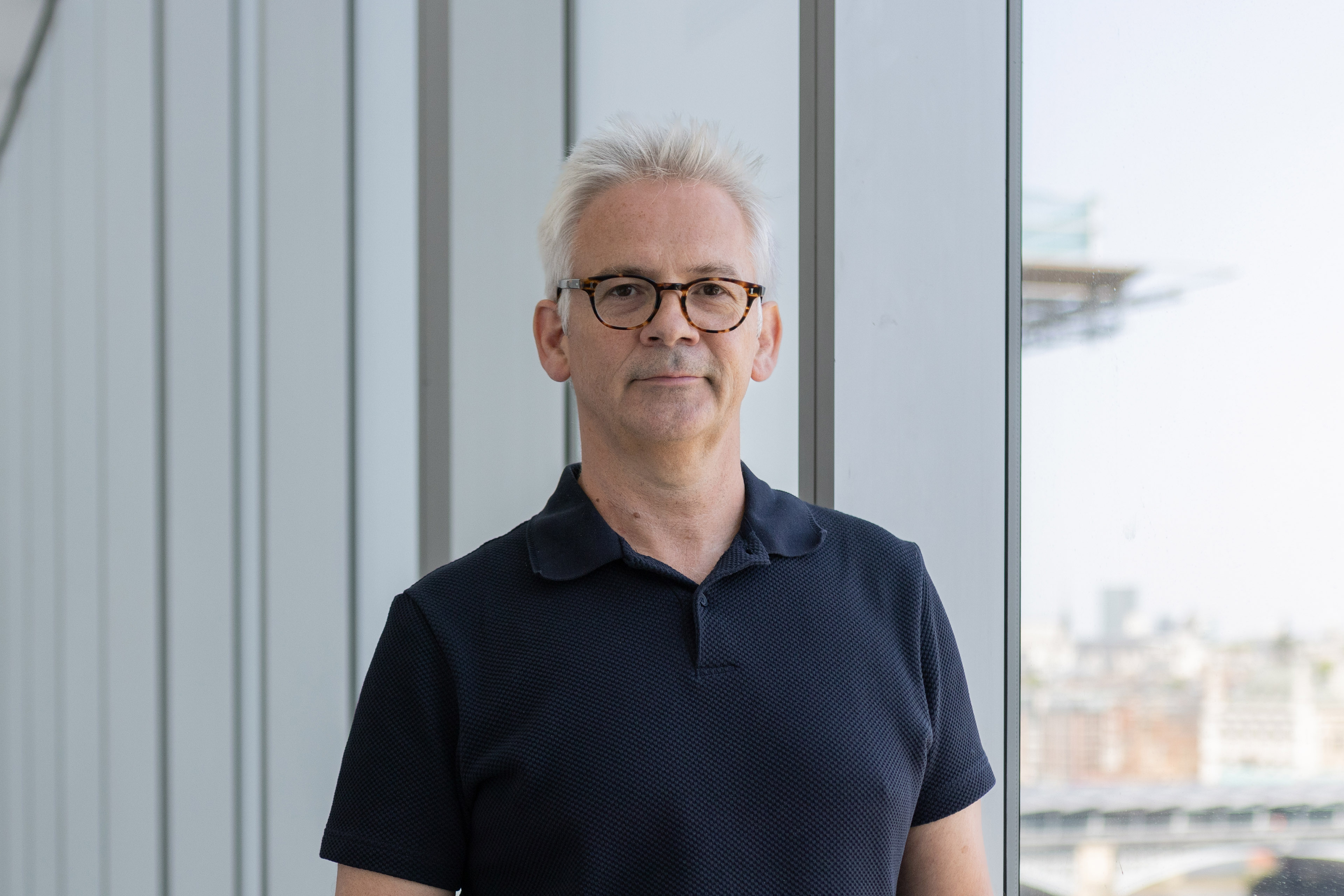
In this episode of Sustainability Matters, David Rae, EY Global CCaSS Head of Sustainability Technology and Innovation at Climate Change and Sustainability Services, explores the complex intersection of artificial intelligence (AI) and nature. The host poses the question: Can technology solve the nature loss crisis, or will its resource-heavy footprint only accelerate the problem?
Hear industry voices and activists debate whether AI is a necessary tool for nature’s survival and offer holistic views on the risks and opportunities ahead, drawing on a hypothetical debate from The EY AI x Sustainability Exchange: from big questions to real solutions, where activists were asked to take opposing sides of the argument.
Gilad Goren of the Nature Tech Collective argues that reversing nature loss is impossible without AI, which is essential for de-risking private sector investment and closing the nature finance gap. We also hear how companies, such as SAP, IBM, Treefera and others, are leveraging real-time data to track deforestation and optimize crop yields in hard-to-abate sectors.
Conversely, activists Livia Pagoto and Fred Werner highlight the "shadow effect" — the skyrocketing energy and water demands of massive data centers. The conversation also explores ethical governance, questioning whether potentially biased algorithms can ever replicate human care required to protect the environment.
Key takeaways:
AI is already accelerating nature protection, from monitoring deforestation and biodiversity to improving climate risk assessment, supply‑chain transparency and renewable energy optimization.
However, AI’s rapid growth is resource‑intensive, driving significant increases in energy and water use, and raising concerns about scalability, equity and environmental impact.
Progress requires collective action, combining human wisdom, inclusive governance, indigenous knowledge and responsible innovation, to ensure that AI strengthens — rather than replaces — our relationship with nature.
For your convenience, full text transcript of this podcast is also available.
Gilad Goren
Yes, AI is helping nature. That's a fact. The question we should be asking is whether we have a fighting chance of reversing nature loss and, frankly, surviving as a species without AI. And that's a resounding no.
Livia Pagoto
AI replacing nature is not a universal dream; it's a western one. What the world needs most is not smart machines. It's wiser humans who choose to protect what makes us alive. Algorithms cannot replicate that.
David Rae
Welcome to the EY Sustainability Matters podcast. I'm David Rae, the Global Head of Technology, AI and Innovation for EY Climate Change and Sustainability practice, and your host for this episode.
This is the first in a special series exploring duality of AI and sustainability. We will tackle challenging questions on nature, social justice, equity and sustainable development in the AI world. We, as a climate change practice, are adjoined at an intersection of two tectonic movements. On the one hand, we have a race to a net-zero, nature-positive future, but on the other, we have a rapid diffusion of AI into every aspect of our lives. We also have a unique vantage point, and with that comes a unique responsibility. We want to help our clients, ourselves and the wider planet to maneuver these questions and help them step into nature action in a more confident and deliberate way.
So, today, we're going to focus on AI and nature — how we see the opportunities for AI as an ally of nature, but also how we balance that with the increased computational demand that is so resource-intensive.
Our episode will feature professionals and activists from across the space to dig deeper. Before diving in, this episode contains excerpts from a staged, hypothetical debate conducted as an exercise to explore sustainability issues, with participants assigned specific viewpoints. The arguments presented were intended to provoke critical thinking and lively discussion and do not represent official corporate views. Also, the opinions of our guests are not the views of the global EY organization or its member firms.
Let's start with the positives. AI can supercharge efforts to protect the environment and improve social outcomes. There's real-world progress already out there. We see AI monitoring and optimizing renewable energy assets. AI is being applied for real-time tracking of deforestation. And it's being used for mapping global supply chains to cut emissions and increase transparency.
We're going to hear from business leaders across the spectrum on how they're already using AI to add value today. But the topic is nuanced. While AI can help protect the environment, we can't ignore the risks. To explore all of this, we held a full-on, moderated, raucous debate in the Museum of Art and Design. It was a great night. So, let's hear from some of the participants. The first we'll hear from is Gilad Goren, Executive Director at the Nature Tech Collective, who argued for the motion that AI can do nature's work.
Goren
Yes, AI is helping nature. That's a fact. The question we should be asking is whether we have a fighting chance of reversing nature loss and, frankly, surviving as a species without AI. And that's a resounding no.
We have a yawning gap of US$700 billion every year — that's called a nature finance gap. Now, for that to be filled in, we need the private sector to invest. And guess what? They don't invest unless they de-risk — unless they ensure their investment. And right now, we can't do that. We don't understand the state of nature.
How do I know this? I serve as the Executive Director of the Nature Tech Collective. We're a nonprofit community of about 200 members. Many of the leading nature tech solution providers are our members. They're the ones on the front lines, and every single one of them is leveraging AI at this point or is straight up an AI company — like that's it. This is what we have.
That argument you had about energy, at most by 2030, as you said, 1.4% of all emissions will be AI-related. What we forgot to say is that nine out of 10 of the main offenders, they're already carbon neutral, or will be carbon neutral or carbon negative by 2030. Not using AI means status quo of desertification, deforestation, species extermination and an unhealthy planet.
Rae
Our friends at SAP were also part of the debate. Their Chief Sustainability Officer for the Latam and Caribbean, Pedro Pereira, was also positive about the future.
Pedro Pereira
This is the best time in history. For the first time ever, we can create AI for nature. We can give voice to nature in a way that has never been possible before. I come from Brazil. I come from an area called the Pantanal area. In that area, it's agricultural. This is the majority of the investment and the economy around farmers trying to do their best. And I've seen farmers making very bad decisions. Those farmers, they have no clue how to deal with all the factors and the variables to make a decision related to nature. The ecosystem is so complex.
They just want the best for themselves and their families, and nature is not a stakeholder for them. But I tell you what, one of my best friends from my childhood was from an Indigenous tribe. Everybody knows that that area in Brazil, the Pantanal area, is full of Indigenous people. And one of my best friends was from that group. And I learned so much about the wisdom that comes from Indigenous people. They have so much to share with us about nature that if you think of the ability to give a voice to nature, now with artificial intelligence, being trained, fine-tuned with the Indigenous wisdom, the best of science. Those farmers, those corporations that want to profit from all of this — they will never ever make a wrong decision again because nature will have a voice. They are a stakeholder in this decision.
Rae
The opportunities and progress are compelling, but we can't ignore the shadow effect. Skyrocketing demand for AI, trillion-dollar infrastructure deals are all driving up energy and water demand.
As an example, nine liters of water evaporate for every kilowatt hour of energy used. When you think the future demand for compute will be tens or even hundreds of gigawatts of energy, this is clearly an impact we need to understand better today. Our debaters helped us do exactly that.
Next up, we'll hear from Fred Werner, the Chief of Strategy and Operations at AI for Good. I thought he articulated it very well.
Fred Werner
So, I've been doing AI for Good since 2017. And if you think about that, that's basically an eternity in terms of AI years. It's a long, long time. But the best part about my job is there's no shortage of positive AI use cases that come across my desk every day. So, from predicting wildfires, from mapping deforestation, for detecting illegal poaching and fishing — if you're looking at all these use cases, they're great. They're really inspiring, really encouraging, but most of them are still niche use cases. They're very restrictive; they work well in parts of the world, most often in developed parts of the world. And there are some major bottlenecks preventing these solutions from achieving scale and really having an impact.
One of those bottlenecks is basically connectivity. As it is today, one-third of the world still remains unconnected. That's the equivalent of a V8 engine only firing on five cylinders. And I'm not talking about connectivity for the sake of connectivity and getting more money for telecom companies. I'm talking about connectivity in the sense that if we don't have a third of the world connected, we're not benefiting from their collective problem-solving power, from their creativity, from their culture, from their storytelling. And like my friend from Brazil said, a lot of these are Indigenous people who have the wisdom of the nature. And we're just not connecting that or connecting to that.
So, for me, until we solve that connectivity piece and bring everyone online and we have that engine firing on eight cylinders, we're missing the picture completely. But there's another problem. Let's say we do have that engine firing on eight cylinders and AI is working perfectly on this big, connected network. The energy consumption of that would completely outdo any kind of net gain that we would get from running that AI. So, while I do believe in AI for good, I also believe that nature doesn't need more AI. And actually, it's AI that needs nature.
Rae
I thought those were great reflections, and I loved how the debate widened thought past the literal question. Continuing that theme, we're now going to hear from Livia Pagoto, a director at the Instituto Arabo, a Brazilian organization dedicated to promoting fair, inclusive and low-carbon development across the country.
Pagoto
AI replacing nature is not a universal dream; it's a western one. In many cultures, especially Indigenous ones, nature is not something to be replaced. She's a relative, a teacher and a source of life. But AI does not listen to rivers or forests; it listens to data sets shaped by systems that have already failed to protect nature, that privilege western science while silencing centuries of wisdom from those who have walked gently so the earth remembers their care.
Knowledge is not just data; it's lived; it's relational. AI can extract it, distort it and commodify it, but it cannot honor it. AI does not ask or respect. AI promises to manage forests, rivers and communities, but governance is collective, rooted in care and consensus. Algorithms cannot replicate that.
Nature and society are not problems to be solved; they are relationships to honor. Languages carry world views. AI cannot speak them, cannot feel them. If machines replace cultural transmission, stories, languages and ways of seeing the world will fade. AI is built for profit, speed and efficiency. Ethics, reciprocity and balance cannot be coded. We cannot let machines replace what is sacred.
When we imagine that machines will save us, we step back from responsibility. The real task is ours to value nature as a partner, not a resource; to protect her, not because we need her, but because we belong to her. So, I stand against the idea that AI could ever replace nature or its systems or think on its behalf or be in symbiosis with or however others may want to frame it.
What the world needs most is not smart machines; it's wiser humans who choose to protect what makes us alive.
Rae
I loved the language of smart machines and wiser humans, but maybe the two aren't mutually exclusive. Another area and theme that came up was governance and trust in what is being developed in the world of AI. And we're now going to hear the take from Jonathan Horn, the CEO of Treefera, a scale-up that is using AI to provide nature-based transparency and insights in the supply chain.
Jonathan Horn
I'm a massive fan of having lots of different ways to come to a certain answer — so, lots of different ways of examining problems, lots of different ways to check the answer that's coming. And I'm a big fan of having humans in the loop for any kind of process, particularly decision-making processes, so you really understand that the answer that you're getting is credible.
So, in Treefera, we think of this as kind of discoverable, understandable and trustworthy. And how do you build that trust? And then the second big problem, of course, from a risk point of view, is that AI is hugely consumptive of energy. That energy is going through the roof — the consumption of that energy as we start to train more and more models. There’re ways in which that can be reduced. We're very keen on and spend a lot of time making the AI that we use as frugal as possible. So, we have, again, this kind of way of coming to something like the answer in a very light way and computationally frugal way, and then just using things like deep learning models at the last kind of point that we can in order to be able to extract an answer.
Rae
We spoke with an expert who works at the company that does just that — Yubin Zhang is Head of AI products at Watershed, an enterprise sustainability platform that helps companies measure, report and act on their emissions.
Yubin Zhang
We see that Watershed has a tremendous responsibility as the reporting and measurement platform for a lot of big companies to really deploy AI thoughtfully and intentionally and get it right. It's a huge opportunity for every sustainable leader who spends way too much time dealing with data and not enough time building actions. So, how do we help automate all the tasks away so people can focus on strategy, focus on action? The other opportunities, like right now, a lot of the companies are being blocked in taking actions because they don't have good, accurate and actionable data. They don't even know where to start to get the data, and that's also where AI can help.
Rae
And finally, we spoke to Adi Khosla, Product Growth Leader for IBM’s asset lifecycle management products. He sees great potential for AI and nature.
Adi Khosla
There are significant opportunities for AI and social development. First of all, it's related to climate risk adaptation. There's a whole host of climate disasters that happen, and most companies and governments cannot figure out how to manage exactly where the impacted areas are. And AI has a significant advantage to identify exactly where the events occurred and what the exact damage was.
There's also a whole host of opportunities when it comes to biodiversity — being able to understand the biodiversity indices, being able to observe above-ground biomass when it comes to estimating the carbon sequestration potential, and also, when it comes to monitoring wildlife in general.
There's also a lot that AI will be able to do in weather forecasting in general when it comes to air pollution monitoring, and that needs to happen at a city level. And lastly, mostly related to agriculture in crop yield identification as well as being able to boost as much as possible, the crop yield of any specific due to weather. Most locations are extremely different in terms of how their biomes are, and AI will actually help make it very specific for specific insights so as to increase as much of crop output as possible.
IBM is a very unique company because it has a full layer of the AI stack.
A lot of our software platforms, and especially our AI platforms, are using emissions calculations as a way to ensure that training AI models and also being able to run inferences on AI models are done as efficiently as possible, thus yielding the least amount of carbon emissions. In most industries that we serve, it's most the hard-to-abate industries; these are manufacturing, oil and gas, and energy utilities. These are the longest-standing industries and they're the ones that are hardest to abate. For them, sustainability really means extending the lifecycle of assets to the broadest amount possible and also being able to reuse hardware as much as possible.
Rae
You've heard all the views. You may have a view, having heard all that, and a snapshot of a content-rich, impactful debate. As a natural optimist, I see huge opportunities for AI to enable a more sustainable future. But we all need to be thoughtful and intentional about the risks and the impacts. And to do that, we need collaboration and creativity that scales well beyond individual efforts.
Within a context of shared experiences and ethical models and frameworks, AI can give us holistic views of supply chains, massively improve predictive analytics, harmonize currently fragmented data, and augment geospatial views to create insights and better decisions. The challenges ahead of us are nonlinear and complex. But already today, we see real AI being applied to real problems for real change.
One of the ways EY teams use AI for nature is our Nature Analytics tool. Recognized by the TNFD (Taskforce for Nature-related Financial Disclosures), it is a geospatial tool that collects data from over 30 nature-related maps to automate the identification of biodiversity and nature-related impacts.
Thanks to our guests for the great insights, commentary and contributions. What's next? You're going to hear more episodes on more themes at this joint of AI and sustainability. You're going to see more debates that you may be able to be part of, and you're going to hear more about collaborations we're working across the communities.
All of this is coming your way. So, watch this space and tell us your thoughts, your ideas and your challenges. Your voice matters.
Thanks for your time and for listening. This has been an EY Sustainability Matters podcast. You can find all the past episodes on ey.com or wherever you get your podcasts. If you enjoyed it, please subscribe. All ratings, reviews and comments are welcome. There's also a range of related and interesting articles on ey.com.
We hope you enjoyed this glimpse into an interactive debate on a critical topic. Thanks for being part of it and hope to connect again in the near future.