EY refers to the global organization, and may refer to one or more, of the member firms of Ernst & Young Global Limited, each of which is a separate legal entity. Ernst & Young Global Limited, a UK company limited by guarantee, does not provide services to clients.
Insights
Discover the insights you need to make better decisions today, to shape the future with confidence.
See more
Highlights
Services
EY helps clients create long-term value for all stakeholders. Enabled by data and technology, our services and solutions provide trust through assurance and help clients transform, grow and operate.
- See All
- 1||About EY-Parthenon
- 2||About EY-Parthenon
Spotlight
- 1||##
- 2||##
- 3||##
- 4||##
- 5||##
- 6||##
- 7||##
- 8||##
- 9||##
Case studies
About us
At EY, our purpose is building a better working world. The insights and services we provide help to create long-term value for clients, people and society, and to build trust in the capital markets.
Search for insights, services and people...
Recent Searches
Trending
-

As AI moves from advice to authority, who defines its limits?
Find out how the use of AI is shifting from assistive to autonomous, led by the choices of everyday people.
26 Mar 2026 -

Can disciplined ambition unlock growth in a volatile global economy?
Explore CEO 2026 priorities: disciplined growth that ties AI to ROI, embeds geopolitics into strategy and uses M&A to compete amid volatility.
04 May 2026 CEO agenda -

Why IPO markets are gaining momentum now
The EY Global IPO Trends Q2 2026 explores IPO momentum, episodic windows shaped by mega-IPOs and geopolitics, and more flexible paths to go public.
07 Jul 2026 IPO

How businesses keep pace with digital tax authorities
Host Susannah Streeter speaks with EY tax leaders about how connected data and robust governance can strengthen tax readiness as authorities increasingly begin discussions with an informed position already in mind.
Tax authorities no longer need to wait for an audit to see how a business operates. Digital reporting gives them transaction data, and AI helps find inconsistencies, accelerating scrutiny. A simple mismatch can draw attention long before a company expects questions.
Host Susannah Streeter is joined by Sandra Knaepen, EY Global TP Controversy Desk Leader; Steve Foster, Partner, Tax and Global Managed Services, Ernst & Young LLP; and Luis Coronado, EY Global Tax Controversy Leader. They explain why legitimate business differences may look like non-compliance and how companies can prepare for potential controversy before a tax authority calls.
Tax leaders need reliable data and a clear account of each business transaction. Strong tax control frameworks build confidence with authorities, while early involvement in finance transformation helps prevent new systems from creating future disputes. By the time the first question arrives, tax leaders should have the facts needed for a clear response.
Key takeaways:
- How digital tax authorities use connected data and AI to identify inconsistencies and prioritize inquiries
- Why tax discussions increasingly begin with an authority’s existing view of the underlying data
- How robust governance and consistent data can support tax readiness and strengthen trust
- How collaboration across tax, finance, legal, IT and operations can improve responses to emerging risks
- Why proactive controversy management is becoming a strategic priority for global tax functions
EY refers to the global organization and may refer to one or more of the member firms of Ernst & Young Global Limited, each of which is a separate legal entity. Ernst & Young Global Limited, a UK company limited by guarantee, does not provide services to clients. The views of third parties set out in this publication are not necessarily the views of the global EY organization or its member firms. Moreover, they should be seen in the context of the time they were made.
For your convenience, full text transcript of this podcast is also available.
Susannah Streeter
Hello and welcome to the Tax and Law in Focus podcast. I'm your host, Susannah Streeter. Today we're looking at one of the biggest transformations taking place in tax administration around the world. Tax authorities are becoming increasingly digital, using technologies such as e-invoicing, real-time reporting, and artificial intelligence to gain far greater visibility into business activity than ever before. This isn't simply changing how businesses comply with tax obligations; it's changing how and when tax controversy begins. Increasingly, disputes are arising not through traditional audits, but through inconsistencies in data, reporting, and operational processes. So, what does this mean for multinational organisations as we move towards 2030, and how can businesses prepare for a future where trust is increasingly built through connected data and strong governance? Well, to explore these questions, I'm delighted to be joined by three EY tax controversy specialists. But before we begin, a quick reminder: conversations during this podcast should not be relied on as accounting, legal, investment, or other professional advice. Listeners must consult their own advisors. But now please do welcome Sandra Maton, who's the Global TP Controversy Desk Leader. You're joining us from Belgium, aren't you? Whereabouts are you exactly, Sandra?
Sandra Maton
So, I'm based in Diegem, but today I'm working from home, and that is in Aalst, that is between Brussels and Ghent.
Streeter
Well, it's great to have you with us. And also, let's welcome Steve Foster, EY partner for Tax and Global Managed Services. Where are you today, Steve?
Steve Foster
I'm joining you from tropical London, which is something I can only say probably two weeks a year.
Streeter
Yeah, although it's lasted a bit longer this year, hasn't it? And Luis Coronado, EY Global Tax Controversy Leader. Where are you, Luis?
Luis Coronado
In perpetually tropical Singapore. Hello, everyone.
Streeter
Well, it's fantastic. A real, a global view today from EY. So, let's get into this subject. We've got a lot to talk about. And let's begin with a big picture, Luis. We've seen tax authorities digitalize steadily over the last decade, but do you think this is a really significant acceleration that we're seeing now?
Coronado
I think certainly it is. There are mainly four reasons why the governments are taking such moves: the increase in tax collection efficiency, reducing tax evasion and avoidance, combating corruption, and strengthening taxpayer support. And this, the gains are observed. You see countries like Mexico where the economy has been stable and yet the tax collection has increased by 6%. So, you can see that there's a payoff on the efficiency drive that the governments are doing. It also is going to be reflected as well in human resources that are used and technologies that need to be put in place and the investments made. But I think definitely that the drive for efficiency is just going to strengthen more and more, and we'll see more movements in this direction.
Streeter
Steve, why do you think this is occurring? What is driving this rapid transformation globally? Why do you think this moment feels different for multinational organisations?
Foster
I would say there's probably a couple of things. I think with GenAI, it really sort of changes the mix. Traditional AI looks at things like financial statements, numbers, ledgers. With GenAI, it spans across into language. So, think of tax policy, tax law, legislation, but also, you know, the ability to speak to the AI. You don't need to be a coder to use AI. So, it opens up a lot more possibilities. And of course, there's a cost element, but the use cases are more than ever before. If you take that, the accessibility of GenAI and what it opens up, you then add in the quantity of data that tax authorities are getting with e-invoicing, bring those two together, it definitely feels like there's a change in momentum with both of those.
Streeter
Yeah, a time of rapid technological change. Sandra, what else are you seeing? Do you feel it? It really does seem different right now.
Maton
It does. And like in many countries, we see tax administrations need to perform now with less people. And in the past, that would mean either do less, be very good in risk assessment, only focus on certain taxpayers or certain topics because they can't look at everything and at everyone at the same time. But now with systems that are not fully integrated, they may even have had a lot of information at their disposal but didn't have the time nor the tools to process that information and missing out as a consequence on things that they would consider to be low-hanging fruit. And now, with the vast majority of them already using AI to do risk assessments and having a lot of information at their disposal, including more real-time information, it's completely different.
AI is helping them to process all that information. To find the inconsistencies between the information provided by the taxpayer and the information they have at their disposal, whether it comes from the taxpayer himself or from third parties or from other jurisdictions. Or publicly available information. And in addition, more and more tax administrations use AI to assist them during audits.
Maton
Think of a TP questionnaire that is fully generated by AI or to process relevant information. Think of pre-filled returns, and that allows them to spend much more time in audit. And so, this is a big change compared to, well, 10 to 15 years ago.
Streeter
It certainly is. And Steve, as we're hearing, as many countries introduce digital reporting obligations at pace, how are technologies like e-invoicing, continuous transaction controls, and real-time reporting fundamentally changing the relationship between businesses and tax authorities?
Foster
Yeah, well, fundamentally, the decision becomes data and trend-focused, and there's also less of a time lag between the business operation taking place and then those data-centric discussions happening. In the past, you might have had a discussion like a transfer pricing discussion where you're sort of, you know, talking about value generation for the business. You then debate the application of some of the tax law, and that might lead to a discussion of financial consequences afterwards. But what we're starting with now is an upfront discussion on data completeness and reconciliation. So, it's, it's really sort of reversed the process to a certain extent.
Streeter
And Luis, timelines are changing as well, aren't they? Historically, organisations prepared for tax audits after the event. It seems we are now moving towards a world where tax authorities have ongoing visibility into business activity rather than these periodic snapshots. What effect is this having?
Coronado
The effect is that taxpayers are getting ready to be more proactive. If you've seen the results of our more recent tax controversy survey, you will see a preference to be more upfront, to have a trust-based relationship with the authorities? I think the digital risk is that you might have information mismatches that don't necessarily lead to evasion or avoidance problems. It's just a wrong entry. And those are going to be the challenge to start identifying, let alone the actual interpretation of a tax issue. So certainly, we're seeing a more current relationship in some of the consumption taxes. You can know immediately the reporting that is done to the government and how much VAT or GST is owed from just a simple purchase you made at the corner store.
Streeter
Yes, so data inconsistency appears key right now. Sandra, to what extent would you say that data inconsistencies and operational mismatches are becoming the starting point for many tax inquiries today, and what impact is this having?
Maton
Yeah, I think a consequence of all the information that is now available and the current way of doing risk assessment is that the tax administration already knows what it is looking for when they come to talk to you. So, when I started at the tax administration more than 30 years ago, the auditor would come to visit you, look at the things you provide, and then see whether he thought something was wrong. But now, the moment he comes to you, he already knows. He already has all this information at his disposal, and he already has the things available that he said, I want to see this and this and this and this because I think this and this and this is wrong. So, he's differently prepared compared to the past. And the biggest impact for organisations is that they need to be ready to answer those questions on inconsistencies. And sometimes there can be a good explanation why the information the tax administration uses is not correct. But you need to be able to provide that information in a short period of time because sometimes you do not get a lot of time to provide an answer to the questions.
Maton
And so, you need to show why some of these inconsistencies the tax administration is pointing to are not correct. And if you want to do that, you will need to be prepared and check in advance. And there are tools that can help you with that. So, I would say that more time and effort need to be put in compliance.
Streeter
Yes, certainly does seem that way. Luis, what kind of inconsistencies are tax authorities actually identifying? Are these purely tax reporting issues or are they increasingly comparing information across, say, finance, customs, supply chain, and operational systems as well?
Coronado
There's certainly cross-referencing. Automatic cross-checks may detect differences that initially appear to be tax non-compliance. However, of those differences many have a reasonable explanation based on the operating model, industry practices, accounting or tax timing, invoicing mechanics, intercompany services, or supply chain dynamics. The challenge really is not only whether the data exists, but whether data can be connected to the economic and operational reality of the transaction as pointed out by Steve, so that Automated mismatches are not always tax failures. Occasionally they are business realities that need to be properly explained.
Streeter
And Steve, you, you mentioned earlier just how crucial data is, and for organisations that still operate across multiple ERP systems and different reporting processes, just how difficult is it becoming to maintain a consistent tax narrative across all these different data sources?
Foster
I, I think it's hugely challenging, uh, for any taxpayer to respond in a consistent way. You know, we see the emergence of global filings like BEPS Pillar 2. You've got, you know, the local narrative around your local operations, sometimes within a country that's across divisions as well. So, you know, in my experience, the taxpayers want to respond in good faith. But when you've got that complex finance landscape underpinning everything you present, it's not unthinkable that there are going to be some inconsistencies that, you know, you're inadvertently not aware of. So, you know, I think it has to be very uncomfortable for anyone sitting in that position that needs to respond to the authorities.
Streeter
And so, Sandra, what's your take on this? How are companies responding and dealing with this changing landscape?
Maton
It's like Steve says, and it's not easy, and some things are completely out of your hands. So, you do not have control over anything third parties provide or what information that is available. And the only thing you can do is have a good narrative, make sure you are consistent, perhaps have a good tax control framework in place. And be prepared. And some companies are being transparent, publish info on their core tax principles or their total tax contribution to show what they are doing. But you will never be able to control all the details.
Streeter
No. As we know, we've talked about already, particularly Steve at the beginning, artificial intelligence really is transforming almost every area of business. So, Sandra, how are tax authorities, do you think, beginning to use AI and advanced analytics to identify anomalies and prioritise investigations. And we've talked about the inconsistencies. Do you think this is where AI can really be making a difference in approach?
Maton
Well, they use AI at several levels, and I think on the data collection side, they have systems that automate taxpayer surveillance, such as scraping, crawling, AI-driven data collection systems. To monitor e-commerce, real estate, sharing platforms, cross-referencing this scraped data with official tax returns. For risk detection, they have systems that detect signals or indications of potential misconduct. For risk management, they have systems that attribute a score to taxpayers, deciding who to control and/or what treatment they would give to each taxpayer. And we also see that several tax administrations use systems that attempt to ensure compliance without using coercion, but like friendly alerts during tax filing or adaptive communication. And as an example, when I was filling my tax return, I got this small nudge. Last year you had income from abroad. Are you still having that income? Then don't forget to submit it. And the UK has nudge letters inviting you to reconsider certain issues. And all these things can't happen if they don't have systems that create the flashlights in these situations.
Streeter
Do you think these carrots, these nudges, will ultimately be more successful rather than the stick approach?
Maton
From what I understand, it is having an impact because when you get this letter saying, or this message, think again, people will reconsider and will think, oh, is there something wrong? Are they not going to accept? And I think that this will make a difference. Yes.
Streeter
Luis, do you think we will increasingly see predictive audit models becoming part of mainstream tax administration? Give us a flavour of what's been happening in Mexico over the past 10 years.
Coronado
I think automation certainly will work in that. Up until now, we knew what were the local trends for audit in a particular year because the government might make an announcement, we're going to follow this particular industry or this type of transaction, etc., right? That can be now automated and picked up immediately. In countries like Mexico, we really started the digitalization route to have more coverage of the tax base, right? Other countries might have different reasons why they do it, but in Mexico, really what we wanted to do was to integrate more taxpayers into the system. Eventually, now we're at a point where individuals, similar to what Sandra mentioned, we get a tax return at 100%, and corporates get it at 70%. So, there's a lot of data points whereby the government can just automate the predictability and extract that information on the types of payments, which country, what type of transaction is being carried out, et cetera, and be able to do that prediction, at least to put in front of the auditor what the suspicious or the incorrect treatment or behaviour might be that could entice then a more detailed tax audit.
Streeter
Okay. And Steve, how are organisations using AI themselves to improve audit readiness and controversy management? Are they doing enough?
Foster
I don't think that they're doing enough. I mean, I think there are country instances where there's a response. So, you know, Luis mentioned Mexico, where the authorities have been very busy digitising. You know, companies have had to respond to that. But if you look at the results of our global survey that we did recently, it suggests that most companies are not really prepared, that they may have one or two early use cases for using AI as part of their preparation for tax controversy and audit. But it's not really widespread. And perhaps that's because they haven't been exposed to a country like Mexico and they haven't sort of seen those changes coming through. Our feeling is that the tax authorities are probably sort of a few years ahead of where our clients are. And I think it's a very difficult position for our clients. They are hearing from us that something is coming, and they need to invest in tech and AI to counter tech and AI, which the tax authorities are investing in. But if they've not seen some of those, you know, pinpoint use cases, they struggle to get the business case to invest in that.
Foster
They are worried about the overall cost impact. So, what they're looking at now is the real cost of investing in tech and AI for something which is still, for some of them, a future possible cost of compliance failure.
Streeter
Yeah, this is the tricky balancing act right now, isn't it? So, Sandra, what help is there available? What kind of strategy should companies adopt, given there is so much uncertainty about what could be ahead?
Maton
Just like tax administrations have tools at their disposal, companies can also use tools to monitor whether there are inconsistencies in the documentation provided and whether publicly available information does not contradict with what is being provided to the tax administration. And I think it will be useful to use these tools. And of course, a good defence file is that is readily available will be a big help. Collecting information in real time as a taxpayer also, and just like the tax administration, they're not waiting to collect it when they start asking questions but having it at the moment is a lot better. Non-tax people might also use different language with a different meaning in tax and so making sure that you are aware of this and tracking this where necessary, have data to justify that what is actually happening is this and not what the tax administration makes of something that somebody non-tax said will be very useful. And then I would say at the last point, there are also tools available to give you a good overview of all your controversy issues. And I think that's also very helpful to have a consistent approach worldwide, which will be very important.
Streeter
So, picking up there on what Sandra's saying, Steve, do you think then AI is becoming less about replacing judgement and more about helping organisations identify risks before tax authorities do?
Foster
Yeah, I mean, I think people have different views on this, but I certainly think that critical thinking and working out how to apply tax law to business operations is something that's— it's always going to require some level of judgement. I just don't see that being easily replaced. However, I do think most taxpayers, you know, want to be compliant. So, if AI can help with that by, you know, finding data inconsistencies which allow you to remediate, you know, I think that's a better outcome for taxpayers. I don't think they're racing to get ahead of the tax authorities. You know, I think there's a fundamental desire to be compliant, and I think the AI can help that.
Streeter
So, let's look ahead now. As we've heard with AI, we are experiencing huge transformation. So, what do you all think tax administration could realistically look like by 2030? Sandra?
Maton
Just like not all companies are at the same level using AI, the same goes for tax administration. So, some are more advanced than others. Think of what Luis said in Mexico. Not every tax administration is at that level already. So, this will remain the case. But it is good to assume that in a few years all of them will use AI to a certain extent. They also learn from each other. They have joint projects, so they will get more and more advanced. And they have an advantage that they come a few years later to check what is provided about something that happened today, which means that they have AI tools available at that time that are not prepared and existing yet to check everything that we are providing them today. So, there is a timing asymmetry and that will always give them a bit of an advantage.
Streeter
So, Luis, what are you expecting to see?
Coronado
You're going to see a lot more collaboration than what we're seeing today of basically, as Steve put it, the developing world being ahead of the developed world in the digitalization of the tax administration. And those tax authorities have been quite generous to offer support, to offer training, etc. We are aware that Mexico has hosted a number of delegations of foreign tax authorities studying the situation over there. So, I think that that's what we will eventually see. There is, of course, an asymmetry as put by Sandra in that some are pen and paper where others are totally digitalized. However, there are international efforts now to at least bring some minimum level of electronic reporting like you would see in CbCR and other types of reporting that is now being shared between the authorities.
Streeter
So, Steve, that's the take of Sandra and Luis. Do you expect tax authorities to become increasingly predictive? Could AI begin identifying potential risks before a formal audit is ever launched?
Foster
Absolutely, without question. I think the tax authorities have been monitoring and predicting for many, many years. I can think back 15 years ago when I was having a conversation with a tax inspector about the VAT filings that we'd submitted for that quarter., and I was being queried on why our VAT cash flow had dropped. Now, I'll hasten to say it wasn't to do with any tax planning or investigation. It's because our sales had dropped for the quarter. But I had to go away and find that out. Going forward though, with AI, I don't think the authorities even need to wait for the VAT return to be filed. They'll have the information at their fingertips, and they'll be, you know, looking at that, looking at the trends, making some analysis. And, you know, drawing some conclusions that you then need to rebut as a taxpayer or explain.
Streeter
Yeah, so given these trends that we're seeing, Luis, if tax authorities are increasingly predicting, what implications does this have for companies? What should they be preparing for?
Coronado
Well, I think first of all, it has to be a collective effort. I think an ERP system covers all elements of a company, not just the tax part of it or the finance part of it. So, you do need to have beyond the collaboration of IT with tax with tax, with finance, with legal, you do need to have operations as well that are going to support how transactions are being carried out and how they're being reported. For instance, just as the example Steve gave, the immediate reporting on some of the consumption taxes when you have VAT filings and so on. So that's important. I think that we are also going to see further investments as we go forward of companies in carrying out the analysis of what systems they should be adopting and study some element of basis that they will need in order to comply with the electronic requirements everywhere. They are not 100%. That's another big challenge. Not every digital effort of every country crosses at 100%. There are certain differences. So, companies are going to be at a position that they need to select a system that is going to be usable in most of the countries that they do and then have to do the little tweaks for local compliance.
Streeter
So, Sandra, what change of behaviour are you seeing from tax authorities? What risks does this present for companies?
Maton
Well, on the one hand, there is also more taxpayer assistance. So, there are systems to automate assistance voluntarily requested by taxpayers. Think of chatbots to answer your questions. There's automated provision of personal information like the pre-filled tax returns. But the more information they will have at their disposal, the more this will happen. But they are not 100% proof. It's like what Luis says, there's things that may be wrong. And so, it's always important to check whether the information on your return is complete and correct. And like I said before, they do risk assessment based on information available where sometimes non-tax language was used. So, it is important to check whether they made good judgement before they use this information. And just like tax administrations would want to know how you come to a certain result, think like if you made your TP benchmarking using AI and they will want to know how we can reproduce it. Well, it's also important that taxpayers and organisations check whether they understand where the info that the tax administration is using comes from and whether it's justified and whether they didn't draw wrong conclusions from it.
Streeter
It does seem as though trust is becoming even more important in this environment with so many kinds of conflicting tides and rapid technological developments. How would you say a lack of confidence in the data is possibly having an impact on trust, Steve?
Foster
First of all, I'd just like to say trust and people acting in good faith has always been important. But I do think sometimes that trust has been a little bit blind. In my view, as much as possible going forward, that trust needs to be underpinned by some level of certainty. And what I mean by that is the transactions need to be accounted for correctly in finance systems. The data needs to be scrutinised, and it needs to be correct, ideally right first time. And there's some level of confidence in the way that tax has been then applied to those transactions. So, trust on a solid foundation going forward. And I think that also means higher standards upstream from the tax organisation because, you know, some people will say the tax organisation doesn't, within a corporate, doesn't generate data. That data is generated by the business and accounted for by the finance function; they need to be doing a very good job upstream from the tax function so the tax function can have trust in that solid foundation of integrity.
Streeter
Luis, what's your take on this?
Coronado
Well, I think first of all, going back to the point that Sandra was making, some initial reverse engineering is going to be needed. When the tax authority provides you with their conclusion of what a transaction taxation is, it may not be the same conclusion the advisor or the company would have. And so, start to predict a little bit based on some of the analysis that is there and what would have been an alternative interpretation, and you can start handling your risks that way. The other point in respect to trust, I think, is there are a few programmes out there that governments are putting forward. Some are not new to digitalization but still play a very important role nowadays. For instance, in the areas of transfer pricing, you have advanced pricing agreements that will put forward for one or more or multiple countries a solution on transfer pricing, mutual agreement procedures as well in connection with disputes that need to be resolved to minimise double taxation. And lastly, governance programmes that governments have started to put out, right? We, we've seen in Australia, in the UK, Malaysia, Singapore, where you can elect to have your tax control frameworks reviewed by the governments, get a rating out of it, and start to move that relationship more on a trust-based basis.
Streeter
And Sandra, how do you think trust can be built the most effectively?
Maton
I just listened to Luis and Steve. I fully agree with them. Trust is absolutely key. And like we say in Dutch, it comes by foot, but it leaves on horseback. So, you need to make sure that you do the right thing. And all the programmes that Luis is referring to are very important. And when I think of AI, I think the first rule to make sure is that your data is correct and complete, because if you don't have the right data, then you will never be able to get the right answer. So, I think that's very important.
Streeter
Absolutely. So, let's turn to the practical implications and dealing with all these changes. Steve, it's often knowing exactly where to start that can prove the biggest stumbling block. How can companies overcome it, the inertia and also the fear of getting it wrong?
Foster
So, I think if you're sitting as a head of tax, the first, the first point of discussion is to, you know, go and speak to your CFO and some of your other finance leaders and just discuss the shift that you're seeing or starting to experience or that you're hearing about in the market. I think if you're going to do anything, you need broad organisational support. Very difficult to do it by yourself. I would also encourage people to go and speak to other companies and also, you know, trusted advisors. I think everyone will have a slightly different path in terms of, you know, how they address their journey, but there's definitely a bit of comfort in sort of sharing some of those challenges and also hearing about how other companies are doing it and also some very good learnings that you can pick up from those other companies or from speaking to your advisors.
Streeter
Well, let me ask you, Luis, where do you think organisations should begin if they're trying to improve readiness? Should it be with technology, governance, data quality, or even the organisation's culture?
Coronado
I think I would start with some of the responses that we also got on the Tax Controversy Survey in as far as tax departments and organisations in general starting to create a function for a controversy role. And you start to get new global heads of controversy or a committee that looks at controversy, etc. And try to figure out what's the philosophy of the company as you go forward. This can be organised through a workshop and try to think through where do we want to be perceived? What sort of trust programmes are we going to use? How are we going to account for the data? How are we going to be preparing returns? Where do we go for inclusion of the board in decision-making, etc.? So, it starts, I think, with having the focus on a controversy role. It's no longer the tax return preparer's job to 2, 3 years down the road to go and figure out how to deal with an audit. It has to be actually a strategic part of the tax function and therefore of the overall organisation.
Streeter
So, it's got to be a strategic part of the tax function. Sandra, what practical steps can businesses then take now to really improve their confidence in reporting?
Maton
I would say that transparency is key and it's the most important thing. And in addition, and Luis referred to that in advance, there's tools like cooperative compliance that can help in building the trust that what you deliver and the information you provide is of good quality. And like I said earlier, the most important thing is that organisations shouldn't wait for the tax administration to come to them but be prepared so that they have the information at their disposal and that they can quickly provide it and show that what they have done is correct, even if sometimes things look a little bit different from another perspective.
Streeter
And Luis, if organisations do feel they've got work to do to build trust, what kinds of programmes are already out there that enable them to do just that? There is help around, isn't there?
Coronado
Well, there's options for taxpayers to take in managing that trust and transparency relationship with the tax authorities on implementing tax control frameworks, how decisions are made, how the board is involved. There are two main sets of programs, ones that are voluntary in nature and the taxpayers start to just report because of financial requirements and how do they deal with tax. As Sandra pointed out, some organisations even put this side by side with their annual reports, et cetera. There then are government programmes that are encouraged and some that are compulsory. We see that still in a nascent phase, they're relatively recent, but I think that taxpayers that have been through the programme have found that the relationship with the governments improves really the way that they're getting audited, if audited at all, because sometimes most of their issues get resolved through the approval into the program. And on top of that, the programmes are not reinvented in every country, right? Again, 80-85% rule. And therefore, if you have adopted a tax governance initiative programme pre-authorized by the government or not, not in Australia, for example, the likelihood is that then the extra miles to comply with Malaysia and Singapore are going to be pretty short because the programmes do intertwine at some point.
Streeter
Let's see, what do you think is the single biggest shift organisations may need to make if they really do want to be ready for this new environment?
Foster
I think they need to be proactive, and the global head of tax needs to take ownership. You know, I hear from a lot of organisations that they are decentralised, that the tax operations happen under the responsibility of someone else. The way I look at that is if something goes wrong in the future, the CFO is going to look at one person, it's the global head of tax, regardless if they're accountable for something on the other side of the world. So, I would say sort of step in and take ownership. If you're not going to step up to the plate, there's no one else in the organisation that's going to do that. Then I would say, you know, if you want to accelerate the readiness, do that in partnership with a trusted advisor. Co-sourcing of tax compliance is a great mechanism to get access to talent and technology to move fast. And ultimately, if you can use that as a mechanism to get to good compliance, then you should get to better controversy outcomes. But you need to start by taking ownership and being proactive.
Streeter
So, taking ownership, being proactive, and that collaboration, absolutely key. And Luis, how important do you see collaboration inside an organisation between tax, finance, legal, IT, ERP teams, and operational functions? How crucial is it in this space? New environment?
Coronado
Alice, definitely you can't go without it anymore. I think we mentioned all throughout the podcast that this collaboration is now intense and that you need to start making friends beyond just the tax department—IT, legal, operations, etc., right? The evidence is going to be founded on operational transactions and therefore those would then follow the tax treatment. So definitely a lot more collaboration within the organisation in order to accomplish the best data and best evidence possible for tax going forward.
Streeter
So, given that, Sandra, what extent are you seeing leading organisations really start to embed controversy readiness into broader finance transformation programmes rather than, say, treating it as a standalone tax exercise?
Maton
The tax teams are now already involved a lot earlier than they were before. So, in the past, the tax team might learn about the reorganisation after it happens instead of being involved from the start and being able to like to say, this has this as a consequence, this has that as a consequence. But then, of course, for all companies, it's not like there's one size fits all. Different companies have different needs. Not all of them have the same controversy strategy. When you're very risk-averse, you will try to get as much certainty in advance as possible. And sometimes you can also try to organise yourself in a way that limits certain risks. As an example, what I have heard a few years ago is that some companies are like having strict rules on not allowing work from abroad because that is a way they try to avoid certain risks and certain problems. But of course, it takes away flexibility and it may hinder your possibility to find the right talent. And then if you do an acquisition, your situation can change immediately. So, it's not that this can like solve all the problems and then other companies will be more comfortable to file and defend and see what's going to happen.
Maton
But for them, it will be very important to have a good defence file. And sometimes experiences from the past will drive them towards certain behaviour for specific situations. Everybody is involved as from the start, and you try to organise; you think of what your strategy is and you act in accordance with it.
Streeter
Yes, as you say, Sandra, it certainly isn't one size fits all. Steve, what's your take on this?
Foster
It's definitely a mixed bag. I agree with Sandra on that, but I do see some companies, you know, try to approach things end-to-end, but I also feel that that's a minority and there could be a number of reasons for that. There are a lot of organisations that are run in a very decentralised manner that's driven by the business, and they want to stay close to the market. And then that has a knock-on impact into, you know, other functions like finance and tax. What that means is that any transformation that you want to do to get ready for the future becomes very local. You know, the challenge with that is you've also got global filings like BEPS Pillar 2, and you need to sort of somehow consolidate all of that local activity and get to that global position. For an organisation that is more centralised, you know, when you're looking at a finance transformation, which is a fundamental input into your tax operations. You know, quite often what I see is they will deal with the core of finance and think of coming back to tax as a phase 2, and sometimes that phase 2 never happens.
Foster
So, you know, ideally the tax would be considered up front, and in some cases, there are resource challenges with that because you're busy dealing with the day-to-day of the tax function. It's hard to carve out the time to sort of then stretch into finance transformation. The result of both of these can be sort of point solutions or stopgap solutions. And, you know, quite often they don't make sense over the longer term. I've already mentioned co-sourcing as a more pragmatic approach to access transformation and readiness. And I do think that sort of helps bridge the gap in some of those resource demands as well.
Streeter
Well, we are nearing the end of the podcast, but I'd like to ask each of you to look ahead. What would you say is the biggest risk businesses face if they continue relying on legacy governance and fragmented data over the next 5 years?
Coronado
Luis? I think you can't. I think you have to make the connections. I think co-sourcing obviously is a way that you could make that connection with the support of an advisor as a service provider. I think that if the taxpayers are not trying to make those connections internally, other governments will do it for them. Sandra comes from the OECD and knows how much they are collaborating with each other. They are sharing results, they are sharing practices, et cetera. And if the organisation is not prepared to be ahead and collaborate, what are the flavours from Asia that could then catch up in South America, or what are the flavours in North America that can then go to Europe, et cetera? The organisation's always going to be behind. Therefore, I think that you need support, and that can probably come from someone that does that on a day-to-day basis as opposed to sporadically with different departments trying to catch up. So certainly, collaboration and sharing best practises is going to be very important. Sandra, what do you think?
Maton
I see if you don't do these things, your compliance failure is your biggest risk with the consequence of losing that trust we discussed and the trust that is so important and in addition, it will create more disputes. So, not the way you want to go.
Streeter
No, certainly not. And Steve?
Foster
I think for many organisations that are compliant today, they may not be compliant tomorrow because you're looking at things even more granular than you are today. So, prima facie, they could look compliant, but ultimately, you know, you're looking at compliance failures. I agree with Sandra on that one as well. And compliance failure can be very costly. I can see it's going to put huge pressure on already hardworking teams and then, you know, potentially lead to a fight for talent for remediation activity as well.
Streeter
So, we've talked a lot about so many different topics and all the repercussions of these fast-moving changes. If organisations can remember one thing from today's discussion, what should it be, Sandra?
Maton
I would say be prepared, stay on top of things, and get help where needed.
Coronado
Luis? Start soon and collaborate. And Steve?
Foster
I'm going to remember that trust rides out on horseback. I think the world has changed. It's faster, it's more data centric. So, recognise you need to adapt, sharpen your focus, but just remember you don't need to do it by yourself.
Streeter
Absolutely. Thank you so much. We certainly have galloped through the topics today, and it does seem clear that as we move towards 2030, tax controversy will become increasingly data-driven, continuous, and connected. The organisations that are best prepared won't simply respond more effectively when the questions arise. They will be building stronger governance, better quality data, and greater operational trust long before controversy begins. Thank you so much for joining me today.
Maton
Thank you, Susannah. My pleasure. Thank you very much.
Coronado
Thank you, Susannah, and to your audience.
Streeter
Thank you. And before we go, a quick note from the EY team. The views of third parties in this podcast are not necessarily those of the global EY organisation nor its member firms and should be considered in the context of the time in which they were made. I am Susannah Streeter. I hope you'll join us again for the next edition of Tax and Law in Focus. EY, shaping the future with confidence.
Presenters
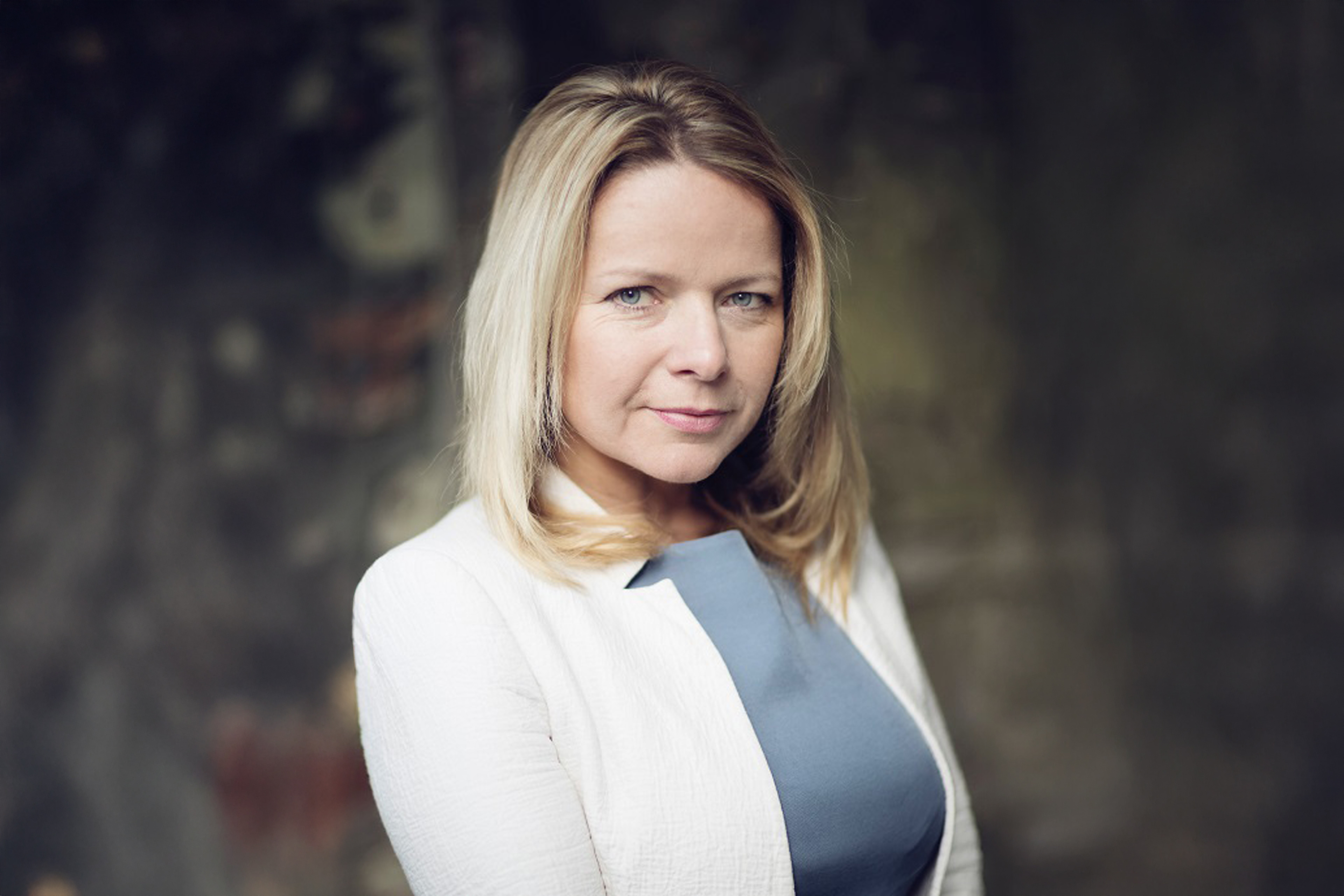
Susannah Streeter
Senior Investments & Markets Analyst, Hargreaves Lansdown, UK
EY logo, Shape the future with confidence