





EY refers to the global organization, and may refer to one or more, of the member firms of Ernst & Young Global Limited, each of which is a separate legal entity. Ernst & Young Global Limited, a UK company limited by guarantee, does not provide services to clients.
Recent Searches
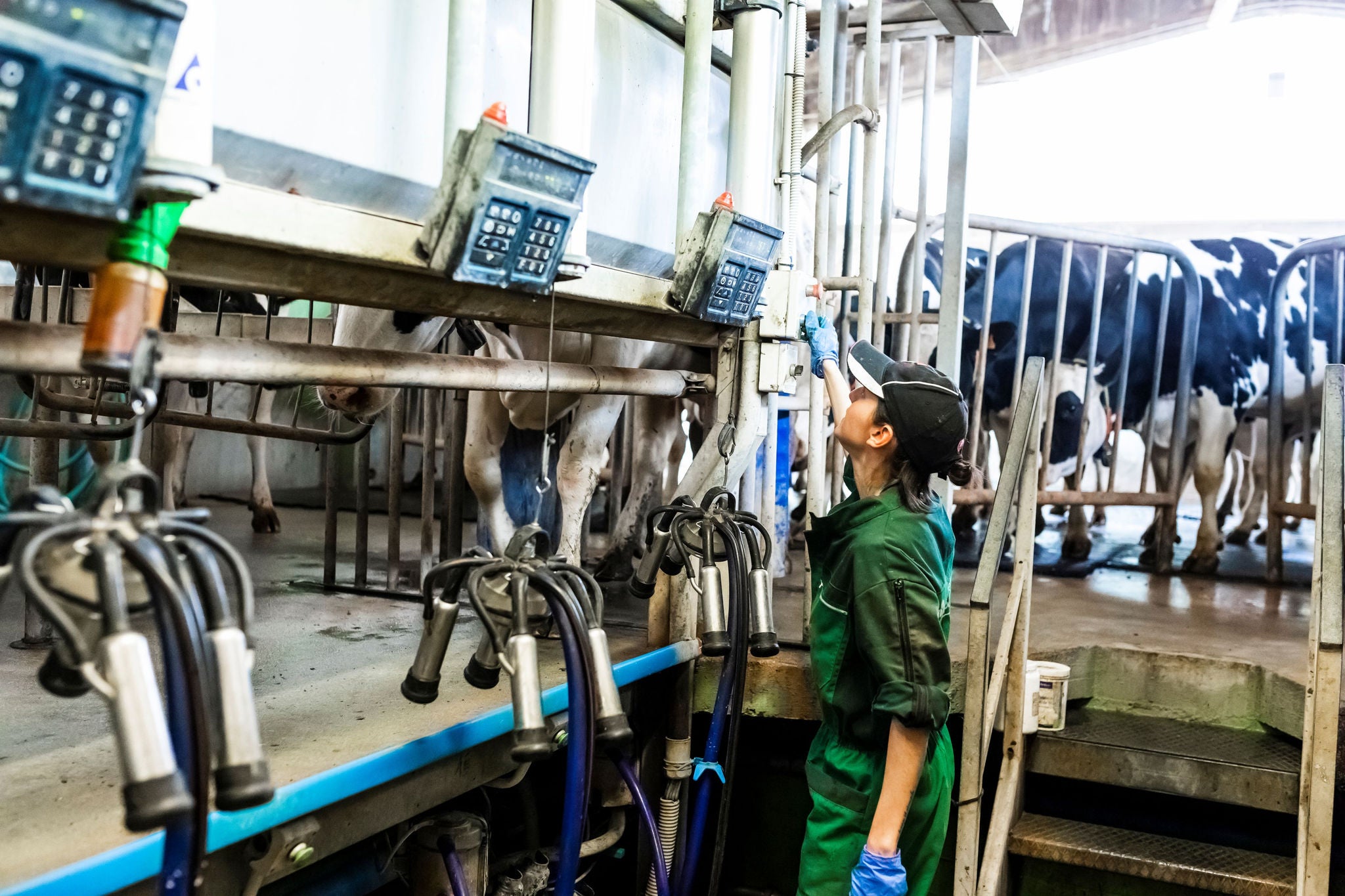
India's dairy sector needs value addition and stronger infrastructure to compete globally.
In brief
- India leads global milk production, but low productivity, quality gaps and weak infrastructure continue to limit value creation.
- The sector should move from volume growth to value addition, productivity, quality improvement and export readiness.
- Genetics, fodder, animal health, digital systems, cold chains and stronger institutions will drive this transition.
India’s dairy sector has entered a defining phase in its evolution, shaped not just by its position as the world’s largest milk producer but also by the need to convert volume into productivity, quality and value. The sector supports millions of rural dairy livelihoods and remains central to nutrition and the broader agricultural economy. Yet low per-animal yield, fragmented supply chains, infrastructure gaps and uneven quality compliance continue to constrain its ability to compete as a high-value and globally integrated dairy economy.
Why value, and why now?
The EY report, “From volume to value: Reimagining India’s dairy growth,” shows that for much of the last decade, Indian dairy growth has been driven by rising output, with milk production increasing from 146.3 million tons in 2014-15 to 239.3 million tons in 2023-24, a 10-year CAGR of 5.7%. While this expansion has strengthened self-sufficiency, it has not fully addressed deeper structural constraints such as low per-animal yield, uneven quality compliance, fragmented procurement and limited processing depth. As demand becomes more diversified and premium dairy categories expand, the sector should move beyond volume growth toward stronger productivity, value addition and export readiness.
Productivity is the critical lever
The strongest case for transformation lies in dairy productivity. India’s dairy ecosystem continues to be held back by limited artificial insemination coverage, nutritional deficits, uneven veterinary access and weak animal-level data systems. Improving genetics, fodder security, animal health and farmer incentives will be essential to raising yields, strengthening farm incomes and reducing the pressure to rely on herd expansion as the primary path to growth.
Infrastructure, quality and value addition will determine the outcome
The dairy sector’s transformation to value will depend as much on dairy infrastructure and institutional design as on farm-level interventions. Processing capacity, cold chains, organized procurement and digital traceability will be critical to reducing losses, improving shelf life, supporting quality assurance and enabling expansion into higher-value domestic and export markets. Cooperatives, public systems and private investment will play significant roles in building a more integrated and resilient dairy value chain.
What 2047 demands
The sector’s long-term ambition is explicit. By 2047, India aspires to raise milk productivity from about 2,080 kg to 5,200 kg per animal, expand dairy cooperative village coverage, increase the share of value-added dairy products in the cooperative sector to 50%, and raise India’s share in global dairy sector growth trend from about 1% to 10%.
Strategies to achieve 2047 goals
India’s next level of dairy sector transformation will depend on how effectively the sector can strengthen the full set of drivers that shape productivity, quality and value realization. This means accelerating genetic improvement through better breeding systems, expanding access to balanced fodder and nutrition, improving animal health and veterinary coverage and building stronger data-led institutions that can support farmers more consistently and at scale. At the same time, farm-level gains should be backed by investment across the dairy value chain, including processing capacity, cold-chain infrastructure, organized procurement networks and traceability systems that improve quality assurance and reduce losses. The larger objective is not only to increase milk output but to enable rising production to translate into higher-value products, better market access and stronger farmer incomes. If these priorities are pursued in a coordinated manner, they can help India move beyond scale-driven growth and build a more competitive, resilient and value-led dairy economy.
The way forward
India's dairy sector’s long-term success will depend on how effectively these priorities are brought together through a clear and mission-oriented development framework that links farm-level productivity gains with stronger infrastructure, quality systems, climate resilience and readiness for better dairy export potential. If supported by institutional clarity, cooperative strength and sustained public and private investment, this transition can help India move beyond leadership in milk production alone and emerge as a globally competitive dairy economy defined by higher productivity, deeper dairy value addition and stronger farmer incomes.
Author:
Satyam Shivam Sundaram, Partner, Strategy and Transactions, EY LLP has authored this article.
Contributors:
- Ranjan Sinha, Director, Strategy and Transactions, EY India
- Vaibhav Prakash, Director, Strategy and Transactions, EY India
- Sudha Kant, Senior Manager, Strategy and Transactions, EY India
- Jayant Singh, Senior Associate, Strategy and Transactions, EY India
- Ashutosh K. Pandey, Senior Associate, Strategy and Transactions, EY India
- Jaya Suriya N, Executive, Strategy and Transactions, EY India
Learn more about India's investment landscape
Download the full pdf
Summary
India is the world’s largest milk producer, yet its dairy productivity remains low. Persistent gaps in quality, dairy infrastructure and market readiness continue to constrain value creation. This paper argues for a decisive transformation of the dairy sector toward value creation through genetic gains, fodder security, animal health, data-led institutions and infrastructure for processing and cold chains. It also highlights quality standards, emissions and export readiness, charting a pathway to global competitiveness in the dairy sector through deeper value addition and higher milk productivity in India by 2047.
How EY can help
-
Our Corporate Finance consultants leverage deep financial and capital markets experience to help CFOs drive sustainable value. Learn more.
Read more -
Explore merchant banking services by a SEBI Registered Category I firm and IBBI Registered Valuer, supporting strategic planning, transactions, and business valuation.
Read more -
M&A Consulting services at EY helps to Perform portfolio review, assess businees strategy, due diligence & determine the right valuation & approach for funding
Read more
Related content
How selective investing shaped India’s M&A deals in 2025
India’s M&A in 2025 favored fewer, larger deals as value rose 18%. Infrastructure-led and cross-border deals surged; PE remained disciplined amid uncertainty.
PE buyouts in India: The story so far
India’s PE market is shifting towards control-focused buyouts, driving operational value, sector growth and stronger exit pathways in a maturing investment landscape.
Redefining operational due diligence in India’s evolving deal landscape
Operational due diligence in India is evolving from risk mitigation to execution certainty, shaping value creation in private equity and M and A deals.