EY helps clients create long-term value for all stakeholders. Enabled by data and technology, our services and solutions provide trust through assurance and help clients transform, grow and operate.
At EY, our purpose is building a better working world. The insights and services we provide help to create long-term value for clients, people and society, and to build trust in the capital markets.
The art of building resilient PE-backed businesses
In this EY India Insights episode, M D Ranganath shares how patient-capital approach, governance and values drive resilient and globally competitive businesses.
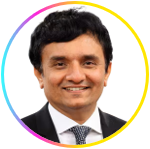
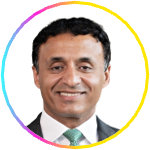
In this episode of EY India Insights podcast, we explore they key factors that help build resilient businesses. Vivek Soni, Partner and National Leader, Private Equity Services, EY India, is joined by M D Ranganath, Chairman, Catamaran Ventures, who brings decades of leadership experience spanning technology, financial services and investment banking. The discussion covers Catamaran’s patient‑capital approach, sector choices, portfolio construction and the importance of values, resilience and governance in investment decisions. Sharing insights from his professional life and experience, Mr. Ranganath advises founders, investors and leaders on how to build scalable and globally competitive businesses.
Key takeaways
Patient capital, strong governance and founder values are critical to building resilient businesses that scale sustainably across market cycles.
Catamaran’s investment approach emphasizes long‑term value creation, balancing returns with liquidity and disciplined portfolio construction.
Globally competitive businesses, not valuation‑led stories, are more likely to deliver sustained growth and attract long‑term capital.
Governance and resilience should be embedded early, as values and decision‑making frameworks rarely improve at later growth stages.
Private equity success depends as much on leadership mindset and execution discipline as on sector selection or capital availability.
Over time, our approach has evolved to support founders from the very start, continue backing them as they grow, and stay invested through till the IPO.
Vivek Soni
Partner and National Leader, Private Equity Services, EY India
For your convenience, a full text transcript of this podcast is available on the link below:
Hello everyone. Welcome to the EY India podcast. My name is Vivek Soni, Partner and National Leader, Private Equity Services, EY India. I am here with a very prominent guest, M D Ranganath, Chairman, Catamaran Ventures. Mr. Ranganath has almost three decades of work experience with IT giants like Infosys and financial services giants like HDFC Bank. And now, since the past many years, he has been spearheading Catamaran Ventures. Welcome, Ranga. It is a pleasure to have you here.
Ranganath
Thank you very much, Vivek. A pleasure to be here. I have also had a long association with EY during different parts of my career, and it is always a great association. It is wonderful to be here.
Vivek
Let me kick off with the question that spans into your early years at Infosys and the art of leadership. How has this long stint in such a well-regarded, well-reputed companies like Infosys, transformed you as a leader?
Ranganath
I joined Infosys as a business analyst in what used to be called a domain consulting group, which essentially was a group of domain experts who would go into projects, prepare specifications for the technical team to write. A unique thing about Infosys was its growth story. Also, when we joined the company, there was a sense of pride in all of us being a part of something big. It had a passionate leadership and a high-value based system.
The reason I joined Infosys was also that it gave me a global opportunity, global perspective, because I earlier used to work for ICICI Bank, then I switched primarily because it gave me an opportunity to work on global projects, get global perspective, and work across different continents and different industries. That was also a boom time for IT services. We used to grow 50%-100% every year and then one journey led to another. And thanks to the leadership development program that Infosys has, all of us got trained and our trajectory led one to another, culminating in the role of Chief Financial Officer.
Before Chief Financial Officer, I was also Chief Risk Officer of Infosys. It was a fantastic journey. What it taught all of us like me, thousands of Infoscions, was to think big, to scale and manage; hone different skill sets - not just in technology, finance or marketing. It gave us an opportunity to grow as leaders and individuals with a bouquet of skills. That was something unique about Infosys.
Vivek
Can you help our listeners understand a bit more about Catamaran and its strategies? Where does it invest in India and globally?
Ranganath
Catamaran is a global investment firm, which happens to have one investor, which is Mr. Narayana Murthy's family. From day one, Mr. Murthy and his family were clear that it has to be very professionally run by professionals with a lot of independence in decision making. In fact, the only thing that we discuss with the family is that we take a sign off on expected return and the risk appetite. Beyond that, all the investment decisions, asset allocation, how much to public, private and so on, is decided by the professionals within Catamaran.
We have an investment committee and a team of investment experts who decide. It is a good model of providing complete independence in decision making. But what is something that the family provides is the brand equity as well as the core values that Mr. Murthy and family have sustained over decades – whether it is Infosys’ values, family values – that is really the bedrock of Catamaran.
Beyond that, we have evolved over the last decade or so. Initially, we used to take direct bets in early-stage companies and over a period of time, we have also started investing in early-stage funds. And when those companies come to growth stage, we co-invest. We have a spectrum of what we call patient capital, which stays with the founders, right from inception all the way till IPO.
We have talked about two examples already in our other conversation. Apart from that, we also made a pivot into precision manufacturing about three years ago. We believe and this is also Mr. Murthy’s vision that if we invest only in services, e-commerce and similar businesses, it will create jobs but if you want to create jobs in manufacturing in the hinterland of India, and globally competitive manufacturing companies, we have to invest in certain parts of manufacturing.
As you know, today, India's GDP from manufacturing is only about 15%. And if India's aspiration is to grow and become one of the top three economies, manufacturing has to lead that growth, for which the GDP share from manufacturing has to be in mid-20s. Then we looked at the entire manufacturing spectrum, which is very wide. We chose precision manufacturing also because around that time when a lot of global manufacturers started shifting some part of their production away from China. It looked like a great opportunity because if they shift their ecosystem also has to shift, their vendors also have to shift.
So, we spotted an opportunity in identifying those vendors. But we are very clear – wherever we invest in precision manufacturing, those companies have to be globally competitive. They have to supply to global players as well as in India. So that has played out well - two of such companies went public recently.
The second aspect which is unique to Catamaran is our joint ventures. As you know, we brought Amazon to India. We had that cloudtail similarly, ion got in insurance grids. So, we continuously look for JV opportunities in precision manufacturing, e-commerce and services. So, what do we bring to the table? One, there is enormous brand equity, which helps us in navigating the local regulatory and other aspects. And second is we understand technology and scaling, thanks to our earlier experience. Scaling is not just about revenue. How do we scale the processes – whether it is hiring, compliance or sales? Scaling is one of the unique values we bring to the table. And now, of course, having invested in precision manufacturing, that is another expertise we bring.
Vivek
Besides precision manufacturing, which sectors do you like when it comes to direct growth investments? Can you also elaborate a bit on your investments in funds?
Ranganath
Clearly, precision manufacturing is one. And we are also focused on certain technology-led investments. E-commerce is one such example. As you know, we have invested in certain insurance companies, which are digital insurance companies. We are also increasingly looking at companies that make in India for global markets. It could be in deep tech or in some kind of services as well – that is another focus.
One of the pieces that we always look at is the scaling possibility. What is the pathway to scale for this company or for that sector? That is important for us. And we do believe that from our past experience of building scalable global companies. Something unique about Infosys from day one was to ensure that it was always globally competitive, not only for local markets. So, that philosophy is deeply ingrained in our investment choices.
Vivek
When you look at your own asset allocation in terms of at what stage of the evolution of a business do you want to get in, how do you construct this portfolio in your mind between listed/unlisted? How much to put where? What is preferred? Any thoughts you can share on that?
Ranganath
Primarily, it is driven by what is the expected return of the overall portfolio. That is the discussion that we have with our principal investors. We have publicly stated this – our objective is that we have to double our assets every five years, which essentially means that we have to compound at least at 15% per annum.
But yes, to generate that, the second criterion is that we have a fair amount of liquidity in the overall portfolio. Liquidity is equally important for us. So, of course we balance between these two. We have certain expectations and liquidity is the next, and the 15% that I mentioned. Using this, we start allocating - how much should go to public equity and overall private equity. Then within private equity growth, late stage and early stage - we get an optimal mix which serves these two investment opportunities.
For example, in private equity, we were very skew towards early-stage investments, By definition, it is not that liquid. If you look at now when we do growth and pre- IPO (36 months before), then by definition it is more liquid. Two of our investments have gone public in the last five months. So, that is one characteristic.
Coming to public markets, we do a mix of both index as well as direct investments. At the peak of Covid, we took a bet on Nasdaq index. Similarly, through GIFT city, we have certain opportunities to invest. So, a significant part is index. At the same time, we said our team has to understand what is happening in each sector at the trench level, which means we created what we call an opportunistic portfolio, which is stock specific. And our team actively manages that.
So, we use these, and we also evaluate the fixed income. So far, it is plain vanilla, but there are opportunities that are coming up in private credit. These are some of the asset allocation principles that we have.
Vivek
That is helpful. When you look at deals, when you look at founders, or when you look at investing in companies, this invisible metric of governance quality - how do you conduct due diligence for that and how important a role does it play in your decision making? Can you tell us a bit about that?
Ranganath
First of all, for us more than anything else – beyond the business plan, beyond the promoters, the underlying value system of the founders and the key management is extremely important. We take time to assess that, and it is also very difficult to assess. In the growth stage, it is probably easier to know what they have done in the early stage, what has been the trajectory, what has been some of the publicly available use of private news? But in an early-stage company, it is extremely difficult to assess.
And we have certain mechanisms; we take more time to understand what is important for the founders. And if they talk only about valuation and not about values, we will be disappointed. We give a lot of emphasis to values. And most of the time, our assumptions have been right. There are instances where assumptions have gone wrong and we have learned from those mistakes.
Another invisible metric that we use is resilience. Resilience to stick to the business, not what target segment or what business value proposition that they have. Keep on sharpening and be focused; come what may, be consistent, in a stubborn way. Working on it is extremely important.
Beyond that, you mentioned governance. We believe that we bring that expertise to the table. For example, if you look at Infosys or even HDFC Bank and so on, in their formative years, these governance principles were put in place and it is now, of course, very famous.
All Infosys founders, including Mr. Murthy have said several times that they had decided that a globally respected corporation was the vision, not the most profitable or largest in market cap. From inception, how does one generate enormous focus on governance? It is not in lip service - how do they create processes, demonstrate in actions when somebody deviates from governance? That has to start from an early stage. And somehow some of the promoters we meet say governance is bureaucratic. Let me first grow. Let me worry about governance later. But our experience is that unless these seeds of governance and focus have not sowed in early stage, it is unlikely that it will happen in the later stage.
All the companies that we work with, we help them create a sustainable governance process inside the company. And that is one reason why several people want us on the table. So that gives a stamp of approval on governance in the company.
Vivek
Tell us about the investments that Catamaran has made outside India, and what is the lens you use when you are evaluating and doing those investments?
Ranganath
Our global portfolio is managed by a person from the US. But the principles are very similar in the sense that what is the target return and liquidity that the principles want there.
But again, in the US, unlike India, we do not have so much of company level. And there are thousands of companies listed there. We decided that until we get company-specific level research potential, we will invest in index. That has played out very well for us over the last seven-eight years since we have been investing in index.
But coming to private equity, one of the focus areas in choosing the funds for us has been Distributed to Paid-In Capita (DPI). Internal Rate of Return (IRR) is extremely important, but over a period of time, we have learnt that history of a particular fund or a group of funds is extremely important. You very well know it more than me that the median return in private equity is below the listed index, for example, the Nasdaq. And there has to be liquidity premium for a fund, because Nasdaq, 14%-15% instant liquidity and somebody has to deliver much above for that liquidity premium.
So, we have invested both in early stage and growth stage funds. We have invested in tech as well as in biotech. We have also invested in certain digital commerce companies in the US. We also get opportunities to co-invest from the funds that we invest in, and it has worked well.
Vivek
What are your passions outside of work and how do you like to spend your time when you are not working?
Ranganath
I grew up in a small town, which is about 250 km from Bengaluru. I did my early schooling there. The good thing about small towns is that everybody knows each other, so the sense of camaraderie is very high. Small town people also tend to develop some toughness and resilience, and a sense of confidence to tackle the big city issues. That clearly honed up my resilience. I graduated from the University of Mysore and then went to IIT Madras and then took a lot of twists and turns.
I am an avid movie watcher - Bollywood as well as Hollywood. Another thing I am very passionate about is to create financial independence for women – that is something very close to my heart. Not necessarily only in villages, but also in cities. That is one of the reasons I joined the board of Women's World Banking in New York. They work in 50 countries with a singular objective – how to increase the financial independence of women. It can lead to financial literacy and many other aspects, but that is one thing I am very focused on.
Vivek
Excellent. Any sports you play or watch?
Ranganath
Yes, of course. I follow cricket very closely. Apart from that, thanks to my son, I also picked up football as one of the sports to watch.
Vivek
We have had this very exciting week where we have seen cricket and deals go hand-in-hand. At your home city, the team has changed hands.
Ranganath
I am so happy I saw the valuations. I am sure that will provide some big push to Royal Challengers.
Vivek
Before we end this discussion, what would your advice be to all the startup founders who are watching this on the new generation of entrepreneurs?
Ranganath
The first thing I would say of the three things is: keep the ideas simple. The ability to communicate what that business idea is, not just for the fund, but also to themselves and their teams; what is the unique business value that they are adding either to the customer, individual customer or corporate, has to be simple and should be easily explainable. If one has to explain the second time; if the listener does not understand it the first time, they have lost.
Second is, do not be over focused on valuation from day one. Valuation is a derivative. It cannot be the starting point of a conversation.
Third is, whatever they want to do, at Catamaran, we ask if they are globally competitive. Are they competitive because of some government controlling in that sector or only in India, or are they competitive because customs duty is high, or because of some other restrictions?
If a company is globally competitive, in terms of both the product or service, finally they will be the winner. They may start in India, go out in multiple geographies, but from day one, how do they aspire to be globally competitive, both in terms of the business value it creates and the price.
Vivek
Got it. So, there you have it, folks. Pearls of wisdom from Ranga. Thank you so much for joining us, Ranga. It has been a pleasure having you on board the EY India podcast.
Ranganath
Thanks a lot, Vivek. Great chatting with you. And look forward to be in touch and see how we could collaborate in creating this wonderful opportunity in India.
Vivek
Look forward to it. Thank you.
Ranganath
Thank you.
If you would like to listen to our podcasts on the go:
EY-Parthenon provides Private Equity Strategy Consulting to private equity firms by helping clients maximize value throughout the investment lifecycle.
India’s PE/VC ecosystem stayed resilient in 2025 with record investments, exits and fundraising. See key trends shaping investor sentiment as 2026 begins.
India’s PE market is shifting towards control-focused buyouts, driving operational value, sector growth and stronger exit pathways in a maturing investment landscape.