EY refers to the global organization, and may refer to one or more, of the member firms of Ernst & Young Global Limited, each of which is a separate legal entity. Ernst & Young Global Limited, a UK company limited by guarantee, does not provide services to clients.
Insights
Asking the better questions that unlock new answers to the working world's most complex issues.
See more
Highlights
Services
EY helps clients create long-term value for all stakeholders. Enabled by data and technology, our services and solutions provide trust through assurance and help clients transform, grow and operate.
Industries
Discover how EY insights and services are helping to reframe the future of your industry.
See more
Case studies
AI-powered claims adjudication
Reimagining healthcare through AI-powered claims adjudication
18 Aug 2026EY India
About us
At EY, our purpose is building a better working world. The insights and services we provide help to create long-term value for clients, people and society, and to build trust in the capital markets.
See more
Top news
Press release
India’s semiconductor market projected to grow threefold to US$200 billion by 2035: EY-IESA report
19 Sept 2026EY India
Press release
EY India and JSA launch playbook on investigation readiness for a new risk reality
15 Sept 2026EY India
Search for insights, services and people...
Recent Searches
Trending
-

Growing economic significance of BRICS+
How BRICS+ is reshaping the global economy through growth, trade, AI, innovation and local-currency settlements under India's Chairship.
28 Sept 2026 -

How Coimbatore can build its path to 200 GCCs by 2032
Discover how Coimbatore can grow from 75 to 200 GCCs by 2032, leveraging engineering talent, innovation, and a strategic growth roadmap.
28 Sept 2026 -

How Indian insurers can move beyond claims to continuous protection
Discover how AI, continuous protection and innovation can help close India's insurance protection gap and achieve Insurance for All by 2047.
25 Sept 2026 Insurance
Leading beyond finance: In conversation with Soma Ghosh
Discover leadership insights with Soma Ghosh, Head of Finance, ZF Group, India, as she discusses trust, balance, mentorship & transformation in ‘Inspiring Voices.
Related topics
In this episode of ‘Inspiring Voices’, our special podcast series on influential leaders shaping the future, we feature Soma Ghosh, a senior finance professional and a Six Sigma Black Belt, currently driving transformation at the ZF Group. In conversation with Arvind Sethi, Partner and Leader - Assurance, Indian member firm of EY Global, Soma shares her leadership philosophy, the importance of trust, work-life balance, and continuous learning. She also discusses her journey, career milestones, and the significance of financial independence. With insights on delegation, mentorship, and personal rejuvenation, this conversation is a must-listen for aspiring leaders looking to navigate demanding roles while fostering growth and empowerment in their teams.
Key takeaways
- Effective leadership prioritizes trust, delegates responsibilities, and empowers teams to foster growth and innovation.
- Setting boundaries, prioritizing tasks, and respecting personal time contribute to sustainable success and well-being in demanding roles.
- Staying updated on industry standards, promoting higher education, and mentoring others are crucial for long-term professional development.
- Applying Six Sigma methodologies in finance improves process optimization, accuracy, and operational excellence.
- Keeping pace with evolving company laws and accounting standards ensures compliance and strategic decision-making.
A leader is not just someone who delegates work but someone who builds trust, empowers teams, and nurtures both professional and personal growth.
Soma Ghosh
Head of Finance, ZF Group, India
For your convenience, a full text transcript of this podcast is available on the link below:
Arvind Sethi
Hello and welcome to a brand-new season of Inspiring Voices. This is the platform where we bring you engaging conversations with leaders who are shaping their industries, breaking barriers and redefining success. I am your host, Arvind Sethi, Partner and Leader for Assurance at the Indian member firm of the EY Global. Each episode we delve into unique stories of resilience, innovation, leadership, and today's conversation promises to be no different.I am thrilled to introduce our guest for today, Soma Ghosh. Soma is the Head of Finance, ZF Group, India. With a stellar career spanning multiple facets of finance and a strong commitment to strategic transformation, Soma exemplifies the evolving role of finance as a driver of growth and innovation.
Soma, it is a pleasure to have you on the podcast. Welcome to Inspiring Voices.
Soma Ghosh
Thank you, Arvind and thank you to all of you at EY for such a great initiative. Thank you for having me. Pleasure to be here.Arvind Sethi
Let us start with your professional journey, which has been truly inspiring. I am aware that you have navigated through various roles and industries to reach this pivotal position as finance director for ZF Group’s India region. Could you share with us some of your key milestones that defined your career? Moments or decisions that significantly shaped, your approach to leadership and financial strategy.Soma Ghosh
My academic career has been fairly good; I was always a merit holder. I got pulled in by the industry when I was ranked 10th in India as cost and management accountant. I never faced any dearth of job offers when I cleared and started off my career quite early when I was 21.5 years old.I always have this philosophy, Arvind, that as leaders, we are first HR managers, so we need to understand people. I was a single contributor until a fairly large share of my career. I completed 28 years last year, very close to 29th year of my journey. And as a single, contributor, I always missed leading teams.
What really shaped me is and helped me become a great leader or rather significantly big role that I have is to lead people, and leading people gives you that diversity in understanding various perspectives because each person is different.
The other philosophy I have is ‘change is absolutely inevitable in every single step that we have in our role and in our lives.’ Accepting the change and taking up challenges has been the key factor in my principles. I was able to change my role, get out of the comfort zone, after every few years, and that led to a lot of diversity in in various aspects. That is how I got the Six Sigma role in my previous job in Cummins, where I went out of finance and I did a whole-time quality role, not pursuing any Six Sigma finance project, but most of that was cross-functional. And that also opened up a lot of windows to many other functions, which then got me the CFO role for the industrial engine business.
That is how I kept going further and kept getting more diverse, kept leading teams and, very happy to state that in ZF, I have an excellent first line were all management grades. There is not a single person who is not in the management grade, and they are good leaders and then they also have a good ladder of people that they would look up to. So, that is how my professional journey has been shaped. I had great mentors; I still have good mentors. Any decision in my career is first through my mentors and then the decision follows.
Arvind Sethi
Amazing. So, are the mentors within the business or they could be somewhere outside the company?Soma Ghosh
No, they are outside the company. They have been mentors for over two decades now. One of the things that I do; there is a self-assessment format that I follow for myself. It was introduced by one of my mentors, which I then cascaded down to my people – it is basically assessing yourself what you are personally, your soft skills, your strengths, and how you see yourself as in the next couple of years, in the next five years and finally till you retire. That is what shaped me into what I am today because I was not as confident 20 years back. Instead, I was scared to do certain things, but today it has shaped me in a certain way. So, that self-assessment is very important where you self-reflect and then correct each step.Arvind Sethi
Diversity and inclusion are no longer just buzzwords, but essential pillars for any modern organization’s style and success. In your experience, how has the landscape of women and finance evolved over the years? Especially since you worked in the automotive sphere, which I am aware, has traditionally been a male dominated space. Have you really observed any changes or progress in this sphere?Soma Ghosh
The way D&I has evolved over a period of time is amazing. When I got into the first job with Atlas Copco, I was the only female manager in the entire organization. There was no female employee. There was a secretary to the plant manager that was hired because I had to get in.My parents were scared, and I came very far off from the home. It was at Chakan (Pune, India), which was like 70 minutes to and fro those days. In comparison with those days till now, industries have opened up to having more women on the shop floor. In ZF, we have three or four lines that are run by women.
So, technology advancements, the literacy, the awareness that families have towards getting women into the industry has been very heartening. When I got promoted in Cummins, people thought that since I am a woman, I was the natural choice is to promote women development. They said you are a woman, so you are the natural choice. Those are certain things that we have to ignore, so that we break these barriers of perceptions and bias, and organizations that I have worked with have been great from my perspective to provide me that standing baseline foundation that make us all very strong as women.
So, it has changed over the years. There is a lot of diversity that we not only promote in gender in the right sense, but we also promote LGBTQ+, and we have a lot of options for this community; we do not distinguish. That is very important because every individual has the right to feel belonged, has a right to be heard, has a right to say something in meetings, voice out opinions and also be respected.
The organizations that I have worked with have been extremely promoted to this particular philosophy, which changes my perception as well to different people that we hire. It is not only about diversity and gender, but it is also diversity in representation. What we ensure is that people from different states are hired.
So, because this is Pune, we speak Marathi and are very close to the Marathi culture. We are also very well placed in Chennai, where we have more influence of Tamil Nadu in that state. We are in Hyderabad, so we have Telangana, and we have Telugu. But when we hire people, we also ensure that they are adequately rotated between the locations. And that is one of the criteria for promotion as well. We ensure that this cultural diversity also then moves.
As a woman leader, now that I am, I did not see this in the past. People had lot of different ways or different perceptions towards eyeing women getting that role, and there was a time where we insisted that only women get hired. Of course, giving due cognizance to quality of talent and education, but we also insist is we look at attitude because you can always get knowledge by learning. And education is an ongoing activity, but attitude comes with the person. It is basically the upbringing that brings the attitude factor.
So that is something that is emphasized apart from looking at basic perceptions which can be corrected through organizational policies and, respect for, equality, respect for diversity and inclusion. So that is how times have shaped up, and today as we speak, we promote equal, but then to get equal at 50-50, it will take a few more years, but we have traversed a long way.
All industries have traversed a long way to ensure a fair representation of diversity in the overall communities.
Arvind Sethi
Could you share with us some initiatives or programs that you have led or witnessed that aim to foster a culture of inclusion and equity? You could share some examples where these initiatives have made a tangible impact within the organization or the broader industry in Pune or in India.Soma Ghosh
Covid has changed our lives; it has brought in a lot of flexibility mandate into companies.That is also one of the primary reasons why we have a lot of flexible or work-specific policies. To cite an example, we have a lot of LGBTQ communities working amongst us. We do not declare, and also do not distinguish between washrooms; they are free to use whichever washroom they want. We also have the LGBTQ policy rolled out, especially to encourage the D&I concept.
We have also introduced the marriage policy because earlier what used to happen is, there was a distinguish feature in the policy which never brought in that inclusivity within people, whether it is a man getting married or a woman getting married. So, we have introduced policies that give you some more time to settle down after marriage.
We have policies for women integrating back to work. Because more often, mothers were not welcome after a break. And there were some families that did not allow the lady to come back even after two years of motherhood. So, we have introduced policies where women can come back to work after a considerable break.
We also have Ted Talks specifically for women where we share about harassment at work, harassment at home, and how to cope with that. So, we have policies that take care of this and especially flexible work policies that would-be mothers can spend more time at home. Some have bed rest. So, we allow that flexible policy. We have a three at two; three days at work and two days from home. But in such cases, we allow that exception as well.
We recently introduced a policy for differently abled community where there are there are certain classes of work, areas which can only be done by them. So, we have made that exception, the paternity leaves and the maternity leave still continue if they follow the legal framework as well. But those are additional policies. But flexibility when you want. That is another policy that we have, irrespective of the reason, if there is a social condition that needs an employee to be at home for certain months, which is also, that we have introduced. So, these were not existing before Covid days. They have, taken more impetus after the Covid days were over.
And now, since we reintegrated back, there is more interest in coming back to work and work within teams. Most of the people do not want to be at home, but we have these policies there as a as a framework. You can exercise whichever you want to. And there are there are no restrictions. I think the manager just can approve it.
We do not have further restrictions, no bureaucracy that is followed. There is a very clear-cut approval system that we have. Then, we also hired a D&I leader two years ago and have come a long way since then. We also got an award for diversity at work, enabling equity and inclusion. It is a HR-specific award; it is a common India specific award, but it was given to ZF because we promoted these kinds of policies that make people more comfortable and make them happy to come to office.
Arvind Sethi
Is your plan within ZF group a role model or is it something India-specific or is it happening across all your locations globally as well?Soma Ghosh
This is very India specific. We are also an ambassador for the ZF Group global. So, we have the D&I leader who is now more like a successor to the German boss that she has. She is the ambassador to all these policies for global as well.Arvind Sethi
From your perspective, as a finance leader, what innovations have you spearheaded or adopted at the ZF Group with a basic purpose of enhancing operational efficiency, while aligning the company's sustainability goals?Soma Ghosh
It is said that if a CFO does not embrace AI, he or she is left out of place. So, we have a specific team, which spearheads AI and innovation.We introduced a lot of concepts, and we are actually practicing AR and VR. Recently, I was privy to a factory design. You can actually get into the factory virtually and knock the doors, open them. So, it gives you a much broader window to the real side of things. We have machine learning; we have artificial intelligence; we have used cases in finance as well. We use Power BI and Power Automate to have MIS and dashboards. We do not use PowerPoint slides anymore. These are real time extracted down from the SAP portal and then you are generating major report. You can just click on any reporting unit details, and you can flash the results. As you all know, we are we as finance are experts in Excel and, and various other Microsoft tools, but we do not use them anymore. Not that we treat them as redundant tools, but then there are much better tools that come today, one of the skills that I insist for people that we hire is some bit of knowledge into AI.
We have a full time AI expert in my team who also helps with automation. We have been successfully able to automate a lot of AR processes, especially in our shared service center, which is in Chennai. There we are doing local for local and local for global. And very happy to tell you that we are spearheading a lot of innovations for global.
Our MIS has been adopted by peer in the US, so she uses the dashboard that we had, developed using power BI. We also use a lot of computer visioning. So, what we do is, we do the town halls and in the town halls, we invite internal experts, who then come with used cases.
So, it is training the trainer and also as a concept. But we also then open the window out to what other use cases are there in ZF Group, which India is not privy to or what we do in India, to which they are not privy. So, this is exchange of information. And as I said, our board meetings are much smoother now because we do not use any PowerPoint slides.
We just kind of flash up the results. It is easy for the board members, to also see where we see the forecasts and these dashboards have become much simpler. Most of the processes which were like manual have been transitioned to a host of host, interfacing, especially one of the projects that I had asked my team to pick up is in Treasury.
So in Treasury, we listed down everything that was manual and then got in touch with our bankers, and we said that we need this automated; we did not want to use any manual interface because we also had an internal audit observation coming up because it is not about tampering with the data, it is also about how you are more influenced to use certain things your way if you do it the manual way.
So, we have been able to come a long way on innovating stuff. I know it is never a 100% progress; we are somewhere around 60 - 70%. There is a lot of road that we need to cover, but so far, we have been a benchmark to most of the processes for those that have closed group globally.
There is an Indian colleague that I had sitting in Germany. He used to be in the erstwhile Vapco which we acquired in 2021. ZF acquired the Vapco Group, and it is known as ZF CVCS India Limited. He used to be based in that entity and now he is based in Germany. He is the one that gives us the use cases in finance, which we then adapt. We have an in-house team, which does, even bots, we have two bots running in finance especially, which read the invoices and then give the scanned output, for that to be processed on a three-way match into the procure to pay system.
And we have one bot that runs into the customer collections and the matching concept that we have with application of invoices with the receipts. So that is what we do, as far as the bots are concerned. We have a good team based out of India and Global that help us with the innovation within finance.
Arvind Sethi: That is a fantastic transformation journey. The automotive industry is undergoing a seismic shift, with technological advancements, electrification, an increased focus on sustainability. We just discussed a bit about that. But, as a finance director, how do you plan for such a dynamic region? How do you navigate the financial challenges and capitalize on the opportunities these changes bring? What role do you envision your function as a finance function playing in supporting ZF Group is a long-term strategy?
Soma Ghosh
ZF Group is into three segments – one is the electric segment; the other is the car segment. With the acquisition of the Vapco Group, we have become our number one in the commercial vehicle technology. So, we do breaking technologies and others, especially what you see in a truck and a bus. And that is moving towards the electric drive.People want to sit in AC cabins of the drivers that have long routes. They want to sit in the comfort. And then the last segment that we deal with is the industrial segment, where we do gearboxes for windmills on one hand, and off highway transmissions on the other, which is your suspensions. If you want to relate to an example, the Vande Bharat trains run on ZF suspensions. So, those are actually imported from Germany, but we are trying to do it locally for local. So, we are talking to the government and also partnering with a few more companies to get the tender.
Today, if you look at the automotive industry, several recent budgets impress upon the use of technology and moving towards outside of the carbon footprint into our e-sort of technologies, and ZF is absolutely into that. The issues we have with the India market is our customers, especially, the ones that are very huge producers of fast cars.
Maruti Suzuki has the largest production of vehicles today, the likes of Maruti Suzuki and Hyundai and other customers. I will not name all of them, but two key ones. They have not experienced the technologies that we have in our cars. So as a strategy, what we decided is to import a few cars with the technologies built in. The recent one was Bharat Mobility, where we showcased our BMW car with the easy turn feature, which allows you a radius of 90 degrees.
So, it just gets into the parking - that was something that we were able to showcase there actually also, trying to import. It is on its way to import, the ADAS technology, which is advanced driver assistance systems. Because our customer said that he does not have experience with those cars. Now as finance people, our main job is that of a shared service; so, what we do is we are offering services to various cost function departments.
And it is no longer a CFO, but it is a business partner, more of a consultant, internal consultants, everybody comes in. Finances is where they stop; not only for funding, but also in terms of guidance. So, we are strategizing the ZF group in India, we are a INR10,000 crore plus company today in a consolidated form.
It came a long way or when I started off when it was 400 crores and now, we are as a group, 10,000 crores. So that is a huge shift and a lot of diverse. So, products that have been introduced. But all that happens is in the headquarters, we do not have experience of the customers with our products in India.
So as a strategy, we said that let us design a long term seven-year plan, which goes beyond 2030. In that process, we also expose the company to the tax incentives. We have two legal entities that were introduced because of the section 115, which is, setting up organizations for manufacturing legal entities.
We set up two for the effective tax rate of 17%, and that was a strategy that we introduced. Then the tech, the PLI. We have two entities - under PLI, one is in textiles, which is of our JV Rane, ZF Rane running which does the seatbelts and the safety systems.
So typically, the webbing that happens on the seat is what the entity does. That is known as occupant safety systems. It is an entity that we have in Thachankurichi. And we had the manufacturing entity belonging to the commercial vehicle in Chennai, which is a subsidiary of the listed entity – these are two entities that we were recommended that the management introduced.
That is what was our initiative as finance, because we also have to open up our perspective to current affairs. It is very important to stay well connected with the government association. So, we do a lot of partnering with ACMA, CII, NASSCOM. We represent our technologies and products. We speak to the ambassadors of various governments, including the German consulate who visits in our technology center in Hyderabad.
Hyderabad as the technology center that hosts 4,000 people today, mostly engineers, and is around seven and a half years old. And that is the technology center for the rest of the globe. We are the best cross country; so as in our key role as finance, what we ensure is the business gets the right support, the business gets the right direction.
We also give these features into the business that if you invest this, this would be your ultimate business case. That business case is a generally in three scenarios - most realistic, optimistic and pessimistic - either way, if it goes wrong then, you do not stand up and say that I did this.
You have to also keep this contingency factor, and most importantly, a lot, the organization on, headwinds helps the organization to prepare, represent the organization in several forums, that we do to promote a lot of technologies, promote a lot of cost features that we bring, the value that we add into the products because customers need the best products and the least cost.
So, the differentiating factor can be only highlighted when you bring in the value add. That is what we support the businesses with. And as finance, we should be approachable to every single issue. It need not come from the managing director. It can come from anybody in the organization and no idea is stupid.
So, the moment you have a broad perspective to things that come and hit you, you then provide solutions. Then you are a go-to person, so I am happy to say that my team, across the organization, we have 85 people in finance. I think all of us know our job, and we are contributing to the long-term strategy of the company as we speak. We are presenting to the board on how the light vehicle industry for India is changing.
Arvind Sethi
Given that we are soaring high in terms of economy and our GDP is now fairly stable at around 6.7%. With the rate cuts that are happening, how are we hedging our products?Soma Ghosh
There are a lot of things, Arvind, which are ongoing as finance people that organizations can highly benefit from. So, I would strongly encourage, people to stay open to ideas and contribute to the 100% response time is extremely important because if you sit on decisions for ages, they do not see any value.No mail is irrelevant even if they are copied mails, but every mail has a reason. That is why you are copied. So, these are some of the concepts and principles that I feel, adds more value to the function in their own sense.
Arvind Sethi
Looking beyond the immediate challenges, what legacy you hope to leave behind, both within the ZF Group and the broader finance community?Soma Ghosh
As I mentioned earlier, change is inevitable. So, adopt the change and adapt to the situation- that is very important. It is very important to stay current. Develop people - the legacy is a reflection of your team. So, if your team is there, you are there. Respect the diversity that it brings. Ensure that you leave a legacy of people that can be torchbearers for yourself.I am proud to say that there are a lot of people in Cummins that I had hired, and they are at senior positions today. That gives immense pleasure in the mentoring that we do as leaders and have to see them scale up. Secondly, technology, as, as we speak is inevitable.
We are doing most of the manual stuff on the back burner. It is making things more prudent and more accurate. India is the country where UPI is rampantly used. It is not there in the rest of the world. So, make most advantage use of technology, stay current, represent wherever it has to be represented, and ensure that people have an open mind towards change.
It is very difficult to accept the change sometimes, but I think be an example for the others to follow. Even if I move out from my current role, I am sure that there has to be standard operating procedures that enable, easy handover take over. There has to be procedures for everything you cannot assume, and it is very easy to maintain procedures.
You have SharePoint. You have so many data devices where you can crunch data and store it for ages. We have the data retention policies, but most of the times my observation is they do not use what is available. And then we crib about the system does not give this and that. It needs to be explored further. It is extremely important to stay updated; education and being as inquisitive as a child is extremely important - These are some of the values which I promoted in my team, especially during town halls or during these meetings, how one should behave with people, certain individual behaviors that really influence, the rest of the teams is extremely sensitive to believe in practice.
These are some of the things that I would like to leave behind as we move forward in our careers so that people then emerge as better leaders as well.
Arvind Sethi
What values or principles do you hold closest when it comes to making a decision or leading teams, and driving an impactful change?Soma Ghosh
That is very close to my heart. I am a mentor myself. I also mentor a lot of students outside of my career. I also help women get back into their careers, integrate back after their pregnancy, etc. One of the key principles that I have is ‘you have to keep learning.’ You would see that I was also privileged to be sponsored to the general management program with IIM Ahmedabad, and that is extremely important because one should keep learning on decisions.As I mentioned, as a support function, people rely on decisions and if you sit down, certain important decisions, you may miss the bus. The company may miss the bus. So be absolutely prompt in reasonable decision making.
Taking risks; unless you take a risk and get out of the comfort zone, you do not get an upsurge to the career. Coming out of the comfort zone is extremely important because then people, feel cozy. Whenever you feel cozy, you just get out of that- that is one of the principles I have.
The other one is - be approachable. It is extremely important to be approachable to people because they come to you for a reason. And they come to you because they believe that you have the knowledge and the ability to support them. So never close doors. Never work with a closed room culture. Be open and transparent and also be open and transparent with the teams because one of the polls that I had, during the first townhall a couple of years back is what would you like us to do?
So, they said, we do not even know so many people because we have spread across locations. And they had not met any people, and we did not have really the budget to have all sites but 8,500 people in one room. So, it is very important to understand the pulse, because if you do not understand the pulse, then they will lose trust.
And trust is what takes us forward in the leadership journey, trusting people, not micromanaging teams. Also, understanding families is extremely important. Knowing them by the first name, understanding what is going on in their houses, sometimes going up to their desks and checking in on the health, on the family's health also plays a very important role. Rejuvenating not only yourself, but also allowing them to take vacations, planning their vacation calendars, asking them to plan, that is one of the things I do, and I have been doing for many years now, because everybody needs a break. It just recharges batteries and for them and come with motivated spirits.
So that i something that I practice whenever somebody goes out for a session or a course. We have further sessions down the line for the entire team. So, say two people go for this session like ICAI organized recently; we sponsored two people and now they are training the others.
So, we have already finished training on 16 standards, though there are a few more to go. Practice learning, after you learn, promote higher education. So, we also have this policy in the organization higher education because there are certain things which may not be related to your work, but then people may have interests. So, we promote that.
The other thing is, be a mentor in the organization. So, I am a mentor for people, easing their way up the ladder and becoming a friend. That is one of the objectives and most importantly, helping people get financially independent on the personal front. So, I take a lot of sessions on how to get financially independent.
Many people did not understand a lot of concepts. So, what is really a balance sheet and trial balance. These are some non-financial things that we teach to the non-finance people. So, these are some of the things I have been that we have been practicing, and I really enjoy doing that.
Arvind Sethi
Work-life balance is often a challenge for leaders, especially those who are managing demanding roles like yourself. How do you maintain, this balance? Are there any practices, hobbies, or habits that help you recharge and stay focused?Soma Ghosh
Let me split this into two parts - one at work and at home. I am single by choice. I take care of my parents who are gracefully aging now, and I enjoy doing that. So, that is at home. But at work first, it is very important for us leaders to prioritize because not every work is important and urgent. So, it is very important to have these quadrants where you decide what is important and what is urgent.What can be done after certain hours and after certain days. So, that is very important. Otherwise, everything comes and lands on desks. If you have very organized teams and if you know your people, then it is easy to delegate. So, a leader cannot be a leader unless that person delegates, you may be extremely good at work, but if you do not delegate that you are not developing your people, you are not trusting your people.
It is extremely important to prioritize, delegate and then lean on them to do the work, based on the objectives set. But, very clearly set the direction, understand what each one has to do. And then once you do, you just go ahead and track the results and of course, lend supportive hand or shoulder to people when they need your advice.
So that is extremely important for us to manage. Now typically if you look at the share of emails that come in hit inbox, is around 400 or 500. Do we look at everything? I think we all should need we should learn to read, diagonally, not horizontally. Because, if you read diagonally, then the key buzzwords are the ones that you need to catch so that you at least read the subject and get a sense of it.
And it is extremely important to know the organizing, understand policies, know products, understand market, understand customers and understand suppliers. And extremely important for you to stay connected with people one on one. So, these catch ups really help team meetings help.
Also, I am a director on two boards. It is extremely important to know the agenda in advance. So, be prepared, be well prepared even if you do not own up the slides. You have to own them up when you present. You can say, “I am coming back to you in some time; I will go through and come back.” That is not something that we can do as leaders.
You have to know the subjects. So, prioritize, own the work, understand what people do, delegate, and ensure that you give a good balance of, leading and sharing information and decision making. Now, on the other side, we spoke about rejuvenation, but it is also very important to manage the home load. Now with aging parents, the responsibility shifts, because then you have to be on the caring side. So, life takes a full circle. So, parents take care of us, and we take care of parents. I am in that share of life now. And it is amazing. I mean, I, I really enjoy going back home seeing, my parents, and then do something for them.
So, whether it is cooking or, doing something that makes them happy, going out on long drives, to places. That is what I do. At work, I take my team out to picnics. Whether it is a sponsored or a self-sponsored thing. Does not matter. These things extremely, mean a lot when it comes to going out and, recharging all of our batteries and eliminating that leadership, subordinate, managing a subordinate, culture, so this is what I do very frequently.
And at home, I personally sing, so I sing to my heart's content, during the weekends. And I do a lot of yoga. I think, sport is very important in everybody's lives to keep that, recharging, going on every time. My, my workday ends, typically between 7 and 7: 30. It is never very long nowadays because I think once the structure is known, as I said, delegation is easy.
And I do not disturb my team during weekends neither. I mean, it is too three. We do not disturb each other neither. My boss does not I do. So, it is so cascade of respect of personal time. Vacations are also respected. But I think, it is important to check certain emails as authorized signatories or certain, board commitments one hour in the vacation time.
So does not matter. One hour is one hour. Sometimes it gets to two hours, but never shirk from responsibilities. And there are several ways that, my parents and I enjoy, at home, we spend, thanks to the, the hybrid culture and, the virtual world. I wish this were in person, but the virtual world.
I sometimes like this because I am able to spend one month in Kolkata, my hometown, during the Durga Puja festival. So that is what I have been doing for the last three, four years. Commitment to work is always there. But this respect that, and the trust that soma will do her job, that is very important.
And the organization enables it. So that gives me, going Arvind and, fortunate and privileged to be able to enjoy this, privilege. Thanks to my, leaders and, mentors in ZF for to trust me and allow me this personal time. So that is what happens. And, so far, work life balance is great.
No complaints about that. I mean, I chose this profession, so there are no regrets. And I, I am happily doing what I love to do. So that is what I am, today.
Arvind Sethi
What are you saying is you love what you do, and you also have a passion which you practice over the weekend. So, that helps you differentiate a weekday from the weekend. So very important, to make sure that Sunday and Saturday. No different than other weekdays.Soma Ghosh
Sorry, Arvind, I forgot one thing. I have to say this, I read a lot of standards, keep myself updated on changes in the Companies Act. Yes, yes. So that is I miss that.That is very important. I think as professionals, we have to be updated. Absolutely, I miss that.
Arvind Sethi
Could you share a particular accomplishment or moment in your career, of which you are especially proud?Soma Ghosh
Yes. There was one particular incident when, somebody wanted to put me under the bus. Okay. And, I think, I sprung up, victoriously, with a lot of respect, and, continued for a very long time. The other one is becoming Six Sigma Black Belt, but I was the only one in the finance function, doing things out of the box. The out of the routine.And lastly, when I came in the merit, that was, something that was not, very easy those days, CW exam, giving two groups, in four days was very challenging. And I was, I was always, So I remember a funny incident. My mom said go have lunch and go back, because if you fail, you will not be able to eat food.
Okay, so I, I followed her instructions, and I was happy to see my role number in both the, in both the list and, I was first in pune , and, I was also in the board, in 12th, I was third in Maharashtra. So, it was never a failure that I could accept.
So, seeing joy in so many people's eyes gave me that, it was very overwhelming for me and career. I already spoke. Every milestone is an example, but these three are specifically. One is, standing up in the CW exams and, ranking up. Yes, the merit list.
Arvind Sethi
Hats off to you. It has been truly inspiring to hear about your journey. The impact that you have made, in the finance world. I can vouch for that. And the vision that you are shaping, for the future. So, thank you once again. I really enjoyed this last, a half an hour to 45 minutes, for joining us and sharing your insights.Soma Ghosh
Equally is my pleasure, Arvind. I would really applaud you for to drive this particular initiative. I personally was inspired by a lot of other voices that I could, hear on the podcast series as well. I subscribe to that as well. Really a commendable job. And I really feel privileged and grateful to be a part of this.But thank you so much for choosing me, as one of the speakers.
Arvind Sethi
Thank you. We will catch up soon, both on. We will catch up soon. Absolutely. Thank you.Soma Ghosh
Thank you very much. Have a nice day. Yes. Thanks. Bye.Arvind Sethi
Bye. So, to our listeners, thank you for tuning in to this episode of Inspiring Voices. Stay with us for more conversations. With leaders shaping the future, of the industries. All the best. Bye.Presenters
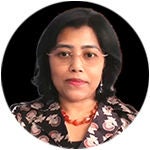
Soma Ghosh
Head of Finance, ZF Group, India
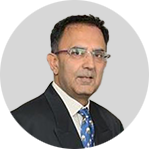
Arvind Sethi
Partner and Leader - Assurance, Indian member firm of EY Global
If you would like to listen to our podcasts on the go: