EY helps clients create long-term value for all stakeholders. Enabled by data and technology, our services and solutions provide trust through assurance and help clients transform, grow and operate.
At EY, our purpose is building a better working world. The insights and services we provide help to create long-term value for clients, people and society, and to build trust in the capital markets.
Finance Transformation: Leveraging tech, data, and talent for strategic finance management and growth. Discover our scorecard approach for real-time insights and efficiency.
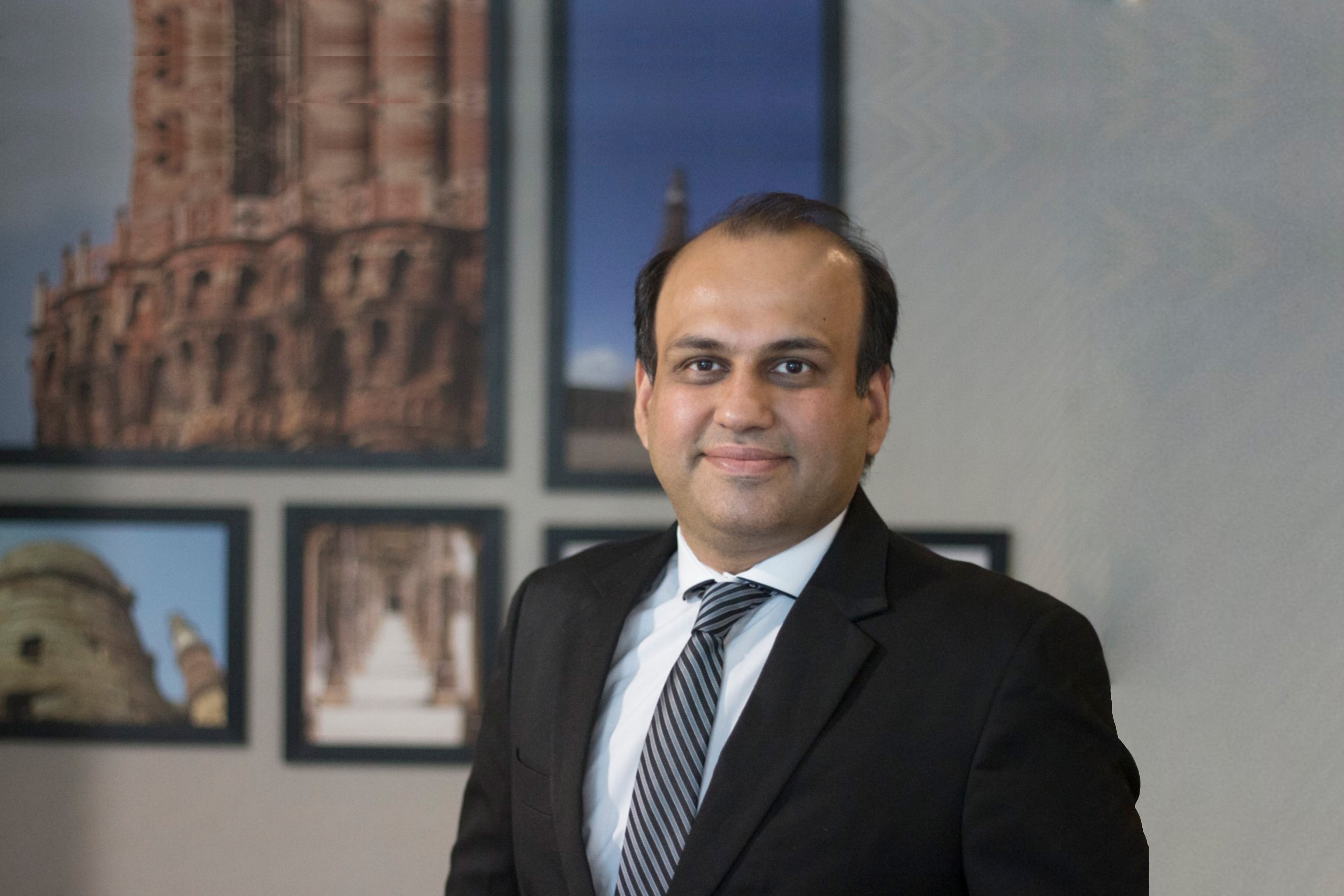
In the first episode of the podcast on Finance Transformation, Sardul Seth, Partner and CHS Consulting leader, EY India, and Kumar Gaurav, Partner, Finance Transformation, EY India, talk to Meghal Sheth, CFO, MARS Wrigley, India, about leading his company's finance function transformation. Meghal shares how digital finance tools and platforms have reshaped the finance function, shifting it from traditional bookkeeping and compliance reporting to a dynamic, value-driven role that enhances business success. He emphasizes that by adapting to changing business models, embracing technology, ensuring strong governance, and investing in talent, finance professionals can continue to shape the future of corporate finance. Join as we explore the evolving landscape of the finance function.
Key takeaways
MARS Wrigley transformed its finance operations using a scorecard approach, leveraging real-time KPIs and efficiency metrics to gain deeper financial insights.
The finance function’s transformation focused on four key areas: digitization, data analytics, talent upskilling, and robust data governance.
As finance automation and digitization progress, maintaining core financial processes, such as bookkeeping and compliance, remains essential for operational excellence.
As I progressed in my career, I observed the evolution of the finance function from bookkeeping to scorecard-keeping. Over time, finance has further evolved into a co-piloting function, enabling the business across multiple dimensions.
Meghal Sheth
CFO, MARS Wrigley, India
The four journeys of finance function transformation are all underpinned by ‘brilliant basics,’ which means maintaining the erstwhile role of bookkeeping in a more sacrosanct manner while integrating digital technologies.
Kumar Gaurav
Partner, Finance Transformation, EY India
For your convenience, a full text transcript of this podcast is available on the link below:
Sardul Seth
Good afternoon, everyone. Welcome to the finance function transformation podcast. I have with me Meghal Seth, he was the Regional Finance Director for Global Emerging Market, and he is the current India CFO for Mars Wrigleys.
I also have with me Kumar Gaurav. He is an EY partner focused on the finance function transformation agenda. Thank you for joining us.
With that, I will open the first question to Meghal. So, Meghal, in the last two to three decades of your working experience, how have you seen the finance function evolve?
Meghal Sheth
Sardul, in my initial years post becoming a professional, I saw finance function more like bookkeeping, it was more around compliance reporting. As I grew what I saw is from bookkeeping, it got into more like score card keeping, more in terms of tracking the KPIs, tracking some of the matrixes and efficiencies, and ensuring that business was going in line with some of those matrixes. Over a period of time, it has now evolved more as a co-piloting function, enabling business across different dimensions of business, whether in terms of technology, whether in terms of digitalization, whether in terms of driving some of the business. One is KPI, but more importantly, it is about understanding what are some of the business drivers, how do we challenge that, and how do we work with different functional leaders to enable solutions and help in terms of long-term growth for the business.
Sardul Seth
So Meghal, you mentioned a very interesting term, co-pilot. As a co-pilot of business, what are the challenges and opportunities you see as a finance professional?
Meghal Sheth
I would say, Sardul, that first and foremost, we are living in a very dynamic world. And hence, it becomes very important to understand what is going around the business—whether it is geopolitical tensions, whether it is an economic environment. It is important to understand how do we weave that in terms of the business strategy. Finance plays a very important role in terms of shaping that up and contributing to it, enabling growth and leading to value creation. So that is, I would say, the first one.
Second area. What I see is in terms of ever evolving is the business model and some of the channel dynamics. For example, a business like ours, which is into FMCG, earlier, we used to focus a lot on traditional trade. Then it evolved into modern trade, and as of now, all of us have got used to quick commerce. And hence, what is the business model? What is the changing channel, dynamic? How do I manage some of the resource allocation to ensure that we continually focus on where it matters, where it helps us in terms of growth and building the capabilities for the future potential of the business. So that is the second one.
The third area, which I believe is very important is digitalization, the technology evolution. That is another area where, over a period of time, lot of us have seen it as a big opportunity in terms of investment. Then through that automate some of the processes, get real time data, use some of the data for driving insights and for equally in terms of driving foresights, to enable some of the business crucial conversations and help us get to the next level of growth and building opportunities.
The other two areas, which are equally very, very important, are in terms of governance and controls. I have equally seen a huge evolution which has happened in that space with the ever-changing one is technology, but also in terms of rules and regulations change in some of the accounting standards. So how do we ensure that the entire area of governance and control has the right framework, the right processes which enable it in line with what business needs?
The other two areas, which are equally very important, are governance and controls. I have also seen a huge evolution in this space, driven by ever-changing technology as well as changes in rules, regulations, and accounting standards. How do we ensure that the entire area of governance and controls has the right framework and processes that enable it to align with the business’s needs?
And the last one, which is the most important, is talent. We need strong, talented people to manage the function, to help in terms of a great co-piloting. There, what I have seen is, first is, how do we ensure that we get strong, top talent from the market. Once we have them, how do we retain them by focusing, in terms of the developmental plans, mentoring, coaching, ensuring that the training needs are met, and help them in terms of giving opportunities in the business to grow, both personally and professionally.
Sardul Seth
Kumar, Meghal has touched upon the strategic move in the finance function in the last two to three decades. He also touched upon what it means to be a co-pilot, both from an opportunity standpoint as well as the challenges. Since you work with a lot of companies advising them on finance financial transformation journey, what are the building blocks as you start the journey?
Kumar Gaurav
Very valid point, Sardul. When you talk about journeys, we see finance function overall evolving in four broad journeys.
Journey number one is digital operations. How do you digitalize the operations given the flexibility and the changes in the technology that is happening, which also means how you make your processes more nimble and adaptable to the new digital technologies that come by? Journey to digital operations is one area.
The second area is journey of insights, data to insights. Because of this digitalization that is happening, there is lot of data that gets captured. How you generate data and insights from the data that you capture is the second journey that we have.
The third journey that you look into is, again, we talked about talent, because that is one important area that you point about, how do you continuously upskill your talent that we have talked about.
The fourth and the most important building block is about the data, governance, and security. As Meghal also was eluding the new areas of payment, the new modes of payment that is coming by. How do you control? How do you ensure governance, compliances with the regulatory authorities, etc., that is coming.
In addition to all these four elements that we spoke about, it is all underpinned by something called a brilliant basics, which means, how are you keeping your erstwhile role of bookkeeping much more sacrosanct, along with the digital technologies? What do you think Meghal?
Meghal Sheth
I very much agree with what you said, Kumar, in terms of the four building blocks, because, again, a similar thinking comes to my mind. And over the last, I would say, 20 plus years of working with two companies, I have been part of some of the finance transformation journey.
What is very important is, as you define some of these things, you have to embrace the change. Change is never easy, and whatever it is, so whether it is in terms of brilliant basics, whether it is in terms of digitalization or in terms of the governance and controls framework.
What is most important is to define, first, what is your objective. Second is then to define what is your glide path, or the road map, what you will take you there and then. Once you are into the journey, embrace the change. Change will never be easy. Some of these journeys are not going to be easy. Many times, we disrupt ourselves through automation and through efficiencies, we actually reduce the number of team members what we need. But if you are into this journey with that change management mindset, I think there is a lot what we can achieve. I have seen over the past 20 years when you are part of the journey, you are full on, you gain a lot of knowledge. At the end of the day, you come out a much better professional, as you rightly mentioned, upgrading the skill set, which is very much required in today’s dynamic world.
Sardul Seth
So Meghal, while my colleague and partner in crime, Kumar, did cover what we consultants believe are the building blocks for finance function transformation. In your experience, if I were to divide it into two parts, as a team member and as a leader, how has been your experience when you were part of such transformation programs?
Meghal Sheth
Two things come to my mind. First, when I was a team member of a finance transformation journey, which I did in my first company where I was there for 14 years, I would say that the biggest thing which I had to adapt to myself was change mindset. Some of these transformations are never easy, and hence, you need to be very sure that this is good for the company, it is good for the team, it is good for you.
Then embrace that change. Once you are part of that journey with that change mindset, you will enjoy it. That is what my experience was. I learnt a lot, both personally and professionally, and that actually helped me when I joined my current company to lead such finance transformation for a very large team.
There, what I saw is, as a leader, it is never easy, because when you declare that we want to get into a finance transformation, first is the mindset, which you need to see with your team. It will be bit of a roadblock. While you take them along, at some point of time, I had to say that the bus has started, either you hop on, or you hop off. So that, to me, was the first thing as a leader. It was a difficult call, but I had to take that call. Once, we had the right people who onboarded on the bus, then it was, again, a pleasant experience of co-creating our vision, working out our, I would say as Kumar mentioned, the building blocks where we want to focus, how we will get there. Having a kind of a glide path and the milestones, and as and when we achieved some of those milestones, we celebrated it in the team with the business, which again, gave us a lot of strength, that we are moving in the right direction.
Business is seeing it, that we are contributing to the efficiency, to the growth of the business, which kept us going. Ultimately, we reach our end destination, in terms of the finance transformation initiative, where we had our entire Shared Service Center equivalent shaped up, the entire co-piloting play book, what we had shaped up with the right team members in terms of talent. I really feel very proud in terms of leaving that as a legacy when I moved from that CFO role into the regional finance director role.
Sardul Seth
Thank you. Meghal, thank you Kumar, for lovely insights. It was great to hear what companies need to do for their journey around finance function transformation. This is one of the many conversations that we have planned for you with industry stalwarts. Keep watching. Thank you very much.
Drive business growth with technology transformation solutions at EY - integrating tech, operations and architecture to build agile, data-driven organizations.