


EY refers to the global organization, and may refer to one or more, of the member firms of Ernst & Young Global Limited, each of which is a separate legal entity. Ernst & Young Global Limited, a UK company limited by guarantee, does not provide services to clients.
Recent Searches
GST at 9: The journey so far and the road ahead
Explore how GST transformed India's tax ecosystem, improved compliance, and shaped the next phase of tax reforms and growth.
In this episode of the EY India Insights Podcast, we are joined by Sanjay Mangal, Member (GST, Central Excise and Service Tax), Central Board of Indirect Taxes and Customs (CBIC), Government of India, and Bipin Sapra, Partner and Indirect Tax Policy Leader, EY India, to reflect on nine years of the Goods and Services Tax (GST) and its impact on India's economic and tax landscape. Moderated by Deepshikha Sikarwar, Associate Editor at The Economic Times, the discussion examines GST’s evolution into a unified indirect tax framework, bringing together the Centre and the States through a unique model of cooperative federalism.
The conversation explores GST's role in creating a common national market, driving formalization across the economy, and leveraging technology to improve compliance, transparency and taxpayer services. Looking ahead, the speakers discuss the priorities for the next phase of GST reforms, including simplification of processes, greater automation, improved Ease of Doing Business, and other measures that can enhance the efficiency and competitiveness of India's tax ecosystem as the country advances towards its long-term growth ambitions.
Key takeaways
- GST has successfully created a unified indirect tax framework, replacing a fragmented system.
- Technology has been a key enabler, strengthening compliance, taxpayer services and efficiency of tax administration.
- With accelerated formalization of the economy, the taxpayer base has grown from 68 lakh at the time of implementation to over 1.6 crore today.
- Indian businesses have benefited from greater tax certainty, reduced tax cascading, increased transparency and a more streamlined compliance environment.
- The next phase of GST reforms is expected to focus on process simplification, greater automation, ease of compliance, and reducing unnecessary disputes.
- Further rationalization of the input tax credit framework, streamlining of audit processes, and continued Ease of doing Business reforms can make the GST ecosystem more efficient.
GST has evolved as a transformative reform that has unified India's indirect tax landscape through technology-driven administration, greater formalization, and cooperative federalism. As the system matures, the focus will remain on making compliance simpler, processes more automated, and the overall framework more taxpayer friendly.
Over the last nine years, GST has provided businesses with greater certainty, transparency, and a more integrated market. The next phase of reforms presents an opportunity to further simplify compliance, improve the input tax credit framework, and strengthen India's competitiveness as a preferred investment and manufacturing destination.
Speakers
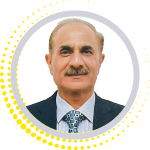
Sanjay Mangal
Member (GST, Central Excise and Service Tax), Central Board of Indirect Taxes and Customs (CBIC), Government of India

Bipin Sapra
Partner and Indirect Tax Policy Leader, EY India
Moderator

Deepshikha Sikarwar
Associate Editor, The Economic Times
For your convenience, a full text transcript of this podcast is available on the link below:
If you would like to listen to our podcasts on the go:
Podcast
Duration
20m 0s
How EY can help
-
Simplify GST compliance with an AI-powered EY India Tax Platform offering GST reconciliation, return filing, e-invoicing and automation for large enterprises.
Read more -
Ensure seamless GST compliance with EY DigiGST. Simplify GST reconciliation with our advanced GST compliance solution & tool for accurate tax reporting.
Read more -
Navigate policy reforms with EY India's Tax and Economic Advisory. Get expert counsel on tax, regulatory and economic matters. Schedule a consultation today.
Read more