EY helps clients create long-term value for all stakeholders. Enabled by data and technology, our services and solutions provide trust through assurance and help clients transform, grow and operate.
At EY, our purpose is building a better working world. The insights and services we provide help to create long-term value for clients, people and society, and to build trust in the capital markets.
During his conversation with Pankaj Surana, Director, Indirect Tax, EY India, he also highlights the policy’s unique ‘choose your incentives’ approach, which allows businesses to customize benefits through a mix of capital, interest and power tariff subsidies. They also explore the policy’s support for MSMEs, large and mega investments and selected thrust sector, while sharing insights on how the policy can drive investment, innovation and long-term industrial growth in Gujarat.
Key takeaways
Viksit Gujarat Industrial Policy 2026 empowers businesses to customize their incentive mix, unlocking subsidies of up to 50% of eligible investment.
MSMEs investing up to INR125 crore in plant and machinery can access incentives of 35%-45% of eligible investment, disbursed over five years.
Mega project eligibility now requires only 250 jobs versus 2,500 earlier, significantly widening access to higher incentives.
Five selected thrust sectors including sports goods and equipment, toys, footwear, robots and drones, can receive incentives of up to 50% investment.
The policy backs innovation, offering up to INR250 crore capital subsidy for qualifying R&D centers.
The flexibility to choose incentives based on business needs makes Gujarat’s new policy a differentiated and competitive offering for investors
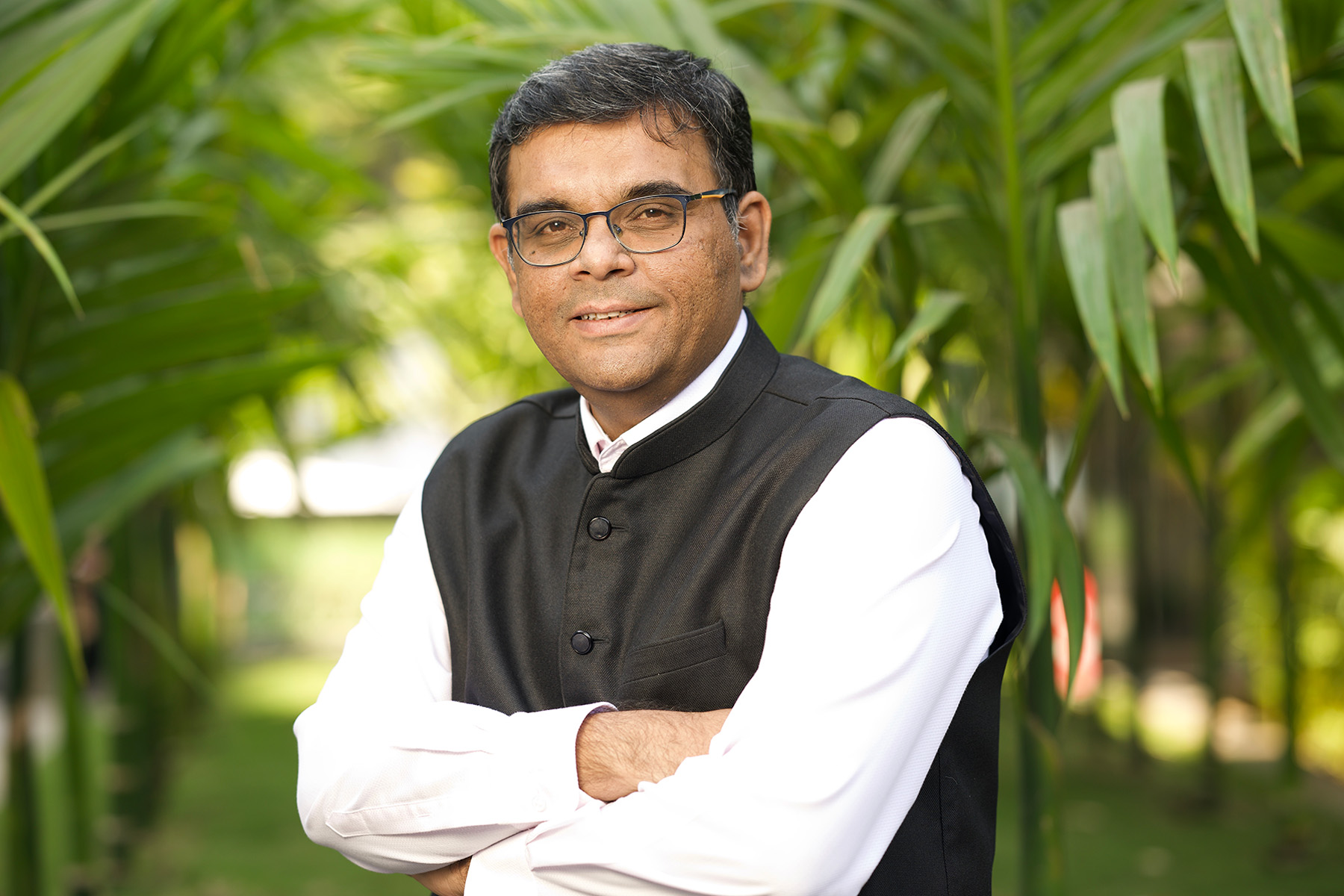
Bhavesh Thakkar
Partner, Tax and Regulatory Services, EY India
For your convenience, a full text transcript of this podcast is available on the link below:
In our previous episode, we explored and discussed Maharashtra’s industrial policy and today we are shifting our focus to Gujarat and its newly launched Viksit Gujarat Industrial Policy 2026, which is aimed to position Gujarat as a globally competitive industrial hub while supporting the vision for 2047.
Before we get into the specifics of the policy and incentives, what is your view on the significance of this new policy considering other states in India?
Bhavesh
The significance of this policy lies in its long-term vision. Unlike conventional industrial policies that focus on attracting investments, the Viksit Gujarat Industrial Policy is designed to build a future-ready industrial ecosystem. If we talk about the previous policies, incentives were largely linked to net State Goods and Services Tax (SGST) reimbursement. With GST 2.0, on many products, GST rate has been reduced from 28% to 18%, or from 18% to 5%, which affects the overall net SGST payment and the incentive realization.
So, investors were waiting for a policy that could support projects across sectors and business models, while also matching the competitiveness of other leading states. Gujarat has responded well with this policy by introducing a flexible, combination-based incentive framework that gives investors more options and improves the overall attractiveness of investing in the state.
Pankaj
Gujarat has always been known for its strong entrepreneurial spirit and this policy builds on that foundation in a strategic way. Tell us about this new policy and why it has created so much buzz in the industry.
Bhavesh
The policy is effective from 1 June 2026 for a period of five years. The most interesting and unique feature of the new policy is – choose your incentives. Eligible units can customize their incentive mix through a combination of capital subsidy, interest subsidy, and power tariff subsidy, ranging from 10% to 50% of eligible investment, based on sector, location and project size.
This offers businesses the flexibility to customize benefits based on the business model, a departure from the old industrial policy of Gujarat and the rigid incentive structure seen in other state policies.
Pankaj
That is quite unique and certainly gives confidence to the industry on the quantum of incentives while planning their investments. Can you briefly walk us through the broad investment categories?
Bhavesh
The policy covers all types of investment, right from micro, small and medium Enterprises (MSMEs) to ultra-mega projects. For MSMEs, the government has adopted the latest definition of MSMEs, which is in line with the Micro, Small and Medium Enterprises Development Act, 2006. So, projects with minimum investment in plant and machinery up to INR125 crore will be categorized under MSME category and projects with investment in plant and machinery of above INR125 crore will be categorized as large projects.
However, turnover criteria as per the MSME Act is not linked for categorization of units under this policy. So, this time, the government has also reduced the limit for mega projects. Projects with a minimum investment of INR1,000 crore in thrust sectors and minimum employment of 250 persons are categorized as mega. So, government has reduced the minimum employment criteria from 2,500 to 250 persons in this policy.
There is also an ultra-mega category with the minimum investment of INR10,000 crore in thrust sector and minimum employment of 3,000 persons.
Pankaj
That is quite comprehensive. The policy appears to offer attractive incentives across categories of investors and sectors. Can you tell us more about this?
Bhavesh
MSMEs get a higher incentive irrespective of sector classification. Incentive to large units and above depends on the sector categorization. There are 16 thrust sectors prescribed under the policy including green energy, chemicals, capital equipment, pharmaceuticals, agro and food processing and textiles.
Additionally, there are five selected thrust sectors such as sports goods and equipment, toys, footwear, robots and drones. These sectors get the highest incentives under this policy irrespective of the investment category.
Pankaj
Bhavesh, can you explain to our listeners the incentive structure and in more detail?
Bhavesh
Traditionally, most state policies prescribe a fixed incentive structure. Gujarat has taken a different approach. Instead of one-size-fits-all model, eligible businesses can choose a customized combination of capital subsidy, interest subsidy, and power tariff subsidy subject to an overall incentive ceiling.
Pankaj
Completely agree. This certainly sounds like a more practical approach from a business perspective. Let us start with the which continues to be the backbone of industrial ecosystem.
Bhavesh
As I mentioned earlier, projects with an investment of up to INR125 crore in plant and machinery will be categorized under the MSME category. This change is beneficial as MSME projects would be eligible for higher incentive and majority of the projects in any state fall under this range.
Eligible units can avail a combination of the three subsidies capital, interest and power tariff ranging from 35% to 45% of the eligible investment, depending on the project location. Incentive will be dispersed over a five-year period, meaning a better project net present value also. In addition, there are other incentives like electricity duty exemption for five years, capital subsidy on investment in cleaner production technologies, Zero Liquid Discharge (ZLDs), etc.
Pankaj
It is quite attractive and I must say that the policy has placed significant emphasis to support MSMEs in the state. As we move up the investment ladder, what does the policy offer to large investors?
Bhavesh
This is where the policy becomes attractive and flexible. Incentive model to large and above investors also remains the same, which is a combination of the three subsidies. For large units in general sectors, the overall incentive ceiling ranges from 15% to 20% of eligible investment, with benefits being disbursed over a 10-year period. For large units operating in thrust sector, the support increases significantly, with incentive ceilings ranging from 25% to 35% of eligible investment and disbursement in eight years. Moving further up, for the mega units, the overall incentive ceiling ranges from 30% to 35% of eligible investment, while ultra-mega units can access benefits ranging from 35 to 40% of eligible investment, with support available over an extended period of up to 12 years.
And there are other incentives also across the various investment categories, such as 100% electricity duty exemption for five years, capital subsidy of investment and cleaner production technology, ZLDs, etc. For ultra-mega projects and units in the selected thrust sectors, there is 100% reimbursement of stamp duty and registration fees.
Pankaj
These are certainly competitive numbers, Bhavesh, and investors should get the attention of the state’s new policy. I have also heard that Gujarat is providing an incremental incentive to five selected thrust sectors. Can you tell us more about that?
Bhavesh
This is a highlight of the policy. So, for selected thrust sectors, irrespective of the investment category, the overall incentive ranges from 45% to 50% of the eligible investment, depending on the project location.
Pankaj
How does the policy support R&D in in the state?
Bhavesh
There is strong focus on R&D centers in the new policy. The first five R&D centers with a minimum investment of INR300 crore will receive 50% of capital subsidy, subject to a maximum of INR250 crore. Other R&D centers with the minimum investment of INR100 crore will get a capital subsidy of 25%, subject to a maximum of INR100 crore.
In addition, there are other incentives like power tariff, payroll subsidy, etc., and the in-house R&D centers approved by Department of Scientific and Industrial Research (DSIR) are also eligible for 50% capital subsidy, subject to a maximum of INR50 crore.
Pankaj
This clearly shows the intent of the state government to build a more inclusive and innovation-led industrial ecosystem. There is one very important question which every investor asks us. What is the scenario on disbursement of incentives by the state government?
Bhavesh
Based on our experience, I can say that that Gujarat delivers what it promises. And government has been disbursing incentives to industries.
Pankaj
Thank you for sharing your insights. The Viksit Gujarat Industrial Policy 2026 represents and provides exciting opportunities to the industry looking to invest, expand or innovate in Gujarat.
Thank you to all our listeners today for joining us. We hope you enjoyed this episode. Stay tuned for our next episode of EY India Insights. This is Pankaj Surana, signing off. Thank you.