














































EY refers to the global organization, and may refer to one or more, of the member firms of Ernst & Young Global Limited, each of which is a separate legal entity. Ernst & Young Global Limited, a UK company limited by guarantee, does not provide services to clients.
Recent Searches
Press release
20 Aug 2026
|
New Delhi, India
Indian family office assets projected to grow 1.5x over the next three years: Julius Baer – EY report
- Family offices allocate 40%-45% of portfolios to alternatives including PE, VC, private credit, AIFs, REITs and InvITs
- India is expected to witness US$1.3 trillion-US$1.5 trillion of intergenerational wealth transfer over the next decade
Mumbai / New Delhi, 20 August 2026: India's family office ecosystem is entering a new phase of growth, with family office assets estimated at approximately INR70,000 crore in 2024, are projected to grow by 1.5 times over the next three years, according to the latest Julius Baer- EY report, Indian Family Office Playbook: Now, Next and Beyond. The growth is being driven by expanding wealth pools, increasingly sophisticated investment strategies and the growing role of family offices as long-term providers of capital.
The Julius Baer - EY report highlights that India today has more than 19,000 ultra-high-net-worth individuals (UHNIs), with the number expected to exceed 25,000 by 2031. At the same time, an estimated US$1.3 trillion-US$1.5 trillion of intergenerational wealth transfer is expected over the coming decade, increasing the need for stronger governance frameworks, succession planning and institutional operating models.
The projected growth in assets is being accompanied by a significant shift in investment strategy. The report highlights that 40%-45% of allocations in many family offices are now directed toward alternatives such as private equity, venture capital, private credit, Alternative Investment Funds (AIFs), Real Estate Investment Trusts (REITs) and Infrastructure Investment Trusts (InvITs). Family offices are also increasingly pursuing direct investments and co-investment opportunities, while expanding exposure to sectors such as artificial intelligence (AI), climate technology, renewable energy, semiconductors, electronics manufacturing, cloud services and data centre infrastructure.
Surabhi Marwah, Tax Partner and Leader, Family Office Advisory Services, EY India said, "Indian family offices are evolving from wealth preservation vehicles into active allocators of long-term capital. As wealth creation accelerates, families are increasingly investing in private markets, innovation-led sectors and opportunities linked to India's growth story. This shift is also bringing greater focus on governance, succession planning and professional management as families seek to build enduring institutions that can create value across generations."
Kunal Sumaya, Ad Interim Country Head - India & Market Head - Global NRI, Julius Baer, said, “India’s family office ecosystem is at an inflection point, with family office assets estimated to grow 1.5 times over the next three years. The scale and pace of this evolution is being shaped by three powerful forces: explosive wealth creation driven by a strong start-up ecosystem and the rise of Indian primary markets; a profound generational shift in wealth management and deployment; and the institutionalisation of Indian capital markets. As India prepares for one of the most significant intergenerational wealth transfers in its history, the families that embrace this moment to build institutional discipline, strengthen governance, invest in technology and talent, and take a long-term approach to managing wealth will not only preserve their legacies, but emerge as architects of India’s economic future.”
Technology is becoming central to modern family offices, with increased adoption of AI-enabled analytics, integrated reporting platforms, cybersecurity and digital governance tools to improve visibility, governance and investment decision-making.
As cross-border investments grow, rising regulatory, data privacy and transparency requirements are driving demand for professional management structures, specialized talent and stronger governance frameworks.
The Julius Baer-EY report highlights how family offices are broadening their investment horizons, increasingly allocating capital to AI, climate technology, renewable energy, digital infrastructure, semiconductors and electronics manufacturing, alongside private markets and real assets.
As Indian family offices continue to evolve, their role is expected to extend beyond wealth management into long-term capital formation, entrepreneurship and strategic investing. With increasing allocations to alternatives, greater participation in private markets and a stronger focus on emerging sectors, family offices are poised to play a more prominent role in India's investment landscape.
Download the full pdf
About Julius Baer
For more than 130 years, we at Julius Baer have managed our clients’ wealth and served them as trusted, truly personal and holistic advisors. With our roots as a family business, we know the value of long-term relationships, and the challenges and opportunities of growing wealth, protecting it, and passing it on. In all we do, we are inspired by our purpose: creating value beyond wealth.
Julius Baer is present in around 25 countries and 60 locations. Headquartered in Zurich, we have offices in key locations including Abu Dhabi, Bangkok, Dubai, Dublin, Frankfurt, Geneva, Hong Kong, Lisbon, London, Luxembourg, Madrid, Mexico City, Milan, Monaco, Mumbai, Santiago de Chile, Shanghai, Singapore, Tel Aviv, and Tokyo. Our client-centric approach, our objective advice based on the Julius Baer open product platform, our solid financial base and our entrepreneurial management culture make us the international reference in wealth management.
At the end of June 2026, assets under management amounted to CHF 547 billion. Bank Julius Baer & Co. Ltd., the renowned Swiss private bank with origins dating back to 1890, is the principal operating company of Julius Baer Group Ltd., whose shares are listed on the SIX Swiss Exchange (ticker symbol: BAER) and are included in the Swiss Leader Index (SLI), comprising the 30 largest and most liquid Swiss stocks.
For more information visit our website at www.juliusbaer.com
About EY
EY is building a better working world by creating new value for clients, people, society, and the planet while building trust in capital markets. Enabled by data, AI, and advanced technology, EY teams help clients shape the future with confidence and develop answers for the most pressing issues of today and tomorrow. EY teams work across a full spectrum of services in assurance, consulting, tax, strategy, and transactions. Fueled by sector insights, a globally connected, multidisciplinary network, and diverse ecosystem partners, EY teams can provide services in more than 150 countries and territories.
All in to shape the future with confidence.
EY refers to the global organization and may refer to one or more of the member firms of Ernst & Young Global Limited, each of which is a separate legal entity. Ernst & Young Global Limited, a UK company limited by guarantee, does not provide services to clients. Information about how EY collects and uses personal data and a description of the rights individuals have under data protection legislation are available via ey.com/privacy. EY member firms do not practice law where prohibited by local laws. For more information about our organization, please visit ey.com.
Related content
Mumbai, 20 August 2026 – Domestic funds emerged as the dominant force in India's private credit market in H1 2026, accounting for 74% of total deal value and nearly 79% of deal volume, according to the EY Private Credit Report H1 2026. The market remained resilient during the period, with investments reaching US$3.5 billion across more than 100 transactions above US$10 million, broadly in line with US$3.4 billion recorded in H2 2025.
New Delhi, 17 August 2026: EY India and Shri Ram College of Commerce (SRCC) today launched AI VIBE (Varsity for Innovation, Business and Economics), a first-of-its-kind industry-academia initiative designed to prepare students for careers in an AI-enabled economy.
PE/VC investments in India reach US$20.5 billion across 604 Deals in 1H2026: EY-IVCA Report
Mumbai, 31st July 2026. PE/VC investments in India reach US$20.5 billion across 604 Deals in 1H2026 according to the EY-IVCA Report
New Delhi, 9 July 2026, EY India launches AI-powered Cyber Performance Management platform to help enterprises quantify cyber risk in real time.
New Delhi, 18 June 2026.GenAI could deliver up to 50% higher sales velocity and faster launches for India’s real estate sector according to the EY-Parthenon-CREDAI report.
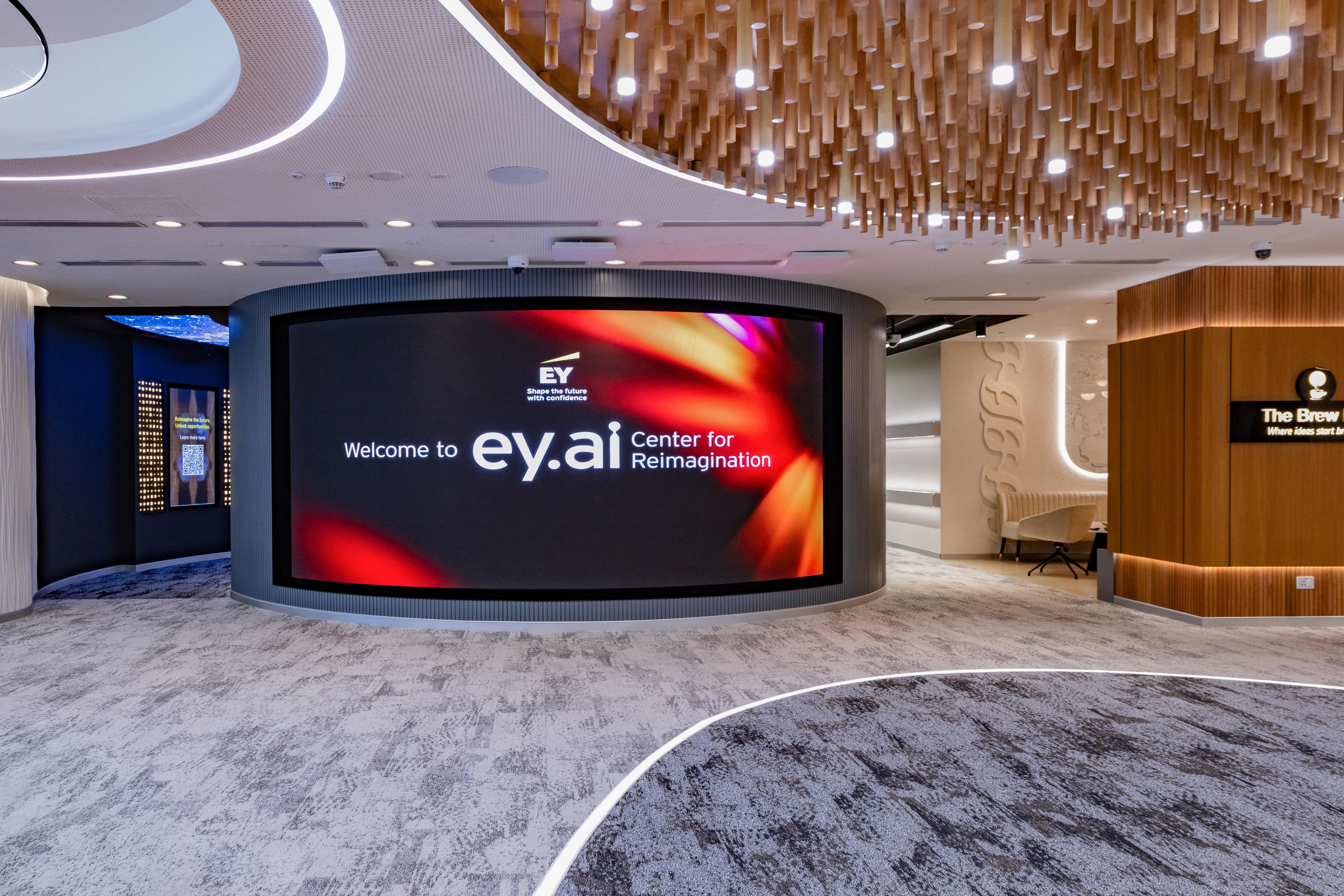
EY GDS launches ey.ai Center for Reimagination in Bengaluru
Bengaluru, India; June 11, 2026. EY GDS launches Bengaluru-based ey.ai Center for Reimagination, enabling AI-powered innovation, design thinking and enterprise growth.
Guwahati, June 10, 2026 – Assam emerges as India’s next concert economy hub; BookMyShow and EY-Parthenon project a ₹700 crore economic opportunity over the next five years.
New Delhi | 12 May 2026.EY India named among LinkedIn Top Companies 2026 as Indian firms shift focus to long-term careers and skills
Mumbai, 30 April 2026.Indian PE/VC investment activity moderates to US$13.1 billion across 360 Deals in 1Q2026 according to the EY-IVCA Report.
Mumbai, 27 March 2026: According to the EY-IVCA monthly PE/VC roundup, private equity and venture capital investments in India decreased by 3% in February 2026 compared to January 2026 in value terms.
India’s media and entertainment (M&E) sector continued its expansion in 2025, driven primarily by digital media, advertising & live experiences.
Sardar Patel Institute of Technology, Mumbai, wins EY Techathon 6.0
Sardar Patel Institute of Technology wins EY Techathon 6.0; Techno Engineering College is runner‑up and IIT Roorkee earns People’s Choice Award for AI innovation.
India’s ₹13,000 crore live events market is driving a major shift to experiential marketing, with rising brand recall, purchase intent and experience-led consumer behavior
India’s PE/VC industry staying on the front foot despite global headwinds: EY–IVCA Trendbook 2026
Read how Indian PE/VC investments continued their upward trajectory, reaching US$60.7 billion across 1,475 deals—an 8% year on year increase.
Dil‑Luminati India Tour 2024 generated over INR943 crore in economic impact: EY report estimates
Mumbai, 5 March 2026.Dil Luminati India Tour 2024 generated over INR943 crore in economic impact according to the EY report estimates.
New Delhi, 23 February 2026India Inc. projects 9.1% salary increase in 2026 as compensation becomes sharper, more skills-led according to the EY Future of Pay 2026 report.
Mumbai, 27 January 2026. India’s Over-The-Counter drugs market set to hit ₹98,000 Crore by 2030, growing at 13% CAGR according to the EY Parthenon report.
Mumbai, 15 January 2026. India’s healthcare sector records cumulative deal value of over INR 10,000 crore in Q2 FY26 according to the EY Parthenon Report.
PE/VC Investments in India reach 88% of 2024 levels as 2025 nears close: EY-IVCA Report
Mumbai, 23 December 2025.PE/VC Investments in India reach 88% of 2024 levels as 2025 nears close according to the EY-IVCA Report.
India leads globally on AI Advantage at work; 86% employees cite positive impact of GenAI on productivity according to the EY 2025 Work Reimagined Survey.
HSBC and EY India unveil a Comprehensive Compendium on GIFT City, signalling next phase of global integration and market maturity.
NEW DELHI, December 1, 2025 .Odisha needs 26,237MW of total contracted capacity to meet rising power demand by 2034 according to the EYASSOCHAM report.
PE/VC Investments in India reach US$5.3 billion across 102 deals in October 2025 : EY-IVCA Report
Mumbai, 28 November 2025.PE/VC Investments in India reach US$5.3 billion across 102 deals in October 2025 according to the EY-IVCA Report.
58% GCCs in India investing in Agentic AI; two-third creating dedicated innovation teams to globalize ideas according to the EY GCC Pulse Survey 2025.
Indias AI shift from pilots to performance; 47% of enterprises have multiple AI use cases live in production according to the EY-CII Report.
PE/VC Investments in India reach US$11.7 billion across 369 deals in 3Q2025 : EY-IVCA Report
Mumbai, 18 October 2025. PE/VC Investments in India reach US$11.7 billion across 369 deals in 3Q2025 according to the EY-IVCA Report
EY and Microsoft launch AI Skills Passport to equip India’s youth with AI driven future
New Delhi, 9 October 2025 – In a significant effort to bridge the AI skills gap in India, EY and Microsoft have launched the AI Skills Passport - a free, online program that provides equitable access to high-quality AI education for youth aged 16 and older.
New Delhi, 09 October 2025.Transparency drives patient choice; 9 in 10 Indians willing to pay more for certified healthcare according to FICCI- EY-Parthenon report
PE/VC Investments in India reach US$2.8 billion across 115 deals in August 2025: EY-IVCA Report
Mumbai, 29 September 2025: According to the EY-IVCA monthly PE/VC roundup, private equity and venture capital investments in India decreased by 31% in August 2025 compared to July 2025 in value terms.
India’s FY26 growth outlook raised to 6.7% on back of monetary easing and GST 2.0 reforms: EY India
- New Delhi, 29 September 2025. India’s FY26 growth outlook raised to 6.7% on back of monetary easing and GST 2.0 reforms according to the EY India
New Delhi, 26 September 2025. EY India launches Automated Regulatory Tool built on Snowflake to transform financial reporting compliance; aims to automate 80% of reporting.
India Needs 40x Surge in Non-Fossil Energy to meet Viksit Bharat 2047 Vision: EY–CII report
EY–CII report reveals India must triple energy supply and scale non-fossil sources 40× to achieve Viksit Bharat 2047, while managing affordability and security.
EY India Techathon 6.0 engages with young innovators to shape the AI leaders of tomorrow
New Delhi, 18 September 2025. EY India Techathon 6.0 engages with young innovators to shape the AI leaders of tomorrow.
Mumbai, 17 September 2025 – Indian treasury teams are at a pivotal point in their evolution, ranking automation as their top investment priority as per EY India Corporate Treasury Survey 2025.
Coking coal imports to rise, steel for 300 MT, 2030
Read how India’s steel sector needs will push coking coal imports up as steel capacity targets 300 MT by 2030 amid sustainability and supply chain shifts.
How Indian hospitals plan to raise IT innovation spends by 20-25% in 2-3 years with AI, automation, data tools and patient-centric care as top priorities.
Bengaluru, 1 September 2025.India emerges as lifesciences GCC hub; nearly half of top 50 global firms establish presence, with significant entries in past 5 years accorsing to the EY analysis.
Read how India could become the world’s 2nd largest economy by 2038 with a projected US$34.2T GDP, backed by strong demographics, reforms and PPP growth.
PE/VC Investments in India reach US$4 billion across 115 deals in July 2025: EY-IVCA Report
Read how India’s PE/VC investments hit US$4B in July 2025 over 115 deals boosted by fintech, healthcare exits, strong deal flow and investor confidence.
Read how India’s outbound investments surged ~67% to US$41.6B in FY25 - driven by ESG, GIFT City expansion, global tax reforms and sector diversification
How India’s private credit market surged 53% H1 2025 to US$9B, led by US$3.1 billion deal driven by infrastructure, real estate, healthcare & global funds
EY India appoints Gaurav Bhalotia as Chief Technology Officer
Read how EY India strengthens innovation & AI-led digital solutions with Gaurav Bhalotia, former Udaan, with 20+ years in large-scale tech & product leadership.
India’s M&A activity holds ground with US$50.5B in deal value in H1 2025: EY M&A Report
Read how India’s M&A held firm at over US$50B in H1 2025 despite a 12% dip in transaction volume, driven by major power and high-value renewables deals.
CXOs need to do more to build customer trust in their AI deployments: EY India
How CXOs can bridge trust gaps in AI, only 30% have scaled AI, 37% lack governance, while consumers worry about misinformation, job loss & loss of control.
PE/VC Investments in India reach US$26.4 billion across 593 deals in 1H2025: EY-IVCA Report
Mumbai, 29 July 2025, PE/VC Investments in India reach US$26.4 billion across 593 deals in 1H2025 according to the EY-IVCA Report.
EY Parthenon report reveals India's green steel demand to surge to 179 million tons by 2050
New Delhi, July 28, 2025. NEW DELHI, July 28, 2025. EY Parthenon report reveals India's green steel demand to surge to 179 million tons by 2050
21 July 2025, New Delhi / Mumbai. ‘Mobility’ key differentiator in global talent strategy, 81% Indian employees find it to be career-transforming according to the EY report