









EY refers to the global organization, and may refer to one or more, of the member firms of Ernst & Young Global Limited, each of which is a separate legal entity. Ernst & Young Global Limited, a UK company limited by guarantee, does not provide services to clients.
Recent Searches
Press release
21 Aug 2025
|
New Delhi, India
India’s outbound investments surge 67% in FY25, driven by ESG, GIFT City, and global tax reforms: EY report
- India’s number of outbound investments surged 15% in FY 2024-25, signaling growing confidence in global expansion.
- Businesses are shifting beyond traditional hubs to destinations like UAE, Luxembourg and Switzerland for better alignment with business, tax, tech, and ESG goals.
- GIFT City witnessed a 100% rise in overseas direct investment (ODI), emerging as a strategic hub for holding and treasury operations.
New Delhi, 21 August 2025. India’s outbound investments jumped by 67.74% to US$41.6 billion in FY2024-25 from US$24.8 billion in FY2023-24, as per EY’s new report “India abroad: Navigating the global landscape for overseas investment – 2025.” The number of transactions also rose by 15%, signaling a sharp uptick in global confidence. Indian companies are focusing on diversification, ESG priorities, and technology-led growth to drive their global expansion strategies. The report highlights sectoral impacts across IT, energy, pharma, automotive, and hospitality.
Key trends shaping India’s outbound investment agenda:
Beyond Singapore and Mauritius: New gateways for Indian capital: While intermediary jurisdictions like Singapore, the Netherlands, and Mauritius have long dominated outbound investment structuring, Indian companies are now broadening their horizons. The shift is being driven by changing global tax rules, tighter regulatory oversight, and evolving strategic priorities. Countries like the UAE, Luxembourg, and Switzerland are gaining ground, offering a mix of favorable tax regimes, progressive regulatory frameworks, and alignment with India’s interests in sustainability, digital innovation, and trade expansion. The UAE is seeing rising investor interest beyond its traditional role in energy, spurred by the India-UAE Comprehensive Economic Partnership Agreement (CEPA) and new opportunities in infrastructure and technology. Meanwhile, Luxembourg’s strength in fund management and green finance, along with Switzerland’s IP-friendly environment and advanced infrastructure, are drawing attention as alternative gateways for Indian capital.
ESG becomes a deciding factor in global investments: Environmental, social and governance (ESG) priorities are now integral to overseas investment decisions. From carbon pricing implications in the EU to supply chain due diligence in the US, companies are embedding sustainability into investment design to meet rising stakeholder expectations and regulatory benchmarks.
GIFT City rises as a preferred hub for outbound investment: Indian companies are increasingly turning to GIFT City as a strategic gateway for outbound investments, with RBI data showing a 100% surge (from 0.04 US $ billion in 2022-23 to 0.81 US $ billion in 2024-25 )over the past two years. Positioned as a cost-effective holding and treasury jurisdiction, GIFT City offers Indian multinationals regulatory clarity, tax advantages, and operational efficiency, helping manage global investments while retaining place of effective management (POEM) and tax residency in India.
Global policy developments: Strategic reorientation is also being catalyzed by a dynamic global policy environment. With announcements of US tariff revisions under the ‘One Big Beautiful Bill,’ scrutiny under OECD BEPS Pillar reforms, and sustainability-linked trade measures are adding layers of complexity to cross-border operations. These developments are strategic signals that necessitate a decisive pivot in outbound direct investment strategies.
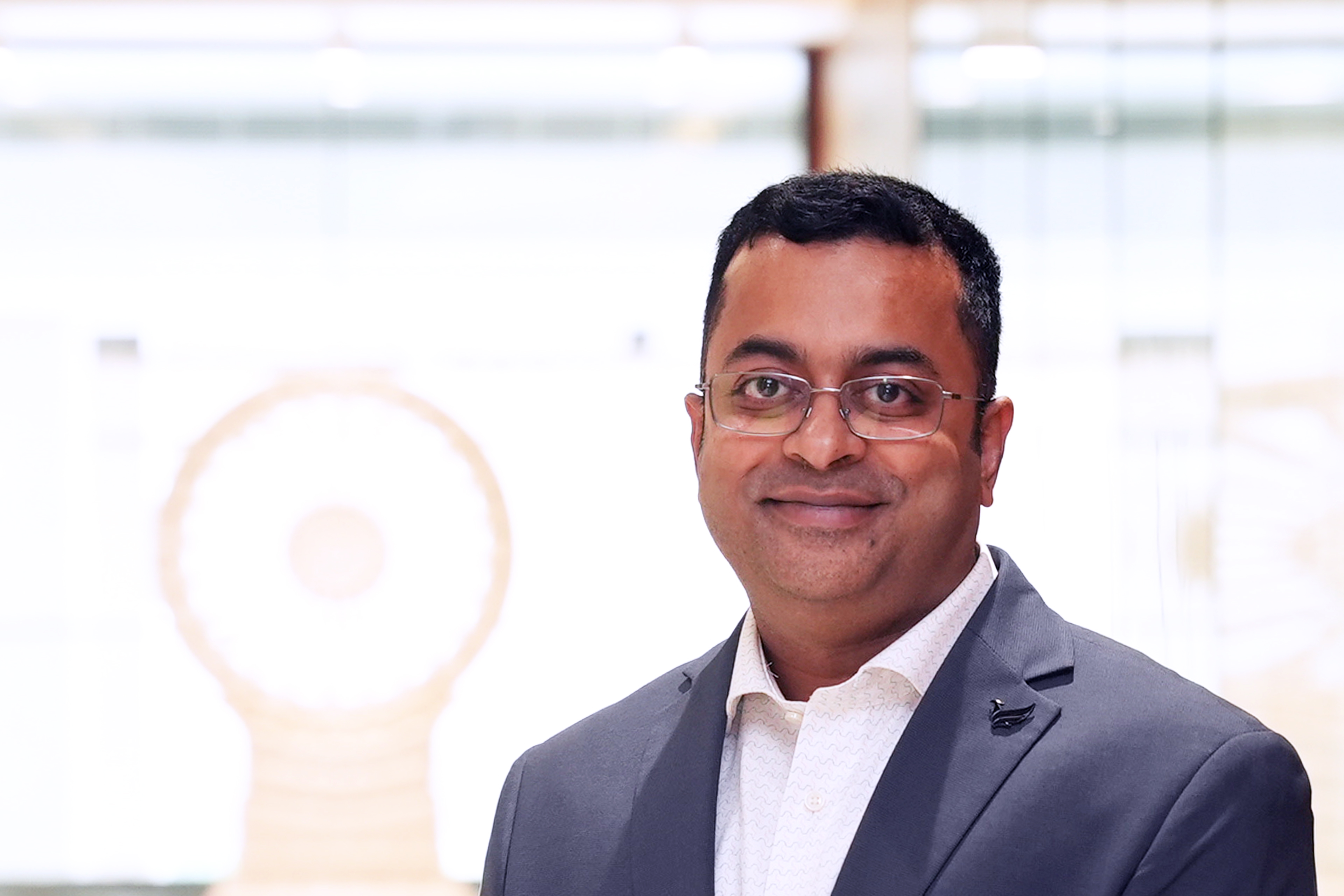
Speaking about the report, Vaibhav Luthra, Tax Partner, EY India said, “India’s global investors are no longer just chasing scale, they are looking for strategic, resilient growth. As outbound capital becomes more ESG-sensitive and substance focused, aligning operating models with local expectations is non-negotiable. The right mix of foresight, flexibility and financial structuring will be the differentiator.”
To remain future-ready, EY recommends that Indian multinational enterprises (MNEs) adopt a forward-looking, compliance-first mindset. A multi-dimensional strategic response will be key to sustaining competitiveness and ensuring resilient global growth.
EY recommends the following strategies for businesses investing abroad:
- Reassess existing investment and operating models: Align holding structures, outbound flows, and tax strategies with global reforms like BEPS Pillar 2, while ensuring transparency and compliance with substance requirements.
- Evaluate supply-chain agility: With developments such as expected revision in US tariffs and the India-UK FTA, Indian MNEs must review indirect tax exposures, assess fiscal incentives, and build in resilience through alternate trade corridors.
- Embed ESG into capital planning: As ESG imperatives like CBAM and CSRDbecome embedded in global regulation and investor expectations, Indian businesses are advancing from basic compliance to leveraging ESG as a core value driver.
- Review international structuring regularly: Periodic review of global investment and operational structures is essential to stay aligned with commercial goals and regulatory expectations.
- Diversify export markets: Reduce dependency on carbon-sensitive jurisdictions by identifying new opportunities in emerging economies and favorable trade blocs.
- Leverage GIFT City’s advantages: As Indian MNEs explore cost-effective, compliant global expansion, GIFT City is emerging as a preferred location for setting up holding companies and treasury operations. With its favorable tax regime, regulatory alignment, and ability to retain Indian tax residency (POEM), GIFT City offers an attractive platform for strategic structuring.
Strengthening compliance with BEPS and substance norms: With the advent of global tax initiatives such as OECD BEPS Pillar 2 and local substance requirements, Indian MNEs must consider restructuring their overseas entities and functions to align with substance requirements and demonstrate genuine economic activity in tax-favorable jurisdictions, Ensuring compliance with minimum global tax standards and robust substance requirements is now imperative not only to meet transparency expectations, but also to safeguard long-term competitiveness and optimizing exposure to regulatory scrutiny. By embracing these measures, Indian enterprises can proactively navigate regulatory complexity, capitalize on international opportunities, and drive long-term sustainable value creation.
For more insights or to access EY’s full report on India’s outbound investment strategy, click here.
Download the full pdf
Notes to Editors
About EY
EY is building a better working world by creating new value for clients, people, society and the planet, while building trust in capital markets. Enabled by data, AI and advanced technology, EY teams help clients shape the future with confidence and develop answers for the most pressing issues of today and tomorrow. EY teams work across a full spectrum of services in assurance, consulting, tax, strategy and transactions. Fuelled by sector insights, a globally connected, multi-disciplinary network and diverse ecosystem partners, EY teams can provide services in more than 150 countries and territories.
All in to shape the future with confidence.
EY refers to the global organization, and may refer to one or more, of the member firms of Ernst & Young Global Limited, each of which is a separate legal entity. Ernst & Young Global Limited, a UK company limited by guarantee, does not provide services to clients. Information about how EY collects and uses personal data and a description of the rights individuals have under data protection legislation are available via ey.com/privacy. EY member firms do not practice law where prohibited by local laws. For more information about our organization, please visit ey.com.
Related news
How India’s private credit market surged 53% H1 2025 to US$9B, led by US$3.1 billion deal driven by infrastructure, real estate, healthcare & global funds
EY India appoints Gaurav Bhalotia as Chief Technology Officer
Read how EY India strengthens innovation & AI-led digital solutions with Gaurav Bhalotia, former Udaan, with 20+ years in large-scale tech & product leadership.
India’s M&A activity holds ground with US$50.5B in deal value in H1 2025: EY M&A Report
Read how India’s M&A held firm at over US$50B in H1 2025 despite a 12% dip in transaction volume, driven by major power and high-value renewables deals.
CXOs need to do more to build customer trust in their AI deployments: EY India
How CXOs can bridge trust gaps in AI, only 30% have scaled AI, 37% lack governance, while consumers worry about misinformation, job loss & loss of control.
PE/VC Investments in India reach US$26.4 billion across 593 deals in 1H2025: EY-IVCA Report
Mumbai, 29 July 2025, PE/VC Investments in India reach US$26.4 billion across 593 deals in 1H2025 according to the EY-IVCA Report.
EY Parthenon report reveals India's green steel demand to surge to 179 million tons by 2050
New Delhi, July 28, 2025. NEW DELHI, July 28, 2025. EY Parthenon report reveals India's green steel demand to surge to 179 million tons by 2050
21 July 2025, New Delhi / Mumbai. ‘Mobility’ key differentiator in global talent strategy, 81% Indian employees find it to be career-transforming according to the EY report