



How Pernod Ricard India’s Finance CoE became future-ready for growth

Centralizing 40+ finance units, Pernod Ricard India embraced digital, efficient, and future-ready finance operations.


Pernod Ricard India (PRI), India’s leading premium wine and spirits company, faced challenges due to rapid growth and a highly regulated environment. To enhance efficiency, governance and trust with regulators, PRI Finance initiated a comprehensive transformation of its operating model, collaborating with EY to leverage its finance transformation expertise.

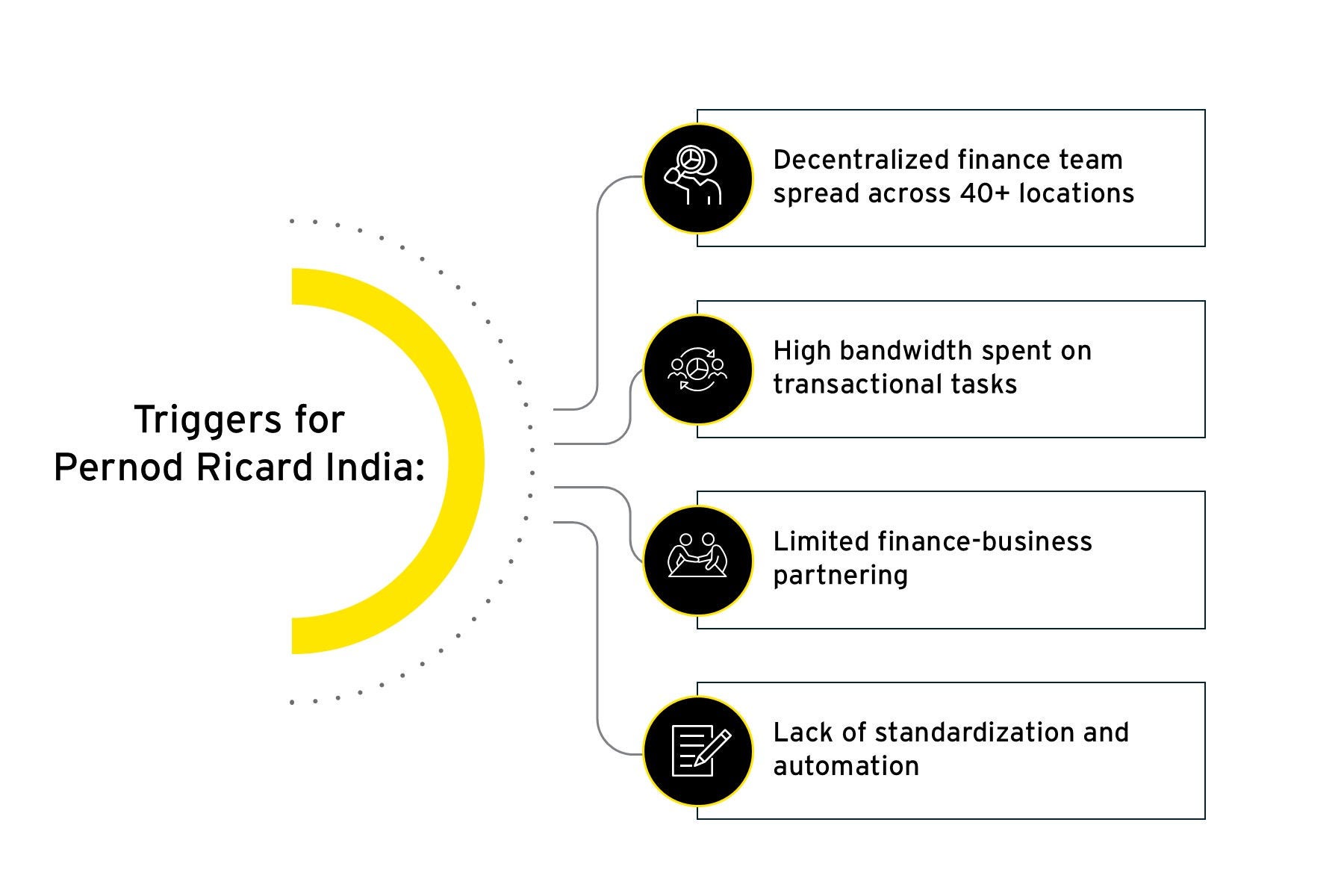
An initial assessment revealed that transactional activities related to transaction processing and routine bookkeeping consumed over 60% of the finance team's time. This left limited capacity for strategic collaboration with the business or for providing actionable insights to support decision-making. This scenario presented an opportunity for Pernod Ricard India to establish a centralized Finance Centre of Excellence (CoE) to enable more value-driven operations.

Triggers for Pernod Ricard India
Our goal was clear: streamline processes, embrace digital tools and empower the finance team to focus on insights that truly drive the business forward.

AI Academy Empowering GenAI training and talent transformation

EY India AI Academy offers GenAI upskilling programs for data scientists, data engineers, and GenAI engineers with role-based learning paths and trainings.

Know more

In collaboration with EY, Pernod Ricard embarked on its finance transformation journey through a structured approach emphasizing stakeholder engagement and governance. Initially, the initiative garnered feedback from cross-functional leaders concerned about shifts in finance support. Within the finance function, experienced personnel who had developed their own workflows faced uncertainty and the concept of a Finance CoE was initially met with caution.
 

To address concerns, the transformation began with a comprehensive diagnostic assessment of over 700 activities performed by approximately 180 FTEs across key finance processes. EY facilitated over 40 workshops with business finance teams to align on the target operating model, detailing service placement, manpower needs, improvement opportunities and governance frameworks with SLA targets.
 

To implement the target operating model, EY developed a detailed transition plan that included over 280 "to-be" process flows, 650 standard operating procedures and approximately 1,300 knowledge transfer sessions. They also conducted over 30 New Ways of Working sessions and established daily Gemba boards and 50 SLAs to build trust with business teams. Additionally, more than 20 digital workflows, 30 reporting automations and ERP enhancements were introduced to streamline processes and improve efficiency.

The transformation was not just about centralizing operations; it was about enabling finance to become a true strategic partner to the business.

LLM for transforming the BFSI sector: Unlocking innovation and efficiency

A specialized fine-tuned LLAMA 3.1-8B Instruct model, which aims at addressing the distinct challenges in customer care within India's BFSI sector.

Know more

Effective change management was essential for PRI management due to its anticipated widespread impact. EY created a detailed stakeholder map and tailored change management strategies to communicate information, clarify roles and foster commitment to the CoE's vision. This included robust project governance, regular updates, and milestone celebrations to encourage collaboration and maintain momentum.
 

On the people front, special attention was given to deploying experienced managers from various business finance teams, who understood PRI policies, processes and more importantly the culture. EY also conducted expert-led training sessions to promote a service-oriented mindset, and over 20 employee-of-the-month awards were conferred to motivate team members and encourage healthy competition.

Automated Reporting Tool (ART)

Automated Reporting Tool (ART) is an end-to-end regulatory reporting automation platform that simplifies financial reporting, enhances accuracy, and reduces compliance risks for banks, NBFCs, and insurers.

Know more

Looking ahead, the Finance CoE team is collaborating to explore AI integration, particularly for enhancing compliance functions. Additionally, the CoE aims to gradually expand into forecasting and predictive analysis, elevating its analytical capabilities beyond transactional processing. Further lies a more ambitious vision: transforming India Finance into a global Centre of Excellence supporting Pernod Ricard businesses worldwide.
 

Success mantra

  • Start with clear objectives and prioritize steady progress over ambitious changes.
  • Effective change management and consistent communication are essential for fostering team trust.
  • Collaborating with external partners enhances discipline and accountability, contributing to successful transformation.
  • External partners should integrate smoothly as extensions of the team to promote collaboration over transactional interactions.
  • Celebrate successes throughout the journey to maintain motivation.

Pernod Ricard India’s Finance CoE is entering a new phase of evolution – broadening its impact, strengthening its strategic role, and laying the groundwork for future-ready finance excellence. 


Related articles

CFOs at the helm of Finance Transformation

Finance Transformation: Leveraging tech, data, and talent for strategic finance management and growth. Discover our scorecard approach for real-time insights and efficiency.

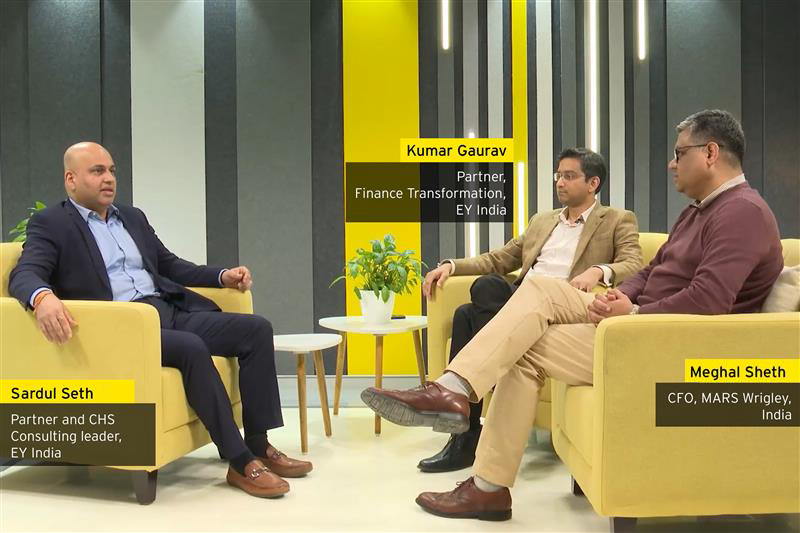
12m 37s

How LT Foods achieved 2x revenue growth with digital supply chain transformation

LT Foods elevates supply chain transformation and doubles revenue with EY's Asterisk platform, enhancing agility and service in the food market.

How Dabur is on a transformation journey to embed long term value for its stakeholders  

Dabur embarks on a sustainable transformation, targeting net-zero carbon by 2045 and water positivity by 2030, embedding ESG for stakeholder value.

    About this article