




India Corporate Treasury Survey 2025

India Corporate Treasury Survey 2025: How AI
and automation are redefining treasury

Related topics

The India Corporate Treasury Survey 2025 explores how operating models, technology and automation are shaping the future of treasury in India.


In brief

  • Indian treasuries face gaps in automation, reporting, and analytics, risking irrelevance if not modernized.
  • AI adoption and treasury automation strategies are emerging as critical levers for forecasting, risk management, and decision support.
  • Shared services, hybrid operating models, and upskilling are central to building future-ready treasury functions by 2030.

The Indian corporate treasury function is at an inflection point. It must shed its inhibitions of being a siloed business unit that adds specific financial value and instead become the nerve center of strategic insight, risk intelligence, and enterprise value orchestration. EY India’s 2025 Treasury Survey, based on insights from 85 treasury leaders across the country, captures this transformation in motion and reveals how organizations are reshaping their treasury functions to respond to a world defined by complexity, connectivity, and constant change.

Key gaps holding back transformation

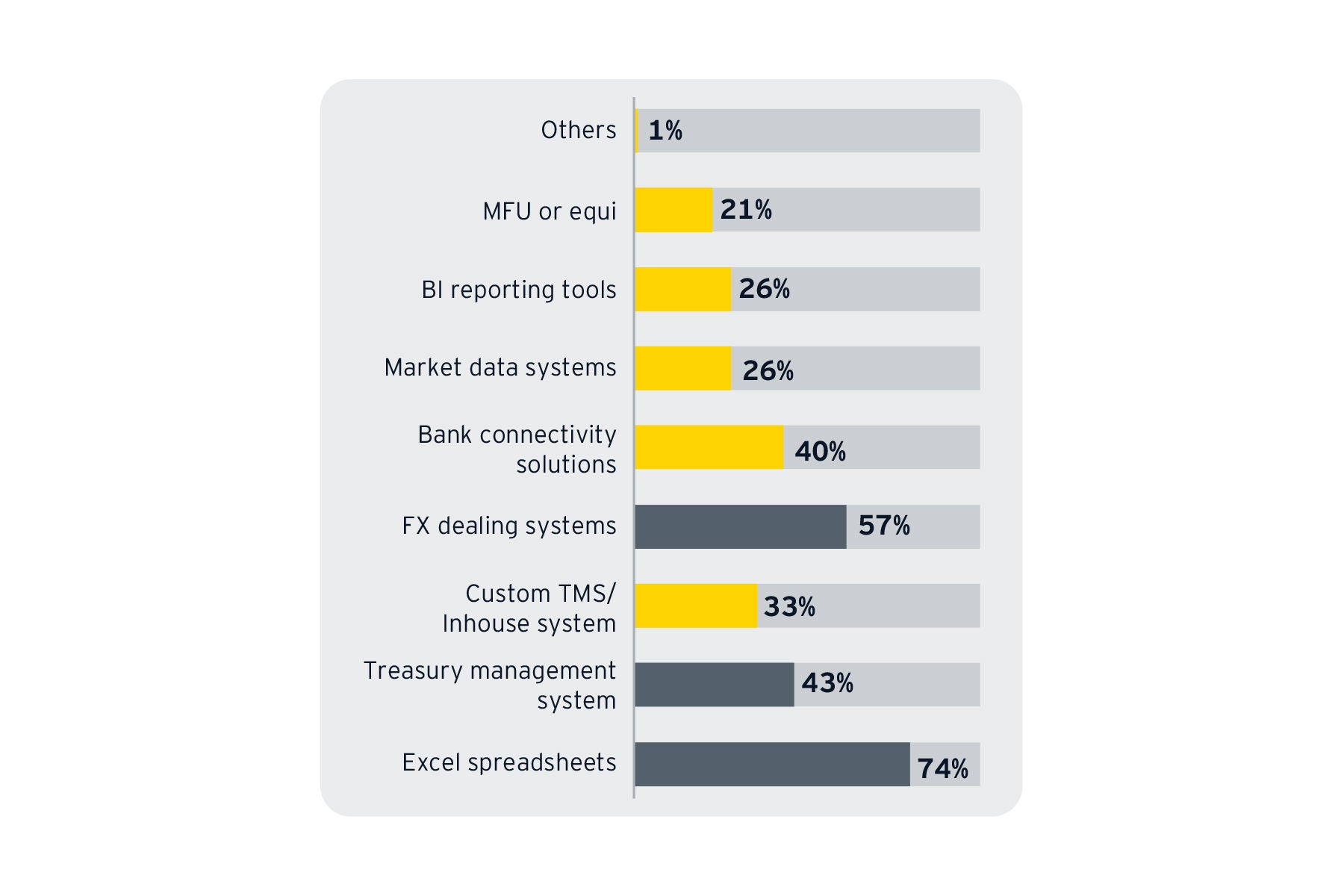
Despite rising expectations, treasury teams in India face structural gaps that hinder progress. More than 70% still depend on spreadsheets, two-thirds cite weak reporting and dashboarding, and only a quarter have launched AI pilots. These limitations make it difficult to deliver real-time insights, manage P&L volatility or plan liquidity effectively.

As the survey emphasizes, one-time upgrades or tactical patches may not adequately address treasury transformation. Instead, organizations must rethink platforms, people and performance to move from reactive support functions to proactive orchestrators of financial agility.

How automation and AI can reshape corporate treasury in India

Listen to this episode of EY India Insights, where Hemal Shah explores how AI and automation are transforming corporate treasury and driving agile, data-driven decisions.

Know more

Technology adoption and treasury management systems

The research highlights that the traditional treasury management system (TMS) is no longer viewed as a complete solution. While some organizations use formal TMS platforms, many continue to rely heavily on Excel, which reflects a maturity gap in digital adoption. Respondents flagged insufficient automation, lack of integration with ERP systems, and limited analytics as major pain points.


Future treasury technology trends point toward cloud-native, modular, and API-driven solutions. Organizations are encouraged to design their technology stacks as platforms rather than products, embedding predictive analytics, reducing spreadsheet dependence, and reimagining vendor support models. This shift underscores the benefits of adopting cloud-native treasury solutions that deliver flexibility, lower costs, and continuous updates.

Treasury technology adoption

Skills believed to be crucial for treasury professionals

AI adoption in finance and treasury

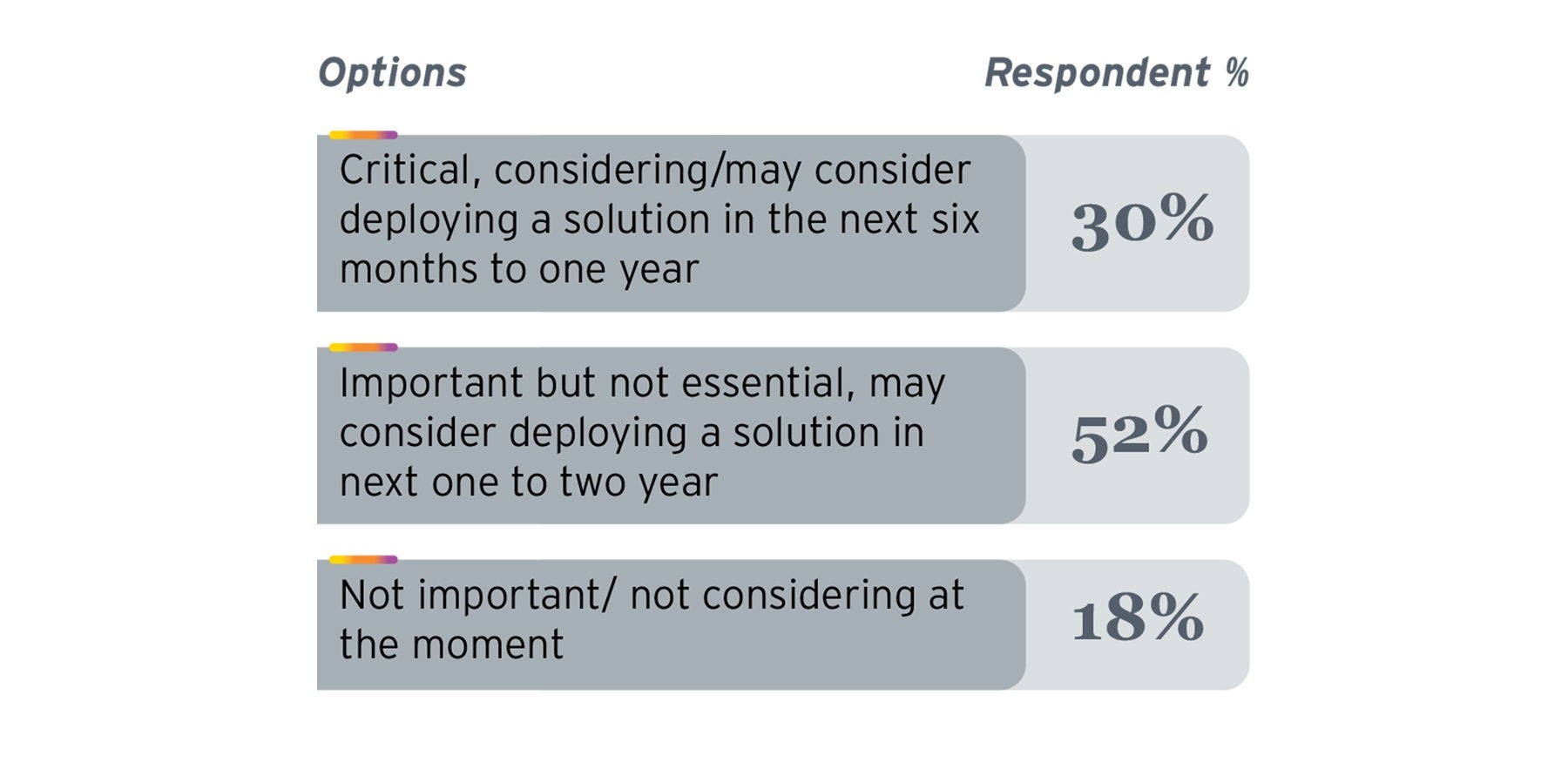
Artificial intelligence is rapidly moving from experimentation to execution in treasury operations. More than 80 percent of respondents believe AI will be critical in the next one to two years. Cash forecasting has emerged as the leading use case, with pilots underway to improve accuracy of inflows and outflows. Other applications include foreign exchange exposure prediction, payment anomaly detection, and trade finance document review.

The survey suggests creating a structured 12- to 24-month AI roadmap, focusing on use cases that are integration-ready and data-rich. Building AI capabilities within centers of excellence and forming cross-functional squads are also recommended. The importance of AI and automation in treasury operations lies not only in efficiency but also in enabling predictive intelligence and proactive decision-making.

How important is the adoption of GenAI, AI and machine learning in transforming your treasury operations?

Adoption of GenAI

Redesigning treasury operating models

Treasury functions are rethinking their operating models to enhance flexibility and scalability. Nearly half of organizations now maintain a 50-50 split between functional and technology skills. At the same time, 49 percent target 90 percent or higher automation of back-office tasks, with some extending ambitions to front-office processes.

The role of shared service centers is expanding. Many organizations are outsourcing technology maintenance, reconciliation, or accounting, while global capability centers and hubs in GIFT City provide additional leverage. This hybrid model balances strategic control with outsourced execution, helping organizations achieve scale, resilience, and compliance.

Strategic and futuristic actions for operating model redesign

Segment treasury
activities by strategic
importance and
outsourcing potential

Design hybrid teams
with Global capacity
centers(GCC) and
nearshore hubs

Build operating model
flexibility around service
layers
 

Upskilling treasury professionals

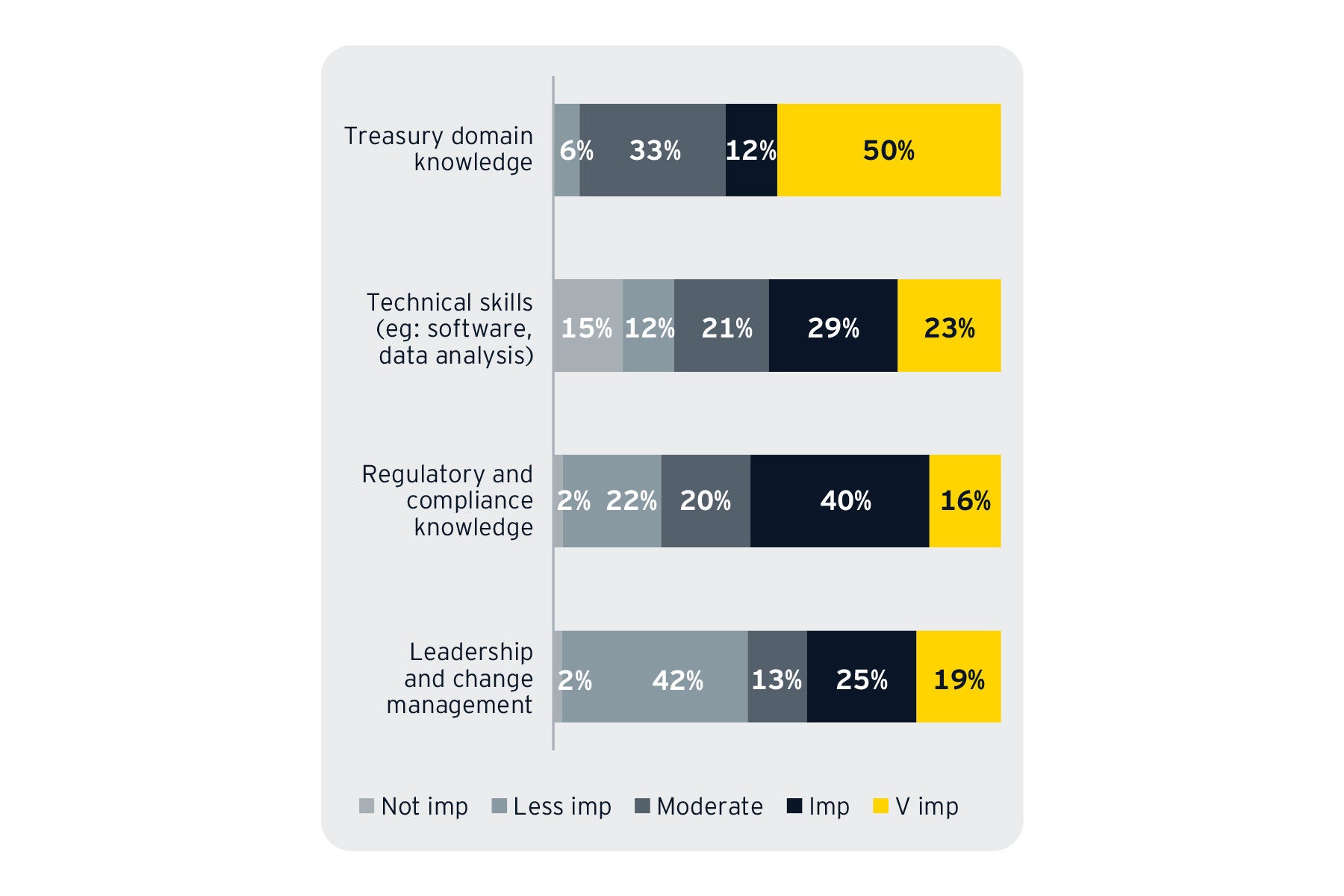
Talent development has become a core pillar of treasury modernization. Treasury domain expertise remains vital, but technical skills such as data analysis, ERP integration and coding are increasingly in demand. Leadership and change management capabilities are also rising in importance.

Organizations are embedding learning through e-platforms, digital standard operating procedures, and low-code tools. The survey recommends defining a treasury skills architecture, institutionalizing learning through digital infrastructure and creating in-house knowledge centers to share best practices. These initiatives represent best practices for treasury upskilling and talent development, ensuring that professionals can operate effectively in a digital, real-time environment.

Skills believed to be crucial for treasury professionals

Treasury technology adoption

The future of treasury in India

Looking toward 2030, the survey envisions the treasury function as a strategic control tower. Automation of treasury and banking operations are the top investment priority, followed by training and shared services. Organizations are also considering offshore centers in GIFT City to strengthen efficiency and regulatory alignment.

The future of treasury in India will depend on balancing automation with people-led transformation. Future-ready treasury strategies for Indian organizations must embed predictive analytics, cloud-native platforms and agile operating models, while also building resilient teams equipped with digital skills.

Strategic actions to embed upskilling in treasury transformation

  • Embed automation into core treasury infrastructure
  • Develop people-led, tech-enabled treasury teams
  • Adopt agile service models
  • Leverage Gift city and overseas COEs for treasury innovation
  • Create a 2030 treasury vision playbook

Conclusion

As the 2025 India Corporate Treasury Survey 2025 highlights, Indian treasuries must reduce their reliance on legacy processes and fragmented systems. To remain relevant, they must embrace treasury automation strategies, adopt AI across GenAI and agentic bots in finance and treasury, and redesign operating models through shared services and hybrid structures. Equally, they must focus on upskilling treasury professionals to navigate the demands of digital transformation in finance.

By 2030, the most successful organizations are expected to be those that treat treasury not as a support function but as a strategic partner driving agility, foresight and enterprise growth.

 Kriya Bhansali, Senior manager – Financial Services Risk Management, EY India have contributed to the article.

Download the full pdf

Listen to this episode of EY India Insights, where Hemal Shah explores how AI and automation are transforming corporate treasury and driving agile, data-driven decisions.

Summary

The 2025 India Corporate Treasury Survey highlights the changes taking place in the Indian corporate treasury function as it transforms from a siloed unit to a strategic hub for risk intelligence and enterprise value orchestration. Organizations consider AI as a critical component for future treasury operations, with a focus on cash forecasting and predictive analytics. Upskilling professionals is of high priority along with comprehensive technology adoption, including cloud-native, modular solutions and AI tools. Successful treasuries are expected to be based on automation, AI and agile operating models.

About this article