





EY refers to the global organization, and may refer to one or more, of the member firms of Ernst & Young Global Limited, each of which is a separate legal entity. Ernst & Young Global Limited, a UK company limited by guarantee, does not provide services to clients.
Recent Searches


CARO disclosures: Decoding commitment to ethics in top NSE companies
ISO certification for Fraud Control Management Systems helps with fraud prevention for enhanced governance, compliance, and risk management.
In brief
- Only 42% of companies disclosed whistleblower complaints under CARO last year
- Large firms with no complaints raise concerns about effectiveness of the mechanism
Mechanism and whistleblower management are not merely moral imperatives but essential necessities for fraud detection. Whistleblowing is a powerful tool that enables individuals to speak up against misconduct and unethical behaviour within organizations and serves as a crucial safeguard against any form of wrongdoing.
According to the Association of Certified Fraud Examiners (AFCE)
43%
43%
of all fraud is uncovered through tips from whistleblowers, more than half of whom are employees.
However, a recent analysis of Companies Auditor’s Report Order (CARO) disclosures for FY23-24 among top National Stock Exchange (NSE)-listed companies reveals concerning trends. Less than 50% of companies have reported whistleblowing under CARO (42%)—with several organizations claiming that no complaints were received.
For companies with an average employee size of at least 5000, and decades of operation, the absence of whistleblowing complaints reports raises the critical question of whether their existing mechanisms are truly effective. Despite their commitment to adopting a zero-tolerance policy on unethical activities in their annual reports, these statistics present an opportunity for self-reflection and improvement in compliance reporting.
Actionable steps for enhancing whistleblowing mechanisms:
- Strengthen awareness programs: Conduct regular training sessions to educate employees about the whistleblower policy, emphasizing the importance of ethics and integrity in the workplace.
- Ensure anonymity and confidentiality: Establish employee complaints mechanisms that ensure whistleblowers remain anonymous, fostering a safe environment for individuals to report concerns without the risk of retaliation.
- Promote a culture of trust: To establish good business ethics, the leadership should actively support whistleblowing initiatives by demonstrating a commitment to addressing concerns raised by employees.
- Monitor and analyze reporting trends: Develop metrics to track whistleblower reports and POSH (Prevention of Sexual Harassment) reports, using this data to identify areas for improvement.
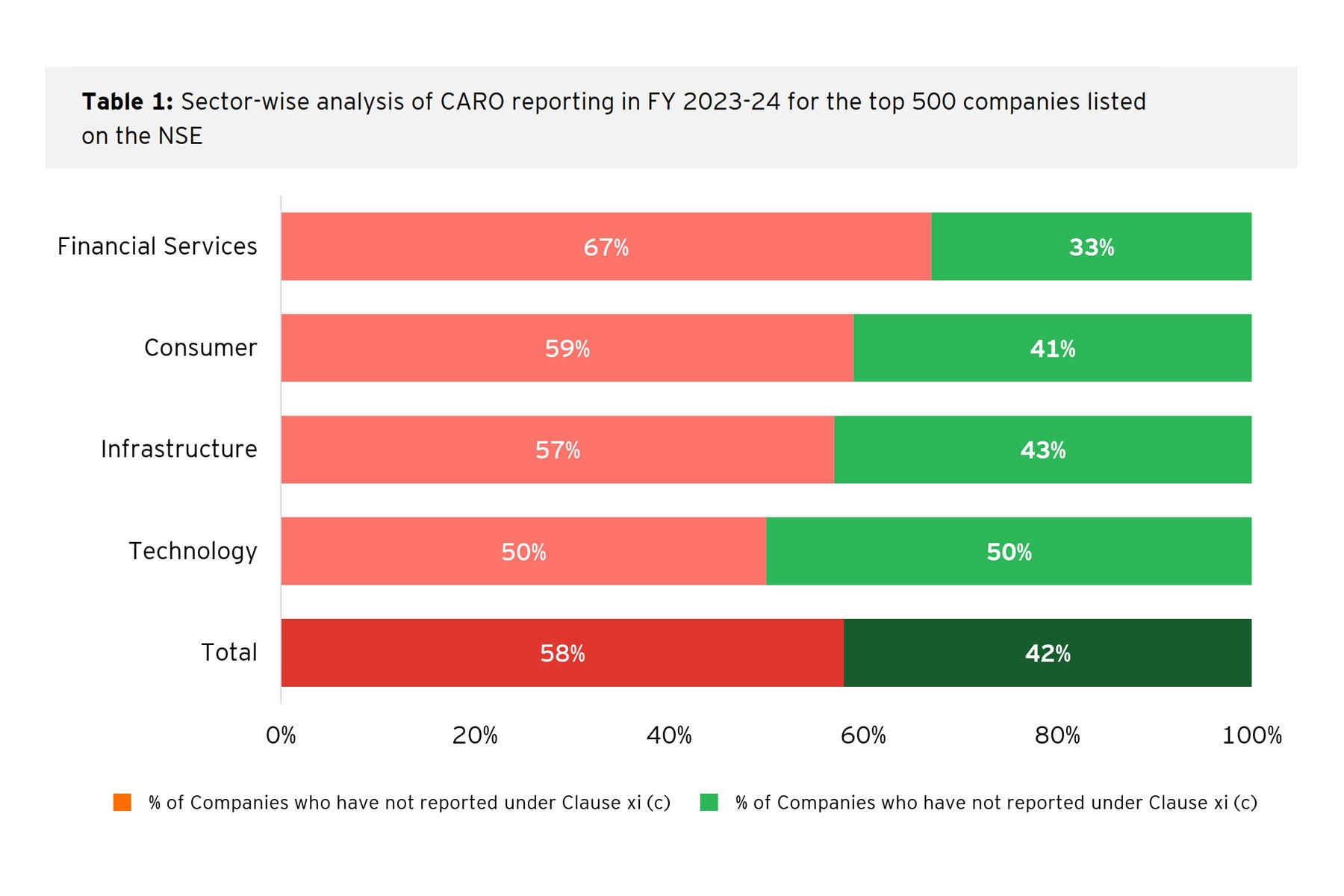
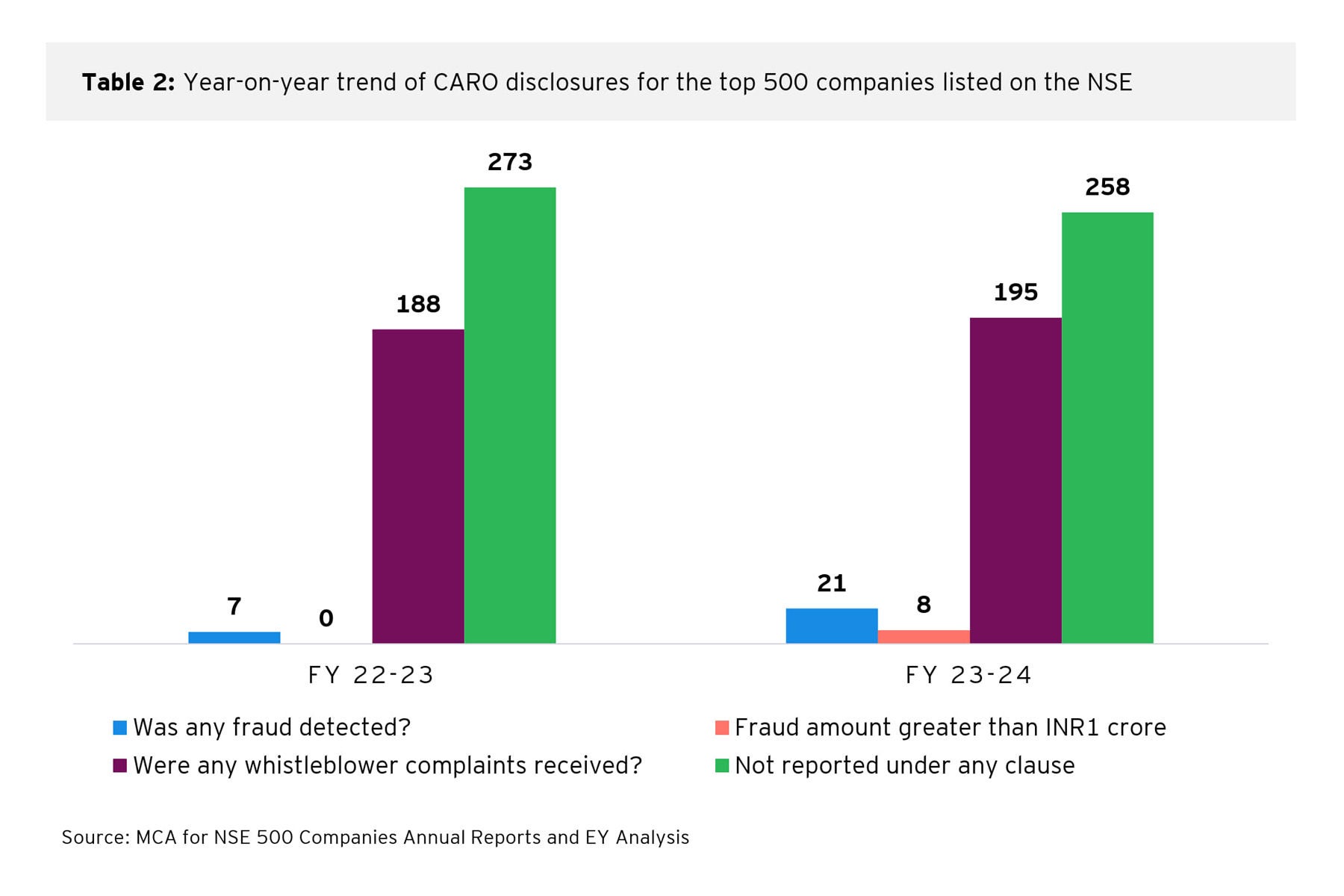
While there is a marginal uptick in year-on-year trends in CARO disclosures, this highlights the need for vigil mechanisms in establishing sound corporate governance practices and the creation of a safe, ethical workplace. According to the ACFE, the key elements for a robust whistleblower hotline include anonymity, awareness, confidentiality, and ease of access. Trust in independent investigations is essential to foster a culture of reporting without the fear of retaliation and maintain workplace integrity.
The success of whistleblowing in NSE companies relies on the tone set by top management, which must clearly convey commitment and intent. As companies finalize their CARO FY 2024-2025 reporting numbers, it is crucial to reflect on the insights and ascertain whether we are progressing in a positive direction.
The table below indicates a breakdown of the companies that reported affirmatively on three specific CARO1 reporting disclosures clauses related to fraud.
Summary
Whistleblowing is vital for ethical corporate governance, yet CARO FY23-24 disclosures show only 42% of NSE top 500 companies reported whistleblower complaints, raising concerns about the effectiveness of existing vigil mechanisms. Despite zero-tolerance policies, large firms with thousands of employees report no complaints, suggesting underreporting or lack of trust. Strengthening awareness, ensuring anonymity, and fostering a culture of trust are key to improving hotline effectiveness and compliance.
How EY can help
-
EY Virtual Ethics and Compliance Manager leverages tech-enabled services to manage investigations, ethics programs and regulatory compliance cost-effectively.
Read more -
AI driven document verification solution with multi level checks, advanced algorithms, and fraud verification to help businesses ensure document authenticity.
Read more -
Trusted Verification at EY supports organizations BGV process with employee background verification and screening services for informed hiring decisions.
Read more
Related articles
How a global MNC nearly halved its BGV time with Managed Services
A global MNC halved background verification time with managed services, boosting onboarding efficiency, cutting risks, and improving vendor performance.
Why leadership is critical in building an integrity-first culture
A 2025 emerging markets perspective of the EY Global Integrity Report 2024 highlights how emerging market companies can continue to put integrity first.
The first firewall: Background checks as India Inc.’s frontline defense
Combat employment fraud with AI-powered background checks. Streamline verification, enhance hiring integrity, and safeguard against advanced fraudulent tactics. Learn more.