EY helps clients create long-term value for all stakeholders. Enabled by data and technology, our services and solutions provide trust through assurance and help clients transform, grow and operate.
At EY, our purpose is building a better working world. The insights and services we provide help to create long-term value for clients, people and society, and to build trust in the capital markets.
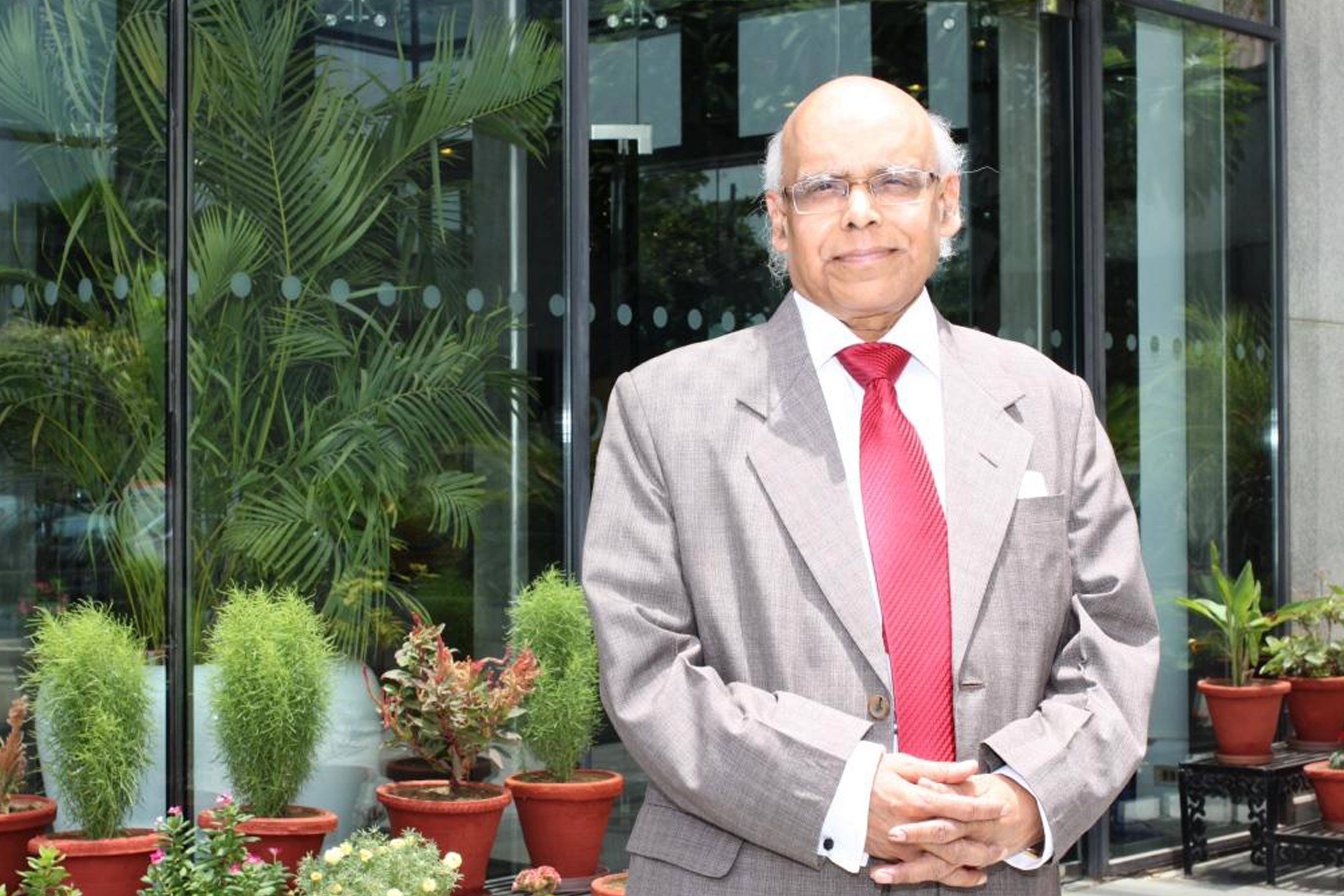
In the first episode of our pre-budget 2025 podcast series, we delve into the macroeconomic landscape and the important policy considerations for the upcoming Union Budget 2025. Engage with us in a thought-provoking dialogue featuring Dr. D.K. Srivastava, Chief Policy Advisor at EY India, as we dissect India's current economic landscape, project growth trajectories, and examine priorities that relate to fiscal consolidation and infrastructure advancement.
Key takeaways:
Budget 2025 should align fiscal stimulus with consolidation to ensure robust short to long-term growth.
Enhancing domestic demand through a renewed infrastructure pipeline and increased capital expenditure can help counter global economic uncertainties.
Rationalizing personal income tax rates and enhancing disposable income for low and lower-middle income groups can help drive domestic consumption and economic growth.
We anticipate a significant shortfall in the government's actual capital expenditure compared to the budgeted INR 11.1 lakh crore.
Dr. D.K. Srivastava
EY India Chief Policy Advisor
For your convenience, a full text transcript of this podcast is available on the link below:
Tarrung
Welcome to the EY India Insights podcast. I am your host, Tarrung, and in this episode, we try to decode the Union Budget for 2025-26, in order to bring out the key macroeconomic messages. To facilitate this discussion, we are joined by Dr. D.K. Srivastava, a distinguished economist, member of the Advisory Council to the 16th Finance Commission, and EY India's Chief Policy Advisor.
A very warm welcome, sir.
Dr. Srivastava
Thank you, Tarrung. Thank you for having me here.
Tarrung
Most welcome, sir. Could you please provide us a snapshot of India's current macroeconomic situation and how it shapes expectations for the 2025-26 Union Budget?
Dr. Srivastava
The second quarter Gross Domestic Product (GDP) growth at 5.4% fell significantly short of Reserve Bank of India’s (RBI) expectation of 7%, as indicated in its October Monetary Policy Review. This shortfall in the Q2 growth numbers led to a downward revision in the annual growth expectations for FY25 GDP growth by most observers of the Indian economy, including multilateral organizations and rating agencies.
Meanwhile, the first advanced estimates prepared by the National Statistics Office (NSO) have also become available. In these estimates, the three-year GDP growth for FY25 is put at 6.4%. The nominal GDP growth has been assessed at 9.7%. In fact, this nominal GDP growth is lower than the corresponding budget estimate of 10.5%. Our expectation for FY26 for real and nominal GDP growth rates, which would inform the FY26 budget estimates are 6.5% and 10.5%, respectively.
It is difficult to push the real GDP growth much above 6.5%, as long as the global economic headwinds prevail. In particular, the contribution of net exports to India's GDP growth might remain subdued under conditions of supply-side uncertainties and continuing global growth slowdown.
Tarrung
Thank you so much for these lucid and thoughtful insights. Now, with the need to balance fiscal consolidation with economic recovery, what approach do you foresee the government taking in the upcoming budget?
D.K. Srivastava
There is no doubt that there is a need to establish a suitable balance between fiscal consolidation and fiscal stimulus to growth that can ensure both short-term and a medium to long-term growth which is robust. With the short-term in perspective, the budget makers need to ensure that productive fiscal stimulus through an emphasis on infrastructure expansion is continued.
This has been the Government of India’s (GoI) strategy for some years. However, this strategy lost momentum in FY25, possibly due to the elections. And we expect that there will be considerable shortfall in the achieved GoI capital expenditure as compared to the budgeted magnitude of INR 11.1 lakh crore. In our assessment, the FY26 budget should provide for at least 20% growth over the GoI’s revised estimate for FY25.
At the same time, continued emphasis on fiscal consolidation would facilitate medium to long-term growth. As fiscal deficit relative to GDP goes down, conditions would be created for bringing down the interest rates so that private investment can also be stimulated. Also, as the debt-GDP ratio goes down, the ratio of interest payment to revenue receipts would be reduced, creating space for higher primary expenditures for the GoI to provide higher fiscal stimulus to growth.
Tarrung
Thank you, sir for these insightful perspectives. Infrastructure investment often drives economic growth. What specific measures or allocations related to infrastructure investment should we anticipate for Budget 2025-26?
Dr. Srivastava
The emphasis on infrastructure investment is extremely valid and relevant in the context of the continuing uncertainties in the global economy. In that situation, India's growth strategy will have to depend primarily on domestic demand drivers. FY25 national income accounts data shows that private final consumption expenditure is estimated to grow at 7.3%, which can be considered as robust growth even though there are some concerns regarding growth in urban consumption expenditure.
Some of that is partly due to the fall in the growth of the industrial sectors in the Gross Value Added (GVA), particularly manufacturing. Some boost to growth may come from the monetary side by a reduction of 50 basis points in the repo rate in the next fiscal year. This will boost private consumption expenditure as well as industrial growth.
However, in the budget, there should be a continued reliance on fiscal intervention by ensuring that the momentum of growth in infrastructure investment is regained. It would be useful for the GoI to bring out the second edition of the earlier infrastructure pipeline in which the roles of the central and state governments, as well as the private sector are clearly delineated.
Tarrung
Thank you, sir for explaining it so vividly. Are there any significant tax reforms or reliefs we might expect for individuals and businesses in Budget 2025-26?
Dr. Srivastava
It is high time that reforms in the case of personal income tax are taken up. In particular, rationalization of rates and deductions should be such as to enhance available disposable income in the hands of lower income households and lower middle-income households. They have a higher marginal propensity to consume and therefore increase in their disposable income would also lead to higher consumption expenditure.
This should be done with respect to the new tax regime. In fact, the new Personal Income Tax (PIT) regime should be so attractive that the old tax regime may become redundant. Further, given the changing global situation, India needs to relook at the structure of import tariffs and provide a high degree of protection to domestic manufacturers. With these strategies, there would be a positive reform of all taxes in India because Corporate Income Tax (CIT) and Goods and Service Tax (GST) reforms have already taken place.
Tarrung
Thank you so much, sir. These are extremely useful perspectives. And thank you so much for joining us in this session and providing us your invaluable insights. Thank you to all our listeners as well. Stay tuned for more captivating discussions on EY India Insights. And do not forget to subscribe to the latest updates. Until next time, this is Tarrung Kapur signing off. Thank you.