EY helps clients create long-term value for all stakeholders. Enabled by data and technology, our services and solutions provide trust through assurance and help clients transform, grow and operate.
At EY, our purpose is building a better working world. The insights and services we provide help to create long-term value for clients, people and society, and to build trust in the capital markets.
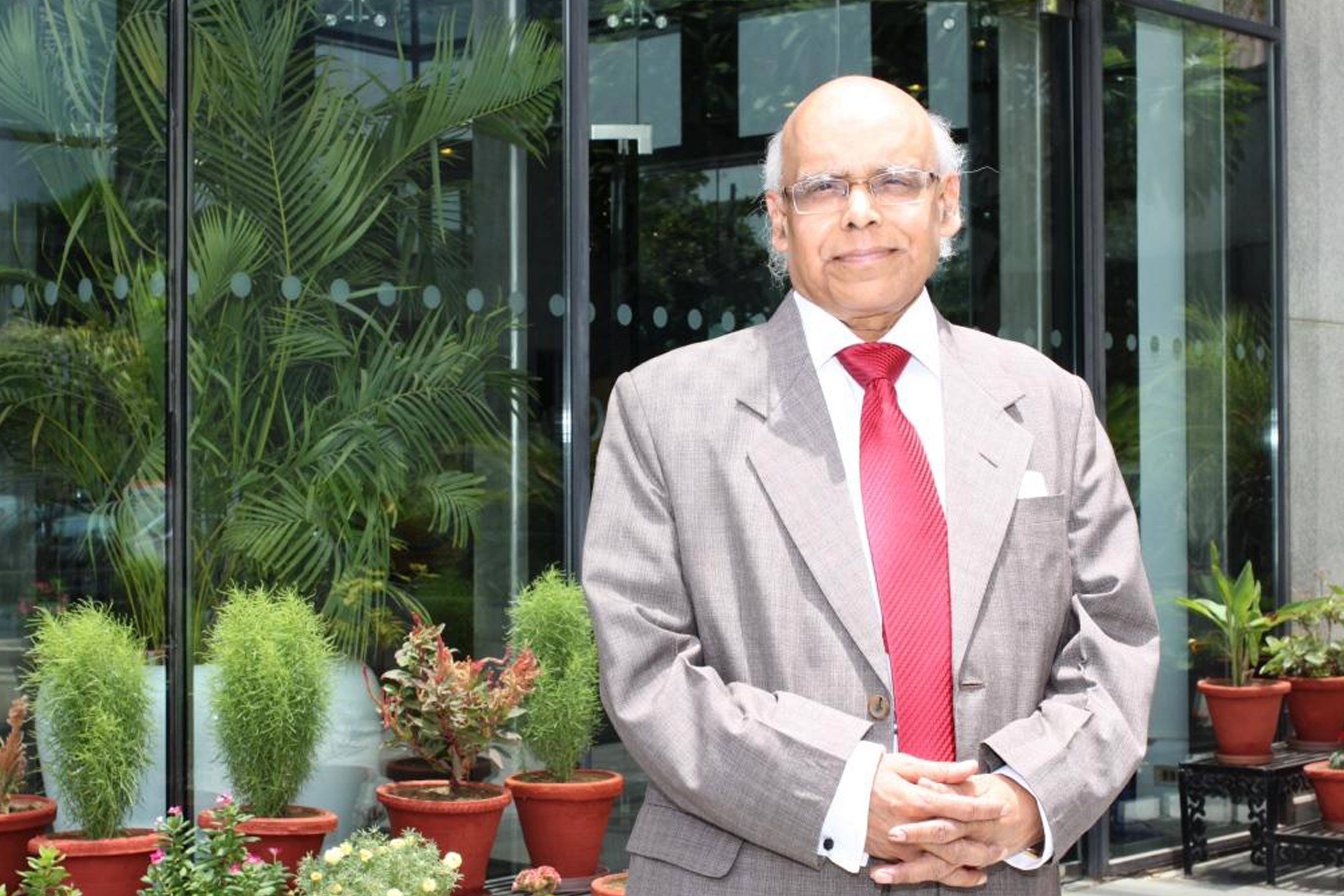
In the latest episode of EY India podcast, D.K. Srivastava, a distinguished economist and Chief Policy Advisor at EY India, discusses reasons behind India's robust 7.8% real GDP growth in Q1 FY26. He provides a deep analysis into the structural and policy shifts underpinning this momentum, particularly the government’s push through capital expenditure and the pressures on fiscal balances amid evolving revenue trends.
D.K. Srivastava explores the far-reaching implications of GST 2.0. The conversation extends to analyzing India’s trade performance amid global supply chain disruptions and tariff-related uncertainties. He emphasizes on the need for strategic diversification of trade partners and highlights India’s vision to achieve US$500 billion in bilateral trade with the US by 2030.
Key takeaways
Q1 FY26 GDP in India grew 7.8%, surpassing RBI’s 6.5% forecast.
Manufacturing and key service sectors — trade, transport, finance, and public administration — were the main drivers of this performance.
Growth in capital formation and government final consumption expenditure supported economic growth from the demand side.
GST 2.0 simplifies tax structure by dropping the 12% and 28% slabs, leaving 5%, 18% and 40% as the main rates.
The initial direct impact of GST rate reductions on revenue may be offset by increased demand as lower prices stimulate consumption.
Sectors such as textiles, consumer electronics, automobiles, health, and most food items are among the key beneficiaries of lower GST rates.
State governments may increase borrowing or reduce expenditure to manage the fiscal burden from GST reforms.
India must diversify its export destinations and import sources in the face of tariffs, supply chain disruptions and other global uncertainties.
Although the direct impact of (GST) rate reduction is negative, it may be counterbalanced by an increase in demand because prices would go down.
D. K. Srivastava
EY India Chief Policy Advisor
For your convenience, full text transcript of this podcast is available below.
Tarrung Kapur: Welcome to the EY India Insights podcast. I am your host Tarrung Kapur and today we embark on a journey to unravel the recent macro developments pertaining to the growth, fiscal and external sectors of the Indian economy. In this episode, we deep dive into reasons for India's robust first quarter real GDP growth at 7.8%, the implications of GST 2.0 and underlying signals emanating from the external sector.
To facilitate this discussion further, we are joined by Dr. D.K. Srivastava, Chief Policy Advisor, EY India, who is a distinguished economist and a member of the Advisory Council to the 16th Finance Commission. A very warm welcome to you to this podcast.
D.K. Srivastava: Thank you.
Tarrung Kapur: To begin with, could you give us an overview of India's economic performance in the first quarter of FY26? How did the growth figures compare with the RBI's expectations?
D.K. Srivastava: Well, as you indicated in your introductory observations, the first quarter FY26 real GDP growth of 7.8% can indeed be considered robust. It outperformed RBI's expectation for this quarter’s growth of 6.5% by a significant margin. In fact, the RBI also had an annual expectation of growth of 6.5%. Given this robust growth of 7.8%, the RBI has now revised its annual real GDP growth projection to 6.8% from a figure of 6.5%. Now we can look at this robust performance from both the output side and from the demand side.
Let us first focus on the output side. There are four sectors that did exceptionally well in this first quarter. The first one is manufacturing, where the growth rate was as high as 7.7%, but even better performing sectors were the three important service sectors in the economy, that together constitute 72.1% of weight in the real gross value added. So, these three sectors are ‘trade, transport, hotels et. al’; ‘financial, real estate et. al’; and public administration and defense services. In these sectors, the growth performance was as high as 8.6%, 9.5% and 9.8%.
So, what happened is that these sectors, with very high weight in the overall output of the economy, also did exceptionally well for close to 9% on average, and that is what pulled up the overall growth rate. Agriculture in general performs in the range of 3% to 4%. Its growth was 3.7% in this quarter, which can be considered a reasonably good growth, although it was marginally less than the corresponding average over the last four quarters at 4.4%.
Tarrung Kapur: Thank you. So, moving to the demand side now, what were the key factors driving growth during this quarter?
D.K. Srivastava: The main players on the demand side are capital expenditure – both government and private capital expenditure – and consumption expenditure, again, both government final consumption expenditure and private final consumption expenditure. Now in these demand segments, the most important role that has been played in recent years was the drive or push given by government’s own gross fixed capital formation. This is called GFCF, which grew at a rate of 7.8%, pushing the overall demand. On the other hand, the government final consumption expenditure showed growth on average, i.e., an average for the four quarters was only 2.9%, although for this quarter it was much higher at 7.5%. So, both capital formation and government final consumption expenditure grew at level 7.5% or above, and that is what supported growth from the demand side. But as prices are driven down, the impact is not only on those sectors where the rates have been lower, but also on those sectors where the rates may have remained unchanged or where higher rates may prevail. This is because when disposable incomes increase, these would be spent not only on the lower rate goods, but on the goods across board, and therefore some of the higher rate goods would also see augmented demand and that would help in making up for the revenue loss.
The only vulnerable segment of demand consists of exports, which grew at 6.3% in this quarter, which was lower than the growth of imports. As a result, the contribution of net exports turned negative at (-)1.4 percentage points, and this was after showing a positive contribution averaging 2.2 percentage points in the last four quarters.
Tarrung Kapur: Thank you so much for your valuable insights. There has been a lot of buzz recently about GST 2.0. Could you start by telling us what exactly has changed in this new version of the goods and services tax system?
D.K. Srivastava: Well, it was after a long transition period from 2017 when it was introduced now to 2025, that a major reform affecting the Goods and Services Tax in India was undertaken. That is the reason why it is being called GST 2.0. The main change that happened was to rationalize and reduce the GST rates. So now two rate categories have been dropped which pertains to 12% and 28% and the three main rate categories that we now have in India's GST are 5% and 18% as the main categories. There is a special rate for demerit, so-called demerit goods or polluting goods, which is set at 40%. So, 5%, 18% and 40%...these are the three rate categories. So, the overall impact is to first drop the 12% and 28% rate categories but also reclassify many of the goods and services into lower rate categories. The overall impact is many goods have been classified at lower rates, although the service tax remains at 18%. At the same time, GST 2.0 also coincides with the discontinuation of the compensation cess mechanism which was introduced at the time when GST was initiated in India. So, the new rate structure may imply, because many goods have been placed in the lower rate categories, a reduction or a temporary negative impact on revenues.
Although the direct impact of rate reduction is negative, it may be counterbalanced by an increase in demand because prices would go down. Also, because of the way the rates have been rationalized, we can look at what sectors can be classified as beneficiary sectors. Now the beneficiary sectors include textiles, consumer electronics, automobiles, health and most food items, which are now placed in the lower rate categories. All the food items mostly are now in the 5% categories. Also, these are very employment-intensive sectors, where the benefits of lower prices may be quite broad based. At the same time, on the production side, sectors that may benefit will include fertilizers, agricultural machinery and renewable energy. So, in these sectors, farmers may benefit through both lower costs and better demand.
Initially, as I said, some short-term revenue impact may be anticipated, but we have to wait and see as to what would be the quantifiable impact of these changes.
Tarrung Kapur: Thank you. Has the government provided any estimate of the potential revenue impact of this policy initiative?
D.K. Srivastava: We have two estimates coming from the Ministry of Finance, and then again, directly from the speech of the Prime Minister soon after. The Ministry of Finance provided an estimate of annual shortfall of INR48,000 crore, on account of the implementation of GST 2.0. This amount is lower than what was being expected by many other analysts at that time, but the government had argued, first of all, that there are many aspects characterized with uncertainty, but also, that along with the substantial fall in post-tax prices, demand may be boosted and eventually the revenue losses may be counterbalanced because of the increase in demand.
Now, in the speech given by the Prime Minister, he had mentioned a likely gain to the Indian citizens in terms of their disposable income to the tune of around 2.5 lakh crore in INR terms for the year as a whole. Now, this may be due both to tax refunds pertaining especially to personal income tax as well as the GST related reforms. At the time of the budget, the personal income tax, it was indicated that the loss is likely to be about INR 1 lakh crore. So, we can consider that close to about INR 1.5 lakh crore would be the impact of the GST changes. And these would have a bearing on the overall revenue foregone figures. I should say that the effect of GST changes would be both in terms of the price effect and income effect. So the price effect is that because of rate reduction, prices would be driven down. But as prices are driven down, the impact is not only on those sectors where the rates have been lower, but also on those sectors where the rates may have remained unchanged or where higher rates may prevail. This is because when disposable incomes increase, these would be spent not only on the lower rate goods, but on the goods across board, and therefore some of the higher rate goods would also see augmented demand and that would help in making up for the revenue loss. Tarrung Kapur: Thank you, that was very lucid. Given these tax reductions now, do you foresee any increased pressure on the fiscal deficit?
D.K. Srivastava: Well, I think because of the amount involved in terms of revenue foregone, there is likely to be an impact on the amount of budgeted fiscal deficit. We have to recognize that the performance of government's tax revenue so far – we have data available for the first five months in the fiscal year covering April to August – the data indicates that there has been a growth in the performance of tax revenues, which is lower than what was budgeted for the full year or what are the corresponding figures in the previous year. So, in terms of what we call GTR or gross tax revenues of the Union government, the growth in the first five months is only 0.8% over the corresponding period of the previous year.
If we break it down between direct taxes and indirect taxes, direct taxes have not performed that well because it is showing a contraction of 1% and that is due to a negative growth in personal income tax, which as we recognized earlier, has been given number of concessionalities in the budget proposals. As a result of that, the direct taxes are showing a contraction in the first five months.
Indirect taxes have shown a positive growth, but only a limited growth, because this growth is only 2.9% as compared to a 9.5% growth in the corresponding period of FY25. There is a positive change that can counterbalance this, and this is because of the receipt of more than anticipated dividend that is part of the non-tax revenues from the RBI. That would help, because that was a very substantial amount, but it may not be sufficient to fully compensate for the revenue foregone on account of GST reforms and PIT reforms. So pressure on GOI’s fiscal deficit may emanate and there would also possibly be some impact of the way in which nominal GDP growth may turn out.
The budgeted assumption was that nominal GDP growth would be 10.1% but in the first quarter it was only 8.8%, and this was mainly because of the fact that the implicit price base deflator was lower than expected. The nominal GDP growth may pick up a little as the monetary policy has been towards reducing the repo rate and increasing liquidity in the system, which may increase the implicit price base deflator to some extent.
But on the whole, I think, there would be some impact on growth, although it may be partially offset by Government of India's demand stimulus through its own capital expenditure, which has grown by 43.4% in this period of five months and revenue expenditure has also grown by 7.2%. So, overall growth is 20.2%, which is a very healthy demand support to overall growth.
Tarrung Kapur: Could the states also face fiscal pressures due to GST 2.0? How do you think that this might affect their spending or borrowing patterns? And finally, to sum up, this fiscal section, in the context of these growth related and fiscal developments, can you also outline your growth expectations for this fiscal FY26?
D.K. Srivastava: States will also bear a similar pressure of revenue foregone because of the GST reforms, because the GST rates are similar for the central and the state governments and therefore any downward revenue impact of GST reforms would be nearly equally shared between the central and state governments. So, they will suffer on that account.
Also, if Center’s GST revenues come down, then the share of the states in tax devolution would also go down to that extent, and that will also have a downward impact on states’ resources. So, both of these changes would be such that states will also face fiscal pressure and they may have to adjust.
Now, the way they can adjust is either to reduce their expenditure or to increase their fiscal deficit. I think different states may behave differently in this manner, but on the whole, there would be some marginal impact on fiscal deficit, states fiscal deficit and some marginal downward impact on state government expenditure. Therefore, state governments will have to bear a burden which may be adjusted either through increased borrowing or through reduced expenditure. To some extent, monetary initiatives may help because repo rate reductions and liquidity expansion may result in higher inflation, and that may lead to some monetization of fiscal deficit. But I think that the extent to which this may happen is quite limited.
With the first quarter real GDP growth of 7.8% and stimulus to demand — both directly from government expenditures possibly both from central and state governments — and private consumption demand, also because of lower GST rates. On the whole, I think that overall growth prospects for India in this year may be quite robust. Our own estimate is that GDP growth in FY26 may be about 6.7%. This compares well with the recent estimates by RBI as well as IMF of higher GDP growth.
Tarrung Kapur: So let us turn to the external sector now. India is currently faced with tariff related uncertainties and supply chain disruptions. So, what policy choices do you think should India make to navigate through these uncertain times?
D.K. Srivastava: As we know, ongoing tariff related uncertainties and supply chain disruptions in international trades have characterized global trade for last several quarters. These changes, although they add to overall uncertainty, but they also provide an opportunity for India to re-examine the pattern and composition of its own international trade with the rest of the world, especially with the US and China.
India's export destinations and import sources have been rather narrow, focused mainly on the US and China, and it is now time for India to consider extensively diversifying its export destinations and import sources, seeking more opportunities amongst the BRICS+ countries, and reducing its overall reliance in external trade both on the US and China.
Tarrung Kapur: This takes me to the final question of this podcast. We have also heard policymakers talk about strengthening Indo-US trade ties. What specific targets has the government set for bilateral trade with the US and what do you think are its implications?
D.K. Srivastava: Well, initially Government of India had indicated that they would like to set a target of reaching a level of US$ 500 billion by 2030 for Indo-US trade covering both goods and services and a balance of trade on these accounts. The balance would imply that there would be on the side of goods also a trade volume of US$250 billion and services also the same body.
This will call for setting up a free trade agreement between the two countries and also ensuring that imports of goods from the US, and services exports to as well as imports from the US grow at the desired compounded annual growth rate of 20%. So, three segments of this four-sided trade between India and US would require an average growth of 20%. The only segment where 20% growth or near 20% growth is already feasible is the import of goods by India from the US. So that segment is covered, and the remaining three segments we have to then adjust, such that an ambitious growth of 20% takes place. If that happens, then we would reach the target of establishing a balance individually between trade of goods and that of services and reaching an overall volume of US$500 billion.
Tarrung Kapur: Thank you very much for joining us in this session and providing all of us with such valuable insights.
D.K. Srivastava: Thank you, Tarrung. Thank you very much.
Tarrung Kapur: Thank you. So, to sum up, I would just say that India's economy showing strong growth momentum with the first quarter FY26 growth at 7.8% and GST 2.2 promising broader benefits even amid short term fiscal pressures. Looking ahead, sustaining growth will depend on managing fiscal challenges, boosting productivity and diversifying trade. Thank you to all our listeners. Stay tuned for more captivating discussions on EY India insights.
Do not forget to subscribe for the latest updates. Until next time, this is Tarrung Kapur, signing off.