EY helps clients create long-term value for all stakeholders. Enabled by data and technology, our services and solutions provide trust through assurance and help clients transform, grow and operate.
At EY, our purpose is building a better working world. The insights and services we provide help to create long-term value for clients, people and society, and to build trust in the capital markets.
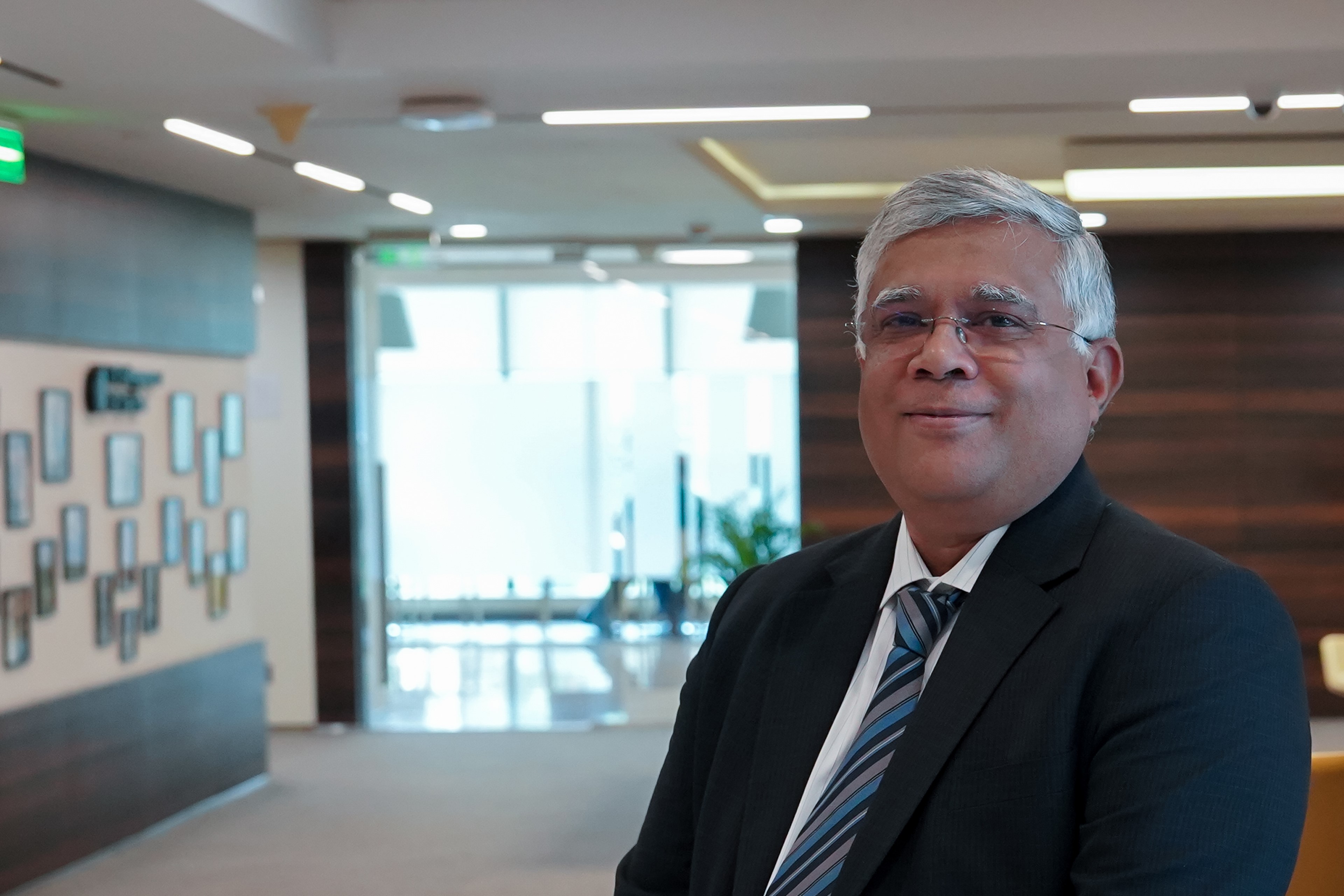
In this episode of the EY India Insights podcast, Agneshwar Sen, Associate Partner and Leader, Trade Policy Advisor, EY India, discusses the landmark India-EU FTA with Shri Anant Swarup, Senior Advisor and former Additional Secretary, Department of Commerce, and India's Chief Negotiator for the EU-India FTA when it commenced in 2021. Shri Swarup highlights the key advantages and opportunities that Indian enterprises and professionals can look for in the FTA, and the unprecedented cross-market access it creates between the two economies.
Key takeaways
The India-EU FTA creates a combined market of 2 billion consumers, boosting trade potential.
Apart from conventional areas like goods and services, this deal includes digital trade, government procurement, and more.
India supplies only 2.6% of EU imports of US$3 trillion, while is indicative of the massive opportunities.
Wider scope across goods, services and digital trade expected to create long‑term growth avenues.
Mobility framework opens short-term visa routes, boosting opportunities for skilled Indian professionals.
Social Security pact could lower labor costs, making EU markets more attractive for India’s workforce.
The purpose of this agreement is to usher in the potential which is existing and get it realized in terms of real exports happening to the European Union.
Anant Swarup
Senior Advisor and former Additional Secretary, Department of Commerce
For your convenience, full text transcript of this podcast is available below.
Agneshwar Sen
Welcome to EY India Insights. I am Agneshwar Sen, Associate Partner and Leader, Trade Policy Advisor, EY India, where I work closely with businesses on navigating trade regulations and featured agreements. In today's episode, we discuss the India-EU Free Trade Agreement and its implications for Indian businesses. I am joined by Shri Anant Swarup, Senior Advisor and former Additional Secretary, Department of Commerce and who also served as India's Chief Negotiator for the EU-India FTA when it commenced in 2021.
He will share his valuable insights into the strategic and policy dimensions of the agreement today.
Welcome, Anant, to this podcast. Thank you very much for joining us and agreeing to share your very valuable insights, because you were obviously a person who was involved in how the India-EU FTA has shaped up today and the results that you are looking at?
The first question that I have for you is that everybody is labeling this as ‘mother of all trade deals’. What makes this agreement one of the most forward looking trade pacts that India has negotiated, in your opinion?
Anant Swarup
First of all, let me make sure for this invitation, it is always a pleasure to talk to you and discuss current issues. The India-EU deal, which has been concluded, is a landmark milestone in India's trade journey. Coming to your question, that why is it mother of all deals?
The sheer scale of this deal is unprecedented. The world's second largest economy has struck a deal with the world's fourth largest economy. It creates a market of 2 billion people. Together, it constitutes around US$20 trillion is the EU GDP and for India's GDP around US$4.1 trillion. So, that itself creates such a massive scale, a market on both sides.
And secondly, this deal is also very different that it is not only limited to the conventional agreements like goods, services. The remit of this deal is much wider. You have areas like digital trade, you have areas like government procurement, you have areas like gender, labor. So, the expanse of this deal is also unprecedented and hence, rightly called ‘the mother of all deals’.
Agneshwar Sen
That is a very important way to look at it, I guess. But what about the normal brass tacks that we look at in a trade agreement, where in the goods and services areas do you see the market access for India expanding. Are these traditionally areas or there would be some to expect even in the newer areas where India can find its niche?
Anant Swarup
Let us first analyze how big the EU market is. We are just focusing on the merchandise trade at the moment. If you look at EU’s global imports, minus the intra-EU trade, it is US$3 trillion of global imports, which EU does. And how much are we exporting? US$79 billion. It is just 2.6% of EU's total imports. So that itself shows the potential that exists between India and the European Union.
The purpose of this agreement is to usher in the potential which is existing and get it realized in terms of real exports happening to the European Union. There are many sectors, I think, where there would be a lot of opportunities for Indian exporters to look at. Say, textiles. US$140 billion is the total imports of the European Union and how much are we exporting? US$5 billion, almost 3.5%. While our neighbor Bangladesh has a share of 16.3%, and Turkey 8%. Once the duties go away, I think that is one market which is available to us for the European Union.
Secondly, look at footwear. US$40 billion. How much are we exporting? US$1.1 billion. Almost 3%. So, overall, if you look at India's contribution in EU’s overall imports, it is hardly around 2.53%.
So, there are immense opportunities which would now be available to Indian exporters and Indian businesses to look at to the European Union.
You talked about whether there will be only conventional sectors or there will be other sectors. I believe this would usher in a lot of collaboration in manufacturing. India's strength in scale, skill and low costs would, combined with the expertise the European Union has in terms of technology, in terms of sophistication, engineering, I think together would lead to Make in India for the World definitely.
Agneshwar Sen
But what about the services area? Two specific things which come to mind are one, the mobility framework. And second, I think that is under negotiations, is the Social Security issues. How do you look at that in being able to contribute to India's services market access ?
Anant Swarup
If you look at India's trade performance over the last five years, you will find one of the bright spots is India's services exports and they have been rising very spectacularly over the last five years. In this agreement, 144 subsectors have been committed by the European Union, and that is the best offer they have offered to any other country.
So, that provides a lot of stability and certainty to the market access on the services sector so far as India is concerned. I am sure that would lead to much more exports happening in the services side between the European Union and India.
Coming to mobility. Yes, although not part of this agreement, but it has been negotiated separately. I think that would offer a lot of opportunities for short-term visas for our professionals, be it chartered accountants, doctors, chefs, yoga practitioners, etc. And that would also position India as a stable, reliable, skilled supplier of manpower. And that would be the benefit which India would actually realize of its demography, which has the youngest population in the world at the moment.
Coming to Social Security. Yes, a framework has been agreed that over the next five years, an agreement would be signed that would help in reducing our costs of labor, because presently they have to pay taxes on both sides and then they never use the benefits of the taxes that they have paid on Social Security or the contributions which they make. I think that would reduce costs, make European Union much more attractive for Indian professionals to look at.
Agneshwar Sen
Great! Thanks! One issue that we have been talking about and which has been a part of Indians FTA policy, has been that India should participate in the global value chains. And that really has not come out fully, if I may say, with the existing ones at least. Do you see that change with the India-EU FTA?
Anant Swarup
One of the impediments, my personal opinion, is the certainty of the policy that contributes to global value chains. And second is how facilitative you are at the borders, how easily you allow inputs to come in, and how easily you allow the finished goods to go out. I think on both counts, this FTA would be helpful. One, it would allow you access to cheaper raw materials or intermediates coming from the European Union, duty-free or at reduced duties. And second, through better customs facilitation. That is also part of one of the chapters here. That would facilitate smoother movement across borders on the two sides.
And as I was mentioning earlier, India strength of scale, skill and low-cost manufacturing, along with the sophistication that the technology in the European Union has, I am sure, this would lead to much more fruitful partnerships where Indian companies collaborating with the European companies would be making for the rest of the world.
Agneshwar Sen
Thank you very much, Anant, for sharing your insights on the immediate move into the agreement. It is clear that this agreement presents significant opportunities for Indian businesses and underscores the importance of strategic planning and trade readiness.
Thank you very much to our listeners for tuning into EY India Insights.
Transform export-import operations with EY Global Trade Automation software, AI powered automation for customs and foreign trade policy compliances, duty savings, incentive optimization, logistics visibility and faster global trade decisions.
Transform tax operations with EY AI Tax Hub featuring AI-powered GST compliance, tax notice management and intelligent GST reconciliation for enterprises.