




EY refers to the global organization, and may refer to one or more, of the member firms of Ernst & Young Global Limited, each of which is a separate legal entity. Ernst & Young Global Limited, a UK company limited by guarantee, does not provide services to clients.
Recent Searches

Relentless finance transformation erodes trust and decision confidence. A sharper design focus can restore momentum and drive impact.
In brief
- Years of ERP, automation and analytics initiatives have increased finance effort but not decision confidence, creating widespread transformation fatigue.
- Transformation fatigue is not resistance to change; it reflects flawed design that prioritizes delivery over trust, clarity and accountability.
- Confidence‑led finance operating models embed trust into systems, redesign controls and elevate human judgment to improve outcomes.
Across industries, finance leaders are confronting a growing but often unspoken challenge: finance transformation fatigue. After years of continuous initiatives like ERP upgrades, automation programs, analytics rollouts and AI pilots, many finance functions are expending unprecedented effort yet struggling to improve confidence in finance decisions. The result is a widening confidence gap, where activity increases but trust in outcomes does not.
In a recent EY whitepaper on ‘Overcoming transformation fatigue in finance’, we explore how this challenge extends well beyond any single organisation. Transformation fatigue in the finance function is emerging wherever change has become constant, layered and insufficiently prioritized. Controls multiply, governance forums expand and reporting intensifies, yet decisions slow and accountability becomes blurred. What begins as a prudent response to continuous transformation risks often ends in rising complexity, growing burnout within finance teams and reduced clarity at the point where it matters most.
For CFOs, this is no longer just an execution issue; it is a leadership challenge that goes to the heart of how modern finance operating models are designed and governed.
Why finance change fatigue is a design problem, not a people problem
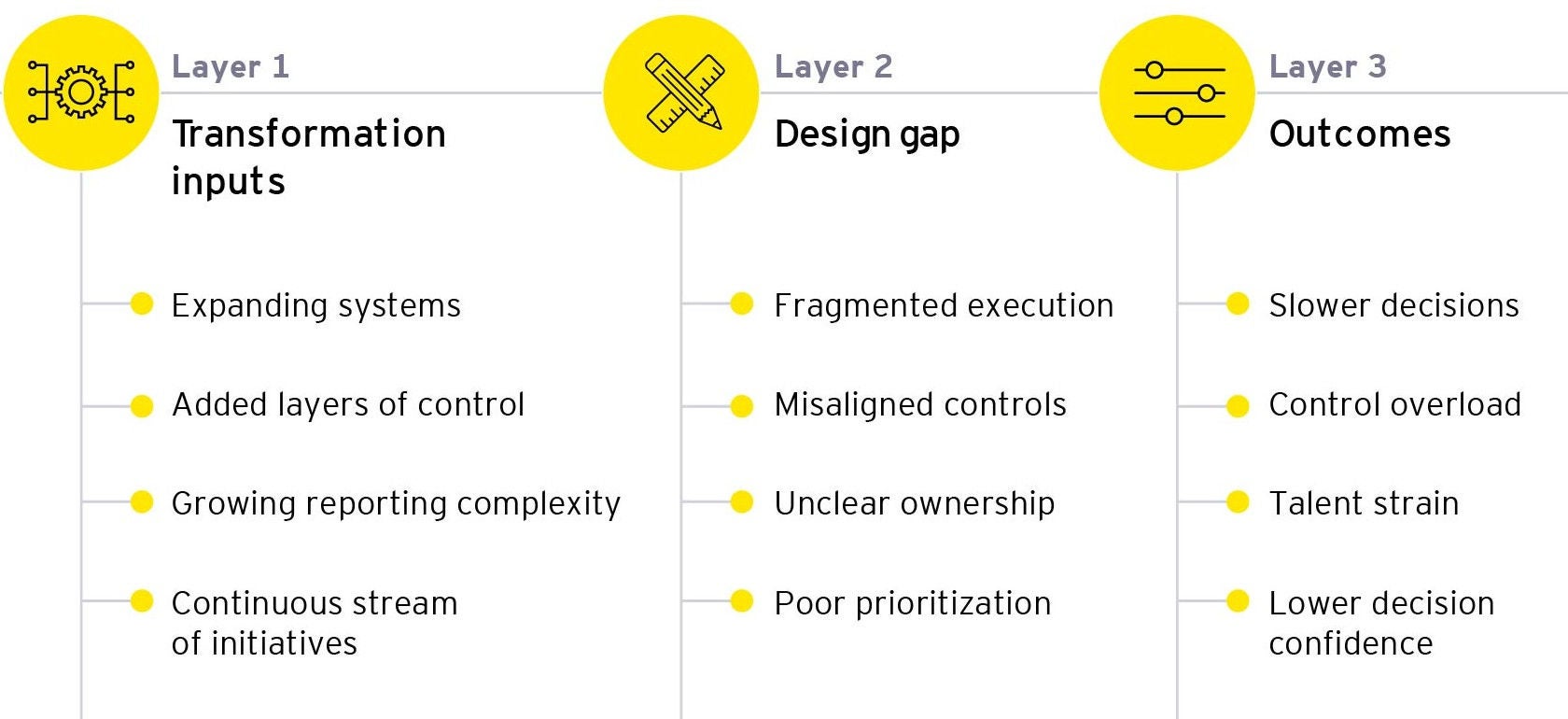
Too often, change fatigue in the finance function is attributed to resistance, skills gaps or transformation exhaustion. In practice, fatigue is a rational response to how transformation has been designed and sequenced. When initiatives prioritize delivery milestones over outcomes, finance teams are left navigating new processes without greater clarity or confidence in finance decisions or results. This design gap — not unwillingness — is what sustains the finance confidence gap.
In many organizations, transformation adds layers of controls, reports and approvals but fails to strengthen trust in finance systems and processes. Each new initiative signals improvement, yet managers still feel compelled to verify numbers manually, reconcile data outside core platforms or escalate decisions through multiple forums. Over time, confidence erodes not only in the data but in the operating model itself. Instead of reducing risk, poorly designed change amplifies continuous transformation risks, slows decision making and obscures ownership.
Addressing finance transformation design has therefore become a core finance leadership priority. Without a reset in how change is conceived, even significant investment will continue to strain teams and limit strategic impact.
Pivoting to confidence‑led finance operating models
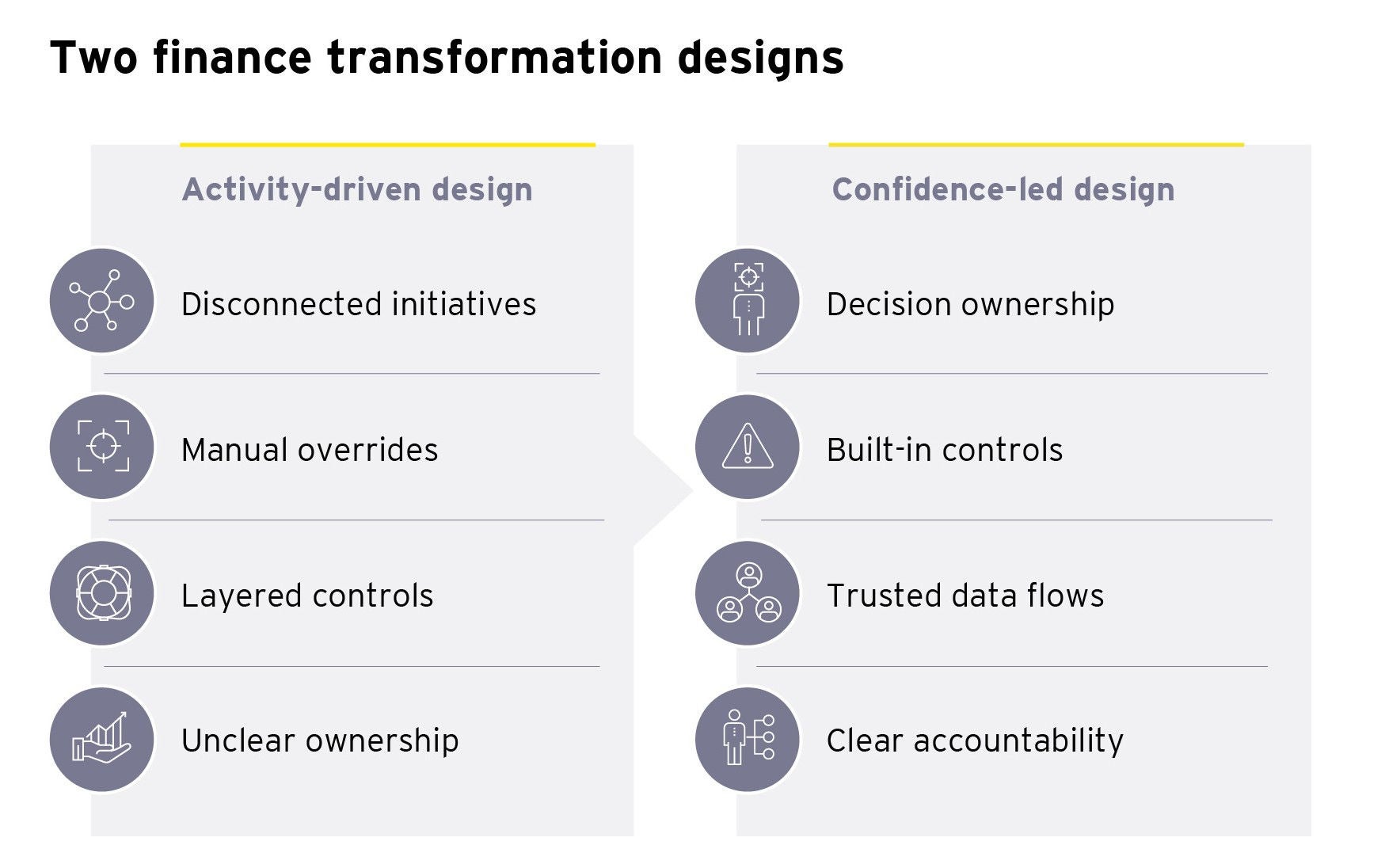
Breaking the cycle of finance transformation fatigue requires a decisive shift, from driving activity to deliberately building confidence. Rather than launching overlapping programs, leading CFOs are anchoring transformation around outcomes that matter most: finance decision confidence, clarity of accountability and trust in financial outputs. This represents a move away from volume led change toward confidence led finance operating models.
Practically, this means simplifying agendas and redesigning transformation around how decisions are made, not just how processes run. Effective finance transformation design embeds trust directly into systems and workflows through end to end data traceability, clear decision ownership and controls sized to real risk. When confidence is engineered into the operating model, finance teams spend less time checking and reconciling and more time generating insight. The result is reduced fatigue, faster decisions and improved agility.
This confidence led foundation also enables agentic finance operations. As governed, repeatable tasks become reliable and auditable, agentic technologies can be deployed responsibly to handle transactional activity, freeing people to focus on judgment, scenario planning and strategic advisory. For CFO transformation leadership, the priority is not more change, but smarter change.
Download the full pdf
Summary
From fatigue to forward momentum
Finance transformation fatigue is not a reason to scale back ambition; it is a signal to lead change differently. Organizations do not tire of improvement; they tire of constant transformation that fails to build confidence or decision clarity. By prioritizing confidence led finance operating models, simplifying transformation design and deploying agentic finance operations with clear accountability, CFOs can reduce burnout and restore momentum. The imperative is no longer to transform more, but to transform smarter — creating trust in finance systems and confidence in the decisions they support.
Learn more about overcoming transformation fatigue in finance
How EY can help
-
Discover how to confidently navigate complex transformations and emerge stronger, more agile and positioned for future growth with Enterprise Reimagined – our Transformation framework
Read more -
Finance transformation service and solution utilizes data strategy, technology integration and talent evolution to deliver insights and long-term value.
Read more -
EY finance consulting services help drive transformative change, enabling businesses to optimize operations, improve performance and boost profitability.
Read more
Related articles
How a strong trade credit policy drives business growth and liquidity
Read how a strong trade credit policy with GCC support enhances growth, protects liquidity and improves risk management through structured controls and analytics.
Why finance transformation defines CFO relevance
Finance transformation bridges the gap between CFO strategy and hindsight reporting, enabling faster, forward-looking decisions in a capital-constrained world.
CFOs at the helm of Finance Transformation
Finance Transformation: Leveraging tech, data, and talent for strategic finance management and growth. Discover our scorecard approach for real-time insights and efficiency.
12m 37s