



























EY refers to the global organization, and may refer to one or more, of the member firms of Ernst & Young Global Limited, each of which is a separate legal entity. Ernst & Young Global Limited, a UK company limited by guarantee, does not provide services to clients.
Recent Searches
Capital Allocation Services
Companies need a capital allocation strategy that is well thought through and aligned to their overall business objectives.
What EY Capital Allocation Services can do for you
Today’s economic climate is forcing businesses to candidly assess their financial fitness. More than a mere review of operations, companies today must conduct objective assessments of the alignment of their business strategies to their accompanying asset portfolios. The goal is the optimal allocation of capital.
We offer insights to help you get answers:
- Is your capital allocated appropriately across projects, functions, divisions, customers and geographies?
- For your business, how do you know which capital optimizing measures really matter?
- Do you use scenario modeling and other risk assessments to inform your decisions relating to capital optimization?
- Are you able to demonstrate that your business decisions and capital deployments are founded on robust data and reasoned assumptions?
How EY's capital allocation services can help you design an optimal capital allocation strategy:
Cash culture drive: Companies are now more closely monitoring their cash — and the risks to cash flow — rather than solely on the profit and loss account. This includes evaluating business practices to optimize working capital levels needed to support the business and releasing any excess cash that could be used for other purposes, along with enhanced cash flow forecasting.
Corporate efficiency: The constantly changing business landscape demands stronger corporate governance, requiring companies to be efficient, streamlined and transparent. An increasing number of organizations are looking internally and examining both the size and complexity of their legal structures.
Proactive portfolio management: Optimal capital deployment should not be left to chance. Companies need to track measures such as return on invested capital (ROIC) — and in particular, to compare their own performance in these areas to that of competitors. In general, ongoing portfolio analysis can help ensure the company is in the right markets for today, but still anticipates the right businesses for tomorrow.
Forecasting and scenario planning
COVID-19 has upended customer demand and supply chains, as well as historical forecasting methods. Companies often lack the capital allocation processes and tools to make rapid decisions to address these changes. Learn more.
Our latest thinking
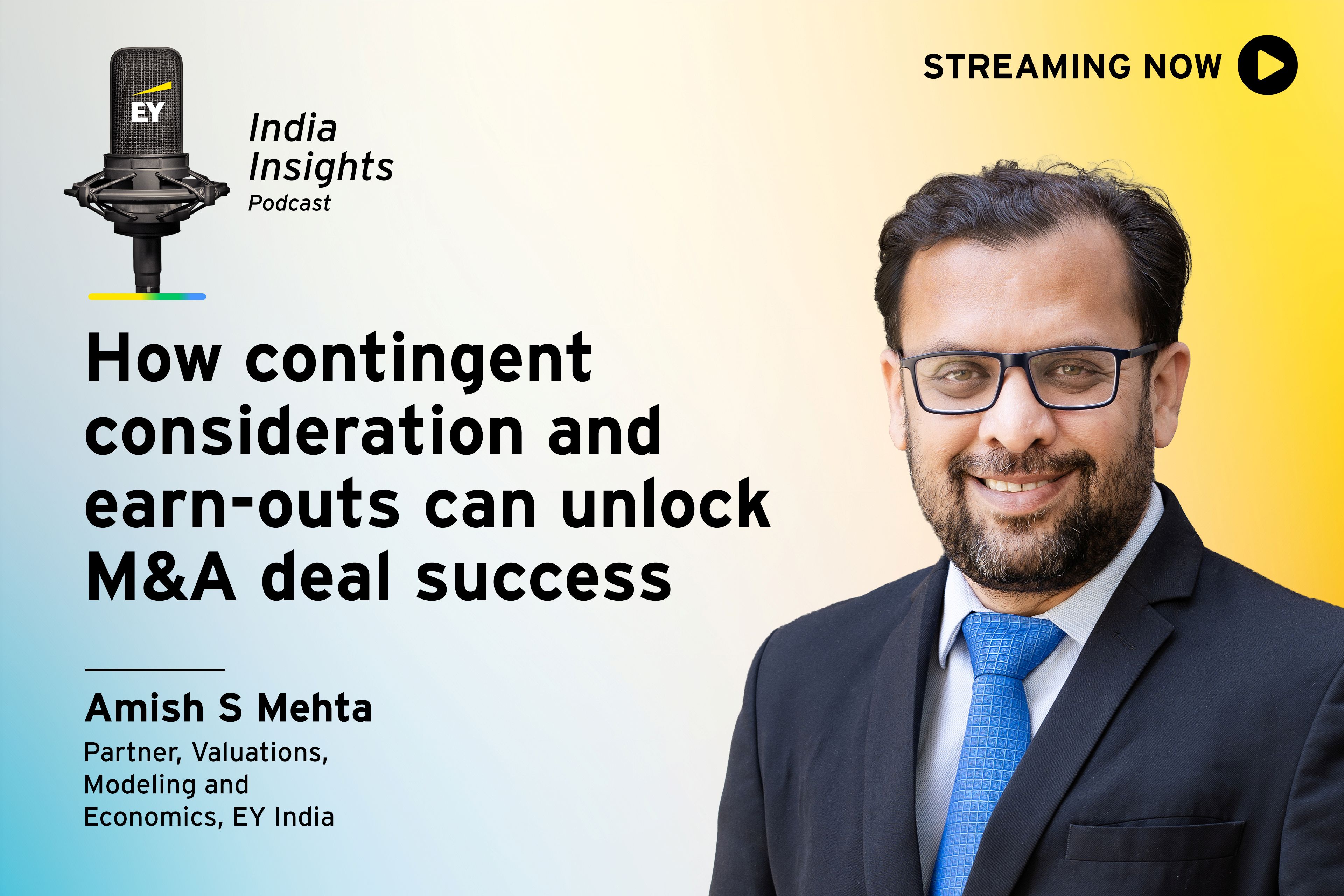
How contingent consideration and earn-outs can unlock M&A deal success
Tune in to the EY India Insights podcast as Amish S. Mehta shares how earn-outs and contingent consideration can bridge valuation gaps in M&A deals.
5m 40s
Onwards and upwards: A positive outlook for private credit in India
India's private debt market remains resilient, with sustained demand for structured credit, supporting business growth across sectors.
AI is redefining IT services, but earnings quality is the real test
AI is transforming the IT services economics. Learn why earnings quality, AI-driven diligence and sustainable value creation matter more than growth.
How Niwas Housing Finance is reshaping affordable housing finance
Tune in to the EY India Insights podcast as Niwas Housing CEO Shreejit Menon discusses housing finance trends, AI adoption, risk and growth strategies.
19m 25s
Contingent consideration for closing deals through earn-out structures
Learn how contingent consideration is valued using scenario-based and option pricing methods, and fair value accounting for earn-outs in M&A deals.
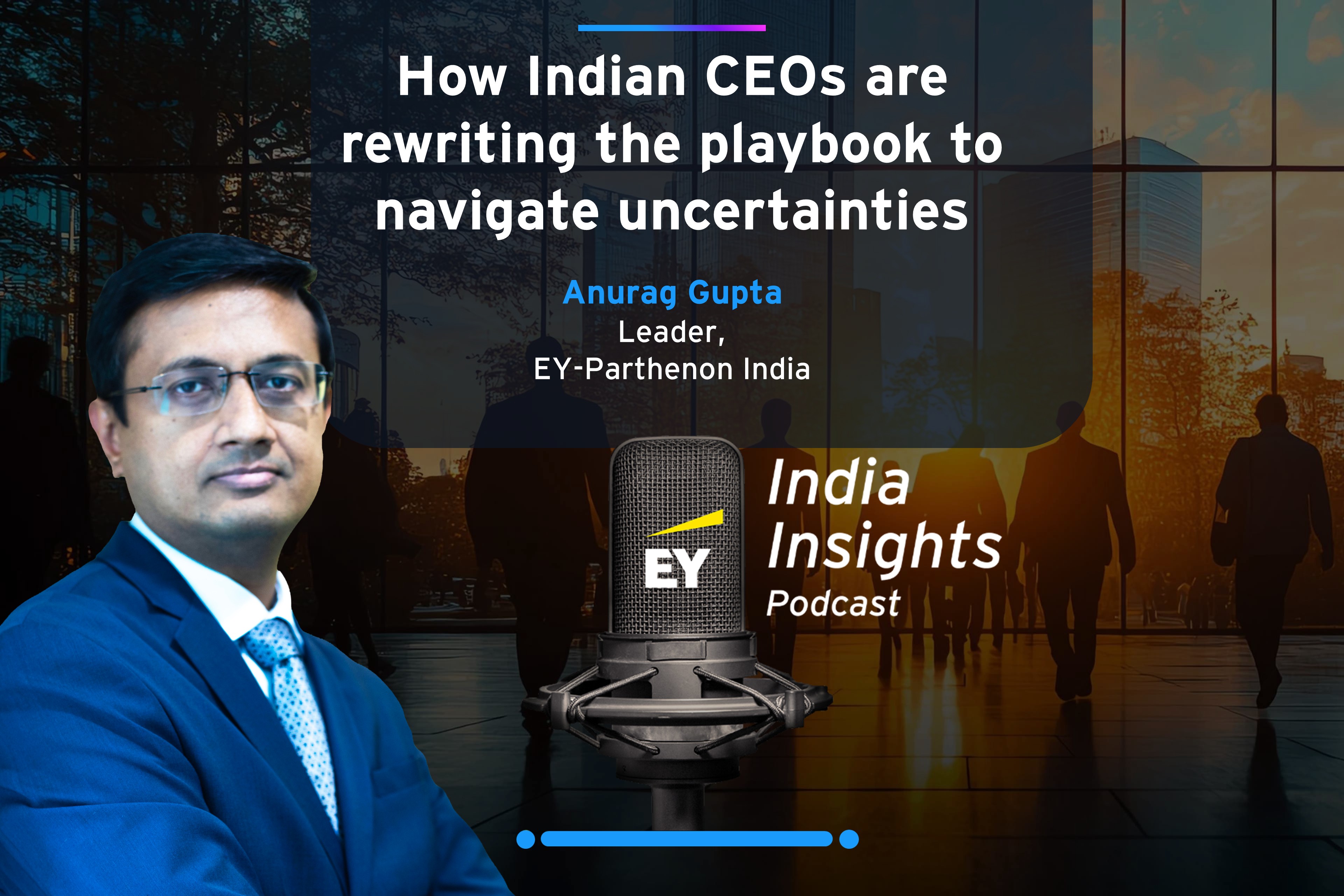
How Indian CEOs are rewriting the playbook to navigate uncertainties
Explore how Indian CEOs are resetting strategy amid geopolitical shifts, strengthening supply chains, embracing AI and driving growth.
15m 15s
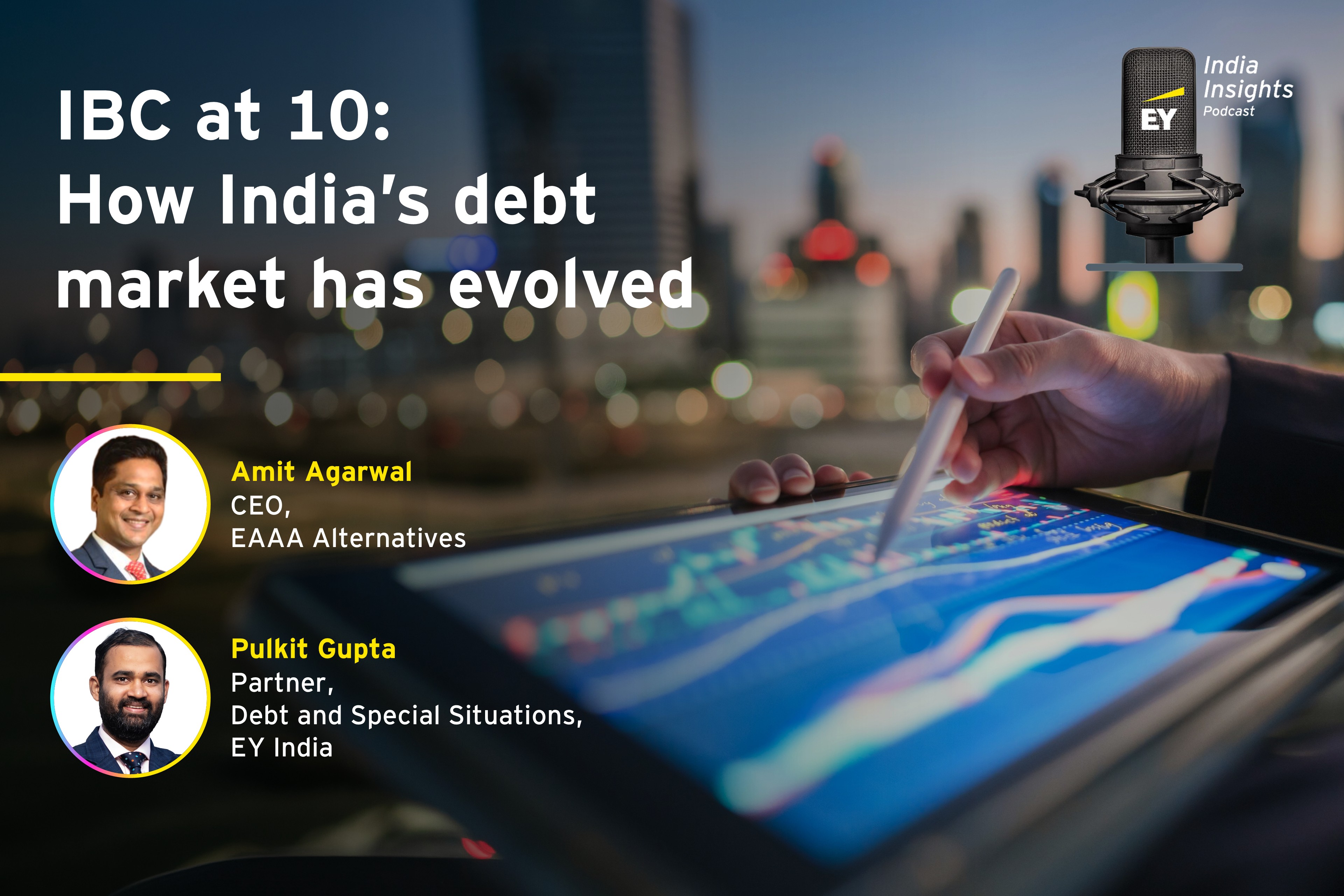
IBC at 10: How India’s debt market has evolved
Explore how the Insolvency and Bankruptcy Code has reshaped India’s credit culture, boosted investor confidence and unlocked value in stressed assets.
24m 54s
How Indian CEOs are resetting strategy amid geopolitical fragmentation
Indian CEOs are resetting their strategy amid geopolitical fragmentation, using AI and discipline to drive resilient growth and long-term value.
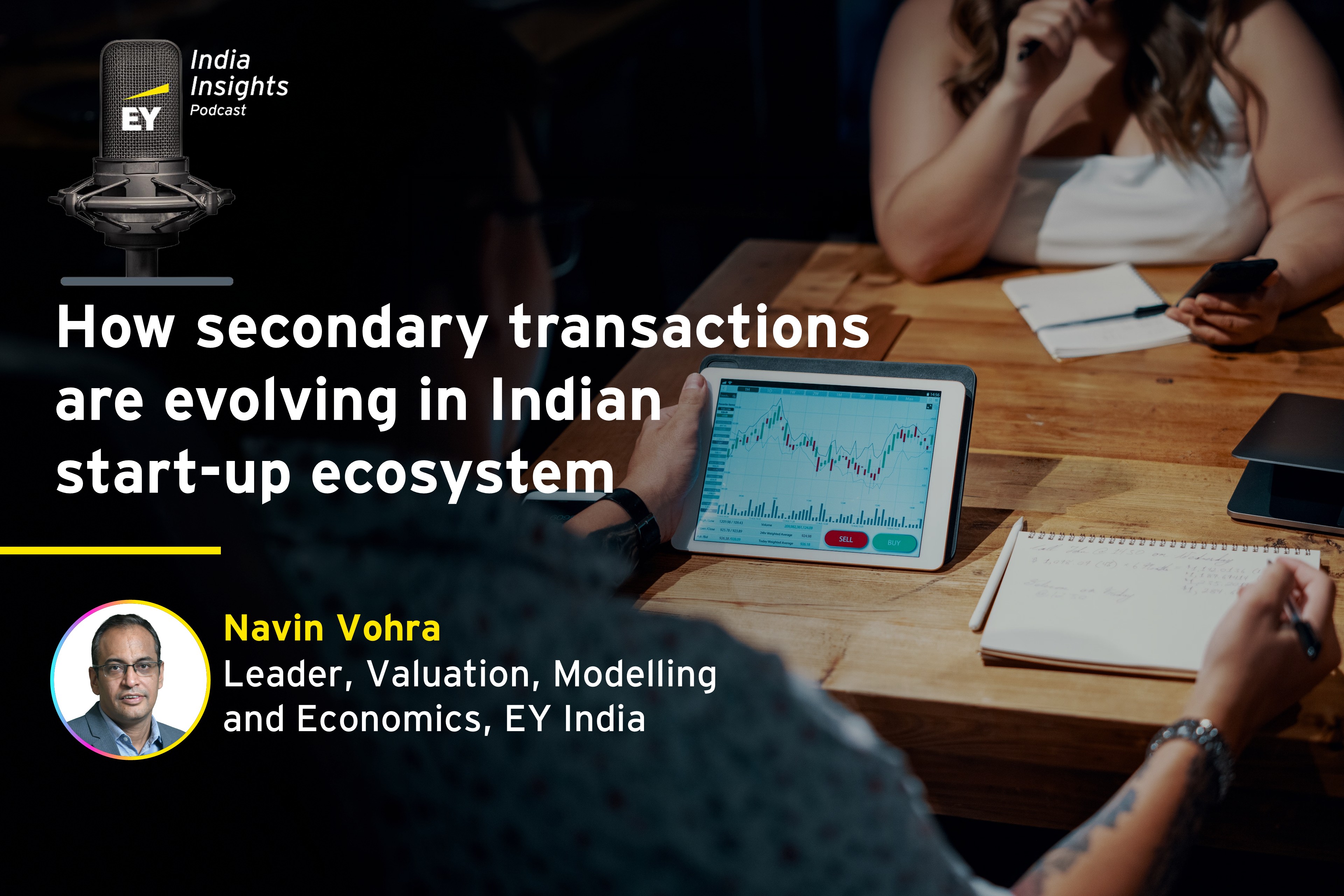
How secondary transactions are evolving in Indian start-up ecosystem
In this EY India Insights episode, we examine the pricing of secondary transactions in Indian start-ups, with valuations aligning with primary rounds.
9m 40s
How India is driving dairy value to lead the global market by 2047
India’s dairy sector must shift from volume to value through productivity, quality, infrastructure and export readiness to build global competitiveness.
Rethinking secondary transaction discounts in Indian start-ups
Secondary transactions in Indian startups rarely come at a discount, with most priced in line with primary rounds.
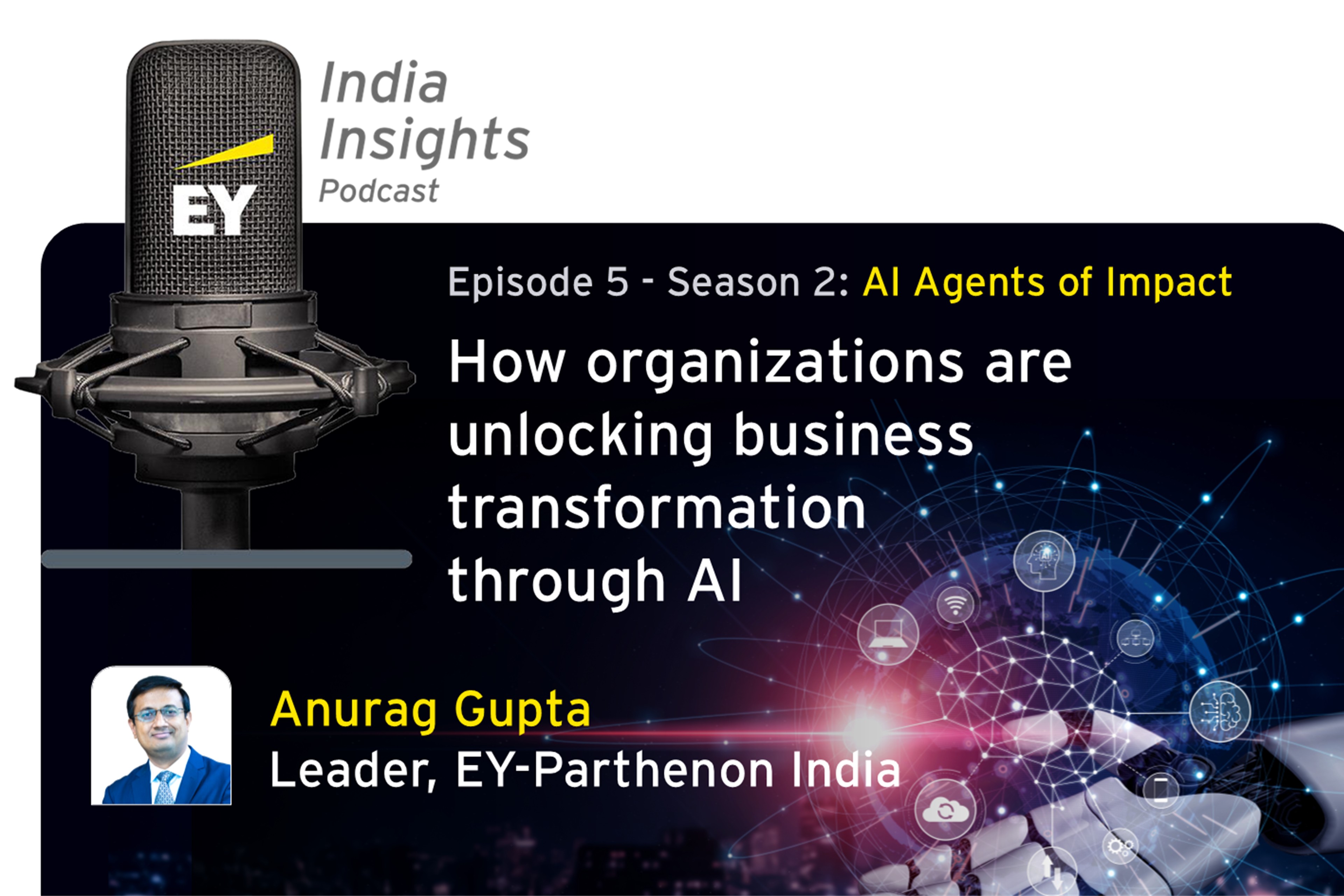
How organizations are unlocking business transformation through AI
Listen to our podcast on how AI is reshaping business transformation across Indian enterprises with AI ready data, governance and clear transformation roadmaps.
14m 13s
How selective investing shaped India’s M&A deals in 2025
India’s M&A in 2025 favored fewer, larger deals as value rose 18%. Infrastructure-led and cross-border deals surged; PE remained disciplined amid uncertainty.
How India’s PE/VC ecosystem is sustaining momentum amid global volatility
India’s PE/VC ecosystem stayed resilient in 2025 with record investments, exits and fundraising. See key trends shaping investor sentiment as 2026 begins.
PE buyouts in India: The story so far
India’s PE market is shifting towards control-focused buyouts, driving operational value, sector growth and stronger exit pathways in a maturing investment landscape.
Redefining operational due diligence in India’s evolving deal landscape
Operational due diligence in India is evolving from risk mitigation to execution certainty, shaping value creation in private equity and M and A deals.
How Indian firms approach Purchase Price Allocation: Industry trends
EY PPA study highlights how Ind AS 103 impacts M&A accounting in India, with sector-wise benchmarks on intangible assets, goodwill, and deal value allocation.
Nine years of IBC: Transforming India’s insolvency landscape
IBC’s nine-year journey shows stronger credit discipline, faster revival, and improved NPAs, while delays and the 2025 Amendment Bill aim to modernize insolvency reforms.
EPR compliance: The new ESG test for Indian companies
EPR compliance is reshaping ESG in India non-compliance risks fines and lower valuations, while sustainability leaders gain a competitive edge.
Reimagining proxy advisory in India: An investor relations playbook
Explore India’s proxy advisory ecosystem, domestic & global players, and strategies for IR teams to align governance with investor expectations.
Navigating the M&A landscape of India: Insights of H1 2025
India's H1 2025 Merger & Acquisitions activity reaches US$50B, led by major transactions, strong power sector growth & steady domestic and PE engagement.
Understanding SEBI’s updated rights issue regulations
Learn how SEBI’s new rights issue framework simplifies fundraising, empowers investors, and enhances market efficiency in India’s capital markets.
7m 54s
How new Rights Issue framework simplify processes and empower investors
SEBI streamlines rights issues with a 23-day timeline, automated allotments, and lower costs—boosting efficiency and investor participation. Learn more.
Connecting the dots: M&A deals in the technology services in 2024
Discover key trends in 2024 M&A for technology services, with 850+ deals, $30B+ value, PE-backed roll-ups, and insights on cloud, AI, and digital transformation. Learn more.
How India Inc. can navigate the road to financial resilience
Explore key findings from the 2024 Cost of Capital Survey, revealing insights into India Inc.'s financial resilience and strategic growth.