





In our fourth edition of the annual survey, we compiled responses from 140+ companies across 20+ industries on their tax transformation journey.


Take a self-assessment

Want to self-assess the current state of your tax function and understand how to future-proof it?


Key findings of the report are as follows:

Impact of legislative reforms

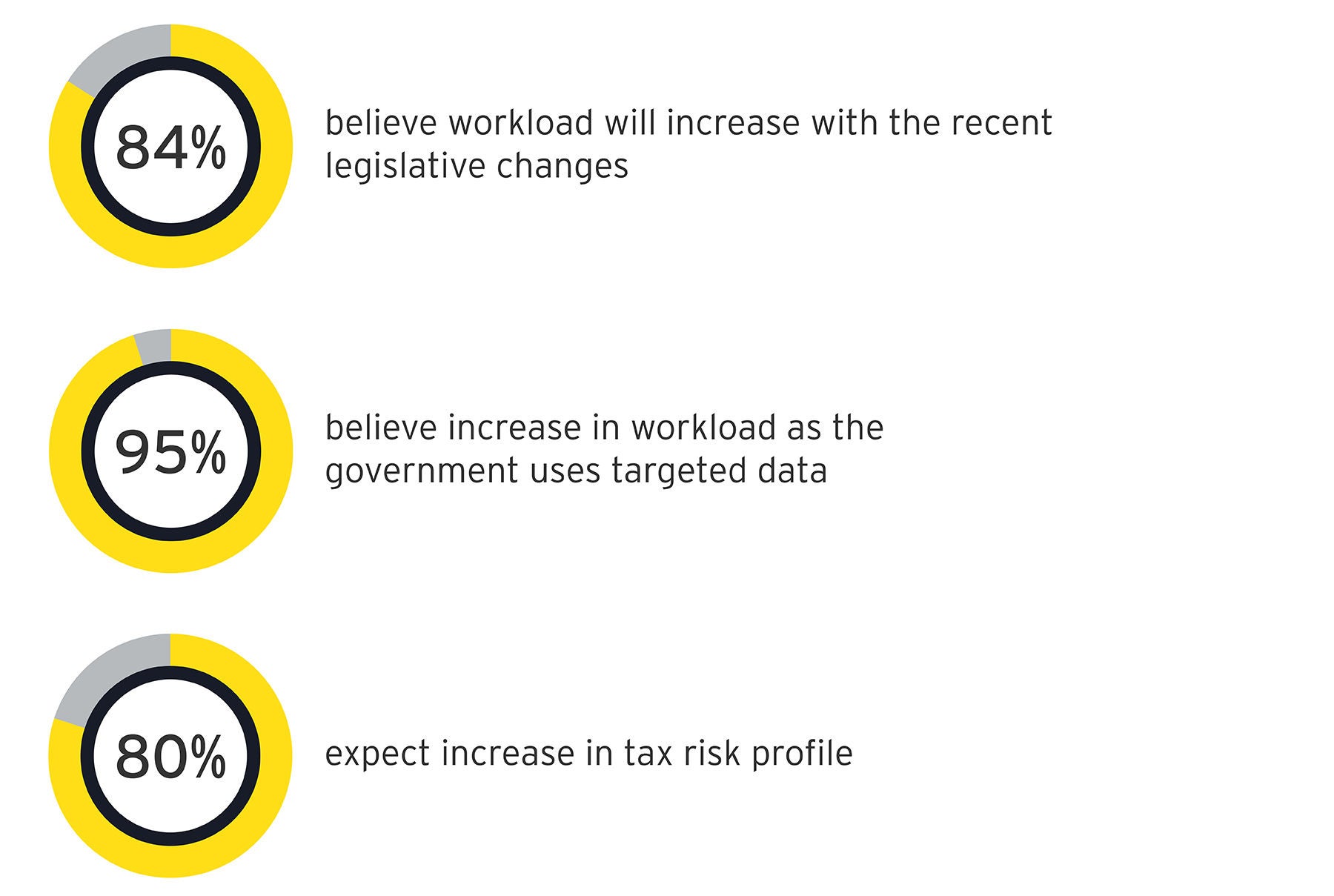
A multitude of legislative and technological amendments have been introduced by the Indian Government to bring in more transparency and simplification.
Tax legislative reforms

While workload increases, budgets continue to be stretched and is increasingly getting diverted to more strategic/value-adding activities.

Tax legislative reforms

Changing role of tax function

In today’s evolving tax space, tax functions are assuming a critical position in driving business decisions. 

Tax legislative reforms

Having identified the need for increased business collaboration as a key focus area, tax functions have also ranked “adding value to business” as their top challenge.  Hence, it is critical to reimagine the current operating model to achieve the desired future state where tax function spends most of its time on value-added activities.

Talent demand and skills

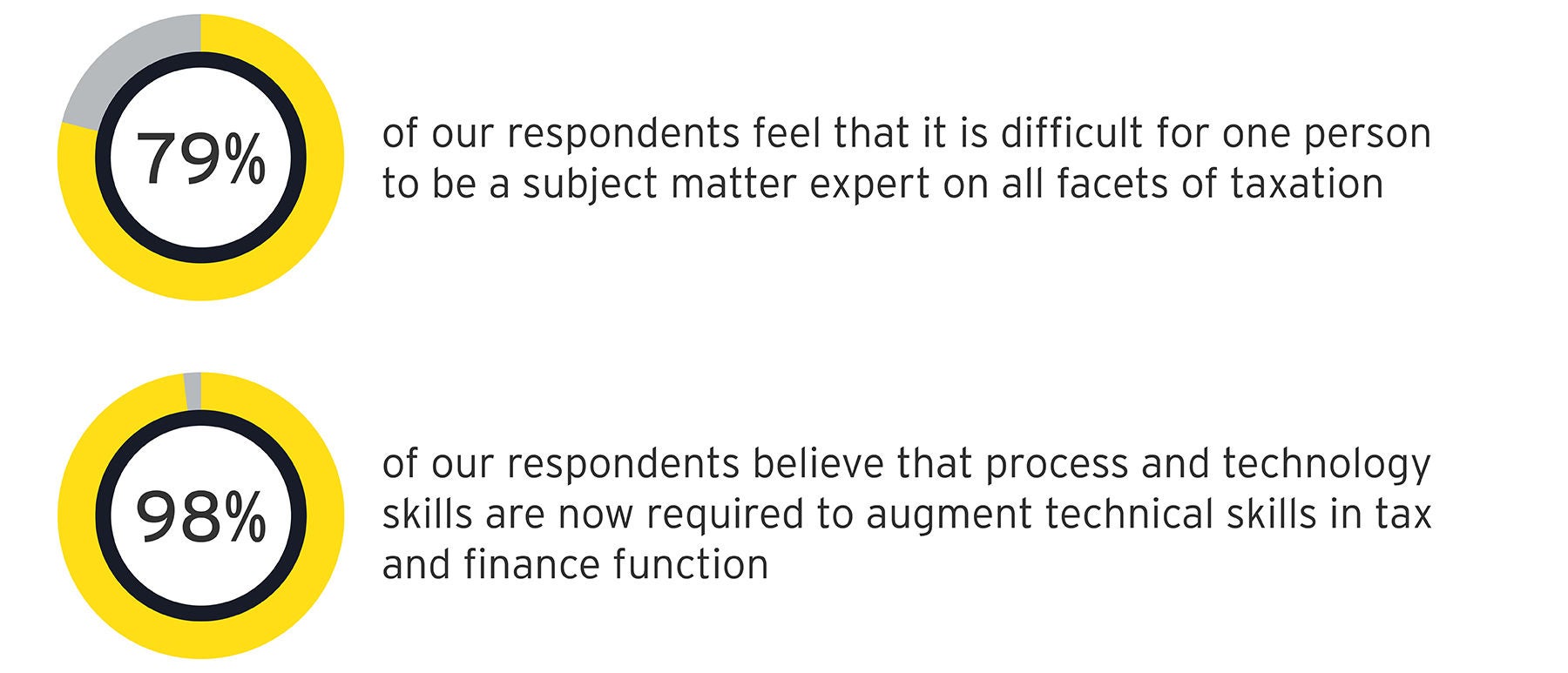
The need for tax functions to carry specialized knowledge and in-depth expertise in all the domains is increasing in recent times. One person single-handedly specializing across all facets of tax does not seem realistic.
Tax legislative reforms

This clearly implies the need to reconsider talent strategy specifically in these times of ‘Great Resignation’.

Data Management

It is crucial for organizations to understand the importance of data management during all stages of data lifecycle

Tax legislative reforms

Thus, it is important that the tax functions move ahead of traditional methods, and stay one step ahead around how they collect, analyze, use, report, and store data.

Optimal Tax Function

Tax legislative reforms

Optimum utilization of three important components — people, processes, and technology are quintessential to be able to achieve an optimal tax function.

Tax legislative reforms
Future-proofing
Tax legislative reforms

Various approaches are being adopted to achieve a best-in-class tax function. Parameters, such as value creation, risk management, time and capital investment, resource availability, responsibility, institutionalization, transparency, and accountability, are to be kept in mind while choosing the best approach.


Take a self-assessment

Want to self-assess the current state of your tax function and understand how to future-proof it?

Our latest thinking

The future of Global Capability Centers in India: Policy shifts

India’s GCC sector is benefitting from tax reforms, safe harbour rules, GST clarity and incentives driving growth, innovation and global competitiveness.

18m 3s

Tax compliance reimagined: AI, data integrity and intelligent reporting

Tax compliance is evolving toward intelligence embedded in operations, leveraging AI and data for real-time insights and regulatory trust.

How AI-led compliance can power India’s export boom

India’s expanding FTA network supports AI-enabled trade automation, helping businesses manage compliance, unlock FTA benefits and scale cross-border operations.

Budget 2026: Highlights for NRIs on investment, property, disclosures

Listen to our latest podcast analyzing Union Budget 2026 updates for NRIs, including TCS on remittances, PAN-based TDS for property sales, investment limits and foreign asset disclosures.

6m 15s

Budget 2026: Tax proposals and opportunities in India data centers

Listen to our podcast about Budget 2026 tax proposals for India data centers, exploring the tax holiday till 2047, Safe Harbor margins, PE clarity and cloud investment opportunities.

12m 52s

Budget 2026 on TDS, TCS, LRS and transition to the New Income Tax Act

Listen to our podcast about Union Budget 2026 direct tax announcements, covering TDS and TCS changes, LRS updates, compliance simplification and the new Income Tax Act.

7m 2s

Strengthening Maharashtra’s industrial ecosystem through targeted incentives

Listen to our podcast about Maharashtra’s Industries, Investments & Services Policy 2025, covering SGST reimbursement, MSME and service sector incentives, and growth drivers.

9m 44s

Union Budget 2026-27 highlights

Get the latest insights on the Union Budget 2026-27, including tax updates, policy changes and sector-wise impacts. Explore insights and analysis from EY India on budget reforms and growth.

Navigating international tax compliance for Indian multinationals

Read how EY helps Indian multinationals with global tax complexity transfer pricing, BEPS 2.0, permanent establishments and technology-enabled compliance.

Understanding India’s Employment-Linked Incentive (ELI) Schemes

Explore India’s new employment-linked incentive schemes and their impact on hiring, compliance, and cost benefits for employers and employees.

6m 20s

Understanding minimum disclosure requirements for related party transactions

In this webcast, our panel of EY experts shares insights on the recent SEBI circular and its impact on related party transaction (RPT) disclosure requirements and industry standards.

Decoding the new Employment Linked Incentive (ELI) Schemes

In this webcast, panelists discussed the new Employment Linked Incentive (ELI) Schemes, benefits available to employers and employees and action planning for employers.

As Trump tariffs reshape global trade, India must adapt fast

Amid global trade shifts from US reciprocal tariffs, India must diversify exports, address trade imbalances, and boost manufacturing competitiveness.

20th Annual EY India Tax Workshop 2025

Register for India Tax Workshop 2025. Learn more about the tax function.

Panaji, IN

    Request a demo
    Like what you’ve seen? Get in touch to learn more.
