EY helps clients create long-term value for all stakeholders. Enabled by data and technology, our services and solutions provide trust through assurance and help clients transform, grow and operate.
At EY, our purpose is building a better working world. The insights and services we provide help to create long-term value for clients, people and society, and to build trust in the capital markets.
In the latest episode of the of EY India Insights, Bhavesh Thakkar, Partner, Tax and Regulatory Services at EY India, discusses Maharashtra’s newly launched Global Capability Centre (GCC) Policy 2025 — a major move to attract global service hubs to the state. He highlights that both new and expanding GCCs can avail the benefits depending on their investment or employment levels, with timelines and compliance being crucial for eligibility.
The policy offers operational support such as payroll subsidies and power cost incentives, all aimed at reducing setup and running costs. In addition, as Bhavesh highlights, the policy aims to build a strong ecosystem for GCCs to grow and thrive in Maharashtra, India.
Key takeaways
Maharashtra’s GCC Policy 2025 offers financial support and operational ease to help GCCs reduce setup costs and boost innovation.
Eligibility begins with INR50 crore of investment or 100 employees, extending up to INR750 crore and 1,000 employees.
Companies can choose a 20% capital subsidy or 10%–20% rental subsidy for five years.
Additional incentives include payroll subsidy, 5% interest subsidy on term loans and reduced power tariffs for GCC operations.
The policy remains active for five years starting 3 November 2025, encouraging timely project launches.
Maharashtra is focusing on GCCs as they are key drivers of innovation and employment. With this policy, the state aims to position itself as a preferred destination for such centers.
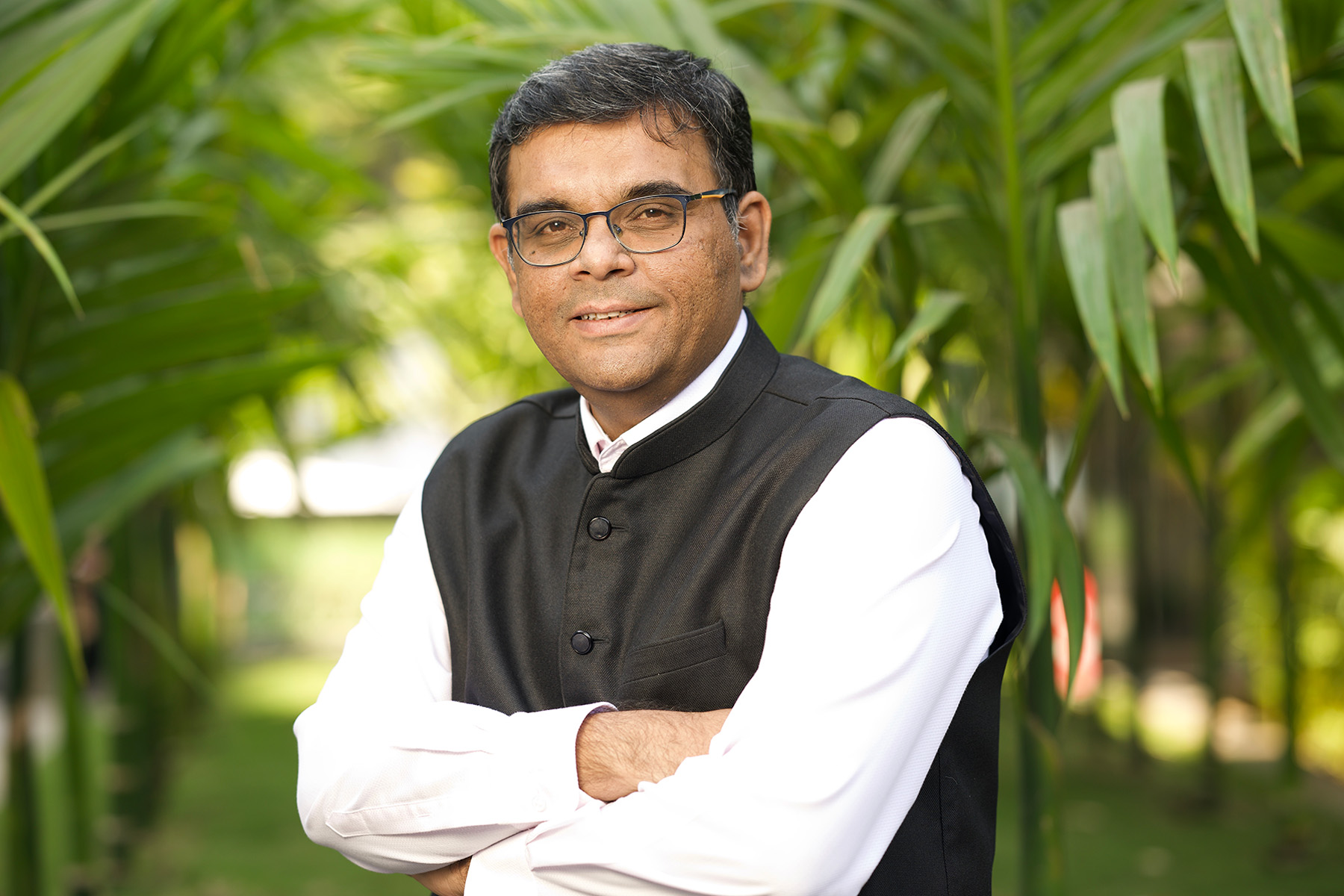
Bhavesh Thakkar
Partner, Tax and Regulatory Services, EY India
For your convenience, a full text transcript of this podcast is available on the link below:
Manisha Koul: Welcome to the latest episode of the EY India Insight podcast series on incentive policies. I am your host, Manisha Koul, Director with EY India Tax Practice. In our last episode, we explored the Gujarat state incentives. Today, it is with respect to Maharashtra, which has recently launched a forward-looking Global Capability Centre Policy 2025. Maharashtra continues to be a top investment destination and this new policy is a major step in attracting global services.
To discuss this in detail, we have today with us Bhavesh Thakkar. He is a Tax Partner at EY India and specializes in incentives and subsidies. Welcome back, Bhavesh.
Bhavesh Thakkar: Thank you, Manisha. It is always a pleasure to be here.
Manisha: Let me ask you a very basic question here. What exactly is a GCC and why is the Maharashtra government been so focused about it?
Bhavesh Thakkar: Manisha, GCC is a captive unit set by a multinational or an Indian company also to provide very specialized services like IT, finance, HR, R&D and analytics and exclusively for their parent organization. So, these are strategic hubs and not outsourcing units, that is the main difference. Maharashtra is focusing on it because it sees GCCs as key to driving innovation and employment. I will say with this policy, the state is positioning itself as a preferred destination for such centers.
Manisha: If I understood it correctly, the core of the definition is that a GCC has to be captive and it has to exclusively serve its parent. Bhavesh, could you also give us a quick structure of how this policy is laid out?
Bhavesh Thakkar: If I want to break down the policy; it is structured around three key pillars. The first one would be eligibility and classification. This will define who qualifies as a GCC and classifies the units based on investment and employment levels. Second would be fiscal incentives. This includes capital subsidy, rental assistance, payroll and interest subsidies. Finally, the non-fiscal incentive, which covers Ease of Doing Business, infrastructure support and operational flexibility.
What Maharashtra has also done is introduce zonal benefits. So, there is a zone one which is for Mumbai and Pune and zone two for the rest of Maharashtra, with differentiated incentives to promote balanced growth. The intent of the government is also to move beyond Mumbai, Pune and also develop cities like Nagpur, Nasik and Chhatrapati Sambhajinagar.
Manisha: It is interesting to know that entire Maharashtra is covered here. We have capabilities for Nagpur, Nasik and other cities as well. So just a quick takeaway; I have to check eligibility and then classification followed by the incentives. Talking about the incentives, who can avail these incentives?
Bhavesh Thakkar: The policy is open to both new GCC units being set up in Maharashtra, as well as existing units planning for expansion. The eligibility is based on two key criteria: first is fixed capital investment ranging from INR50 crore for small units to over INR750 crore for ultra mega projects. Or, it is direct employment. So, from 100 employees for smaller units to over 1,000 employees for ultra mega units. The units must meet either the investment or the employment threshold and maintain those levels consistently. For expansion projects, there must be at least a 25% increase in both investment and employment.
Manisha: That means, for new units, there is an either or condition; but for expansion, you have to meet both when it comes to fixed investment and direct employment.
Bhavesh Thakkar: Absolutely correct, Manisha.
Manisha: Let us talk about the benefits. What kind of incentives are there in the policy?
Bhavesh Thakkar: I will say Maharashtra has a very good structure of incentives out here. Manisha, if you look at the other leading hubs in India for GCCs, it is quite competitive. Speaking of benefits, GCCs can choose between two main options. The first is a capital subsidy that is 20% of the eligible investment in plant and machinery. The maximum benefit you can get from this is around INR10 crore to INR100 crore, depending on the size of the unit. Units can also go for a second option, which is rental assistance in which the company gets 10% to 20% rental subsidy for five years. This is a good incentive for companies who do not want to spend much on infrastructure and prefer an asset light model.
Manisha: That is interesting, Bhavesh. Did you say 10 to 100 crores?
Bhavesh Thakkar: Yes.
Manisha: That sounds very interesting and intriguing. Plus, there is an option to select between the two subsidies. Apart from this, Bhavesh, there are many operational costs as well. Are there any subsidies available for that as well?
Bhavesh Thakkar: GCC being a labor-intensive industry, there is an operational incentive, like a payroll subsidy of up to INR5 crore annually. Plus people who go for a term loan, there is an interest subsidy on 5% on term loans. This is capped up to INR25 crore. Apart from this, electricity is also a very critical cost for this industry. So, the policy offers power tariff subsidy which ranges from one or two rupees for five years and 100% electricity duty exemption for 10 years.
Manisha: I think that covers a lot of operational costs when it comes to electricity and other payroll subsidies. That is great. I am sure that these benefits would definitely bring down the cost in Maharashtra, making it an attractive destination for GCCs. Coming to the timelines, are there any important timelines that you think are important to be listed here while we talk?
Bhavesh Thakkar: That is a good question, Manisha, and a critical point also. So, the policy is effective from 3 November (2025) and is valid for a period of five years. Also, the GCCs must commence the commercial operations within the operative period of the policy. And for employment-based incentives, the minimum direct employment must be created within two years from the date of commencement.
So, yes, timelines are critical here and missing them could mean losing out on incentives.
Manisha: I am sure that our listeners will be making a note of all these critical points. Bhavesh, while we have spoken about the fiscal incentives, what about the non-fiscal incentives, which many companies prefer for flexibility, operational ease and assistance?
Bhavesh Thakkar: The policy brings non-fiscal advantages, too. Let us take a quick look at some of them. There is an industry status given for GCCs. There is a priority land allotment for GCCs. Allowing 24/7 operations is very critical. There is also a promise of uninterrupted power and water supply. Again, you can set up in any zone, whether it is residential and no development zones also. Obviously, the government has set up a single window platform which is called the MeitY GCC facilitation cell. So, I will say that all these nonphysical benefits will definitely make it easier for companies to set up, scale and operate effectively.
Manisha: I think, in all, we have covered the essence of the policy. We have spoken about the eligibility incentives, fiscal and non-fiscal. So, any final thoughts before we wrap this up, Bhavesh?
Bhavesh Thakkar: I would say that this policy is a strong signal from Maharashtra. It is not just about attracting GCCs, but creating an ecosystem where they can thrive, with the mix of financial incentives and Ease of Doing Business measures. It is a compelling proposition for global companies looking to expand in India.
Manisha: Thank you so much, Bhavesh, for this insight. It was a great walkthrough of the policy.
Bhavesh Thakkar: Thank you, Manisha.
Manisha: All right dear listeners, if you are exploring GCC setups and expansion in Maharashtra then this policy is definitely worth your attention. This is Manisha Koul signing off. Stay tuned for more episodes of India's evolving incentive landscape. See you.
Global Capability Center-as-a-Service (CaaS) at EY offers end‑to‑end GCC setup, scaling and transformation solutions to drive strategic innovation and growth.
Our Global Capability Centers(GCC) Advisory practice, led by a team of professionals can help your business be future-ready for the digital disruption.
Welcome to an exclusive video series by EY India where we dive into the strategies and best practices driving the success of Global Capability Centers (GCCs) in the financial sector.