

EY refers to the global organization, and may refer to one or more, of the member firms of Ernst & Young Global Limited, each of which is a separate legal entity. Ernst & Young Global Limited, a UK company limited by guarantee, does not provide services to clients.
Recent Searches
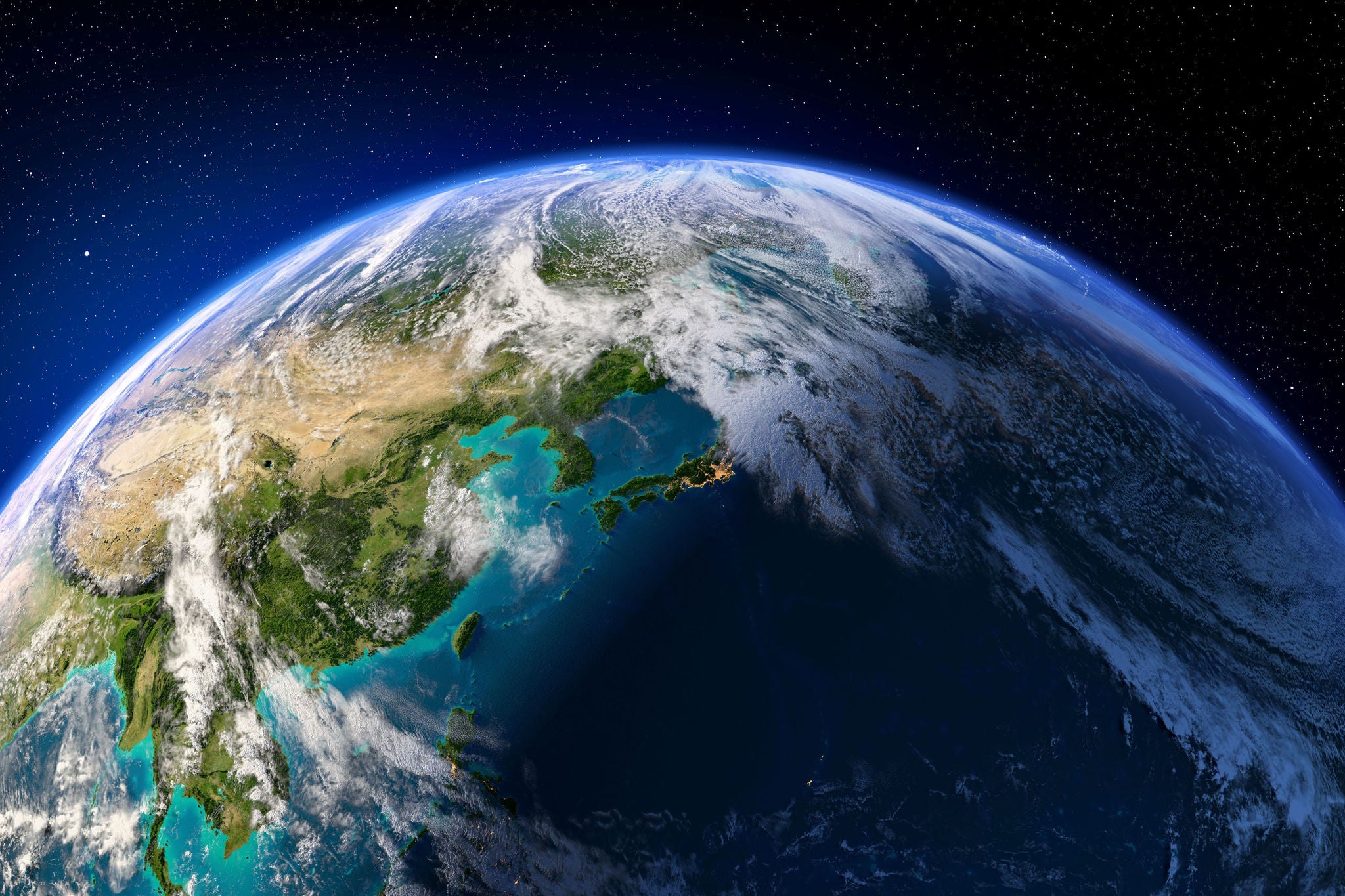
Today we mark Earth Day as a reminder of our shared responsibility to protect the planet we call home. As astronaut Christina Koch on NASA’s Artemis II mission aptly noted, “We will always choose Earth. We will always choose each other.”
Against this backdrop, we highlight some of the steps Malta is taking to preserve its environment. While important progress has been achieved, continued effort will be critical as pressures on natural resources intensify.
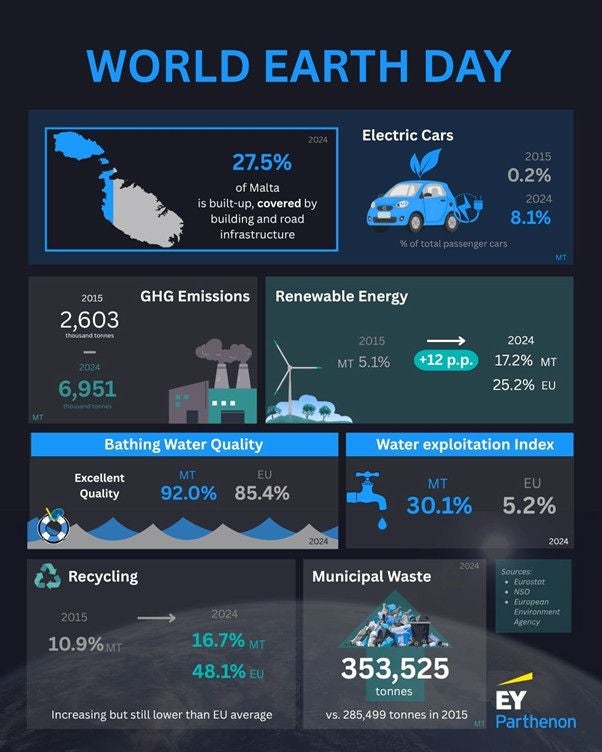
As Malta’s population grows and tourist activity expands, municipal waste has risen from 285 thousand tonnes in 2015 to 353 thousand tonnes in 2024. Measures such as the Beverage Container Refund Scheme have helped push recycling rates up to 16.7% by 2024. Ongoing investments in new recycling infrastructure are expected to support further improvements in the coming years.
Changes in greenhouse gas (GHG) emissions reflect on one side rising economic activity, population growth and transport demand, and, on the other hand, a cleaner energy mix. Managing such GHG emissions requires a broad-based transition across energy generation, buildings, transport and resource efficiency, supported by continued investment, behavioural change and technological uptake.
In renewable energy, Malta’s share has increased significantly, from 5.1% in 2015 to 17.2% in 2024, driven by incentives encouraging households to install solar technologies and the development of solar farms. Further progress will be delivered through new initiatives targeting public buildings and the exploration of offshore wind.
On transport, government and financial institutions have promoted electric vehicle uptake through grants and favourable financing. As a result, EVs now account for 8.1% of passenger cars, up from virtually zero a decade ago, an encouraging shift in the right direction.
Malta continues to perform strongly on bathing water quality, with 92% rated as excellent compared to an EU average of 85.4%, reflecting sustained investment in wastewater treatment. However, water stress remains a critical issue. 30.1% of water consumption is from renewable freshwater resources, compared to 5.2% across the EU, leaving Malta heavily reliant on energy-intensive reverse osmosis (ROs). As climate change alters rainfall patterns, further investment will be needed in water catchment and in renewable energy to manage costs of ROs and enhance resilience.