






Finance transformation fatigue

Why finance transformation fatigue is becoming a CFO concern

Finance transformation remains essential, but overlapping initiatives and continuous change can slow decisions and weaken accountability.


In brief

  • Constant transformation in finance is creating structural risks, slowing decisions and weakening accountability despite sustained investment.
  • Overlapping initiatives and poor sequencing are eroding momentum, leaving finance teams managing change rather than benefiting from it.
  • CFOs must restore discipline, focusing on fewer, well-sequenced initiatives that improve decision quality and rebuild confidence in outcomes.

Over the past decade, finance leaders have driven continuous transformation. ERP upgrades, shared services, analytics platforms, automation and AI initiatives have become standard across large organizations.

In a recent EY whitepaper, “Overcoming transformation fatigue in finance” we examined how continuous finance transformation can create unintended operational complexity, weaken decision-making and introduce new transformation risks despite sustained investment. Each initiative has been justified on its own. Together, they have created a different reality. Change is no longer periodic; it is constant and, in many cases, it is no longer improving how finance performs.

This is not a question of whether transformation should continue. It is a question of how enterprise finance transformation programs are governed, prioritized and sequenced.

Organizations do not tire of improvement. They tire of change that does not deliver clarity or measurable impact.

The focus now needs to shift toward measuring finance transformation outcomes and ensuring that strategic transformation initiatives deliver confidence in financial outputs and decisions.

When change becomes the risk

As continuous transformation becomes the norm, organizations are facing a new challenge: managing the risks of ongoing change while maintaining effective finance governance and operational stability.

Multiple initiatives run at the same time, drawing on the same leadership attention and talent. Governance expands. Reporting increases. Additional checks are added to manage perceived risk. In practice, this often makes the function harder to operate.

The impact is clear:

  • Decisions take longer as teams become more cautious 
  • Ownership becomes less clear across systems and programs 
  • Manual work persists despite new tools 
  • Teams face ongoing pressure to deliver stability while absorbing change 

In trying to reduce risk through more transformation, finance can create new risks – slower decisions, heavier processes and lower confidence in outputs.

This is not unique to finance. Research shows that frequent organizational change increases fatigue, which in turn reduces performance through lower engagement and commitment. 

The loss of momentum

The most significant impact of constant transformation is the loss of momentum. Transformation is meant to accelerate finance – better insight, faster decisions and clearer accountability. Constant change often has the opposite effect.

Leadership attention is spread across multiple programs. Teams spend more time managing change than using it. Even with sustained investment, it becomes difficult to point to clear improvements in outcomes.

The result is a simple but critical gap: effort continues to increase, but decision-making does not improve at the same rate. At that point, transformation is no longer accelerating performance; it is slowing it down.

Automated Reporting Tool (ART)

EY India ART is an end-to-end regulatory reporting automation platform that streamlines financial reporting with built-in audit trails, validations, and data governance.

Know more

LLM for transforming the BFSI sector: Unlocking innovation and efficiency

A specialized fine-tuned LLAMA 3.1-8B Instruct model, which aims at addressing the distinct challenges in customer care within India's BFSI sector.

Know more

The CFO challenge

For CFOs, the priority is to restore focus and discipline through a clear CFO transformation strategy that prioritizes business outcomes over the volume of change. Continuous change cannot be sustained without clear prioritization and sequencing. This requires deliberate choices:

  • Which initiatives directly improve decision-making and business outcomes 
  • How programs are sequenced, rather than run in parallel 
  • How core finance processes like closing, reporting and compliance are protected during change 

The objective is not to reduce ambition. It is to ensure that the transformation is coordinated, manageable and tied to outcomes.

Resetting the approach

Breaking out of this cycle does not require finance to do less. It requires finance to be more deliberate. 

This means fewer initiatives, better sequencing and a clear link to outcomes. In this context, the broader shift toward confidence-led transformation and the leadership imperatives outlined elsewhere are not additional layers. They are the discipline required to make transformation effective.
 

The priority for CFOs is clear: move beyond continuous activity and re-establish transformation that delivers measurable outcomes, faster decisions, stronger accountability and sustained momentum.

Download the full pdf

Summary

The next advantage for finance shall come from making change more intentional, not more frequent. By aligning initiatives to clear business priorities and maintaining execution discipline, CFOs can strengthen trust, improve organizational effectiveness and create greater value from transformation investments.

Learn more about finance transformation fatigue

Related articles

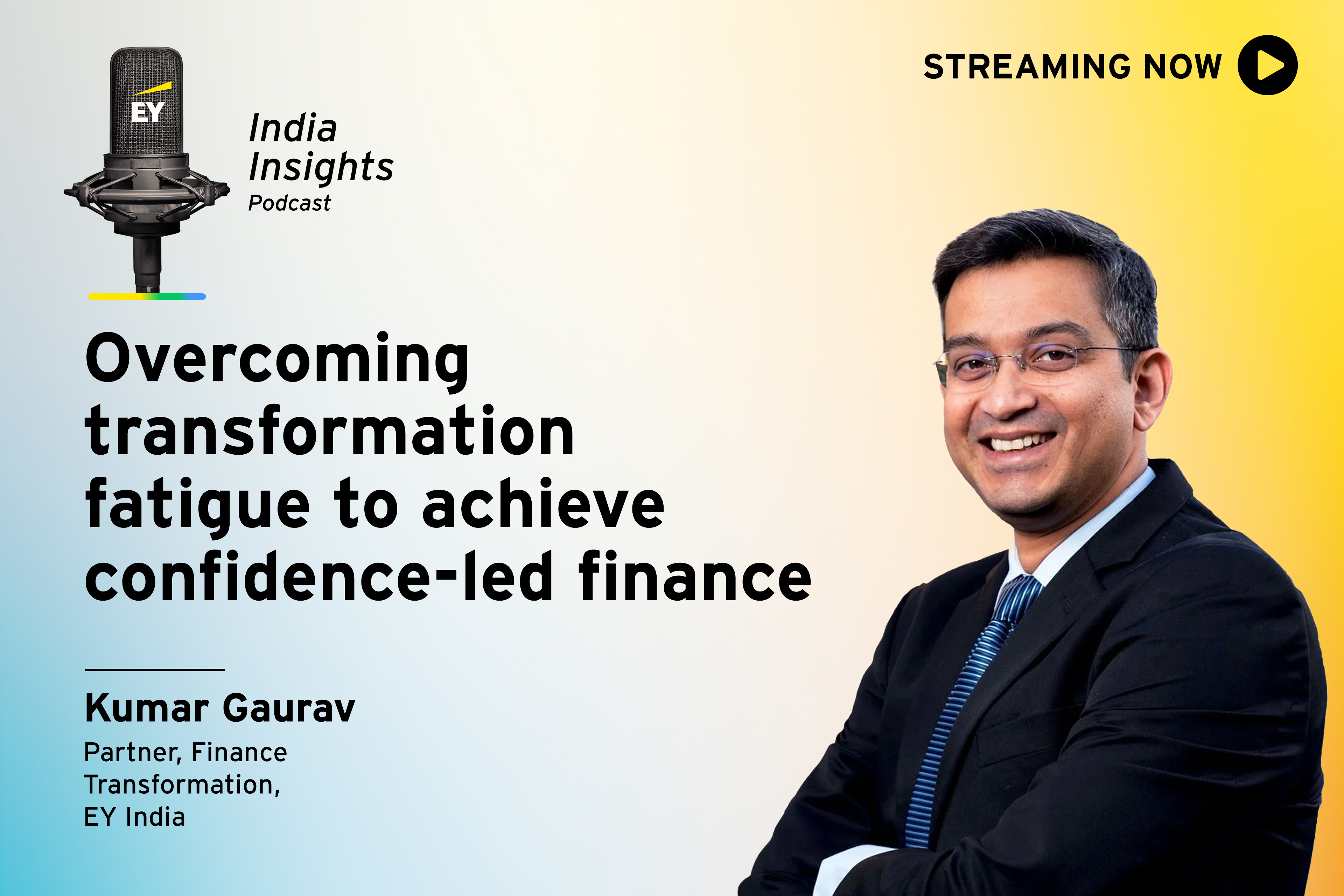
Overcoming transformation fatigue to achieve confidence-led finance

Listen to the EY India Insights podcast on overcoming finance transformation fatigue through confidence-led change and human-centered design.

8m 10s

How effective design can resolve transformation fatigue in finance

Finance leaders face transformation fatigue as constant change widens the confidence gap. Learn how confidence-led finance models restore trust and clarity.

Why finance transformation defines CFO relevance

Finance transformation bridges the gap between CFO strategy and hindsight reporting, enabling faster, forward-looking decisions in a capital-constrained world.


About this article