EY helps clients create long-term value for all stakeholders. Enabled by data and technology, our services and solutions provide trust through assurance and help clients transform, grow and operate.
At EY, our purpose is building a better working world. The insights and services we provide help to create long-term value for clients, people and society, and to build trust in the capital markets.
How CFOs can drive profitable growth through finance and customer focus
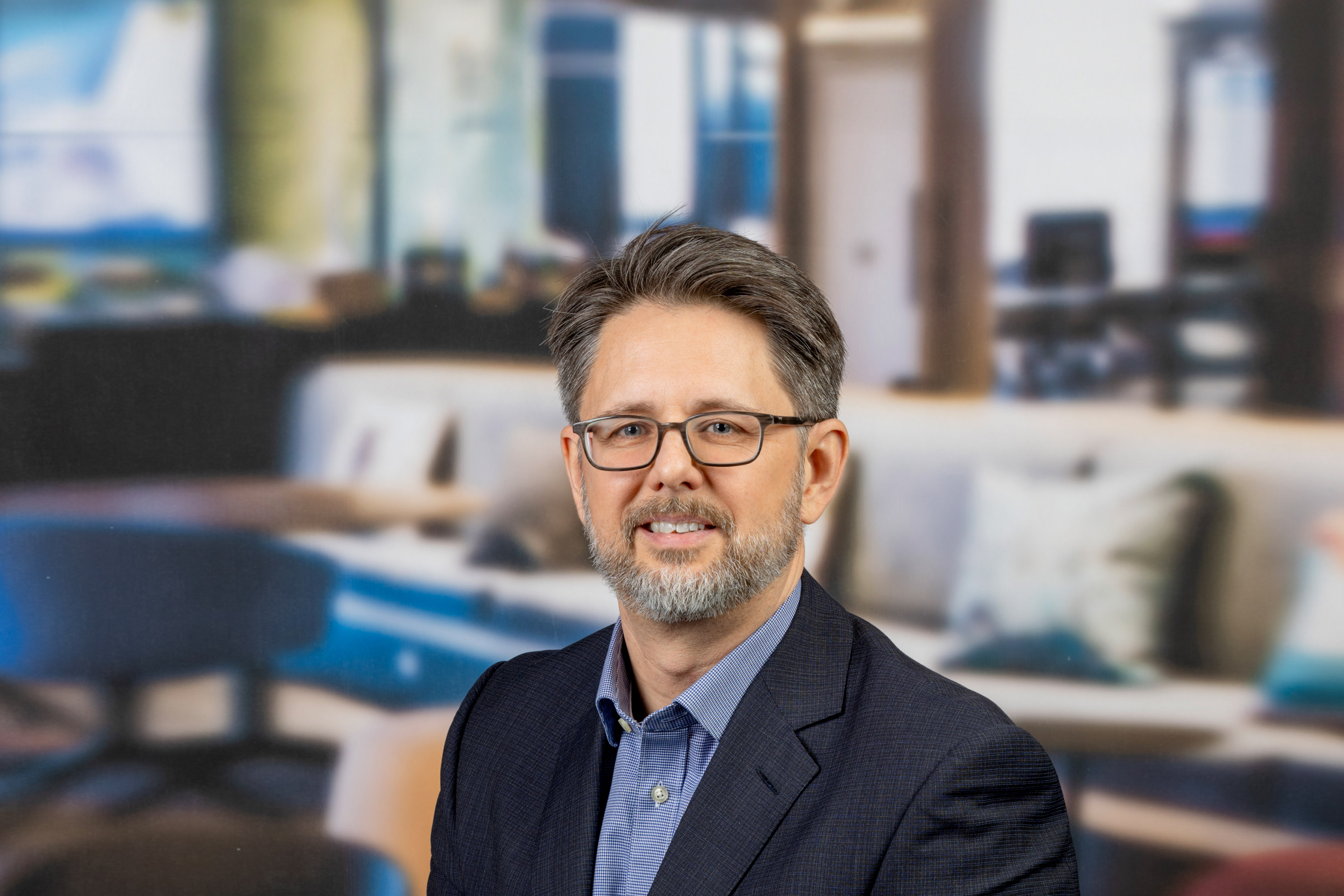
In this episode of the Better Finance: CFO Insights podcast, host Myles Corson speaks with David Homonoff, CFO of Feast & Fettle, on how CFOs can lead profitable growth by balancing finance, operations and customer focus.
In this episode of the Better Finance: CFO Insights podcast, Myles Corson speaks with David Homonoff, CFO at Feast & Fettle, about what it takes to lead finance in a fast-growing business where culture and customer experience are deeply intertwined.
David shares how Feast & Fettle’s success stems from a simple yet powerful idea: make decisions through the lens of the customer. He explains why treating the customer as the North Star shapes nearly every decision, from pricing and expansion to how the organization thinks about retention, profitability and long-term value. Rather than chasing growth at any cost, the conversation explores how finance leaders can use their operating model to make thoughtful trade-offs as complexity increases.
The episode offers an inside look at the modern CFO mindset. David reflects on why strong fundamentals are essential, but not sufficient, and why some of the most important work happens outside the spreadsheet. He talks candidly about testing new ideas, learning from experience and willingness to adjust course when something no longer makes sense. Throughout the conversation, David highlights the importance of building teams that take ownership, stay curious about technology and are prepared to navigate uncertainty, illustrating how today’s CFOs are evolving from financial stewards into true business leaders.
Key takeaways:
Understand how strong finance fundamentals and operational discipline create the foundation for sustainable, profitable growth
Discover why treating the customer as the North Star helps CFOs balance expansion, pricing and investment decisions without compromising quality or culture
Learn how embracing innovation, including artificial intelligence (AI), while leading with integrity can enable finance leaders to navigate complexity and create long‑term value
For your convenience, full text transcript of this podcast is also available.
Myles Corson
Hello and welcome you’re listening to the EY Better Finance: CFO Insights podcast — a series that explores the changing dynamics of the business world and what it means for finance leaders of today and tomorrow. I’m Myles Corson, from EY.
In this episode, I’m joined by David Homonoff, CFO of Feast & Fettle. During the course of this season, we’ve spent time talking about the importance of curiosity, preparing teams to be future ready and enabling growth and how those ideas are shaping today’s finance leaders. David builds on our previous conversations by sharing how he brings the ideas to life, especially by keeping the customer at the center as your business scales.
So let’s get started!
Corson
Dave, fantastic to have you.
David Homonoff
Pleasure to be here. Thank you very much, Myles.
Corson
So Dave, perhaps we can start off by just talking a little bit about your background and your personal journey and how you got to where you are today.
Homonoff
Yeah, I went to school in New York City. I studied finance there. I grew up in a family that loved to talk business at Thanksgiving or Rosh Hashanah or any family get-together, any graduation. It was always a business. When we were going out to a place, we were always talking business. When we were convened at home, we were always talking business. So naturally, I really wanted to get involved in either an economics or a business undergraduate school.
Finance was always really interesting to me and I went to school during a great boom in the economy and then the great financial crisis as well. I graduated in 2010. Finding a internship during school was one of the most important things to me and landed a great internship at a bank. Had a wonderful early career with the head of equities at that bank into a hedge fund. Then I launched into business.
I worked at a D2C [direct-to-consumer] business in New York City. I helped grow that, sell that company. I started a business with my father, which is a very successful business in furniture liquidation. And, now I'm at Feast & Fettle and I have a lot of experience dealing with business and finance. And it's really culminated into a really interesting opportunity to help a Rhode Island-based business continue to grow.
Corson
Great. Well, we're going to get into how some of your experiences helped you be successful in the current role. But as you kind of highlighted, Feast & Fettle is very well known to many of our listeners in the northeast of the US [United States], given we've got a global audience. For those that aren't familiar with Feast & Fettle, maybe just want to share a little bit about the business.
Homonoff
Feast & Fettle was founded in 2016. It's Rhode Island-based. We're a premium meal delivery service. Until recently, we served customers in seven states and we just opened up the DMV market. So, we're now servicing DC [District of Columbia] and a healthy amount of customers in Virginia and Maryland as well. We operate in 10 states.
Corson
You mentioned this is obviously a rapidly growing business and one that continues to grow very profitably, which is a great story. I'm looking forward to understanding a little bit more about how you've achieved those twin objectives of significant growth and profitability while retaining a lot of the cultural and the value proposition that's made you successful.
As you reflect on your experiences, as you mentioned, you had been in this very successful furniture business. What was it that attracted you to Feast & Fettle? What did you think, based on your experience, you could bring to the business based on your personal history?
Homonoff
As a young single kid in New York City, I was always trying to save time. Time was my most precious asset. And I wound up getting a meal delivery service that was more along the lines of you got these little ingredient cards, you had to spend 30 minutes pretending to be Bobby Flay in the kitchen. And then you ate it on your sofa alone in New York City. It was a really lonely experience, not great experience. And the last thing you feel like doing at the end of a 14- or 15-hour day is cooking.
Then I went into business with my dad; it was wonderful. We were on the road a lot working, doing deals. And in 2023, I came across Feast & Fettle as a consumer here in Rhode Island.
And I just love the fact that after a long day, I didn't have to cook anything. I was blown away that everything was prepared for me and it tasted great. It tasted like if I were actually a good cook and made something. I'm not, but I know what good food tastes like, and I just was really attracted to the product and how much time savings it gave me.
Corson
Obviously, there was this great fit with the actual product and understanding the benefits the product conferred. From a personal perspective, in terms of your experiences today in your career and what positioned you to be successful coming into this role in a new organization? As you sort of reflect back on all of those career experiences you talked about before you joined, what were the ones that you think really helped you be well prepared for this role?
Homonoff
My early experience in finance was about moving around numbers in the spreadsheet. And that's your table stakes, the skills that it takes to understand, and to manage the finances of a business. But the real magic is what's not in the spreadsheet
It's wonderful to put your budget together for the year, hit your budget. But that doesn't happen by accident. You don't just put numbers into a spreadsheet, fast forward 365 days and get the results that you planned. My real benefit coming into this business was having a heavy operational hand in my past lives in business.
I have done a lot of negotiations with landlords, with vendors, with any purveyor vendor that my past businesses have had, figured out pricing strategies for different tiered plans, if it was a DTC [direct-to-consumer] company I worked at in New York and help manage. So, the real factor of success that I've had has been a result of my operational chops.
Corson
It comes to you very clearly as you talk about the history, that sort of operational or even entrepreneurial bent that you have. As you think about getting the right balance between the operational hands-on side with some of the traditional finance responsibilities, how do you strike that balance? And do you have to rein yourself in a little bit in terms of being too aggressive?
Homonoff
Whenever you come into a new position, you have to make sure that, like I was saying earlier, the table stakes are all met. You can't sit down at a poker table that's US$100- US$200 blinds with US$1,000 and think you're going to be successful. Because a couple of laps around the table before you make your first bet, you're out of cash. So, you need to make sure that all your ducks are in a row.
That's the first thing. That can take months to make sure that you have the right accountant, you have the right bookkeeper, your admin is doing everything correctly, that all the filings are done right, that the insurance is tight and buttoned up.
All of that, that you have the right standards with your vendor relationships, an RFP [request for proposal] process with projecting out what your costs are going to be on a monthly and yearly basis, that the budget is done right, and that you're economically viable, and that your risks are mitigated to the extent that they can be.
Then you have to learn the business. You have to understand how does a dollar come in, get circulated around, and what are you left with at the end of the day in a business? And once you understand that, and you really understand where your leverage is as a business, then you can start making recommendations. You can put together a pricing strategy on the plan side and say, hey, I think that this geography might be able to pay a different price than this other geography that you can introduce a zone-based pricing. Or hey, why are we limiting how much our customers can buy of our product? Make it a little more dynamic, you start with a tier-one plan, but you give the consumer and you show them the value in trading up. There's no better time to increase the AOV or the average order value from a customer when their wallet's already open, whether that's in person or digitally.
Allowing the customer to tell you what they're willing to spend on your service is key. And there were a few medium- to large-size projects that after I really understood the business and had gotten the ducks in a row, I was able to spearhead.
Corson
As we mentioned, Feast & Fettle has achieved this amazing growth. I think you're looking at like 40% year-over-year growth at the moment, which sounds like it's coming from obviously this great brand position, a lot of very loyal customers that love the product are expanding what they spend. And then you've also got the geographic expansion. How do you, as a finance leader, help strike the right balances between what is the right rate of growth that the business can absorb?
Homonoff
I think the first thing that we have to understand about a business like ours, I would say an industry like ours is that there are some larger players that had a thesis to enter this industry, raised a bunch of investment dollars, acquired a lot of customers, and those customers churned quickly because the product or service was not up to the standard that they expected or they ultimately wanted. So, the first thing we have to make sure to do always is remember that the customer is the North Star. We want to keep the customer happy. That reduces churn. It increases retention and it allows us a really healthy base to grow on.
So, the first thing is making sure that we never sacrifice the quality of the service that we provide our customers. And then in terms of growing profitably, once you have that down and the LTV [loan to value] to your customer is a known and predictable quantity year over year, you have a decent understanding about what you need to spend to acquire additional customers.
If I know that the LTV of my customers is X thousands of dollars, my contribution margin from those customers is Y contribution margin. I need to get a certain return on my marketing dollars. I can back into what I need to spend on acquisition.
Corson
One of the things that stood out to me when we were talking in preparation for this episode was this idea of Feast & Fettle being a hospitality company first and foremost. And that comes through in what you're describing. The customer is the North Star. And you've talked about it. If you don't get the product right and have this great loyalty, then what have you got?
And culturally, that idea of being a hospitality-first business, maintaining this kind of high level of customer satisfaction, how do you maintain that cultural trend as you scale up? It's very easy as businesses scale to lose that consistency of culture and mindset. And sometimes again, you can lose sight of making cost cuts here, cost cuts there and trading off. And that can actually be kind of productive in some ways. How do you strike that balance?
Homonoff
I want to be very careful and say that it's not me entirely that strikes that balance. Not really in much or any part, but we have a wonderful COO [Chief Operating Officer] and head of people, Kyla Hanaway-Quinlan, who does a tremendous job with the people team of making sure that what got us here in the first place is carried through when we open a new facility. Whether it was the fulfillment center in Port Chester, New York, or our new facility in Elkridge, Maryland, the heart and soul of the business that we have curated and developed in Rhode Island is transplanted. And we do that by taking our best leaders off the business and stationing them or assigning them to those other locations to build teams that are evocative of what has made us successful in the first place.
Starting a new team from scratch is really hard. And I think our people team play a tremendous role in helping replicate the heart and soul of the business as we expand.
Corson
I think you're introducing a really important point here, which is your role alongside your fellow C-suite executives and how you collaborate as a team. I'm interested in terms of how that dynamic works, how do you address conflict? And to the point, sometimes finance people can be seen as being the people that say no, but it sounds like you really understand on the people's side, on the brand side, what you need to be investing in, because that's an enabler of growth rather than just always managing the cost side of the equation. But, interested in what has worked well in your experience with that C-suite interaction and the role you play from the finance lens.
Homonoff
The first thing is that understanding the leverage points, as I was talking about earlier, is super important. So, I know that an incremental dollar of revenue that we get in is worth more than any other dollar of revenue that we've had to that point, more or less. I also understand that the larger we grow, the more operating leverage we get from a corporate opex [operational expenditure model] perspective.
I'm a big proponent of growth. We just have to do it in a mindful way where it's well funded and in a variety of outcomes. The business is in a better position than had we not opted for that growth trajectory. I want to get it straight. I do say no from time to time. And I'm the most like a stick in the mud than anyone else on the executive team. But the mud is not so rigid.
I understand and appreciate that the more we grow to a point, the more leverage we get and doing it in a measured way, it's what we all have a keen eye toward. We put each other through the paces and you ask the question, how do we deal with conflict? We do it head on and respectfully. And I wouldn't even say it's conflict, because we're all working toward the same goal. And I think that we were able to have conversations and that's the crux of the conversation, it's always healthy and love working together.
Corson
That's great story. I appreciate you sharing that. Just come back to the finance organization that you lead. You mentioned earlier on the importance of getting the foundational elements right, the bookkeeping, the controls, all of that foundational stuff. The table stakes doesn't go away. As you think about your team and the skills that you're looking to build, what would you say are the things that are completely non-negotiable? What are the things that you're looking to develop in your team to allow them to be effective and build that business partner and capability that you're talking about?
Homonoff
Being intellectually curious about new technologies is on the top of our list. There are a lot of wonderful AI [artificial intelligence] tools these days that we've implemented and we continue to explore and implement for member services team; using agentic AI to handle customer issues; to the finance team, putting new scenarios and potential investments through different AI tools that we have. That's a non-negotiable. If somebody wants to do it the old-fashioned way and not really explore all the new bevy of tools that are at our disposal, it's a square peg in a round hole.
Corson
And on that AI piece, are there particular things you're most excited about in terms of applications in finance? And with that context, how do you evaluate the investments? Obviously, one of the things right now is we're all learning about the capabilities and the potential of AI. We don't always know the return side of the equation. We can see the cost, but there may be this much more significant upside that we can't necessarily quantify or measure right now. How do you balance those kind of equations?
Homonoff
We have had internal discussions about just that, whether it's the implementation of AI tools or any other endeavor that we want to explore. At the end of the day, you don't know until you do it. And we've taken that approach a couple of times. If it's within the budget and it's an investment in bandwidth and/or hard dollars, and we think that the upside is many, many multiples of whatever we're spending, we look for those asymmetry opportunities.
Sometimes, it's hard to quantify the upside of something you've never implemented before. You can talk to a counterpart at a similar company, and we've done that, that's implemented something similar and measured their results. And we certainly take advantage of our network of contacts to get an idea about a range of upside we might be looking at. But at the end of the day, I think if you have it budgeted and you have a growth mindset, I think that's adequate in many instances.
Corson
You mentioned growth mindset, you mentioned intellectual curiosity earlier on. And those kind of attributes, I think, are big contributors to the ability to innovate and challenge the status quo, which we've talked a lot about on the podcast; is not necessarily something that finance people are always comfortable dealing with. Do you have examples of how your team's been able to innovate, challenge the status quo, do things differently and how you encourage that because this idea of failing fast, I think, can sometimes be anathema to finance people?
But it's how do you kind of learn fast and actually make some mistakes in areas that it's okay to make mistakes, particularly the forward-looking stuff. Obviously, there's things that you're not going to take any chances with in terms of the numbers and all those things that need to be absolutely well controlled, well managed. How do you as a leader show people it's okay to innovate, do things differently and make some mistakes along the way?
Homonoff
I think the first thing we've done is we've built a profitable business. And that's the lens through which I'd be looking at any of these opportunities and our team looks at these opportunities. It's not something to take for granted because it was hard to do. And we're scaling the unscalable more or less.
It's really hard to satisfy a dozen high-end customers when you're delivering complete finished prepared meals to their house, let alone thousands and thousands, thousands of customers a week. We're doing something very hard. We understand that. But the amount of trust that we've built is beyond anything you could imagine.
We have a wonderful base of customers and we have a profit business. We now look at opportunities that allow us to get to the next level. We looked at retail and we had a few retail operations, we had a few retail locations. It took a few hundred thousand dollars to build at each location and what it did allow us to do is increase the saturation of our core delivery service in that geography.
Ultimately, it didn't make sense to continue to carry the locations. So, we closed the locations down. We were able to more effectively deploy that capital that it took to open a new location in other core competencies that we have. And the operating costs of the locations didn't merit continued operation. So, we closed those retail locations down.
At the end of the day, we now have a technology that we can use, a distribution technology internally developed that we could use one day for wholesale if we ever decide to go down that route. So, we have value from that experience. We also have value from managing a brick-and-mortar retail team. We know how to do it if we want to decide to do pop-ups to activate a new geography that we've recently launched.
So, we have a lot of core competencies that we've developed as we've tested things. I think it's really important as you test ideas, what kind of core competency are you creating as an effect of exploring this new path that you could use down the line. Talk about asymmetry, the results from an endeavor are one way to measure the upside from that endeavor. But what you take and what you've developed as a skill going forward, I think, shouldn't be lost. That could be very valuable, multiples of whatever you potentially profit from a new endeavor.
Corson
That's great. That sort of idea of core competencies and how you deploy them, scale them up, get more return from those investments is I think really helpful, a great model to talk about. One thing as we sort of wrap up, we talked about the organic growth. You've also done some acquisitions and some inorganic growth. And again, as you think about that in the context of building those core competencies, what have you been looking for when you do acquisitions? Are you looking for those adjacencies, you're looking for extension of the core competencies? Maybe just talk a little bit how you think about using inorganic growth and acquisition as part of your growth strategy.
Homonoff
Yeah, one of the reasons I'm so excited about the fact that we opened up the DMV market is that we have a much larger service area. So, the number of acquisitions or the footprint of potential acquisitions is wider than ever. Until recently, we operated in seven states. So, we were always looking for a compatible meal delivery services that operated in kind of our backyard.
We've done a few acquisitions over the past handful of years. And they've performed very well. Usually, a sub one year and, in some instances, a sub two-month payback period. We look for a certain ARR [accounting rate of return]. The last company we acquired had about a US$7m annual run rate. Over the first year, we were able to retain about half of that.
So, you add US$3.5m to a business that's already become profitable. And the contribution margin from that additional US$3.5m is pretty substantial. So, now we're operating from Maine, New Hampshire, all the way down to the Virginias. And we would be looking for acquisitions along the Eastern Seaboard.
When I look at the trust that we've built with our clients and the loyalty we've built with them, we are looking to services that are not currently within the cadre of what we offer. Who knows what the next acquisition is? Is it going to be another meal delivery service in our backyard? Is it going to be a services business we can layer on top of what we already do great? Yeah, time will tell.
Corson
Fantastic. Well, I think the track record shows whatever you do, it'll be done successfully. So, I appreciate you sharing those insights. As we wrap up, anything you'd leave in terms of recommendations, particularly for aspiring CFOs looking to move into entrepreneurial rapid growth businesses.
Homonoff
I think the most important thing for me is I always treat the money like it's my own. I've kind of always grown up on that. Coming from a family of entrepreneurs, we've always treated the money like it's our own. And I think it shows in what you do, in how you treat relationships.
I take everything seriously, cross my t's, dot my i's. And, if I'm going to do something, I'm going to portray the company a certain way and represent the company a certain way. I wouldn't mind any conversation I've ever had getting back to anybody else. I think that's super important, having integrity, treating it like it's your own name. It takes a lifetime to build a reputation and five minutes to ruin it. So, I think reputation is the most important thing anyone can have in any business. Generating a strong reputation and then fighting to keep it day in and day out is the most important thing I could tell anybody.
Corson
Fantastic. Well, that's wonderful advice and a great way to close out. But before we completely finish, we always like to have a few rapid-fire questions just to get to know you a little bit more. The first one I'd ask is, what is one of your all-time favorite quotes?
Homonff
One of my all-time favorite quotes is if you consider the downside, the upside takes care of itself. I can't recall if it was Munger or Buffett. I'm sure it can be attributed to a lot more people but I always thought that was a great way to put it. You can basically tell if you have a little circle, a little business knowledge, if something potentially has legs. If you consider the downside without being too much of a stick in the mud, Myles, you often can realize some nice returns without taking an inordinate amount of risk.
Corson
As you reflect back on your career, was there a particular piece of advice that was most impactful for you in shaping how you think and act?
Homonoff
I'm gonna go back to reputation. My last name is Homonoff. It's not exactly Jones. So, my grandfather, God rest his soul, Harold Homonoff said, your last name's Homonoff, you're not going to be mistaken for somebody else. So, always treat the name with respect. You're representing the family. And,whatever you do, people are gonna know who you are. So, always treat people well.
And he would also say, treat everybody the same. My grandfather had a very successful furniture store here in Rhode Island for many, many years. And he would treat the highest-end clientele the same way as the janitor at the store or the security guard at the store.
You'd also, if you came in on a Saturday morning, you'd see him probably vacuuming the front carpet or fixing the corner of the entryway rug. He was that kind of a guy, very hands-on. I learned a lot from him, my dad, Bert. Everyone kind of in my family has a very strong work ethic and just being very respectful, understanding that people know you and you want to treat everybody the same.
Corson
And then finally, you're obviously super busy, you've got a lot going on professionally. What do you do to maintain wellbeing and balance outside of work?
Homonoff
My wife and I are having a baby in April. That's the kind of balance I'm looking for. Some really nice personal things. I can't guarantee I'm gonna be able to do that every year. But, this first year, I think that'll do the trick. Very excited about that.
Corson
Congratulations again. I'm excited to hear that. Definitely changes your priorities. You get things more in perspective with the addition of a little one. A very momentous occasion. I'm excited to wish you well on that.
Homonff
Changing diapers, changing priorities.
Corson
It keeps you very humble, to your point.
Homonff
Absolutely.
Corson
Awesome. Well, David, it has been wonderful to talk. I really appreciate you sharing these perspectives. It's a great, great business, great story. I wish you well and continued success.
If you’ve enjoyed this or any episode of the EY Better Finance: CFO Insights podcast, please subscribe or leave a rating or review. You’ll find related links at ey.com/betterfinance. As always, thank you for listening.