
EY refers to the global organization, and may refer to one or more, of the member firms of Ernst & Young Global Limited, each of which is a separate legal entity. Ernst & Young Global Limited, a UK company limited by guarantee, does not provide services to clients.
Insights
Discover the insights you need to make better decisions today, to shape the future with confidence.
See more
Highlights
Services
EY helps clients create long-term value for all stakeholders. Enabled by data and technology, our services and solutions provide trust through assurance and help clients transform, grow and operate.
- See All
- 1||About EY-Parthenon
- 2||About EY-Parthenon
Spotlight
- 1||##
- 2||##
- 3||##
- 4||##
- 5||##
- 6||##
- 7||##
- 8||##
- 9||##
Case studies
About us
At EY, our purpose is building a better working world. The insights and services we provide help to create long-term value for clients, people and society, and to build trust in the capital markets.
Search for insights, services and people...
Recent Searches
Trending
-

As AI moves from advice to authority, who defines its limits?
Find out how the use of AI is shifting from assistive to autonomous, led by the choices of everyday people.
26 Mar 2026 Technology -

Can disciplined ambition unlock growth in a volatile global economy?
Explore CEO 2026 priorities: disciplined growth that ties AI to ROI, embeds geopolitics into strategy and uses M&A to compete amid volatility.
04 May 2026 CEO agenda -

Why IPO markets are gaining momentum now
The EY Global IPO Trends Q2 2026 explores IPO momentum, episodic windows shaped by mega-IPOs and geopolitics, and more flexible paths to go public.
07 Jul 2026 IPO
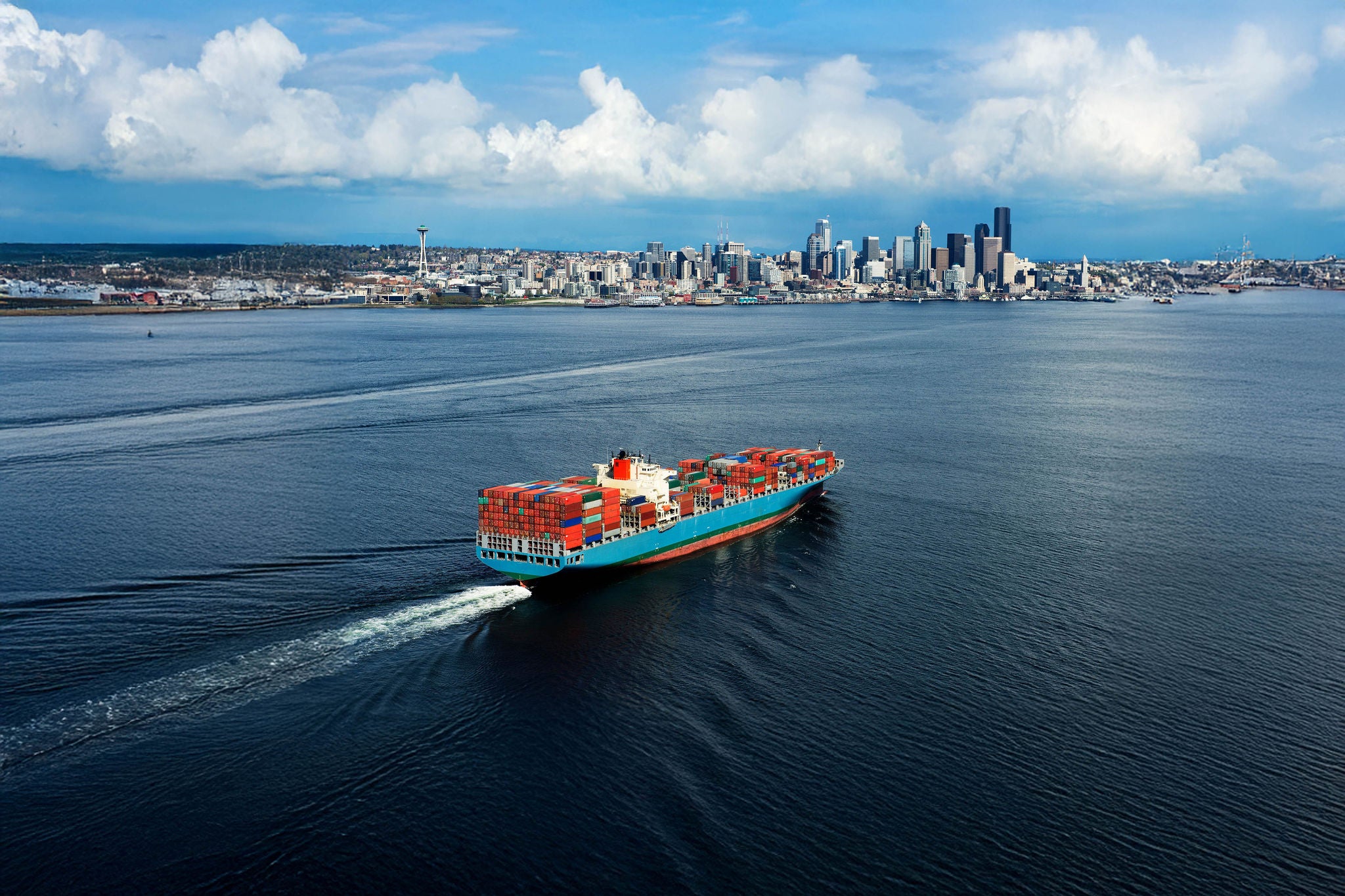
How shifting tariffs will transform global trade
In this episode of the Tax and Law in Focus podcast, host Susannah Streeter explores how tariffs, trade tensions and AI are reshaping global tax.
Related topics
This episode of the Tax and Law in Focus podcast, hosted by Susannah Streeter, explores how tax and legal leaders can respond to an increasingly unpredictable global trade environment. Geopolitical tensions, shifting US tariff policies, and retaliatory measures are reshaping trade flows, dismantling long-established networks, and driving up costs — while also opening unexpected opportunities.
Susannah is joined by Jeroen Scholten, EY Global Trade Leader, Indirect Tax; Luke Branson, Partner, Global Trade at Ernst & Young; and Shenshen Lin, Partner, Global Trade at Ernst & Young LLP. Together, they unpack how tariffs are no longer simply an economic lever but are increasingly used as a geopolitical tool — from reshoring strategies and retaliatory tariffs to their impact on supply chains, logistics and tax structures.
The panel discusses why cross-functional collaboration between tax, trade, legal, and the C-suite is now critical, and how businesses can balance short-term mitigation with long-term strategy. They also examine how tools like artificial intelligence (AI) and data analytics can help organizations model tariff impacts, manage compliance, and pivot quickly as policies evolve.
For tax and legal teams, the message is clear: tariffs aren’t a temporary disruption — they’re the new normal. This episode offers practical insights to help organizations strengthen resilience, leverage opportunities, and rethink their role in shaping strategy in a rapidly transforming trading world.
Key takeaways:
- Understand how shifting tariffs and trade policies are impacting supply chains, tax frameworks and business operations.
- Learn why tariffs are increasingly used as a geopolitical lever — and what that means for global businesses.
- Gain insight into short-term mitigation tactics and long-term strategies to manage tariff risk and seize opportunities.
- Explore how tax, trade and legal teams can collaborate with the C-suite and use AI-driven analytics to make informed decisions in a volatile trade environment.
For your convenience, full text transcript of this podcast is also available.
Susannah Streeter
Hello and welcome to the Tax and Law in Focus podcast. I'm your host, Susannah Streeter. In this edition, we're going to focus on how tax and law leaders can manage the constantly shifting tariff environment. We're living through a period of growing geopolitical uncertainty where changing transatlantic relations, shifting power dynamics, economic tensions, and security concerns are reshaping global trade and the way the world works. US tariffs are dramatically recalibrating international relations, triggering risk, but also creating opportunity. Described as national security moves, US tariffs have sparked retaliatory action from trading partners and are starting to dismantle long-established trading networks, disrupting supply chains and affecting indirect tax exposures. The landscape is shifting fast, with new developments every week, often every day. In this uncertain new trading world, what strategies should tax and legal leaders consider to mitigate risk and ensure the necessary levels of operational agility and resilience? That's what we're going to discuss in this latest podcast, and I'm very pleased to say I'll be joined by a panel of subject matter experts who are going to share their insights about all of this. But before I introduce them, please do remember, conversations during this podcast should not be relied on as accounting, legal, investment, nor other professional advice. Listeners must, of course, consult their own advisors.
Streeter
But now, please welcome to the podcast, Jeroen Scholten, who is the EY Global Trade Leader, Indirect Tax. Hello there, Jeroen. Great to have you with us.
Jeroen Scholten
Hi, Susannah. Great to be here.
Streeter
Also, we have Luke Branson, who is EY Australia's Global Trade Leader. Hello there, Luke.
Luke Branson
Hi, Susannah.
Streeter
Please welcome Shenshen Lin, a Global Trade Partner at EY UK. Thanks for joining us, Shenshen.
Shenshen Lin
Thank you for having me, Susannah.
Streeter
Thank you. Let's kick off then. I want to speak to you, Jeroen, first and set some context. To what extent are the latest US tariffs part of a continued reframing of global trade? One, in a way, that's been going on for the past decade?
Scholten
I think setting that context will be useful. If we look back at the world of global trade, I would say that there's been a lot of changes in the past decade. At the earlier part of the decade, I would say the trade environment was a very predictable environment. We were actually collectively around the world focused on reducing trade barriers. So duty rates were going down. There were additional free trade agreements coming into place. There were negotiations about more free trade and liberalizing trade effectively. But that changed. It changed really in the last 10 years because we saw since 2016, and it was not specifically due to the appointment of President Trump the first time in the US, but also other reasons, we saw disruption increasing. We saw trade blocks falling apart. Take Brexit, right? Long-lasting trade blocks that were suddenly breaking up. We had unfortunate situations of war resulting in different tensions, export controls, and other regimes, all an effect of changes in the global trade landscape. So we went from a pretty predictable duty reduction, low rates to spikes in tariffs, additional measures, trade blocks falling apart, more tensions, and it's worldwide. And that, I think, is the context that is especially relevant to understand.
Scholten
Final point there, it's not only tariffs that are relevant, it's also other programs that economies and countries around the world try to use to stimulate more production activities onshore rather than offshoring it all to a specific market zone.
Streeter
Yeah, absolutely. There is so much to consider. So, Luke, do you think the current tariff disruption is intended as a short, sharp geopolitical shock aimed at recalibrating relationships? Is it an extended negotiating tactic, or is it something more structural?
Branson
Yeah, thanks, Susannah. It could be a little bit of all of the above, but really, when I look at the US Trade Policy changes, I see something that's more structural in nature. I think if we reflect, perhaps on COVID-19 in particular, we saw pretty significant disruptions and supply shocks there. We saw export controls put on a range of different products that limited their supply. Out of that, I think what we're seeing is the US administration, both sides of politics, really focusing on this need for self-reliance and sovereign capability. We're seeing that play out in some of the sectoral tariff investigations that have been initiated and the identification by the US administration of key sovereign capabilities, like the automotive sector, like the steel and aluminium sector, the pharmaceutical sector, critical minerals, so on and so forth, has been critical to US self-reliance. To me, this push towards reshoring capability back into the United States is perhaps more structural, and so necessarily going to take quite a bit longer than just a quick hit change or some short-term shock.
Streeter
Yeah, I mean, what's your take on this, Shenshen? Do you think it's a long-term shift or short-term volatility? I mean, what evidence is there either way?
Lin
I think it's important to separate potentially two concepts. One is the US trade and tariff policy itself. The second is perhaps on a worldwide level, trade and tariff being utilized as a geopolitical lever rather than a pure economic lever. If we look at the former concept, which is the US tariff policy itself. That, I would say, is entirely subject to speculation. Short term, definitely a lot of volatility is involved, but whether it's a long-term thing here to stay remains to be seen. Now, on the latter, which is the worldwide trade policy and tariff as a geopolitical lever. That's something that I think we could more confidently expect to come and last for a longer period of time. In fact, to my colleague's point before, the US tariff event actually wasn't the first. Brexit wasn't actually that long ago. Brexit itself, even though that was not a tariff event on its own, it had a long-lasting impact of that. The sudden introduction of a custom border between the UK and the European Union brought a lot of shocks to companies that many of them are still having long-lasting impact, even till this days, from procurement decisions to the size of the trade teams, even the talent market in Europe.
Lin
What happens in the US is simply just a continuation. It's a snowballing event of that. Many of the trade policies that we're expecting to see in the next few years to come could also find their roots and bases in what we're seeing these days.
Streeter
Yeah, absolutely. As you've been outlining there, Shenshen, there are real links to what's happened as far as Brexit is concerned. I mean, not least, the direct effect of driving up the costs of goods and potentially eroding profit margins. Jeroen, what other consequences could these tariffs have in areas such as supply chains, logistics, and also perhaps sustainability efforts?
Scholten
Yeah, that's a good point. To start, tariffs are a cost. They will increase the cost price of the products being imported. If the duties are a few %, it can still be a big number for some companies, but across the board, you would say companies and supply chains absorb those costs. If duties and taxes start to run into double-digit numbers, it really starts to impact the cost of goods sold, and that really forces companies to look into supply chain options. Can I use alternative sourcing? Can I get my products from somewhere where I don't fall under these high tariffs? And should I look into moving production around or set up my business in a completely different way, supply chain in a different way? But that's the thing, don't do it overnight. It's intense. So what we see is a consequence of this constantly changing landscape, these tariffs that are installed, maybe go away again, is that it can be a bit paralyzing. So we see companies looking at their supply chain and then, first of all, thinking about more or less short-term actions, like what can I do now that may not completely disrupt my supply chain?
Scholten
And that has to do more with looking into valuation and other types of solutions to reduce the cost in the supply chain. And then in parallel, look at long-term, more transformational steps, like really changing the sourcing and production locations, changing the hubs for distribution, et cetera. I think that is what we see. And then on top of it, we notice that it's not only the tariff, but there's also a lot going on in the sustainability space, as you mentioned, sometimes referred to as non-tariff barriers, some involved, where we look at rules around CBAM or EU deforestation. They also have an impact on future flows of goods, transparency in the supply chain, and visibility that companies need to provide to authorities and customers, basically to demonstrate the source-to-shelf process and be compliant. Also, their companies are looking at the big picture, long-term, best possible supply chain setup.
Streeter
So lots of scenarios really to plan for. Shenshen, aside from the tariffs, what would you say are some of the less publicized aspects of Trump's global trade policies that are having an impact on companies?
Lin
That's a very interesting question. I think probably at two levels, if I could just give some examples. First of all, at the very high macro level, I think many people may forget from time to time that the US tariff policy itself doesn't just end with the US. It's actually a very much a global event. The impact is also not just between the US and the rest of the world countries. It could be among the other trading blocks that is not US-related. It's interesting to take a look at how some of the rest of the world's countries have responded recently. For instance, initially, what we have seen is that some of these other countries responded to the US tariff campaign, probably more on a bilateral basis. But then gradually, there's now an increasing shift and focus on wider regional or maybe global policy response. This is evidenced by the completion of some of the very long-standing free trade agreements recently, which have accelerated, actually, since the US tariff policy was published. Secondly, perhaps at the more granular operational level, what we are hearing from companies is that much as the policy level presents its own ambiguity, there's also a lot of confusion and lack of awareness on how it actually works at the border.
Lin
For example, one typical question that we get from companies is, particularly for import into the US, with this change in volatile policy shift, what does that mean in terms of CDP, which is the US Customs Authority's ability to respond to that? Is their system able to cope with things when policies and tariff rates can really change overnight? A lot of these present ambiguity to companies, and some of them are in this watching-out position where holding off decisions can actually be quite a common practice for a lot of them.
Streeter
Yes. I mean, there is so much ambiguity, as you say. So, Luke, what's your take on this and all of these changing policy shifts?
Branson
Shenshen has made a really good point there, in particular around US CBP or Customs and Border Protection, and this de minimus change that's being talked about. So that's really the low value threshold. So goods that enter the United States at less than $800 US don't pay a tariff, or they historically haven't paid a tariff. And part of the changes that the US administration has introduced has been to abolish that de minimus threshold for goods originating from China. And that's really blown apart the drop-ship model, the very popular e-commerce supply chain model, where you don't need to hold inventory as a company, as an importer into the United States, and you can leverage that de minimus threshold to bring in consumer products or other goods into the US and not have to pay the tariff. It's really blown apart that business model in a pretty substantial way, very quickly. I would say that while bigger companies have been reticent to change their supply chain structure, some of these smaller entrepreneurial, more agile businesses have had to respond very quickly, where they've got a high concentration of sourcing goods in China. And so they've had to react quickly to set up US operations, whether it's a 3PL, an entity. They're now having to report income in the United States in a way that they wouldn't have had to before and register for state sales and use taxes and a whole range of other issues that they're now facing into. So quite far-reaching implications and quite disruptive.
Streeter
And Luke, is there any targeting of so-called retaliatory tariffs for what seems to be other policy objectives, such as being used as bargaining chips for other concerns?
Branson
Absolutely, Susannah. We've certainly seen that. We've seen that in respect of the US-Canada border-related issues, and the US-Mexico border-related issues, we saw very early on the introduction of the so-called Fentanyl Tariffs under the International Emergency Economic Powers Act by the US administration, really to prompt greater focus on border security issues at the North American border, in particular in respect of the fentanyl trade and in respect of migration challenges as well. Say what you will of using tariffs as a bargaining chip, I think the important consideration is that actually it did get the Canadians and the Mexicans to the negotiating table, and they certainly made investments in border security as a result of the tariff proposals that were put forward by the US administration. We've also obviously seen tariffs used as a bargaining chip more recently with the Canadians around digital services taxes in particular, and the Canadians walk back from their proposal to impose a digital services tax. So we're certainly seeing them used as a bargaining chip in geopolitical government-to-government negotiations to some effect.
Streeter
Yeah, that's really interesting. And Jeroen, what disruptions do you think tax and law teams should be aware of in terms of the potential upcoming retaliation?
Scholten
Yeah, Susannah, I think it's actually what Luke is also highlighting. Some of this is used as a bargaining chip, and we see constant changes as well in the landscape of not only tariffs, but also other taxes, digital service taxes, Section 899 of the big beautiful bill that was also dropped, it seemed, as part of a negotiation with the different countries. I think it's a lot to deal with, not just by a customs or a tariff team, but by the overall tax, law, or even C-level team. It is really impacting companies. I think the changes that are coming our way are direct tax-driven, regulatory-driven, basically sustainability-driven. All the big teams have underlying measures that can really influence how companies set up their business. It's either through a more or less the carrot and the stick. We see punitive actions, additional tariffs. That's clearly more of a stick approach. We see, on the other hand, incentives, subsidies, other programs to try to attract businesses to set up their supply chains onshore. I think the balance between the two should keep the tax and law teams occupied in the coming months and years.
Streeter
Certainly sounds like it. I'd be interested to find out your view, Jeroen, on just how much inbuilt resilience there could be, because obviously, we've had previous so-called Black Swan events, like the pandemic, Suez Canal blockages, natural disasters, terrorist action. They've all taught multinationals a great deal about supply chain resilience and diversification. To what extent would you say these lessons are relevant now? Have they learned from what's happened before?
Scholten
To your point of previous Black Swan events, the global pandemics, COVID, other big turnaround events like the Suez Canal blockage, I would say companies definitely learned from that. But did they completely change their supply chains? In our experience, and I think I speak a little bit for Shenshen and Luke as well, we didn't immediately see these companies move their production to other countries. It's also a very hard thing to do. What I think is actually going to be relevant going forward is if the change isn't going to be a constant change, like I think tariffs are here to stay, there will be a new and a higher level of tariffs going forward, that typically forces companies to really rethink their supply chain. A one-off event is clearly contributing to thinking smarter around diversifying the supply chain, derisking supply chains. But it's the long-lasting impact of tariffs, sustainability measures and the likes that really force companies to change their supply chain.
Streeter
Yeah, interesting to see just how long it takes companies to move. Shenshen, given that US trade policy does appear more fluid than ever, perhaps tariffs are here to stay, as Jeroen has been saying. How should tax teams develop the required agility to cope with this sustained period of disruption? Should they simply be considering it the new normal?
Lin
That's an excellent question, Susannah. I think probably the most important thing, in fact, for companies is to take a look at the past six months, what has gone well and perhaps what has not. For example, some companies were able to pull together a multi-work stream task force very quickly when situations evolved, and that allowed them to make decisions that really pull together supply chain, compliance, legal, tax, etc. Whereas others perhaps took a bit longer time to find even the responsible teams or people. Now, trade is also, interestingly, not always just owned by the tax teams. If we look around the world, many companies, trade and tariffs, are actually owned by supply chain, legal, or even other departments. I think that itself is a fascinating fact because it reflects the fact that trade touches so many different departments and teams in an organization. Therefore, to answer your question in terms of agility for the future, I think the most important thing is to look at from the infrastructure perspective, do companies have the right people, the right operating model in order to sustain them for those potential future changes? Is tax, for example, sufficiently and also effectively plugged in and integrated with the rest of the company? Some companies, for instance, the recent US tariff event was actually the first time that the tax team properly talked with and worked with their government affairs team. There's a lot that can be done and, in fact, should be done going forward.
Streeter
Absolutely. So, Luke, alongside agility, which Shenshen has clearly outlined as the crucial need for - what other qualities do teams need to leverage to succeed in this current climate, and why?
Branson
I've seen some businesses respond really well, and I've seen other businesses really struggle. And the businesses that have responded well have had very clear accountability and responsibility for dealing with the situation. They move very quickly to establish a governance structure, or they already had some governance structure in place that enabled the cross-functional connectivity that Shenshen was referring to just now. But they also had very clear decision rights and singular accountability for making quick decisions, particularly around, are we going to move forward with scenario analysis? What scenario analysis should we perform? And then what are the relevant mitigating actions that we can undertake? And that's where you do really need to draw in the different parts of the business, because different parts of the business will be impacted in different ways by these tariffs, importantly. So it can't just be one group or one function making the decisions for everyone, but certainly, very clear accountability and responsibility established at the outset.
Streeter
Yeah, and it is hard to keep up with the noise, isn't it, Jeroen? Let alone cut through it. But just how important is it to have an overview and really gain strategic insights, not just try to deal with events as they come colliding and hit you in the face, essentially?
Scholten
Susannah, that's important. I think to get to the point Luke is referring to and to be able to make actual decisions, clearly, it's important to stay on top of all the changes that are happening continuously, but to also very much be able to rely on the data, your own data, data in the supply chain, data that's been submitted to the authorities around the world in customs declarations and the like. So I think analytics on the data, tracking all the regulatory developments, and then being able to segregate between the more strategic items versus the operational aspects, I think that's key. Otherwise, you just get paralyzed and you're not able to basically handle the situation, I would say. I think dealing with that in a structured way, dealing with your data in a structured way, dealing with the regulatory updates in a structured way to feed into the teams Luke was describing, helping to separate between what is going to probably be a long-lasting impact, like what I say, from a tariff deal between the UK and the US, you can derive certain insights on what the new normal may look like and start to anticipate on those long term consequences is something companies can benefit from.
Streeter
So Shenshen, what's your take? What do you think companies should do to gain a swift understanding of how each new tariff will affect their operations? And also, deal with the need to potentially replicate this multiple times. Do you think tools like predictive AI and data analytics will help with this?
Lin
They're definitely very, very helpful enablers for companies. To Jeroen's point, probably the most important is data. When it comes to scenario modelling, what that allows people to do is to plug and play when new tariffs kick in, for example. That allows businesses to really be able to pin a number down to the impact. That allows, specifically, very senior stakeholders in a company to make decisions far more effectively, far more sufficiently as compared to, for example, a qualitative description. We've seen data very much deployed by the best-in-class companies when they try to stay ahead of the curve with the upcoming potential changes in the tariff landscape. Also, using data for modelling is not just relevant from a US perspective. We have seen that being done for the rest of the world. A lot of countries, for example, also allow importers and exporters to obtain data from a government perspective. This allows the scenario modelling to be more comprehensive and to show the overall global dynamic and impact for an organization. Lastly, when it comes to GenAI, it is not just a fancy term that we read in the news. In fact, what we're seeing a lot in the market now is GenAI being deployed in particular customs processes and activities, such as HS classification, for example. What that brings, even if it's not directly related to the tariff itself, it really drives efficiency and optimisation from a company's perspective. That allows all businesses to stay more agile and being able to cope with these Black Swan events whilst managing their day-to-day job as well.
Streeter
There's certainly a lot to juggle, isn't there? I mean, Luke, do you think companies can adapt their customs and trade operations to help obtain tariff-related risk, and in what way?
Branson
Well, they can, Susannah, and they have to, and some companies have really done this already. It's this dichotomy of an operational versus an advisory-focused trade and compliance function. So are we focused on the operational trade compliance activities, like making entries, reviewing declarations, and performing harmonized system classification? Or are we focused more on advising the business, particularly in respect of challenging operating models or new trade lanes that we might be looking to establish, or trade disruptions, which obviously, as we've been talking about and hearing today, are far more frequent. And so the businesses that have pushed towards a more advisory focus over an operational focus are those that have been better prepared to deal with the tariffs that we've been seeing and the other trade disruptions as well, actually. It really becomes a question of what do we insource, what activities do we keep in-house, and what do we push to outsource providers, whether that's customs brokerage in the most basic form or all the way through to some of the different operational activities that I talked about earlier on, like harmonized system classification, leveraging free trade agreements and the like. And by outsourcing those activities, those businesses tend to pull themselves out of that daily grind, and they're able to support the business as a more strategic advisor, which is so fundamental and important at this particular time when things are moving so quickly. They're able to focus on finding the signal in all the noise that we currently are experiencing with all of these daily announcements in respect of the tariff situation and the trade policy changes that are occurring very rapidly.
Streeter
Yeah, it's certainly a time when there's a real hunger for knowledge. Shenshen, I just want to ask you, in this environment, how useful are principles such as first sale for exports, but also foreign trade zones?
Lin
What you mentioned there are some of the really good examples of very technical, tactical mitigation solutions that we're seeing a lot of companies are deploying. For example, when we think about tariff mitigation, we usually go back to the three principles at one point. The three principles being tariff classification, customs evaluation, and country of origin. Now, the first sale for export that you mentioned is a mechanism in the customs valuation sense, where in a chain transaction, that principle allows customs duty to be assessed based on the earlier, which is also typically the lower transaction subject to certain conditions being met. The foreign trade zone, for example, you also mentioned is the one point, which is the tax point. Now, FTZ basically allows tariff suspension for products being stored under FTZ. Some of these are obviously subject to specific conditions being satisfied. But just as an example, of a lot of planning, feasibility, and implementation being done by companies around the world from a customs-specific perspective.
Streeter
Really interesting to hear about the tactics being explored there, Jeroen. What else can be done in the valuation space?
Scholten
Yeah, thanks, Susannah. I really agree with Shen on the three fundamental pillars: valuation, origin, and tariff classification. Within valuation, Shen explained the principles of first sale for export using an earlier transaction in the chain to reduce basically the customs duty bill. If that's not a possibility for companies, we are still very much focused on the value of the products that are being imported into a country. If we look at international trade, the majority of transactions are based on inter-company transactions. So we carefully look at the inter-company transfer pricing. And we have product pricing that, for historic reasons, could be relatively high based on a transfer pricing model. We have an entity importing and distributing at a routine profit level that results in relatively high transfer pricing to the market. And it could be that within that transfer price, there are elements that actually represent an intangible or something else that potentially could be charged separately and expressed separately to basically make sure that we're not overpaying duties unnecessarily. Of course, that comes with quite some careful considerations and design, but it's critically looking at the inter-company pricing to reduce the customs values effectively.
Streeter
Okay, thank you. And Luke, what else would you say that companies could do right now?
Branson
Yeah. So right now, companies are really hard-pressed to look at shifting manufacturing. And when we say shifting manufacturing from a trade sense, we really mean moving the origin of the product. In the US, we have a set of rules of origin. There are two sets of rules of origin. There are the preferential rules of origin, which sit in free trade agreements that the United States has struck, and that's the same in the world around. And then there's the non-preferential rules of origin. And those rules set out where a product is produced, wholly produced or manufactured. Those rules provide guidance to manufacturers and to other producers around the determination of the country of origin at the time of importation. And with the reciprocal tariffs that we're now waiting to hear the outcome of government-to-government negotiations around, potentially putting in place very high rates of customs duty on far-ranging countries all through Southeast Asia, not just China. It's incredibly difficult for a business to make a decision to shift origin to a more advantageous location, where we don't know what the customs duty rate is going to be in a week's time or three months time or even twelve months time.
Branson
And so that's really creating stasis, I think, in terms of that decision around changing origin for many businesses. And the hope is that amongst many of our clients, that we will get some policy certainty around the customs duty rates, the tariffs on the full range of countries that have been proposed to have a reciprocal tariff rate imposed on them. So some of those sorts of decisions can start to be made.
Streeter
So Jeroen, given what Luke's outlined and the sheer complexity we're having to deal with, is it realistic to think that a single team can address tariff disruption? Do you think if there is more collaboration, it could help move the dial and avoid that stasis, as Luke pointed out? Or could it, in fact, with more people trying to make the decisions, lead to further complications?
Scholten
No, I think the last point you make, I think in reality, is not where we are. If you look at the impact on the magnitude of tariffs, as an example of what we're discussing right now, and the impact it has on our businesses and the cost. We used to be in a situation that Luke, Shenshen, and myself, we used to talk specifically to a tax or a trade director and try to deal with specific isolated issues. If we want to successfully help clients from our end, but act more specifically to clients at their end, if they want to successfully address the challenges that are out there, we see that cross-functional collaboration is absolutely required. Yes, you make a team bigger that can lead to more discussions, but I think the depth of the discussion and the skills that the people bring to the discussion, that diversity and that different experience sets are needed to actually get to the right outcomes. I think we need people that have a direct tax background, indirect regulatory background, supply chain procurement. It all needs to come together if we start to readdress the way supply chains are being set up. It's too difficult to handle in isolation.
Streeter
It certainly sounds that way. So, Shenshen, given this, how should then the trade, tax, finance, legal, and supply chain all work together? What should the approach be?
Lin
I think the key thing is integration there. In order to do so, it is really important for people and the various different departments to ditch some of the old mindset that, say, for example, certain departments are just back office or a compliance function, or it's sufficient, for example, to inform certain departments when wider business decisions have already been made. In fact, all departments these days, if we look at the dynamics of trade and what's happening around the world, they all have the potential to change from the more firefighting, more reactive functions to become more strategic value-added functions. It's actually a great opportunity for all of these departments that you mentioned to come together, to work together. That itself is a really good circle where strategic achievements can be made as an organization.
Streeter
So, Luke, we've heard about disruption, uncertainty and risk, but as Shenshen has just pointed out, there is a great strategic opportunity, too. So what else could you see as the upside of the current environment?
Branson
Yeah, absolutely. Tariffs act as effectively a barrier to trade, but they don't stop trade. They often divert trade. So we have this concept that economists will often talk about called trade diversion. And so, for example, when the United States put very high tariffs on China imports. China retaliated and put very high tariffs on US imports. Those imports happened to be agricultural products, predominantly. My country, Australia, benefited greatly from the imposition of those tariffs on US imports of soy and beef and other products. Because Australia is, of course, a competitor with the US in China in respect of the sale of those goods. Take beef, for example. Australian exports of beef skyrocketed 41% in the wake of the tariffs that were imposed by China on US imports. So amongst all of this, there are absolutely organizations and businesses that stand to lose out, but there are also businesses that can be winners. And importantly, it's about making sure that your commercial people are across the shifting landscape as well, just as much as the customs or the trade or the tax department, so that they can capitalize on those opportunities as they arise.
Streeter
Thank you. So Jeroen, do you think then in this environment, the tax and legal function could also be one of the winners if it adopts a strategic leadership role?
Scholten
You're right. The traditional landscape is, normally speaking, that the trade experts deal with trade compliance issues, and they deal with trade compliance issues and not day in, day out with strategic planning, changing the transfer pricing structure, changing the way the valuation is set up in the company. It's not a day-to-day activity normally. When there's a constant state of change, I think it really justifies bringing more of that strategic lens to the team and maybe in a function as such. We see those moves happening right now. In the past, tax mitigation, tax planning was typically handled by tax directors only. We now see tax directors actually including parts of the trade function into their role there are other persons added to the team that really are taking basically a next level in an organization in doing the planning.
Streeter
Yeah. So there is so much to consider, but I'd like you really to try and distil some of your thoughts as a quick takeaway now at the end of the podcast for our listeners. What would you say is the one single piece of advice that you would like them to keep at the forefront of their minds when navigating this really complex new trading world? Luke, if you could start.
Branson
Yes, absolutely, Susannah. I think my piece of advice would be look after the trade or customs professional in your business. And if there isn't currently someone with that role, find someone. If it's an open vacancy, fill it. I spoke about this back in November at the outcome of the election result in the United States, and I'm speaking about it still today. Many businesses, many of my clients are not sufficiently resourced and don't have sufficient technical capacity within their organizations to really respond to these issues in an effective way. And so that's my one thing. Fill the team, build the team.
Streeter
Build the team. Thank you very much, Luke. Jeroen?
Scholten
I would say look at this as an opportunity as well. I mean, as a trade professional, you can bring a lot of value to your company right now, and you can help your internal stakeholders not to get paralyzed by all these constant changes, but to really be able to lead them in the right direction.
Streeter
Thank you. And finally, Shenshen.
Lin
If I were to summarize, I would probably like to draw an analogy. I think trade itself has almost gone through a Cinderella story on its own. Through its own transformation, it now stands at the centre of the stage globally. It's getting all kinds of attention from all kinds of stakeholders and departments. Now, it's a great opportunity to jump on the wagon and get involved in trade and tariffs. It's the perfect opportunity to reshape what the future might behold.
Streeter
Thank you so much. Really great takeaways from the three of you. Thank you so much for your time.
Lin
Thank you very much. Great to be here.
Scholten
Thanks, Susannah. I really enjoyed this.Branson
Thanks so much, Susannah. Thanks, Shenshen. And thanks, Jeroen. It was a great session. Always happy to talk about this topic.
Streeter
Before we go, a quick note from the legal team. The views of third parties set out in this podcast are not necessarily the views of the global EY organization or its member firms. Moreover, they should be seen in the context of the time in which they were made. I'm Susannah Streeter. I hope you'll join me again for the next edition of the Tax and Law in Focus podcast, EY: Shaping the Future with Confidence.
Presenters
EY logo, Shape the future with confidence