


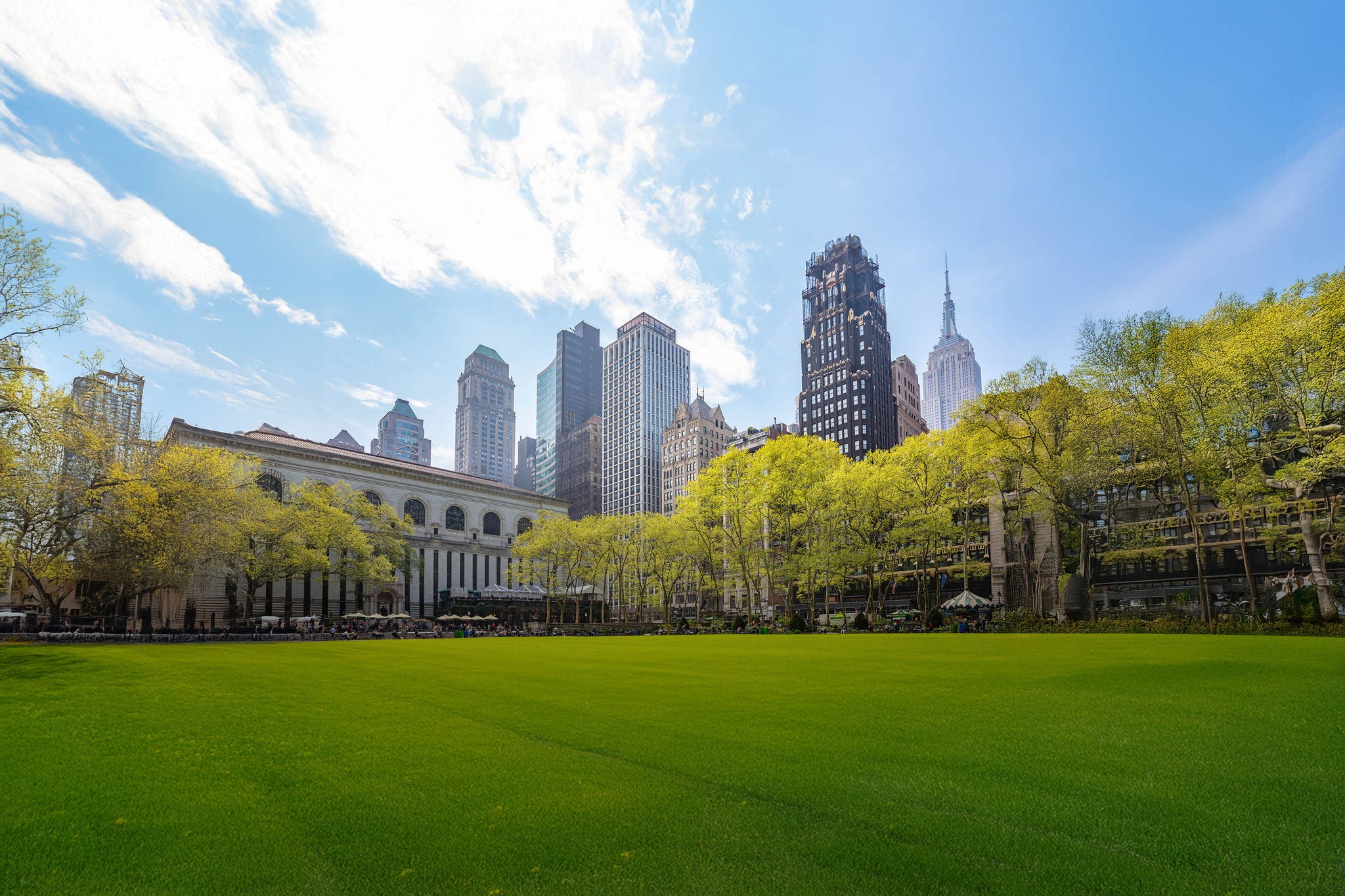


Bryant Park, New York, Manhattan; high buildings view from below against blue sky background

How global business districts are rebounding as global economic hubs

Global business districts are considered more attractive compared to 2020, reaffirming their enduring role in underpinning the global economy.


In brief

  • Despite the headwinds, global business districts are regaining strength. Of stakeholders surveyed, 63% view them as more attractive than before the pandemic.
  • Four megatrends are reshaping the future of global business districts, reflecting deep demographic, technological and environmental shifts.
  • New York's Midtown and Financial District secure the top two spots in the 2025 rankings, but Asia's hubs are on the rise and global shifts are evolving.

The third edition of the Global Business Districts Attractiveness Report, developed in association with the Urban Land Institute for the GBD Innovation Club, highlights that global business districts (GBDs) are rebounding at pace.

Almost two-thirds (63%) of the 250 business district stakeholders surveyed consider these areas “more attractive” in 2025 compared to 2020, despite the upheavals brought about by the pandemic.

This confidence stems from the enduring power of global economic crossroads such as Manhattan (New York), Downtown Core (Singapore), Beijing CBD, Marunouchi (Tokyo), the City of London and La Défense (Paris). These major urban centers serve as the driving force of the global economy, collectively supporting more than 7 million jobs, housing the headquarters of 84 Fortune Global 500 companies and generating US$4.5 trillion to gross domestic product (GDP).

Their leadership positioning relies on structural advantages — world-class transport networks, dense clusters of business activity and privileged access to talent — that set them apart from historic city centers or suburban business parks.

However, the rise of hybrid work has created challenges and reshaped the expectations of GBDs. Average occupied office space has fallen by 5–10% since 2019, according to CBRE1, and with office working now averaging two days a week for employees in the 30 largest business districts, companies continue to streamline their real estate portfolios. In Europe and the US, 60% of firms plan to further reduce their footprint within the next three years.2 Combined with global economic slowdown, persistent inflation and geopolitical uncertainty, this has made real estate a prime cost-saving lever for companies. Yet, according to the survey, fewer than one in five executives believe that the price companies pay to locate in GBDs is truly proportionate to the value provided.

Beyond these immediate tensions, the report highlights four trends that are reshaping the future of GBDs, which, in part, can alleviate these challenges and merit immediate attention from investors, developers, occupiers and other GBD stakeholders.

Download The GBD Report 2025

Four trends shaping the future of GBDs

Each of the trends3 reflect deep demographic, technological and environmental shifts that are transforming how cities — and their economic cores — function, evolve and create value and experience. A clear understanding of these dynamics can help investors, developers, occupiers and GBD managers shape strategies that navigate the delicate trade-offs they face, supporting global business districts in being more vibrant, sustainable and innovative.

Trend 1 – Talent first

More than three in four (76%) of executives rank talent attractiveness as their top priority when choosing a business district. These districts must act as partners for companies, helping them attract and retain employees. In addition to continued investment in transport, technology and safety, housing has become a critical concern, cited by 46% of respondents as a priority issue.


Talent attractiveness ranked as top priority
of executives rank talent attractiveness as their top priority when choosing a business district.

Concerns are shifting beyond office buildings toward the urban experience: vitality and quality of services are now prerequisites. Only business districts offering true diversity of uses — green spaces, retail, culture and leisure will continue to appeal to companies, employees and investors. Without renewal, global business districts risk being overtaken, even locally, by smaller, more agile and better-integrated urban hubs.

Trend 2 – The soft and hard power of real estate

The question of “fair value” has become central to real estate strategy: 40% of executives now cite it as a priority, up 14 points since 2020. Vertical, iconic architecture; large office floors; and prestigious locations raise a question: how can the cost of height and prestige be justified in an era of cost-cutting and changing needs?

Two paths emerge: urban design and quality. The survey shows that top-quality buildings and districts — those most accessible, modern, comfortable, tech-equipped and energy-efficient — continue to attract tenants. In contrast, those that don’t address these evolving needs or fail to embrace mixed use will struggle to find occupants and maintain their ranking.

Trend 3 – The dual role of technology

Technology is now a cornerstone of GBDs, serving as a major operational lever for planners, developers and managers. It enables faster design, reduces environmental impact and offers a better understanding and control over the millions of activities that flow through these areas every day.

Businesses expect districts to be innovation hubs
of executives want stronger collaboration between research institutions, universities and companies in business districts.

At the same time, businesses expect these districts to be innovation hubs. Almost half (42%) of respondents emphasize the need for stronger collaboration between research institutions, universities and companies within business districts, and 27% believe artificial intelligence initiatives will be crucial to achieving this goal.

Trend 4 – The complexity of sustainability

Sustainability has become central to the global business district agenda. The survey identifies three key levers to accelerate the transition:

  • Low-carbon mobility development (54%)
  • Energy renovation of existing buildings (49%)
  • Deployment of green spaces (46%)

Looking ahead, success will depend on the ability of business districts to fully integrate climate considerations into their planning, investment and governance. Yet, a significant gap remains between ambition and action: fewer than 10% of executives believe these areas are on track to address climate risks.

30 GBDs analyzed

These trends are reflected in the 2,400 indicators and eight categories used to assess the performance and attractiveness of 30 GBDs. 

  • Historic and foundational sites remain at the top of the rankings. New York leads globally (Midtown #1 and Financial District #2), followed by Tokyo Marunouchi (#3), Paris La Défense (#4), and the City of London (#5). But, while they maintain their lead, some are threatened by rising vacancy rates and weaker investment trends amid a changing global landscape.
  • Asian business districts continue their ascent. Beijing, Singapore and Seoul feature in the top 10, reflecting the region’s growing economic influence. 
  • North America faces challenges. New York’s strength contrasts with the mixed performance of Los Angeles and San Francisco, which struggle with vacancy and safety issues. 
  • Europe is losing competitiveness. Europe’s six leading districts host 2.5 times fewer Fortune Global 500 headquarters than their Asian counterparts. 
  • New business districts are emerging. DIFC (Dubai) and KAFD (Riyadh) are asserting themselves in the Middle East. In India, Outer Ring Road (Bengaluru) and BKC (Mumbai) could represent the next generation of global business districts, alongside Johannesburg, São Paulo and Casablanca.

These 30 global business districts remain cornerstones of the international urban economy. Their ability to innovate, become vibrant living environments and embed sustainability will determine their place in the coming years. 


Summary

Five years after COVID-19 reshaped how and where people work, GBDs continue to be command centers for global business and investment. Collectively, the top 30 GBDs employ more than seven million people and host 84 Global Fortune 500 companies. Beyond immediate economic and geopolitical tensions, the report highlights trends reshaping the future of GBDs. The next decade will see them evolve into “central social districts,” which will be inclusive, mixed-use spaces that blend work, living, culture and climate resilience.


Related articles

The future of sustainability in business: why success depends on integration

Companies integrating sustainability into their strategy by default show greater confidence in their business outlook. Read more.

Global financial reporting trends in real estate 2024

Key trends in global real estate IFRS financial statements 2024. Learn more

How artificial intelligence can unlock a new future for infrastructure

To unlock the value of AI and truly transform the infrastructure sector, it must adopt a new mindset, skillset, toolset. Find out how in EY’s new report.

    About this article