



EY refers to the global organization, and may refer to one or more, of the member firms of Ernst & Young Global Limited, each of which is a separate legal entity. Ernst & Young Global Limited, a UK company limited by guarantee, does not provide services to clients.
Recent Searches
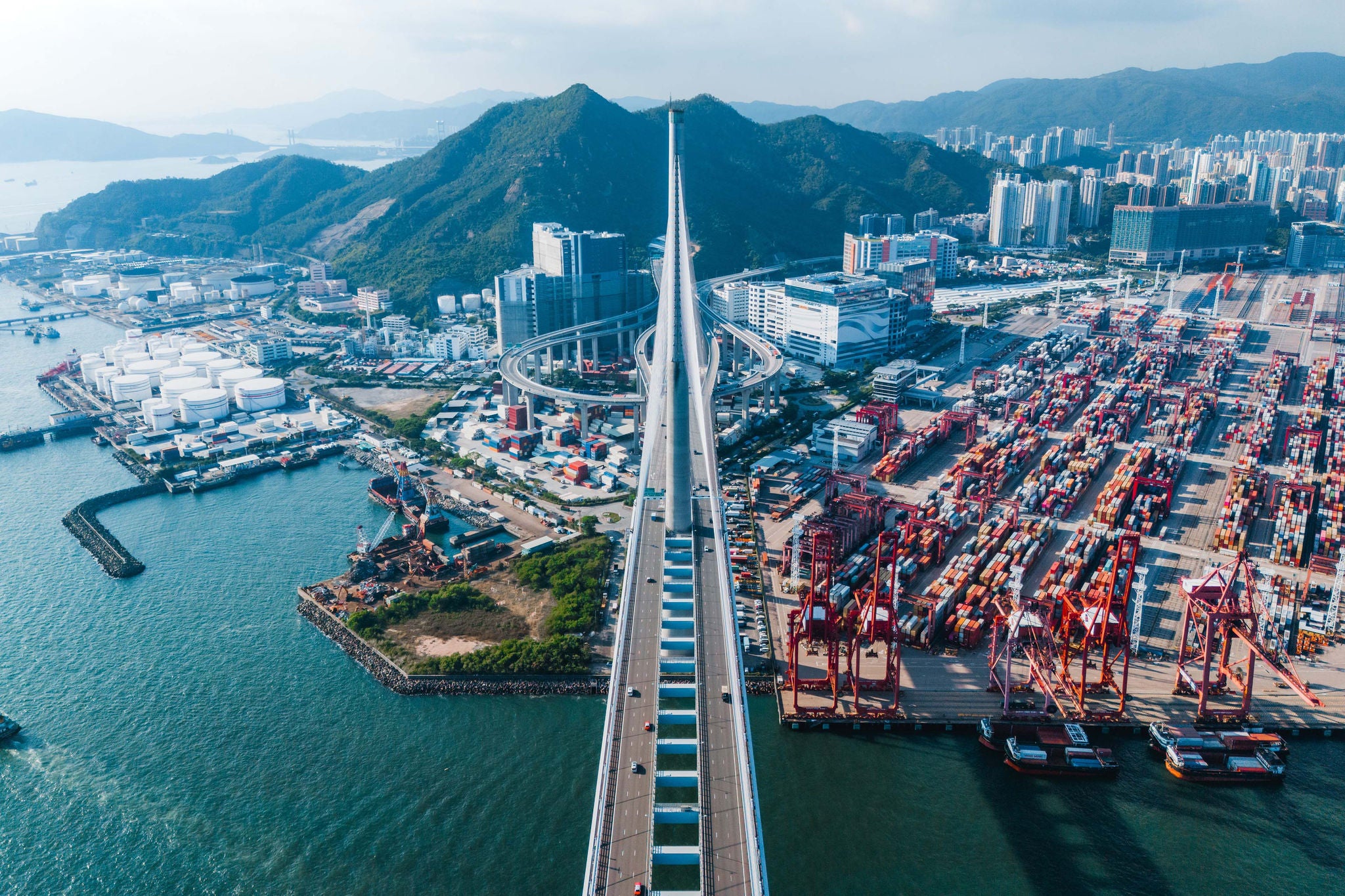
In this episode of the Tax Threads podcast, host Tony Ganzer explores why disruption is prompting companies to develop flexibility and a higher tolerance for uncertainty in supply chains.
Recent disruptions have acted as an extreme stress test for supply chains, ranging from extreme weather events to global health crises to geopolitical conflicts.
For global organizations facing uncertainty on many fronts, how can they best power through? EY professionals discuss this and examine whether innovations like generative AI (GenAI) will be enough to rewrite the supply chain playbook.
Presenters
Tony Ganzer
Associate Director, Global Tax Brand, Marketing and Communications, Ernst & Young LLP
Podcast
Episode 3
Duration
9m 36s
How can planning for uncertainty lead to a more certain supply chain?
In early 2025, it was tough to avoid headlines about tariffs, supply chains and the new shape of global trade.
“…where do negotiations stand today and should we expect tariff hikes at the end of this 90-day pause…”
“…services have been changing, and also play everyone’s favorite game right now: let’s look for impacts from tariffs…”
“…uncertainty that they’re facing, whether it’s around tariffs and trade policy, or whether it’s around the potential for conflict, it gives them more confidence…”
Disruption is nothing new for business, but recent uncertainty has amounted to a decade-long stress-test of supply chains, jolted by extreme weather events, global health crises and geopolitical conflicts. Trade policy today feels like a case of needing to deal with everything, everywhere, all at once. For the multinational companies facing uncertainty on many fronts, how best can they power through? And is the promise of innovations like GenAI enough to rewrite the supply chain playbook?
Disruption is the new supply chain normal
Jay Camillo: "The focus on that question from the C-suite has gained a new urgency over the last call it 10, 12, 13 years with the combination of the collapse of what some people refer to as the WTO consensus, which is really a multinational global consensus, that free trade is a good thing."
Jay Camillo is the EY Global Operating Model Effectiveness Leader.
Camillo: "Ultimately, companies now have to really be forward-thinking and consider, not if, but when the next disruption occurs — how can I respond at least as well as my competitors so I can meet my peers."
The expectation of disruption, oddly enough, created a kind of interim stability, but we can’t understate how the larger shocks to supply chains have caused significant fluctuations.
Beyond the COVID-19 pandemic, disruptions and uncertainty of global shipping through the Panama and Suez canals have quickly revealed cracks in supply chains and the need for more resilient and adaptable functions.
Of course, as you patch some cracks, more appear making it more important to look for them ahead of time.
Camillo: "I think what you'll find is most companies are having to try to predict what could disrupt their business in the future, but that's nearly impossible to your point. What I think they're doing is they're taking lessons where they were successful. Like a lot of companies today who are having to face or are going to face the tariffs on their imports in the United States, they're convening task forces. They've got war rooms in there, very much from every part of the company — legal, supply chain, knowledge and insights that people can do, the data analytics and try to predict."
Trying to predict the unpredictable
The reason many companies are convening task forces is the scale of ripple effects from tariffs on an already challenging cost environment for supply chains. When tariffs rise into double digits, especially, they can start to impact the cost of goods sold and realign supply chain calculus.
Jeroen Scholten is the EY Global Trade Leader, Indirect Tax.
Jeroen Scholten: "That really forces companies to look into supply chain options. Can I use alternative sourcing? And should I look into moving production around or set up my business in a completely different way, supply chain in a different way? But that's the thing you don't do overnight. It's kind of intense."
Scholten told the EY Tax and Law in Focus podcast that for companies to deal with a little of everything all at once, they need to reconsider a little of everything, short term and long term, all at once.
Scholten: "Looking into valuation and other types of solutions to reduce the cost in the supply chain, and then, in parallel, looking at long-term, more transformational steps, like really changing the sourcing and production locations, changing the hubs for distribution, et cetera. And then on top of it, we notice that it's not only the tariffs. There's also a lot going on in the sustainability space, sometimes referred to as non-tariff barriers. Also, their companies are looking at the big-picture, long-term, best possible supply chain setup."
It’s a common refrain: companies are best served when they build trade strategies proactively, instead of waiting to react to a host of sudden changes. They take full advantage of the data, tools and talent they have. And they continue to innovate and invest in a sustainable way.
It is no different for supply chains.
Gone, for now, at least, are the days of business as usual with the assumption of stable tariff regimes. World events can alter trade policies, duties and regulations with little notice.
Ultimately, companies now have to really be forward-thinking and consider, not if, but when the next disruption occurs, how can [they] respond at least as well as [their] competitors so [they] can meet [their] peers.
Prioritizing proactive strategies
Tax leaders cannot wait for changes before they react. They need proactive approaches to anticipate disruptions with agility. This approach includes horizon scanning, scenario planning and cross-functional collaboration to gauge how new rules or tariffs affect profitability.
Shenshen Lin: "I think the key thing is integration."
Shenshen Lin is a Global Trade Partner for Ernst & Young LLP in the UK.
Lin: "In fact, all departments these days, if we look at the dynamics of trade and what's happening around the world, they all have the potential to change from the more firefighting, more reactive functions to become more strategic value-added functions. It's actually a great opportunity for all of these departments that you mentioned to come together, to work together. That itself is a really good circle where strategic achievements can be made as an organization."
When it comes to GenAI, it is not just a fancy term that we read in the news. In fact, what we're seeing a lot in the market now is GenAI being deployed in particular customer processes.
Along with a more strategic posture, organizations are beginning to see how robust data management and new technology are helping navigate unknown waters. Use cases for generative AI are becoming more widespread across industries and functions, and supply chain management is no exception. GenAI is set to make supply chain management more resilient and sustainable, while also changing how costs are managed.
Lin: "We've seen data very much deployed by the best-in-class companies when they try to stay ahead of the curve with the upcoming potential changes in the tariff landscape. Also, using data for modeling is not just relevant from a US perspective. We have seen that being done for the rest of the world. Lastly, when it comes to GenAI, it is not just a fancy term that we read in the news. In fact, what we're seeing a lot in the market now is GenAI being deployed in particular customer processes and activities."
Camillo: "Whether it's related to digital, whether it's related to tariffs and supply chain disruption, whatever it is, business transformation is definitely top of mind for most of the C-suite."
For Camillo, risk is always going to be part of the calculation in managing supply chains in a fluid environment. Balancing short-term and long-term goals, and investing in a strategy bolstered by robust data and technology, is way to create sustainable value.
Camillo: "So I'd say resilience, flexibility and agility are top of mind for the C-suite, and then it's always balanced against the cost. You can't have a risk-free, low-cost supply chain. If you want a risk-free supply chain, you're going to have redundancies in inventory, manufacturing, and everything. It's just going to cost more. Do those companies that make those investments and carry the higher cost survive the disruption and earn longer-term profits, versus those who don't survive because they're too lean, they're too linear and too cost focused?"
Here are some thoughts for the phase ahead:
- In this time of constant disruption, companies need to develop a higher tolerance for uncertainty and build flexibility into traditional supply chain stress points.
- Technology solutions like GenAI can help facilitate this transformation, but it looks to be a complex journey.
- Organizations should tailor responses to each situation. By maintaining visibility into supply chains and integrating all departments involved, they can adapt quickly.
Maybe the question isn’t about uncertainty’s impact on your supply chain, but instead “will your supply chain adapt before or after the next challenge?”
Thanks for listening to this episode of Tax Threads from EY. Please remember to rate this podcast and subscribe for future episodes. For in-depth analysis of tax and law issues, check out our Tax and Law in Focus podcast. It is also available on EY.com, Apple, Spotify and other popular podcast platforms.
Conversations in this podcast should not be relied upon as accounting or legal, investment or other professional advice. Listeners should consult their own advisors. The views expressed in this podcast are not necessarily the views of the global EY organization or its member firms and should be considered in the context of the time in which they were made.