


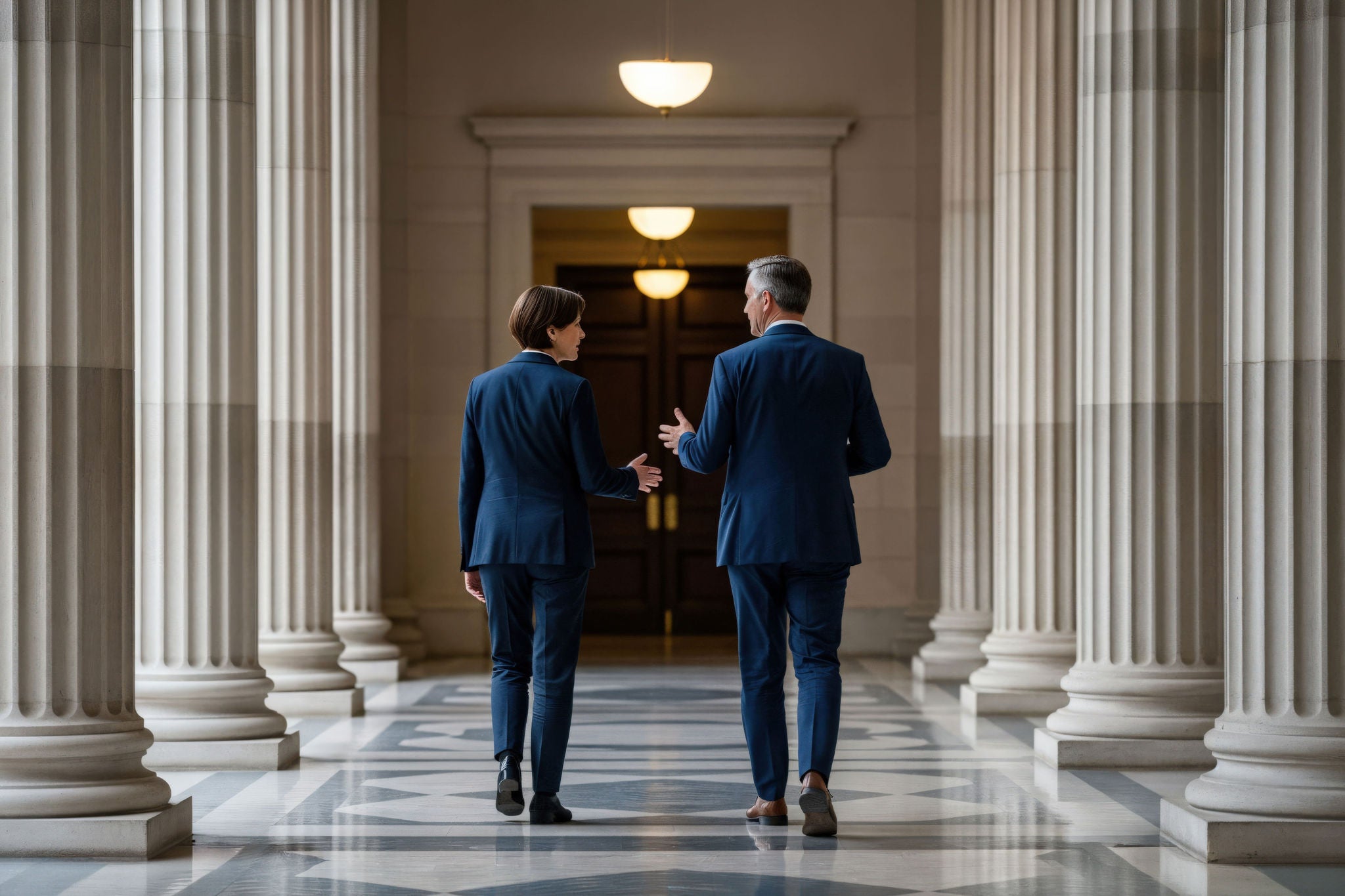



Two Business Professionals Walking Together in a Hallway of a Government Building

Why legislative engagement on tax policy matters more than ever

Related topics

Congress can change the tax code at any time. Why business engagement is key to preserving stability.


In brief
  • Can Congress revisit tax provisions that are considered permanent?
  • Why should businesses continue engaging with lawmakers after tax legislation is enacted?
  • How can real-world business experiences influence the future of tax policy?

One of the most consequential outcomes of the One Big Beautiful Bill Act (OB3) was permanence. Several significant business provisions were made permanent, giving businesses a level of tax certainty they have been seeking for years. Yet many business leaders are asking a reasonable question: How permanent is "permanent" in Washington?


On paper, research and development (R&D) expensing, bonus depreciation, interest deductibility under Section 163(j) and key international provisions now have no expiration date. Coupled with the corporate tax rate, which was already permanently lowered, the result is a more stable framework than companies have operated under in recent years. That stability matters. These provisions were designed to encourage investment, innovation and job creation in the United States, and they help companies have greater confidence when making long-term decisions.


Of course, anyone who follows policy knows that no Congress can bind a future Congress. But there are reasons to believe today's framework may prove more durable than many of the temporary provisions businesses have managed for years.


The experience since the 2017 Tax Cuts and Jobs Act (TCJA) is part of that story. Before tax reform, policymakers frequently heard concerns about US competitiveness, corporate inversions and the movement of capital and jobs overseas. Many lawmakers viewed the TCJA as a response to those challenges, and supporters pointed to increased domestic investment and business expansion as evidence that the reforms strengthened the US investment environment.

Those business outcomes became part of the political case for extending and making many provisions permanent through OB3. The argument for permanence reflects years of examples that connected tax rules to real-world economic activity.

That connection remains important because tax policy is never truly settled.

Future Congresses will have the ability to revisit today's rules just as previous Congresses revisited those that came before. Election cycles, changes in committee leadership and shifting policy priorities will continue to shape the debate. To preserve the current tax framework, future policymakers need to understand its value.

That is where the business community plays a critical role.

Lawmakers are far more likely to support a tax provision when they can point to tangible outcomes in their states and districts. Investment decisions, new facilities, research spending, workforce expansion and economic growth often carry more weight than technical arguments about tax mechanics.

Timing is especially important. Congress will continue to experience turnover, particularly on the House Ways and Means Committee and the Senate Finance Committee. As that happens, many of the lawmakers shaping the next generation of tax policy will be evaluating the issues for the first time. Their views will be influenced by the stories and experiences they hear from employers, investors and industry leaders.

For businesses, this means engagement cannot be an occasional exercise reserved for major tax legislation. It should be an ongoing effort to help policymakers understand how tax policy influences investment decisions and economic growth.

True permanence may not exist in the tax code, but durability does. And durability is strengthened when policymakers consistently hear how tax policy supports US jobs, innovation, investment and competitiveness.

If businesses want greater certainty in the years ahead, now is the time to make that case. The lawmakers who will be writing the next chapter of tax policy are already forming their views, and real-world business experiences will shape those decisions far more than any technical explanation ever could.

Summary 

Tax certainty can support long-term business planning, but sustaining favorable tax policies requires ongoing engagement with policymakers. As legislative priorities and leadership change, businesses can help policymakers by demonstrating the real-world impact of tax provisions, sharing how they affect US investment, innovation, workforce growth and competitiveness. Consistent advocacy and practical examples play an important role in helping to shape future tax policy decisions and reinforcing a stable business environment.

About this article

Related articles

EY Center for Tax Policy monthly update - September 2026

The EY Center for Tax Policy monthly update provides an overview of recent tax and economic developments.

Tariff refunds: 3 ways to help reduce the process’s corporate risk

EY explains the importance of managing your tariff refunds so that you can avoid risks in the future. Read the full article.

Trade policy and the 2026 redesign of critical mineral supply chains

Learn how trade policy is reshaping critical mineral supply chains in 2026, with new frameworks, market tools and rising stakes for business.