




EY refers to the global organization, and may refer to one or more, of the member firms of Ernst & Young Global Limited, each of which is a separate legal entity. Ernst & Young Global Limited, a UK company limited by guarantee, does not provide services to clients.
How EY can help
-
Helping top leaders to achieve peak performance, professionally and personally, by providing insights and networking opportunities.
Read more -
Discover how EY's Supply Chain Transformation solution can help your business move towards fully autonomous, connected supply chains that drive business growth.
Read more
“I live in parallel universes,” said one executive during the most recent virtual roundtable of chief operating officers (COOs) organized by the EY Center for Executive Leadership (EY CEL). “I have a pile of outdated infrastructure, so the data is all patched together. We’re on a long journey to correct that — when you feed the AI models, sometimes it’s good and sometimes not. And then there are edge cases where we are transforming using not only AI but a metaverse model. We’re everywhere in between. We are still using CD-ROMs in one place, and then there are bots doing things where we used to have 50 people.”
Even so, this uncertainty can be more invigorating than concerning for those leaders who rise to the challenge. The mood of our COO roundtable participants wasn’t negative: two-thirds of them said they were feeling neutral about the economy, 22% said they were more bullish compared with six months ago, and just 11% were more bearish.
In her presentation to the group, Lydia Boussour, EY-Parthenon Senior Economist, noted the resiliency of the US economy, thanks to AI capex and spending by high-income households, and the potential for eased interest rates in early 2026 setting up a stronger second half of the year. But she does not expect the boom in AI capex to persist, and GDP growth in the US would be far weaker without it, with factors such as geopolitical volatility, trade and tariffs, shifts in immigration, and an aging population adding supply constraints.
“In the past decade, demand was at the center of economic activity, but going forward supply dynamics are really going to matter,” she said. “In the years ahead it’s going to be about adapting to these challenges and building robustness in supply conditions.” As such, scenario building will be vital for organizations so that they are prepared to change and adapt, she added.
“We’re all really navigating this challenge of a nonlinear, volatile and interconnected world — a structural shift in the global business environment where the old playbook is no longer fit for purpose,” said Kristin Valente, EY Americas Chief Client Officer, based on her discussions with leaders of some of the world’s biggest companies. “Episodic disruption has evolved into structural volatility. You don’t handle one disruption after another; they’re layered and interconnected. You can plan for that volatility as a baseline. I’m seeing that come up in decision-making, moving from ‘predict and control’ to ‘sense and respond.’”
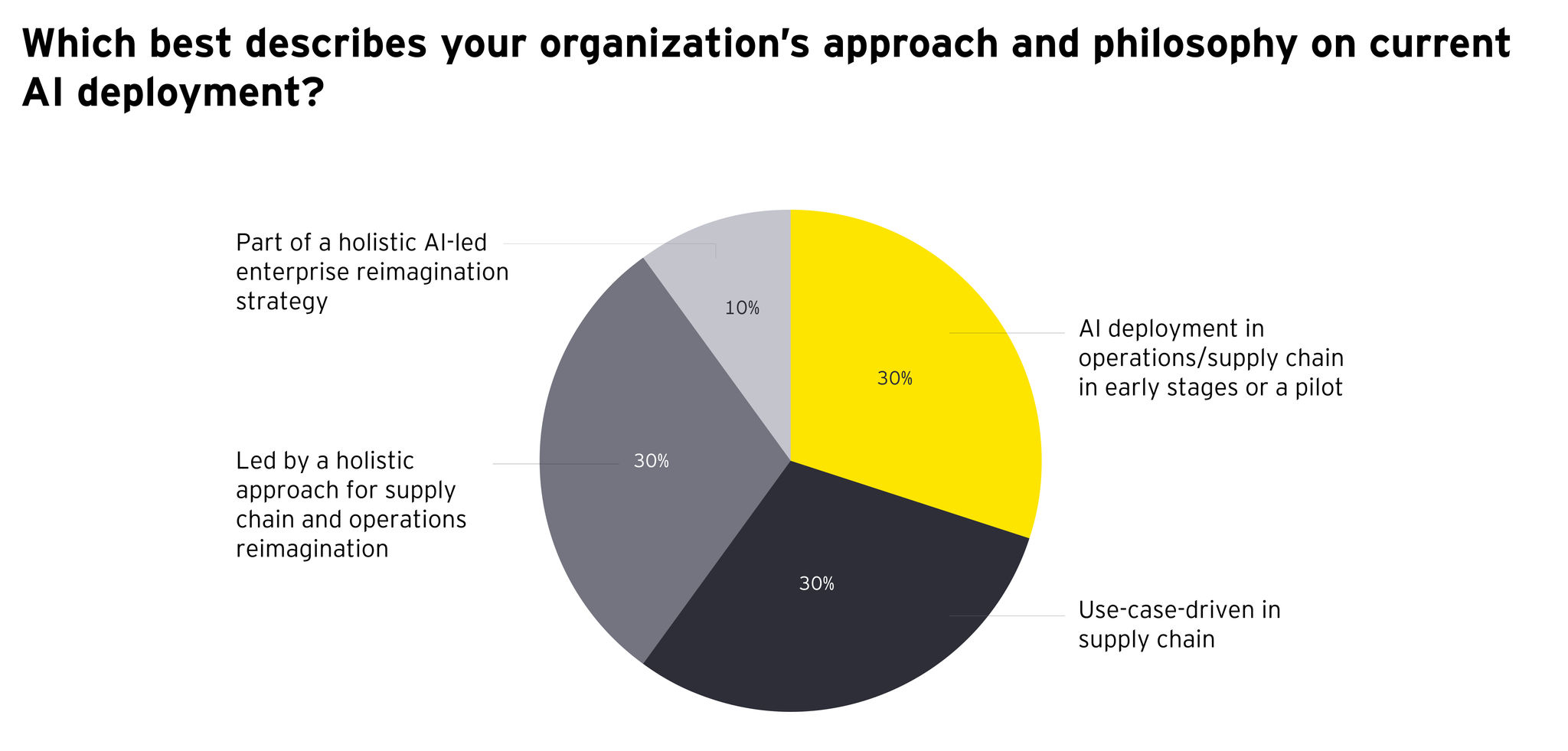
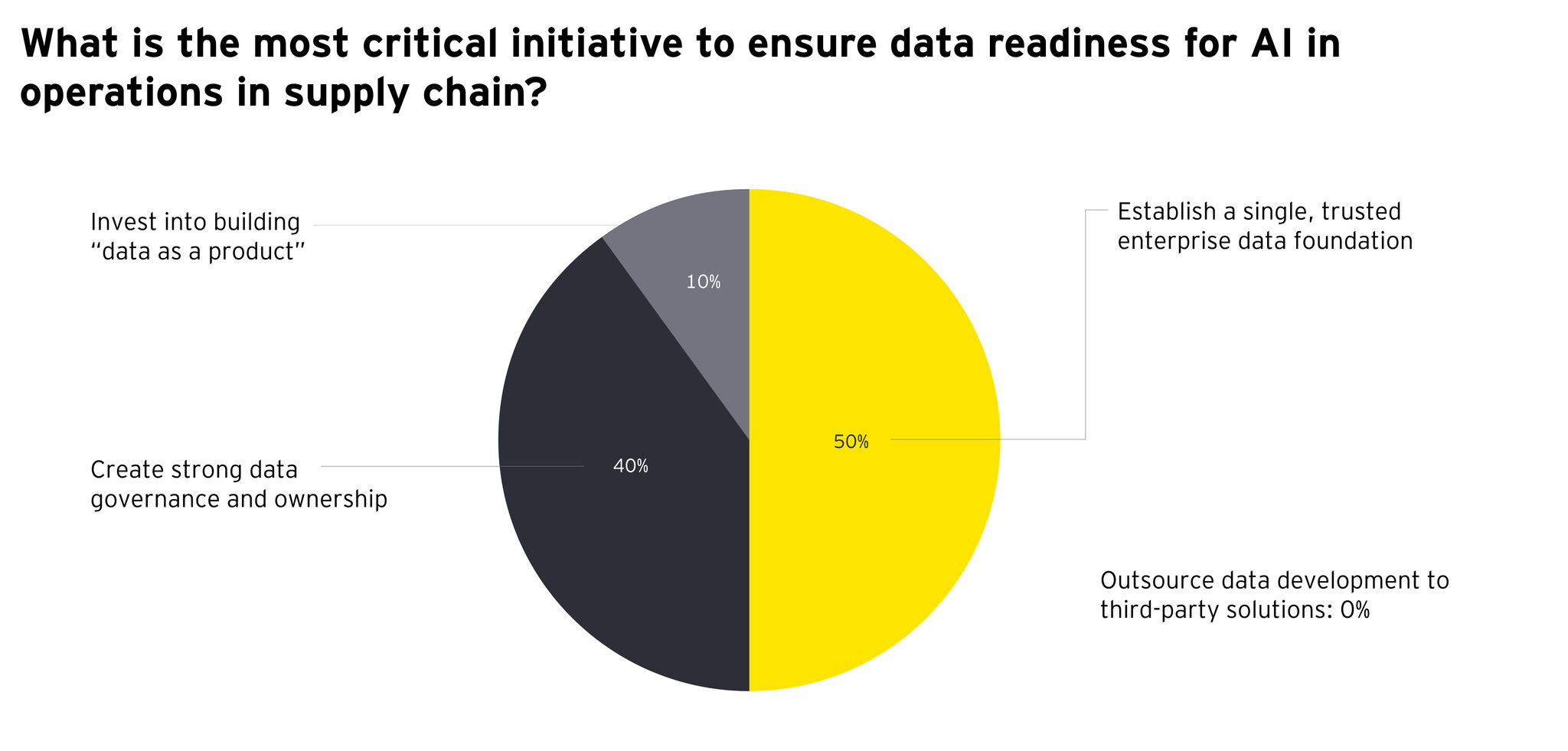
Here is a pulse check on what COOs are doing with AI and how they are advancing the discussion.