US-based companies in the chemicals industry, under increasing pressure from activist investors to focus on competitive advantage, need to take steps to protect value in the carve-out of non-core assets.
Across industries, 35% of leaders expect to conduct divestments, spin-offs or IPOs this year, according to the EY-Parthenon CEO Outlook Survey conducted in March and April 2025. In the complex chemicals industry, following decades of industry consolidation, activist investors have been demanding that companies enhance their portfolio by shedding non-core assets. This coincides with a trough in global chemicals demand exacerbated by supply increases in Asia and the Middle East. These factors are leading to slower demand for US exports.
Chemicals company leaders need a divestment strategy to manage industry-specific carve-out complexity and drive value.
Ill-planned chemicals industry carve-outs can result in significant delays to get to a deal close, which is a concern for all buyers but especially for private equity buyers. Even when workarounds are used to accelerate closing, this leads to additional one-time costs to service the workaround and often delays full realization of the deal value. These delays are often attributable to disentangling the carved-out business, which often has complex manufacturing, distribution and operational entanglements that can cause costly, unexpected delays in carving out these intertwined chemicals assets. Delays of two to six months can erode 2% to 5% of deal value, or $20m to $50m for every $1b in deal value, and significantly impact the deal thesis, according to EY-Parthenon analysis.
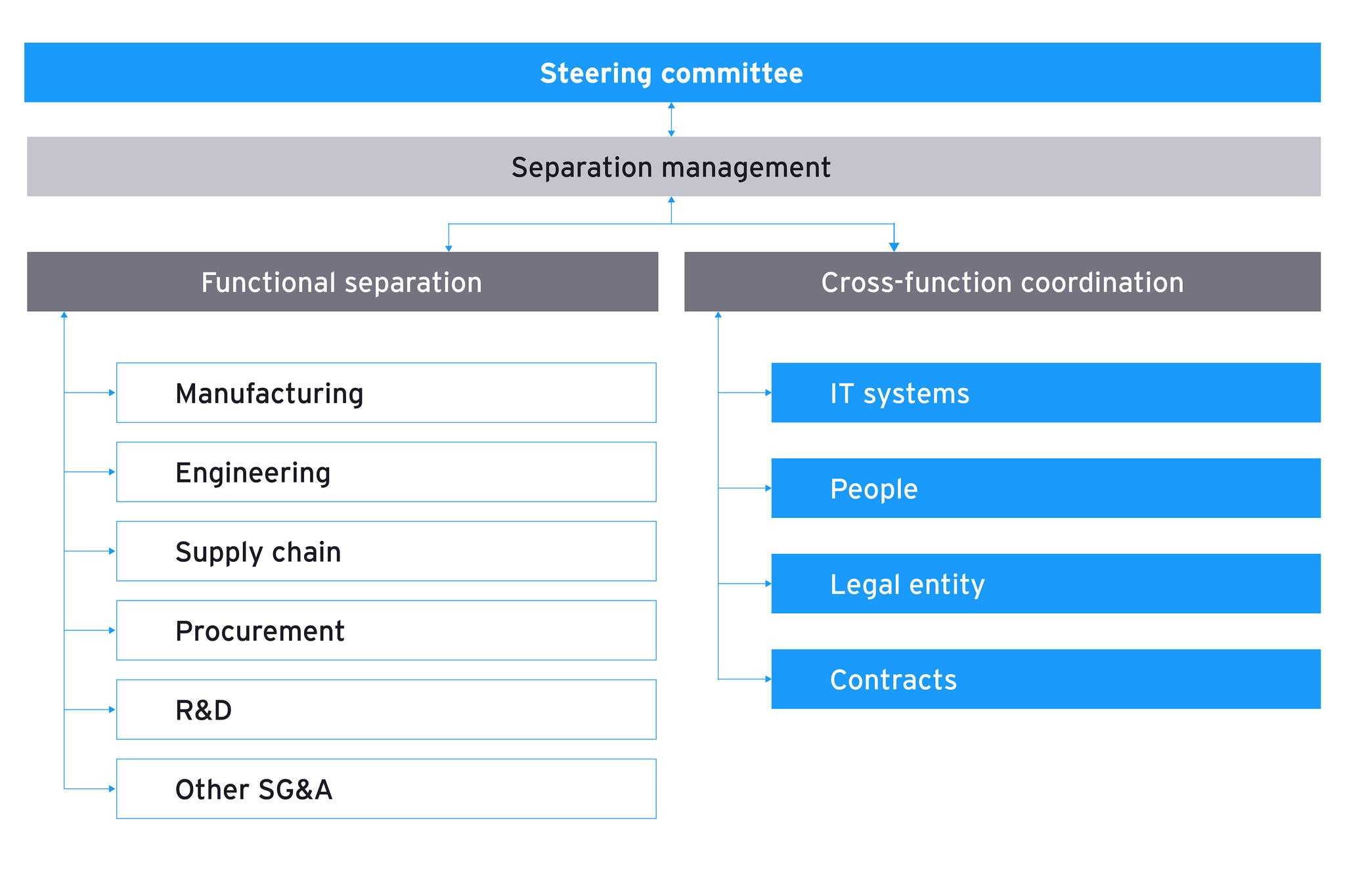
In addition to the typical carve-out challenges related to people, IT systems and other transaction considerations that need to be carefully managed, there are three challenging areas where sellers of chemicals assets need to focus:
- Commingled manufacturing that is difficult to disentangle
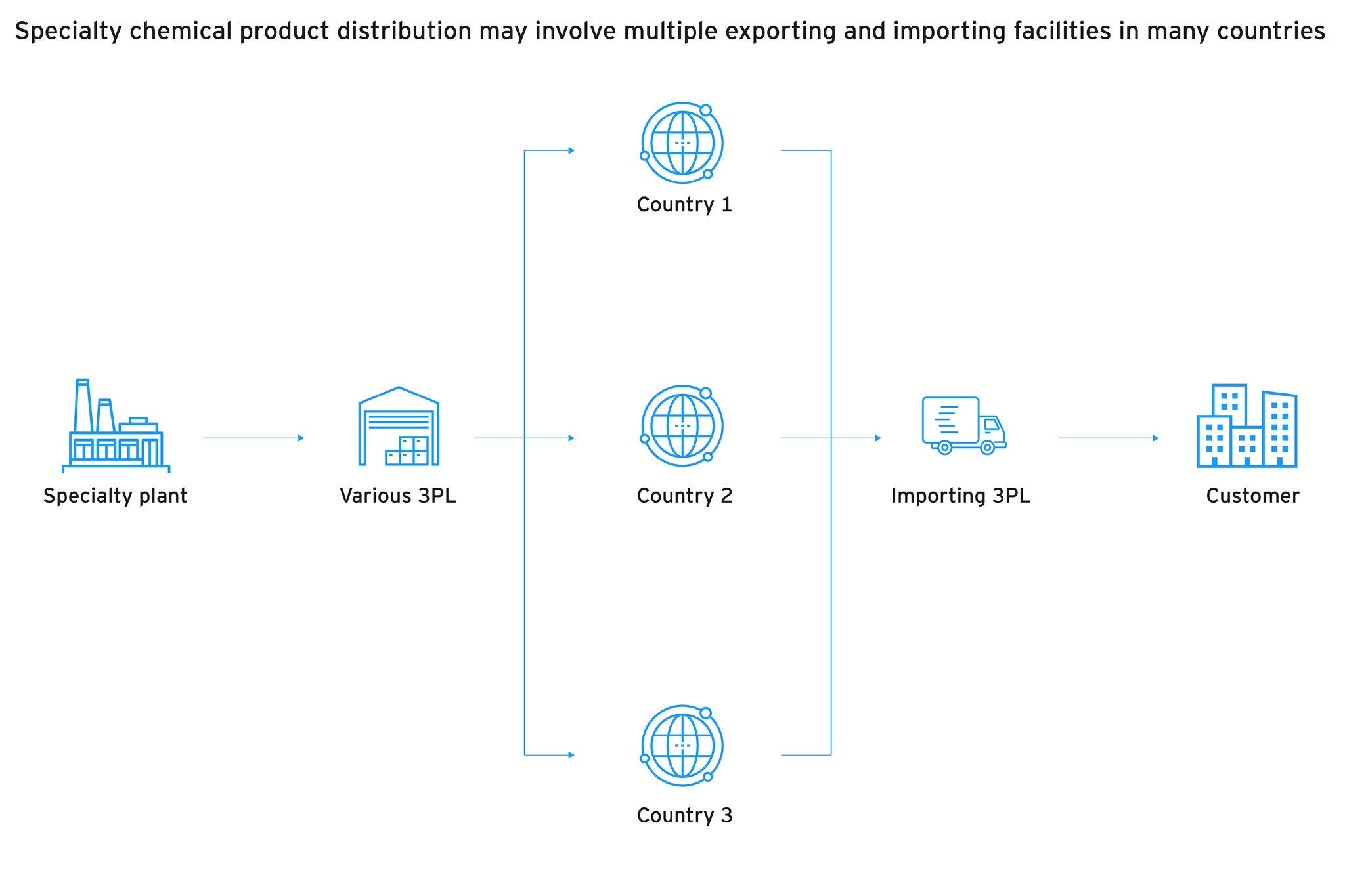
- Global trade flows of specialty chemicals that may create unique considerations
- Operating permits and product regulatory risk
Companies can tackle chemicals industry carve-out challenges by clarifying issues, highlighting solutions and getting guidance on the best next steps.
1. Together forever? The carve-out challenges for commingled chemicals manufacturing sites
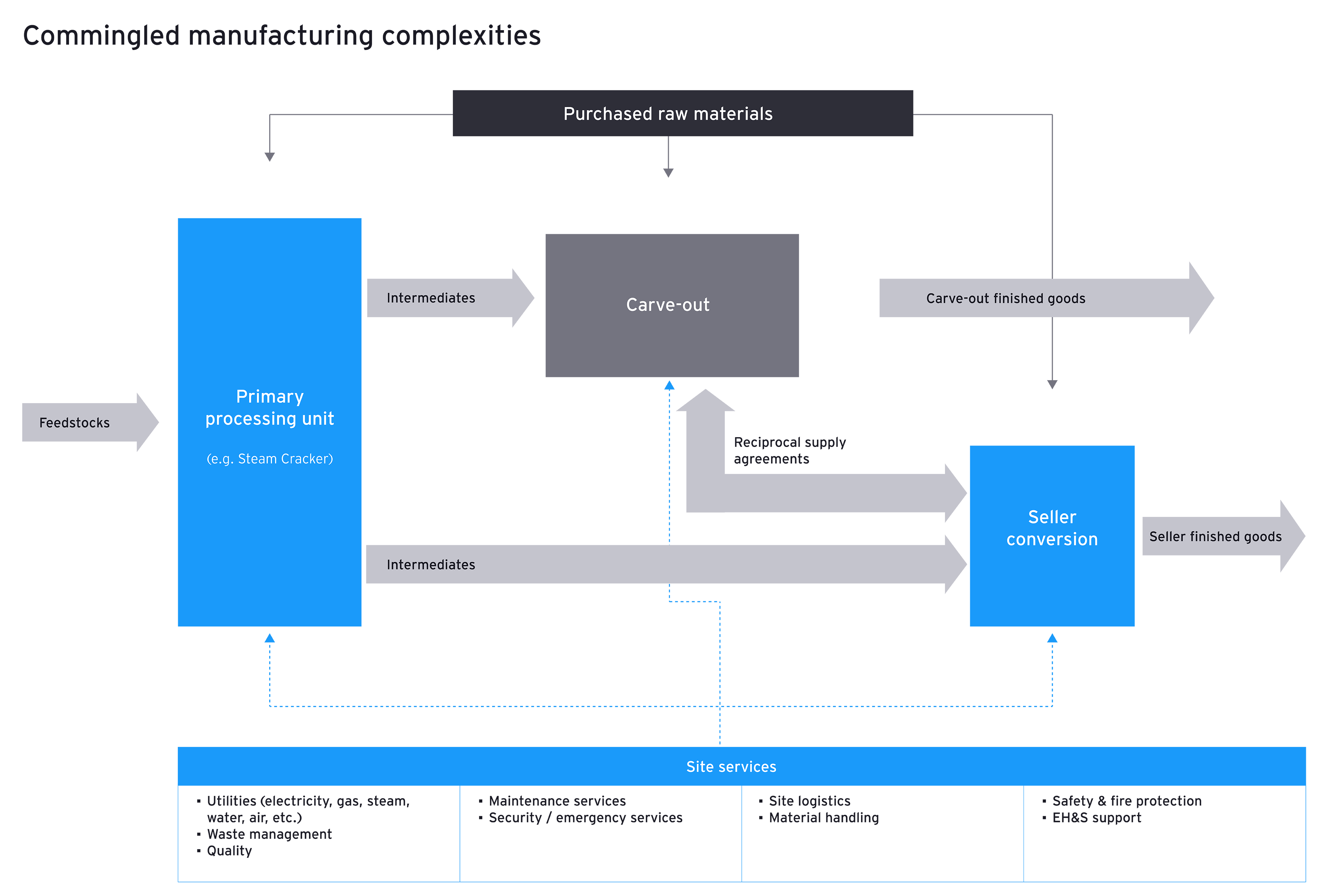
Many chemicals manufacturing operations are highly integrated across multiple stages — from raw materials to finished product. This is especially true for large chemicals companies, making it a challenge to carve up sites and assets.
As a result, this often requires structuring a complex series of multi-decade agreements between buyer and seller that control risk. One scenario might be that the buyer acquires and operates assets on the site as a “tenant,” while the seller continues to provide site and ancillary services as a “landlord.” Another option might entail ownership transfer while the seller continues to operate the assets.
In one example, a US chemicals manufacturer sought to carve out its resins assets to focus on core assets. Due to interdependent operations, the carve-out presented challenges such as overlapping labor responsibilities, the need for seamless post-sale manufacturing for the buyer and the urgency to draft clear operating agreements to facilitate the transaction. EY-Parthenon teams enabled a timely transaction close by helping the seller to develop a robust operating agreement with clear buyer and seller roles and responsibilities for a seamless transition, including the seller’s continued operation of the manufacturing assets after ownership transferred to the buyer at close.
Figure 1: Commingled manufacturing for commodity chemicals