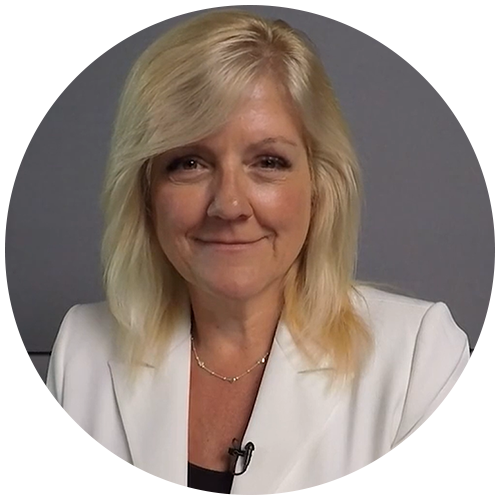
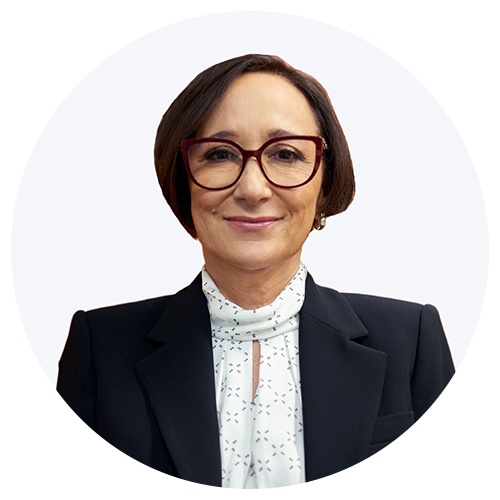
Jo-Anne VanStrien: Welcome to this episode of EY’s Leading Women in Mining. My name is Jo-Anne VanStrien. I’m a Mobility Tax partner based here in Toronto and lead our Mobility Advisory Services for Canada.
I have the privilege today of sitting down with Amparo Cornejo, Chief Sustainability Officer at Teck Resources Limited.
Amparo, thank you for joining us. I know you’re in Santiago, so we are doing this remotely, and I really appreciate you taking time out of your day.
Amparo Cornejo: Thank you so much, Jo-Anne. It is a fantastic opportunity to be here from Santiago as you say and have this opportunity to discuss and to talk to you about what is the impact of Leading Women in Mining.
Jo-Anne VanStrien: I always like to start, Amparo, with understanding how one got to be where they are. So, let’s start off with your journey in particular, some of the factors that have contributed to your success, where you are today. I also want to call out some of the achievements that you’ve had. So, you’ve been named The Northern Miner’s first Operator of the Year as well as EY Chile’s Executive of the Year.
So, love to hear about your journey.
Amparo Cornejo: My journey has been very long, but I will focus maybe in the last 10 years that I have been working in the mining industry, and I think that I have had the opportunity to be at the correct moment of an industry that in the past was not very much connected to society.
I had the opportunity and the responsibility of leading in Chile the construction of a very big project for Teck, which was Quebrada Blanca Phase 2, and we focused all of our activities and our purpose as a company in building a sustainable project. So very much connected to the society where the communities were our first objective to have strong, long-lasting relations with them.
And that has had a big impact. I think The Northern Miner recognition precisely is focused on the activities that we did as an organization in relation with the society. And also, I think there has been a particular situation because I am a female and I was one of the first females to have some leading roles in the industry in Chile.
Jo-Anne VanStrien: I think that’s really, really impressive. And you can tell that your passion for sustainability comes out. I just want to say that first and foremost. When I think about my own career, Amparo, I think about the mentors that I’ve had along the way. Curious to hear about your mentors, the impact that they’ve had on you, how they’ve inspired you, and maybe even influenced you when it comes to sustainability and community engagement.
Amparo Cornejo: Thanks, Jo-Anne. I agree with you. I think, in our career, mentors are so important. I have been very lucky. I have had the opportunity to work with at least two very strong Ministers of Mines in Chile. The first Minister of Mines, Karen Poniachik, and the current Minister, Aurora Williams. So that has been a very important part of my career.
Internally, I was super lucky to work with a very strong sustainability leader in Teck, Marcia Smith. She taught me a lot of things. And it was fantastic to be able to work with her. But I also believe that in this work, you are always in contact with people.
So for me, being able to connect, for example, with young professionals that are coming to the industry with their fresh view, with comments, with questions, it’s always an opportunity also to learn. And because of the external engagement of this activity, I think working and knowing people from the communities, and I would say especially from the Indigenous communities, has been super powerful.
Indigenous woman in Chile and in other places of the world, they play a key role in their communities. They are leaders. They have an incredible approach to nature, a different perspective, a different history. So for me, it’s always a privilege to be engaging with people in different roles and always trying to learn from them.
Jo-Anne VanStrien: Yeah, I would agree. I think there is a lot to learn, especially with the generation that’s coming through, and to get that sort of diversity in thought, I think this leads to even better success. So that’s awesome.
Hindsight is 2020, as they say. When you reflect on your experiences, what advice would you give your 20-year-old self if you were starting your career, you know, in what was traditionally a male dominated industry?
Amparo Cornejo: Well, I think first of all, I would tell that young Amparo to be more confident and to be a little bit more indulgent with herself and to understand that things don’t happen as fast as you want. You don’t need to be perfect. Those things that you learn with the career and the time.
But if I think more about the industry itself, I think at least three ideas. One: Equity with limits is not equity. So if you think or if you see something that does not appear to be right, or you think you are being excluded, then I think you need to raise your voice and ensure that the spaces are there and allowing you to demonstrate who you are and to show yourself and to contribute.
I also think that, and it’s connected to the conversation we were just having, I think being able to connect and to have mentors and also build relations and networks. I think it’s impossible to work or to do anything or to develop a career if you do it in isolation. So you really need to build those relations, those bonds and be vulnerable, also, to show yourself and to be open to feedback and to engage with others.
And finally, I think you need to be super convinced of your own principles and lead by example and maintain connected to those values that you have.
Jo-Anne VanStrien: Now we’re going to go into the sort of present day, you know, mining today. I’ve been aligned with the mining sector for about 25 years now. So my experience in mining goes up and down. Today we’re at a high, I would say, and for a number of reasons. That all being said, what challenges do you currently see for women in the mining sector? And how can these challenges be addressed to foster greater success and inclusion?
Amparo Cornejo: Well, I totally agree with you. I think, the mining industry has changed. The participation of women professionals and technical people has increased. I think that there are two challenges. The first one is to maintain this focus and not to lose that intention. I see and I have been able to witness how all the companies are doing efforts.
I think there is a real understanding that more women participating in the industry has very strong business fundamentals, and it’s a benefit for the business. And I see that in all my colleagues, in all the companies. But I think it’s something that is so new that we should maintain the focus and ensure that we don’t lose that objective, because this is a cultural change and it’s always a trend or a risk to go back to what was business as usual.
I hope that business as usual continues to be having a very diverse workforce and, of course, having a lot of females. But maybe the most relevant risk, or what is more concerning for me, is about the roles that females play in the senior management space and also in the boards. I think there is a lot of focus today in having more women entering the industry, which is fantastic, but I still believe there is more space that could be opened to professionals at management level and sitting at those tables where at the end the decisions are made and the culture of the organization and the culture of the industry is maintained. So for me, that is something that it’s always a big concern and I am always trying to push for that.
Jo-Anne VanStrien: I think that’s great. I have absolutely seen more women in those roles, and it’s been very encouraging. I do agree. I think more can be done, and it’s great that these conversations are being had. So in your role as Chief Sustainability Officer, how is your organization creating opportunities for young women in helping them to advance their careers and maybe even from the sustainability sort of focused roles?
Amparo Cornejo: Well, at Teck as most of the mining companies, we do have an approach, a strategy and some objectives in order of including more women and building a more diverse organization. So we have set the target of having like 30% participation by 2030. We are doing that. In Chile, we were able to grow from around 16% to 28%.
So I think as a company, we are doing that in all the areas of the organization. And we do that by having special programs. A very critical focus is to have training and programs in relation with respectful workforce. I think that is a key element to ensure not only that you bring more women into the industry, but also that you maintain them and you don’t have a big turnout.
But maybe I think sustainability has this capability of not only being inside of the organization but also being outside and connecting with the rest of the society. So internally, we are really focusing in having programs to ensure that all of our people and our female talent has a development plan.
We are always working on that, and I think that is super important. And externally, we are connecting with the communities. For example, in Chile we have a very nice and powerful program called Originarias, which is being done in association with UN Women. And we have been able to work and support more than 8,000 Indigenous women in Chile, which is super powerful, not only because of the amount of people, but also because of the different tools that this program provides to them.
So we are connected with the communities. Our CEO has just been appointed as ambassador of UN Women in the program called HeForShe. So he’s an advocate publicly on the importance of participation of females. And we try to bring that internally in the organization and also in relation with the community. So, very focused there. And one of our key priorities is about diversity.
Jo-Anne VanStrien: I think it’s great and says a lot about Teck as well.
Amparo Cornejo: And just maybe, Jo-Anne, just an additional comment. You can have targets. You can have a policy, you can have everything. But if this is not part of how you work and it’s not embedded in the senior leadership team and in all the levels of supervision of the organization, it doesn’t happen. So that’s why I think it’s so important to maintain that focus, because it’s a cultural aspect of how we work.
Jo-Anne VanStrien: Great. It sounds like a wonderful culture. And I agree; I think it has to be sort of in your heart and soul. So now we’re going to switch to, if we had a crystal ball, we’re going to think more about future.
How do you envision the mining sector becoming more innovative, and what role will women play in that innovation?
Amparo Cornejo: It’s a fantastic question. I think we don’t need the crystal ball. I think we have the future in our hands. So we are shaping it.
So, I would say that all the mining industry today is about innovation. And it’s not only about technology. And you know perfectly well how that is advancing. We have remote controls. We are bringing technology into our operations. We are doing all of that. But I think maybe the most relevant aspect and connection with the future is the minerals that we produce.
So basically, and I think that is the unique opportunity that we have as an industry because we are enabling the future. We are enabling the transition to an economy that is different. So I think that is so powerful because we are part of that process. And it’s also an invitation for young people, and of course young women, to come and connect and work in this industry.
I think maybe not always you are in a position or in a situation where an industry is so important for the future of humanity. So I think that is fantastic and generates incredible opportunities.
Jo-Anne VanStrien: Could not agree more. What advice would you give women looking to be trailblazers in the mining industry?
Amparo Cornejo: If I think about my own experience, I think, the first is how you believe in what you’re doing, like really being sure of what you are bringing into the table. Shout out, say what you think. Believe that you are doing a big contribution. So maybe I think for me that is the first aspect.
I also think that connecting to others is so critical. So, really building those relations and listening. Sometimes we are always talking and saying, but the opportunity to listen and to learn is so important.
And thirdly, I would say that you need to maintain your view and your values. So be confident that you are bringing something that is unique, is valuable and generates value. You are not able to do this alone; you need to connect with others, you need to learn, maintain curiosity.
This industry is always changing. The world is changing. So be able to listen and learn and I would say people will have tremendous opportunities to build that future and to change what needs to be changed.
Jo-Anne VanStrien: Yes, be curious, be true to yourself. And I’m always, you know, as I get towards the end of my career, I think about what is that impact I’m going to leave behind. And I think with mining, it’s evolving really, really quickly, and I think women have a great opportunity to have a very positive impact on what the future holds. I think there’s a lot of positive contributions that can be made. So, great!
Last question: What does the future of mining look like for young women entering the workforce today, and how can they prepare for the opportunities ahead in a rapidly evolving industry? Because it is.
Amparo Cornejo: Totally, I couldn’t agree more. I think the future is incredibly promising. I think the opportunities are there. We were talking about this, how mining is changing. It’s reshaping the future. We are part of that future. So I think on one hand, you have the technology that creates new opportunities. So the way of working is different. That has allowed to have more flexibility, a different life balance. So that is something that is very, very important.
The professional training and capacity of young people coming to the industry is very high. We need those skills. And I am sure that, not only women, but also people from a very diverse perspective, will continue to foster and to shape the future of mining. I think mining is an important industry, but I would say never in the past we have had this opportunity where the metals and mines that we produce are so important for humanity. So if we don’t take advantage of that unique opportunity, I think we will miss a very important moment.
Jo-Anne VanStrien: Amparo, I want to just say, as we wrap this up, that I have been so inspired. I think your passion comes out. I think your perspective about the impact that women can have in this industry is great. And I want to say, first and foremost, thank you so much for taking time out of your very busy day, and thank you for being the inspiration you are when it comes to women in mining.
Amparo Cornejo: No, on the contrary, Jo-Anne. Thank you so much for the space, the opportunity, the dialogue. I really enjoyed it. And even though you are in Canada, I am in Chile, I have not felt that distance; that’s how technology can be super helpful. I was very pleased to be here and have this conversation.