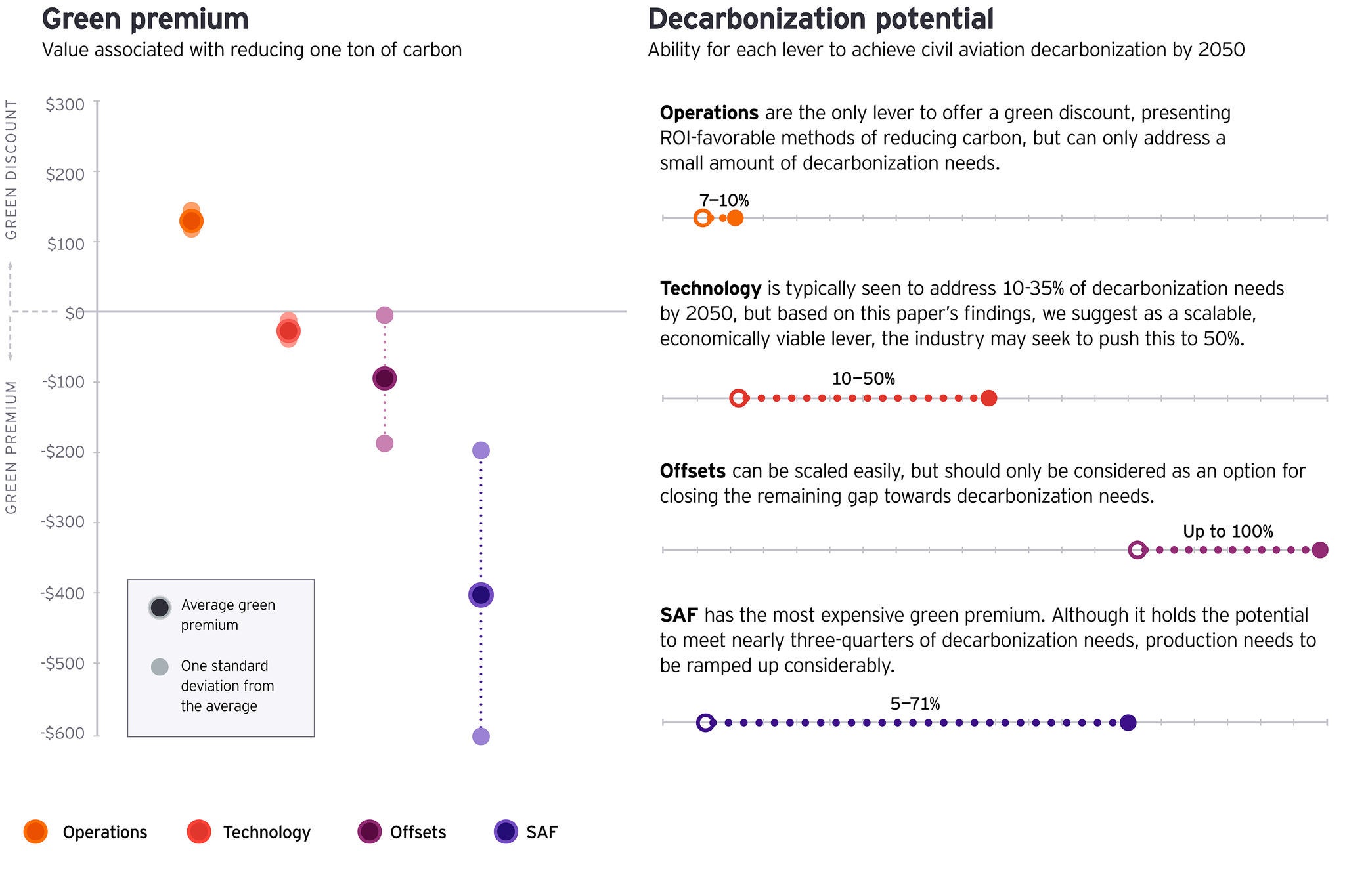
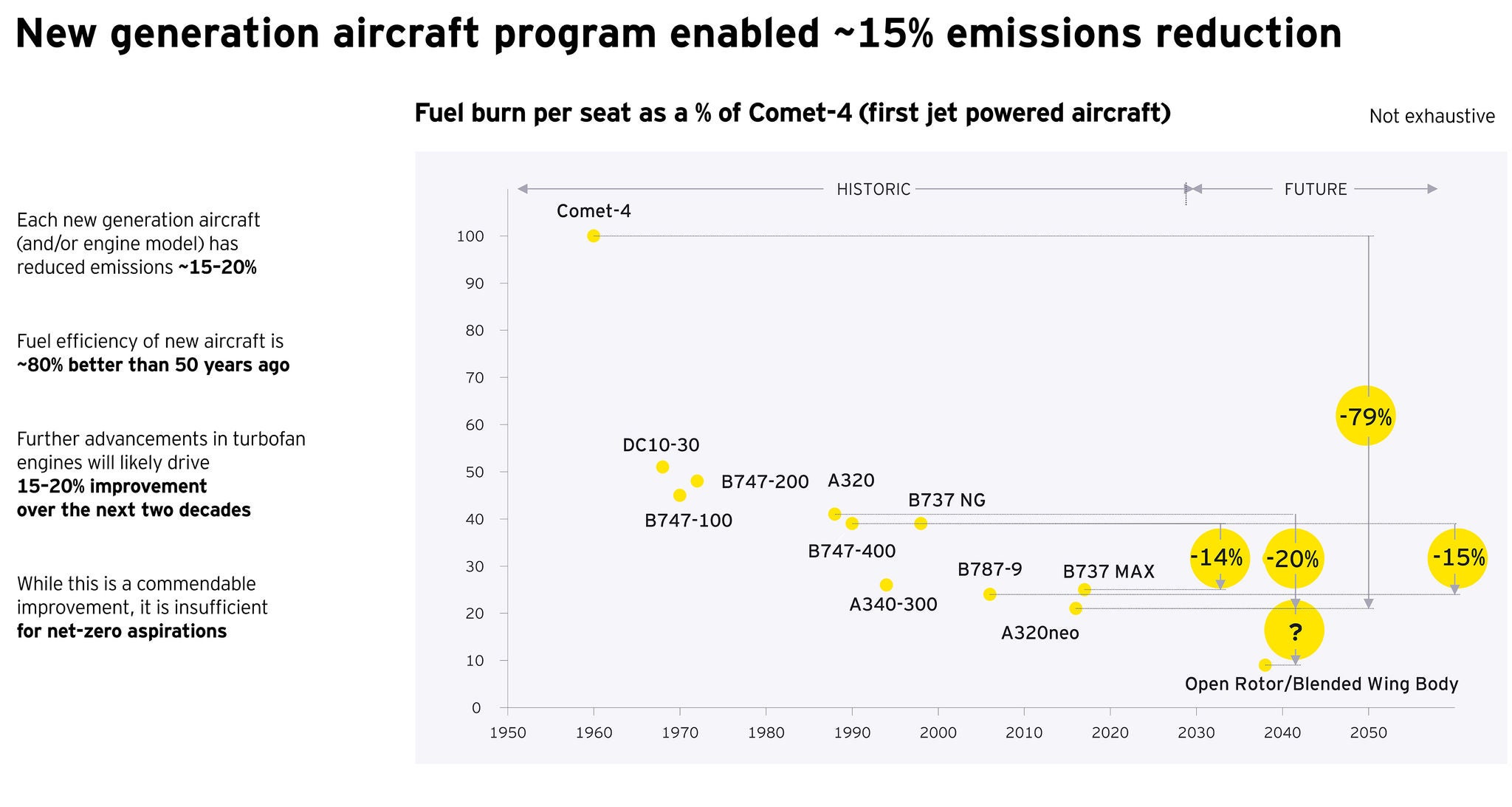
For technology improvements to make a substantially larger contribution to achieving net zero, industry would need to overcome at least three impediments that are intertwined.
Technology readiness and integration
Aviation needs transformative breakthroughs ‒ revolutionary aircraft architectures like blended wing bodies and truss-braced wings offer up to 50% fuel burn reduction through dramatic aerodynamic gains. But realizing their potential comes with steep integration challenges: cabin layout, pressurization, emergency egress and regulatory certification remain unresolved. When paired with innovations in conventional propulsion (e.g., geared turbofans, open rotors) or alternative power systems (e.g., hybrid-electric, hydrogen combustion, fuel cells), next-generation materials (e.g., advanced composites, 3D printing, morphing surfaces) and digital/autonomous systems, the pathway to step-change efficiency becomes viable. Yet, several of these technologies remain largely immature today. The industry must break away from multidecade innovation cycles and embrace faster, bolder development, validation and commercialization pathways.
Development and certification duration
Today’s aircraft development timeline ‒ often 10 years or more from launch to entry into service ‒ is too slow for the scale of transformation needed. Model-based engineering, digital twins and AI-assisted design enable faster iterations and smarter trade-offs. These tools can drastically reduce the time required to design, simulate, test and certify new aircraft. If harnessed effectively, they could enable more frequent introductions of clean-sheet designs and faster replacement of legacy fleets.
Business case viability
The current business model in the industry is rooted in a 40+ year aircraft program lifecycle. Given the high development cost, manufacturers in most aircraft subsystem segments depend on the lucrative aftermarket – which starts around 7+ years and peaks 15+ years post-entry into service of a new program. Unfortunately, this also exacerbates the challenges that systems providers take on, which can reduce the appetite for the risk inherent in a radically new (and potentially more sustainable) design.
Profit pools are unevenly distributed across the value chain ‒ systems providers and component manufacturers often capture more economic profit than airframers or airlines. Airframers desire to capture a larger portion of the value created, while systems OEMs would like to lower risk and improve timing of value realization and payback. Airlines prefer a low acquisition cost of aircraft but also want less ambiguity in lifecycle cost, which is intensified by new technologies and increasing operations in a harsher environment. This confluence of profitability, risk and uncertainty-related challenges across the value chain could open the door for more equitable or disruptive business models with implications.
If airframers were to capture a larger portion of program value and economic profit, they could increase the frequency of new aircraft model introductions with higher fuel efficiency. In which case, systems providers, particularly propulsion system providers, would have to contend with a shorter lifecycle, requiring their business model to rely on initial sale instead of aftermarket revenue. The total cost of ownership would need to remain comparable to current models, while increased upfront cost would be offset by lower fuel and maintenance costs for airlines. The initial sale profitability could balance out the significant long-term risk of the existing model.
Airlines would, of course, benefit from the lower operational costs related to fuel but will likely seek alternate options to address the higher acquisition cost for propulsion and other major aircraft systems. Financial sponsors may leverage their balance sheet strength to offer availability-based models, providing flexibility for airlines to make operational and capacity decisions.
A question remains of whether airframers and systems providers can remain profitable with a shorter program run, where new technology introductions trigger planes to retire at 20 years rather than 30 years. We have seen this play out effectively in business aviation. Can this transfer to commercial aviation? Achieving net zero may rely on it.