








People in a pharma lab working on machines

Why ‘AI by design’ is foundational to pharmaceutical manufacturing

To unlock the potential of AI, pharmaceutical manufacturers need a robust data foundation to drive success.


In brief
  • High-quality, contextualized data is crucial for AI effectiveness, yet many organizations struggle with fragmented data sources.
  • A five-layer data mesh strategy can transform chaotic data into AI-ready information, enhancing operational efficiency.
  • Companies that prioritize data readiness can expect significant returns on AI investments, while others risk costly failures.

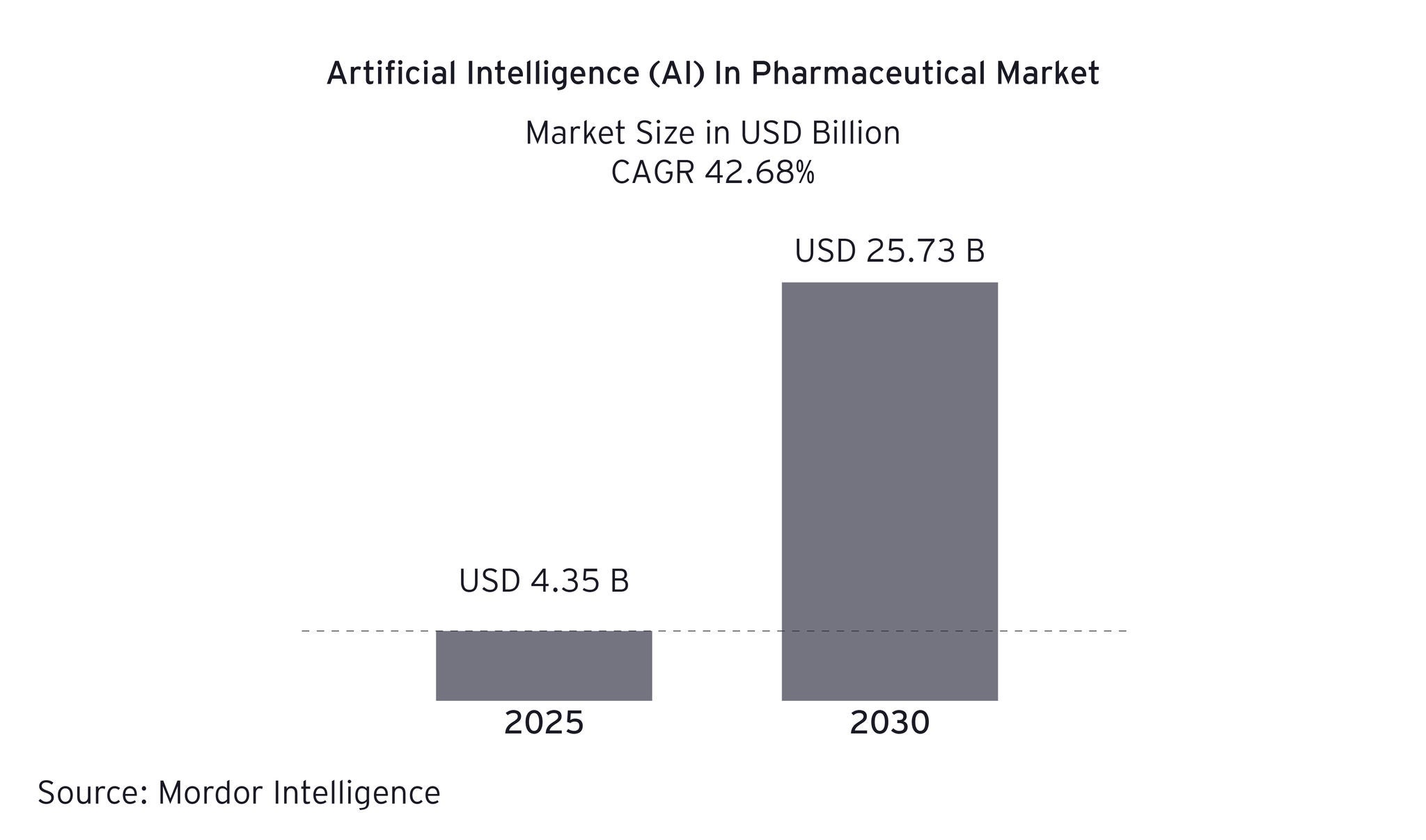
Pharmaceutical manufacturers stand at a critical inflection point, where the promise of artificial intelligence (AI) meets the harsh reality of data chaos. As companies in the industry ramp up their investments in AI — projected to surge over sixfold by 2030¹ — their aspirations often collide with a staggering statistic: 95% of AI pilots fail to deliver measurable business value.²

Graphic 2512 10643 CS AI by design charts v1

This concerning trend doesn’t merely reflect technological shortcomings; it underscores a deeper issue rooted in the very data that fuels these initiatives. Below, we explore why traditional data architectures hinder AI success and present a proven “AI by design” approach — a five-layer data mesh strategy designed to transform chaotic pharmaceutical manufacturing data into AI-ready information without disrupting existing operations.

The sobering reality: why AI investments fail

Manufacturing executives are all too familiar with the pattern: a promising AI pilot launches amid great expectations and hype, backed by talented teams, advanced technology and well-defined use cases. Yet, six months later, it often ends up quietly shelved. Postmortem analysis consistently points to a single culprit: AI that performed flawlessly in the lab faltered on the factory floor because of fundamentally flawed production data.

The numbers tell the story:

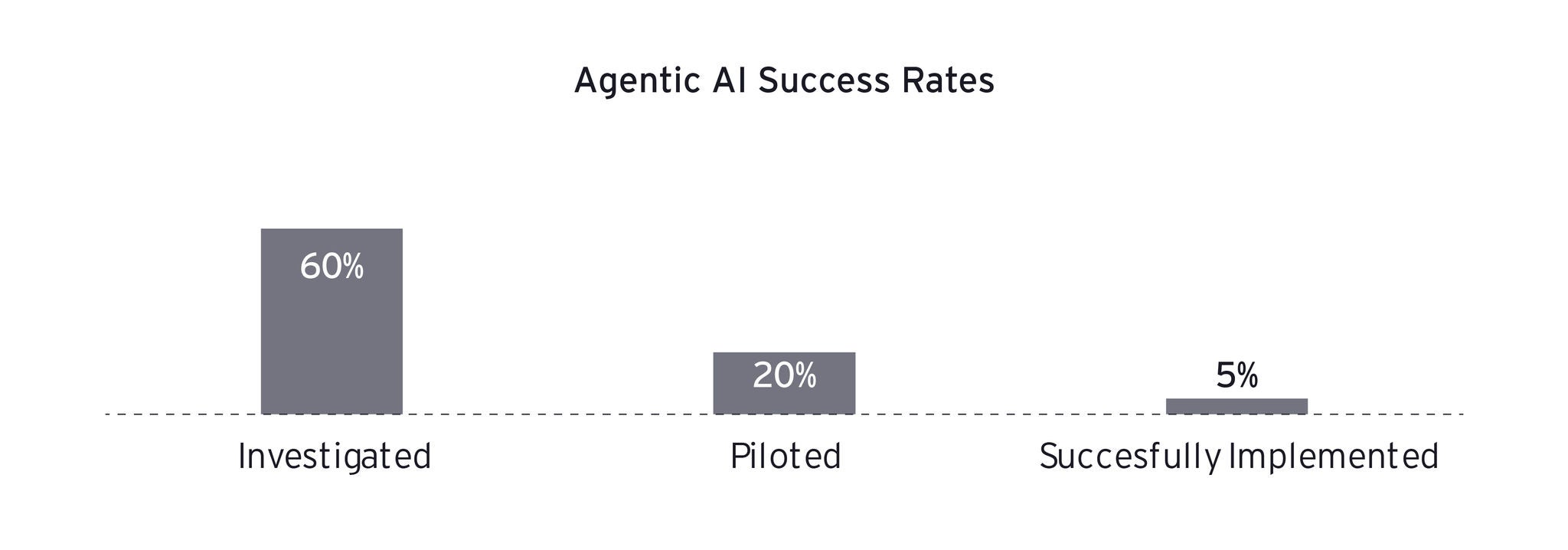
  • Only 5% of enterprise agentic AI pilots achieve rapid value acceleration.³ This stark statistic highlights a pervasive challenge within the industry: Most AI initiatives fail to translate into tangible financial benefits. The low success rate underscores the critical need for organizations to reassess their approach to AI implementation, particularly in how they manage and prepare their data.
Graphic 2512 10643 CS AI by design charts v1

  • Data issues are the biggest challenge facing AI in manufacturing.⁴ Many manufacturing leaders identify data quality and accessibility as the primary obstacles to successful AI integration. Poor data governance, inconsistent data formats and a lack of real-time data availability hinder AI systems’ ability to deliver accurate insights and drive operational efficiencies.
Graphic 2512 10643 CS AI by design charts v1

  • Data quality and contextualization are the top challenges with AI data.⁵ High-quality, context-rich data is essential for AI systems to function effectively. Yet many organizations struggle with fragmented data sources and inadequate data management practices, leading to unreliable inputs for AI algorithms. This lack of contextualization can result in misguided AI outputs, further perpetuating the cycle of failure in AI projects.
Graphic 2512 10643 CS AI by design charts v2

This “pilot purgatory” phenomenon is particularly pronounced in pharmaceutical manufacturing, where complex regulatory environments, risk-averse cultures and sprawling data ecosystems encompass R&D, clinical trials, manufacturing and supply chain operations. The issue lies not in the sophistication of AI but in the readiness of the data it relies upon.

Understanding the root causes: the seven fatal flaws

To grasp why AI initiatives often falter, it is essential to identify the underlying flaws in manufacturing data systems. These flaws create barriers that prevent AI from delivering its promised value. Below are seven fatal flaws that plague pharmaceutical manufacturing data and hinder successful AI implementation:

The five-layer data mesh solution in pharmaceutical manufacturing 

To overcome these challenges, pharmaceutical manufacturers can adopt a five-layer data mesh strategy that transforms chaotic data into AI-ready information without disrupting existing operations. This approach treats data as a product and fosters domain-driven ownership and federated governance.


Layer 1: Edge intelligence (the foundation)

Instead of collecting uncontextualized data, organizations should tag data points with relevant context at the moment of creation. This principle emphasizes decentralized data ownership, ensuring that domain experts (manufacturing operators) enrich data at its source.


Implementation strategy:

  • Deploy small, cost-efficient edge gateways machine by machine.
  • Include machine ID, batch number, process phase and calibrated time stamp at data collection.
  • Use Network Time Protocol (NTP) for time synchronization, which is available in most networks.


Layer 2: Unified name space (single source of truth)

When an organization establishes a unified name space, every signal has a standardized name and location. This eliminates the need to sift through multiple systems for specific data elements.


Implementation strategy:

  • Publish data to organized topics: plant, area, line, machine and measurement.
  • Define naming conventions for production lines and begin publishing.
  • Create self-service data discovery through standardized interfaces.


Layer 3: Common data models (universal language)

Standardizing definitions for key data elements fosters consistency across all plants and systems, creating a framework for interoperability.


Implementation strategy:

  • Develop schema definitions for five to 10 core objects in pilot use cases.
  • Maintain a simple registry for storing and versioning schemas.
  • Validate all data against registered schemas before acceptance.


Layer 4: Federated governance (standardization and tracking without central control)

This layer emphasizes the need for comprehensive tracking of data, regardless of its location, while allowing for local implementation of standards. In the pharmaceutical context, federated governance is particularly crucial because of the industry’s stringent regulatory requirements and the need for compliance with Good Manufacturing Practices (GxP).


By adopting federated governance, pharmaceutical manufacturers can maintain data quality and compliance across all operations, fostering a culture of accountability and continuous improvement.


Implementation strategy:

  • Establish central governance bodies that set organization-wide compliance standards, which local teams then adapt to their specific processes and regional requirements.
  • Maintain audit trails to satisfy regulatory requirements while enabling innovation and flexibility in operations.
  • Implement domain-specific risk controls aligned with manufacturing criticality levels so that each site can address its unique challenges while adhering to overarching governance principles.

Layer 5: Continuous learning (getting smarter over time)

To keep AI effective, organizations must capture feedback on AI recommendations and outcomes, allowing for continuous improvement.

Implementation strategy:

  • Deploy feedback mechanisms (e.g., thumbs up/down buttons) for operators to evaluate AI recommendations.
  • Add text fields for operator notes and context.
  • Implement basic model versioning and retraining workflows.

The technology exists, the business case is proven, and a framework for success is available. Manufacturing leaders who address their data foundations today using data mesh principles will position themselves to succeed with AI tomorrow. Those who delay this will continue to face costly pilot failures while competitors advance.

Success hinges on focused execution rather than sweeping transformations. Identify your most pressing production challenge, rectify the data feeding it using these five layers, and then apply AI. Companies that adopt this approach can expect returns on AI investments of five to ten times, while others risk wasting millions on failed projects.

The choice is clear: Build the data foundation that enables AI success — or continue investing in sophisticated algorithms that falter on chaotic data. The AI readiness gap represents both the industry’s greatest challenge and its most significant opportunity for competitive differentiation.

Article includes contributions by Adam Cooper, Principal, Business Consulting, Ernst & Young LLP, and Ryan Hill, Senior Manager, Technology Consulting, Ernst & Young LLP. 


Summary 

The integration of AI in pharmaceutical manufacturing hinges on the quality and contextualization of data. Fragmented data sources often undermine AI initiatives, leading to ineffective implementations. By adopting a five-layer data mesh strategy, pharma manufacturers can create a solid data foundation that supports AI initiatives, ultimately driving operational efficiency and delivering substantial ROI. Prioritizing data readiness is essential for success in this evolving landscape.

Originally published in Pharmaceutical Online: https://www.pharmaceuticalonline.com/doc/the-layer-fix-for-ai-failure-in-pharmaceutical-manufacturing-0001

About this article

Authors

Related articles

How to enhance traceability in the life sciences supply chain

As the need for more traceability in the life sciences supply chain intensifies, technology can help drive patient safety and product integrity. Read more.

How to reach gold-standard operations in pharmaceutical manufacturing

The “golden batch” approach is poised to revolutionize pharma manufacturing by setting the standard for an ideal production run. Learn more.

How real-time release (RTR) can transform pharmaceutical manufacturing

Real-time release has significant potential in pharmaceutical manufacturing, but companies hoping to adopt it must meet several prerequisites. Learn more.