Private equity remained active despite a dip in share
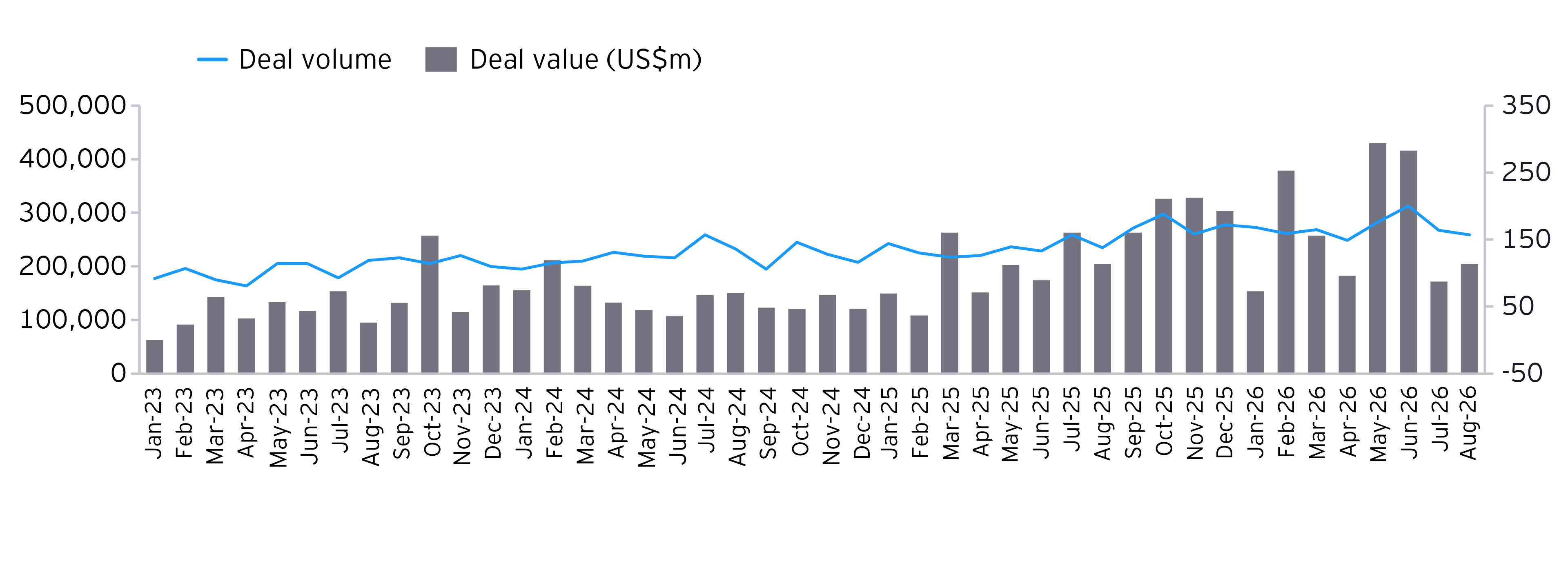
While overall deal value declined in October, deal volume increased, indicating a strategic pivot toward mid-market and smaller transactions rather than megadeals. For transactions above US$100m, the PE share of dealmaking fell to 40.4% in October, down from 59.2% in September, reflecting increased corporate dominance in large-ticket deals.
PE activity has shown a steady upward trend since July, culminating in September’s record performance, where PE outpaced corporates in deal value and achieved its highest monthly value of the year. However, October saw moderation, with PE deal value dropping from September’s peak yet remaining the second highest in 2025.
PE sponsors continued to deploy capital into large-scale healthcare and technology assets, while minority investments in consumer and energy sectors signaled diversification into resilient franchises and power solutions. This activity underscores a balanced approach, combining mega-scale initiatives with targeted investments in digital infrastructure and energy transition themes.
Horizontal integration is reshaping industries through scale and synergy
October’s deal activity highlights how horizontal integration is being used as a strategic lever to strengthen competitive positioning in mature sectors. Such transactions focused on horizontal integration were most prominent in sectors such as banking, utilities and technology, reflecting a strategic push toward scale, cost enhancement and competitive advantage. By merging with peers, acquirers aim to expand geographic reach, consolidate customer bases and leverage shared infrastructure.
In technology, horizontal integration can support portfolio expansion and accelerate innovation, while in banking and utilities, it can enhance operational leverage and service coverage. This trend underscores how firms are using horizontal integration to reduce duplication and improve pricing power and position for long-term growth in mature, competitive markets.
Looking ahead
The EY-Parthenon Deal Barometer projects a continued rebound in US M&A through 2025 and into 2026, supported by improving financing conditions, strong corporate balance sheets and rising CEO confidence. Deal volumes for transactions above $100m are expected to grow 9% in 2025 and 3% in 2026, with corporate M&A up 10% and PE up 8% in 2025. In the coming months, momentum is likely to be fueled by AI-driven investment in data centers, tech infrastructure, asset price appreciation and affluent consumer demand.
In 2025, divestiture activity, especially tax-free spin-offs, is anticipated to see a significant rebound, with projections suggesting around 12 to 14 high-value transactions. This marks a notable increase compared with 2024, which saw approximately six to seven high-value transactions. This growth reflects rising confidence in the M&A and capital markets, and this positive momentum is expected to carry on into 2026 as well.
Companies should focus on developing clear acquisition strategies, evaluating potential divestitures – particularly focusing on tax-free spin-offs, which are expected to rebound significantly – and enhancing technological capabilities. We also recommend that businesses explore financing options and engage with advisors to navigate the evolving market landscape, making sure they capitalize on growth opportunities.