



EY refers to the global organization, and may refer to one or more, of the member firms of Ernst & Young Global Limited, each of which is a separate legal entity. Ernst & Young Global Limited, a UK company limited by guarantee, does not provide services to clients.
How EY can help
However, H.R. 1 also presents opportunities for corporations to adopt a more strategic and deliberate approach to tax and corporate philanthropy, enabling them to continue to advance social and business objectives within this new paradigm.
Tax implications for corporate donors
The new framework requires a more deliberate approach to philanthropy. Tax directors and sustainability leaders are expected to re-evaluate how and when their organizations give.
One immediate opportunity stands out: 2025 is the last year with no deductibility floor in place. Businesses can accelerate planned donations into this calendar year to secure full deductibility up to the ceiling, supporting philanthropic goals without constraint. Contributions to donor-advised funds or corporate foundations may be front-loaded in 2025 to preserve deductibility while maintaining steady grantmaking. Finance and sustainability teams should act quickly to identify high-impact initiatives that can be executed before year-end.
Looking ahead, corporations should consider available giving approaches, many of which revolve around timing. One approach is “bunching” donations, or consolidating multiyear gifts into single years, to periodically boost the donations that exceed the 1% floor. Some businesses may adopt biennial or triennial giving cycles, skipping years to concentrate donations when they are most tax effective. Integrating charitable giving into quarterly tax provision forecasting helps align philanthropic budgets with financial performance and deduction thresholds.
In addition to front-loading and bunching strategies, select charitable expenditures, such as advertising expenses related to qualified event sponsorship, may be reclassified as business expenses under Section 162, which remain fully deductible and are not subject to the floor. Inventory donations can also be evaluated to potentially be recovered as cost of goods sold (COGS) instead of as a potentially limited charitable contribution.
Continuing to raise charitable giving in light of these new rules requires close coordination between finance, tax and sustainability teams balancing community impact with tax implications.
Sustainability and strategic impact
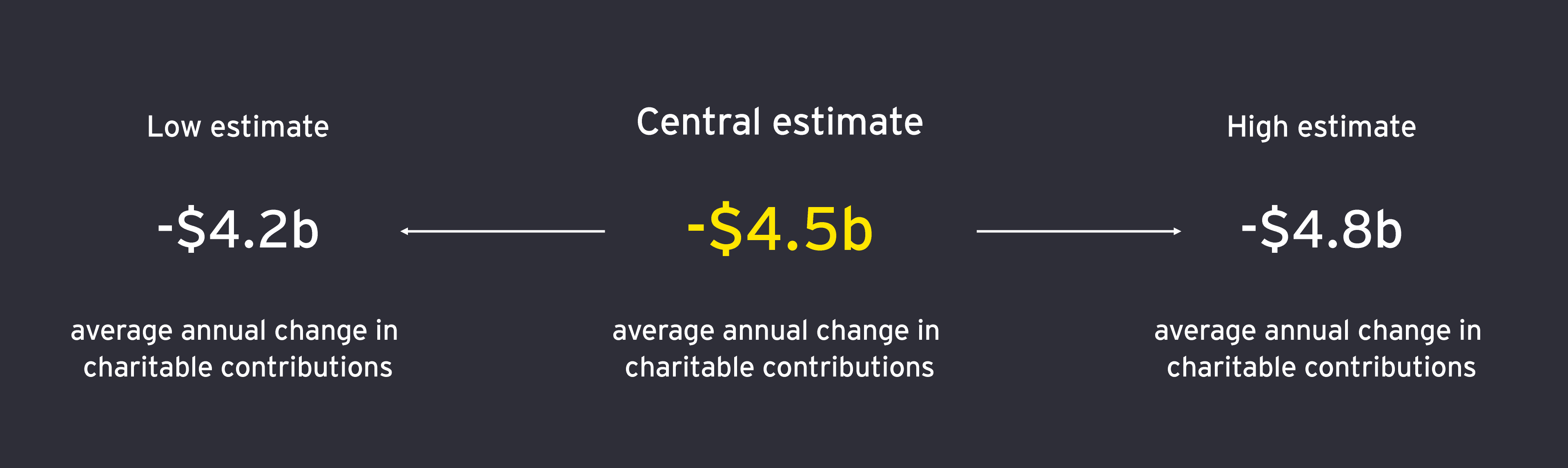
In recent years, there has been a steady shift in alignment of corporate philanthropy programs with sustainability priorities to strategically address impacts across a company’s value chain and drive desired outcomes with communities. The statutory changes under H.R. 1 pose challenges to corporate philanthropy programs by potentially raising the net cost of giving, and with tax benefits diminished, the strategic value of giving becomes paramount.
Organizations have an opportunity to use the inflection point that the 1% floor creates to refresh both tax and charitable giving strategies, but these opportunities should be considered on balance with associated limitations: