


EY refers to the global organization, and may refer to one or more, of the member firms of Ernst & Young Global Limited, each of which is a separate legal entity. Ernst & Young Global Limited, a UK company limited by guarantee, does not provide services to clients.
Recent Searches

Ernst & Young LLP (EY US) surveyed 5,000 full-time workers in white-collar jobs at organizations with 5,000 or more employees to understand workplace dynamics across the four main generations in the workforce – Gen Z, millennials, Gen X and baby boomers.
This is the second iteration of the survey which explores workplace perspectives around company culture; learning and development; flexibility; and workplace expectations overall.
Download Executive Summary
Workplace culture: how people treat each other
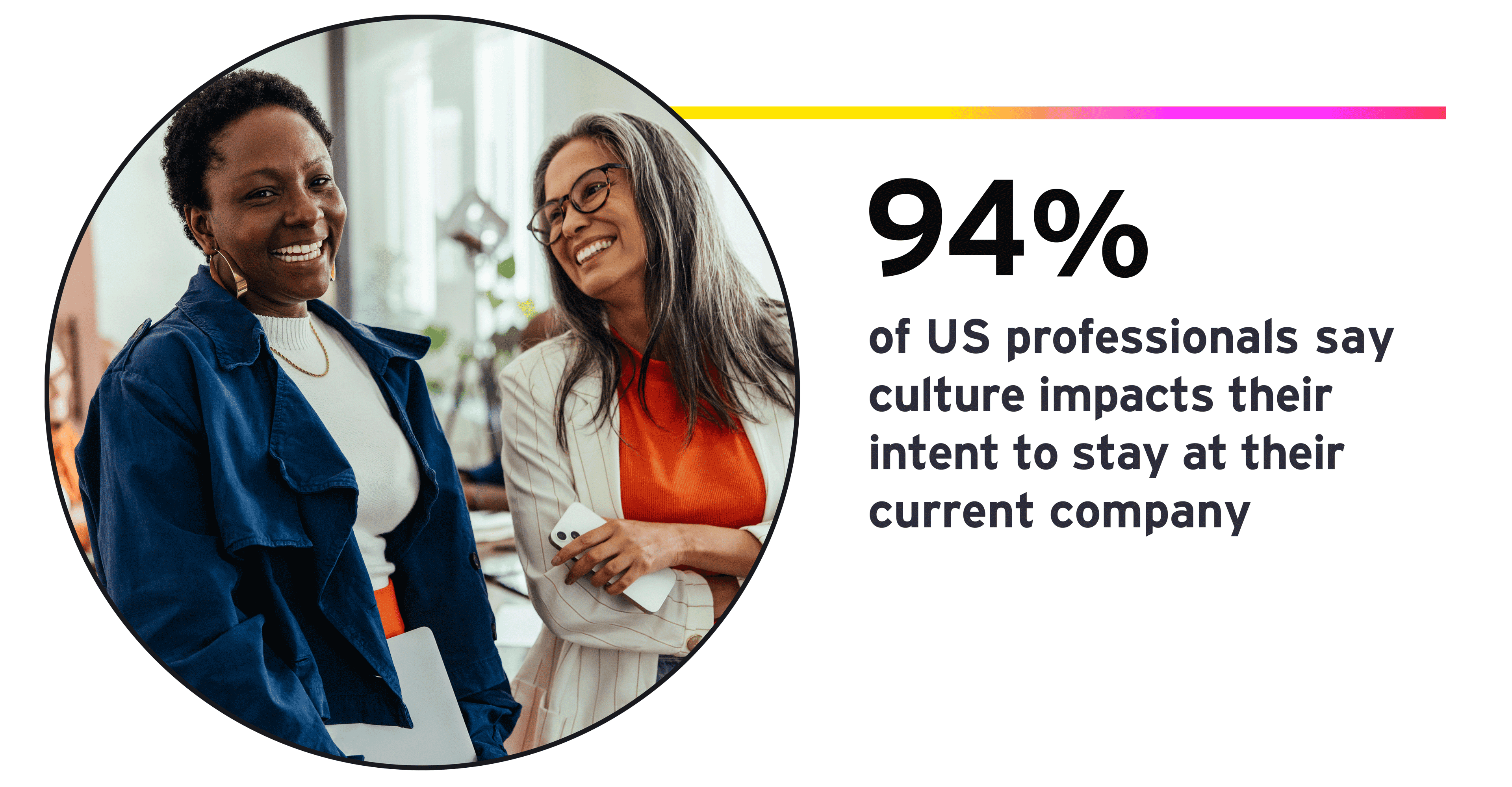
The vast majority of professionals – of all generations – say culture impacts their decision to stay with their employer.
- Ninety-four percent of US professionals say culture impacts their intent to stay at their current company, in line with 92% in 2022.
- Sixty percent say it influences their decision to stay “a great deal” or “a lot,” similar to 59% in 2022.
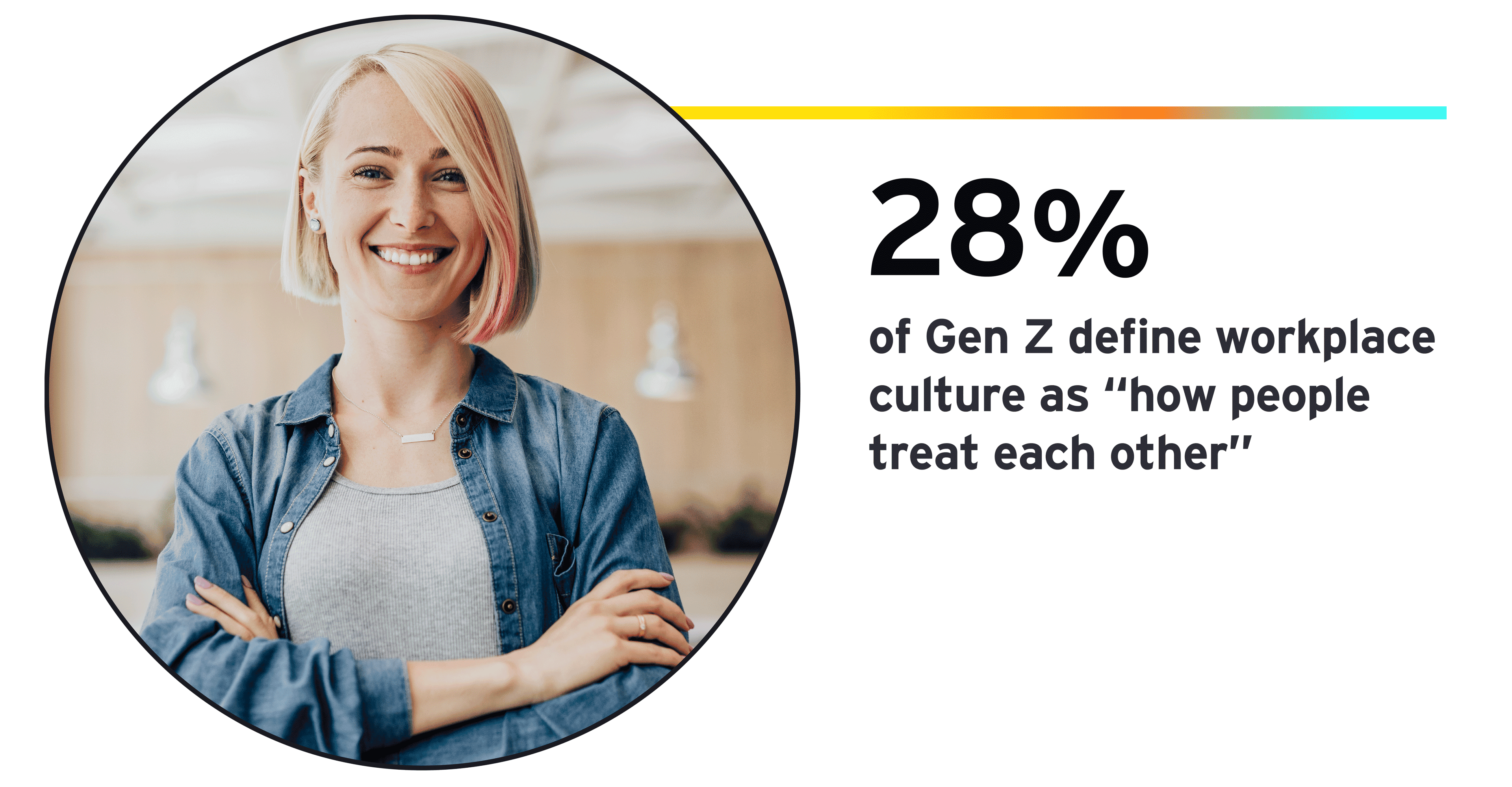
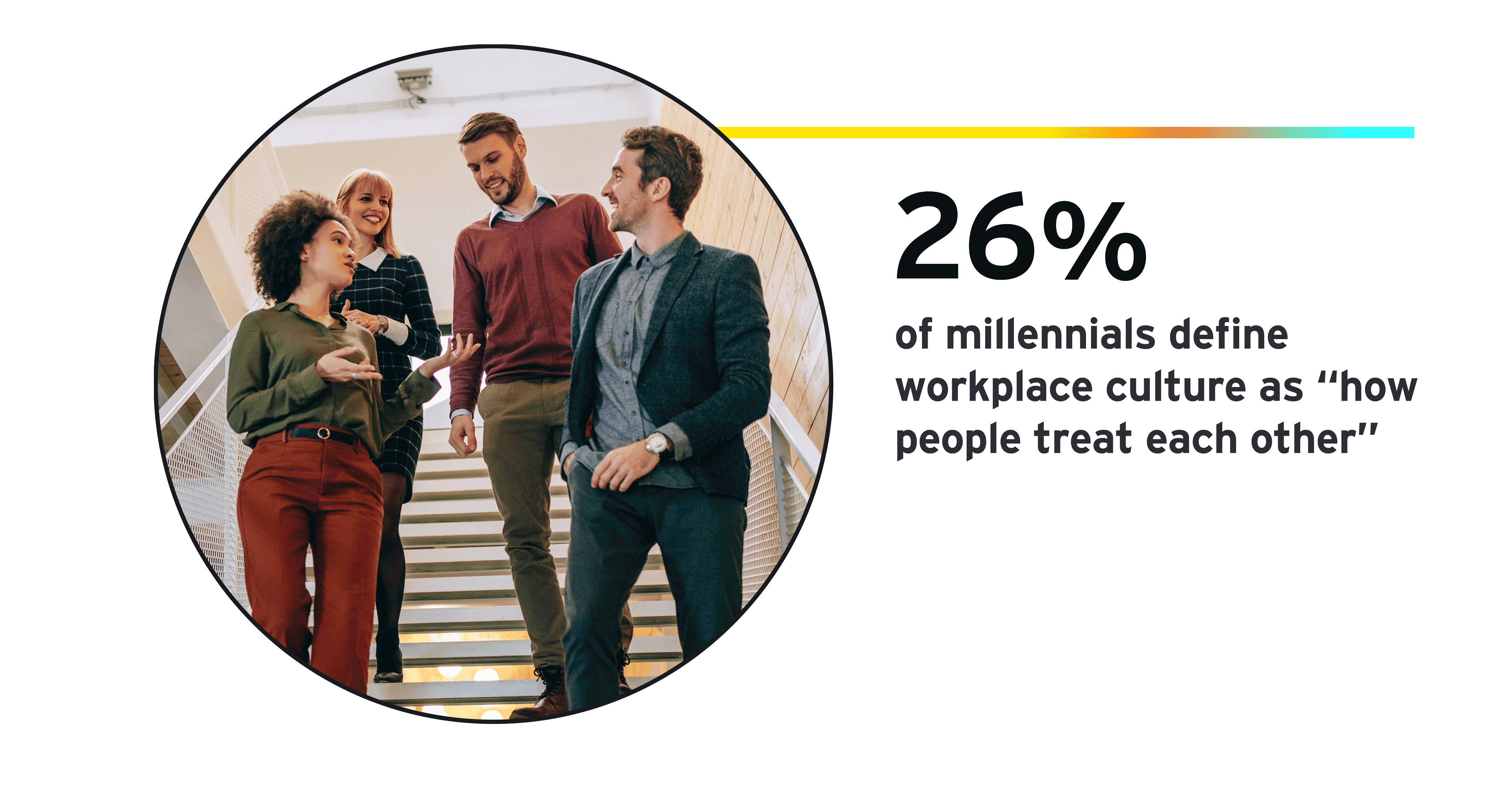
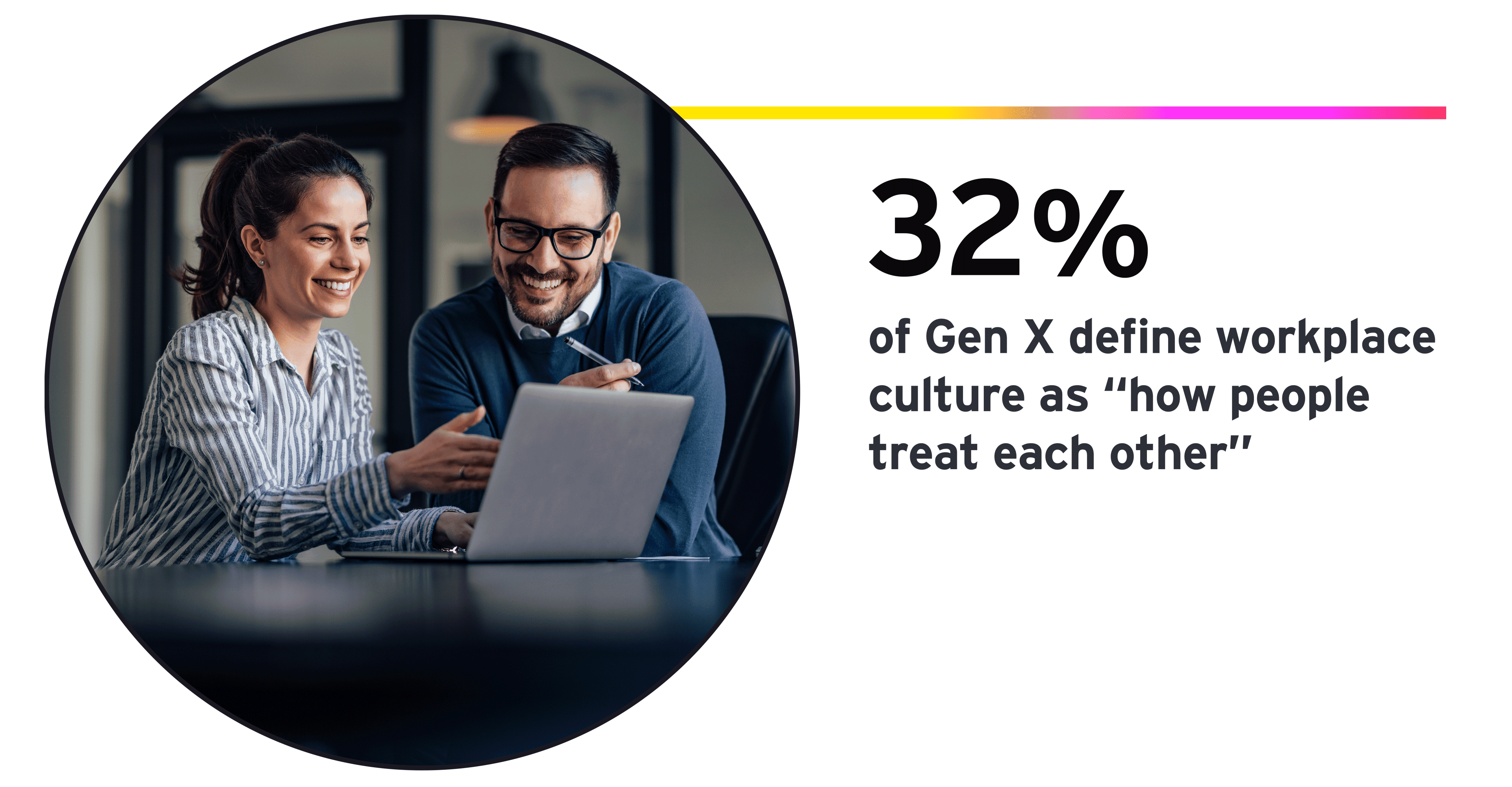
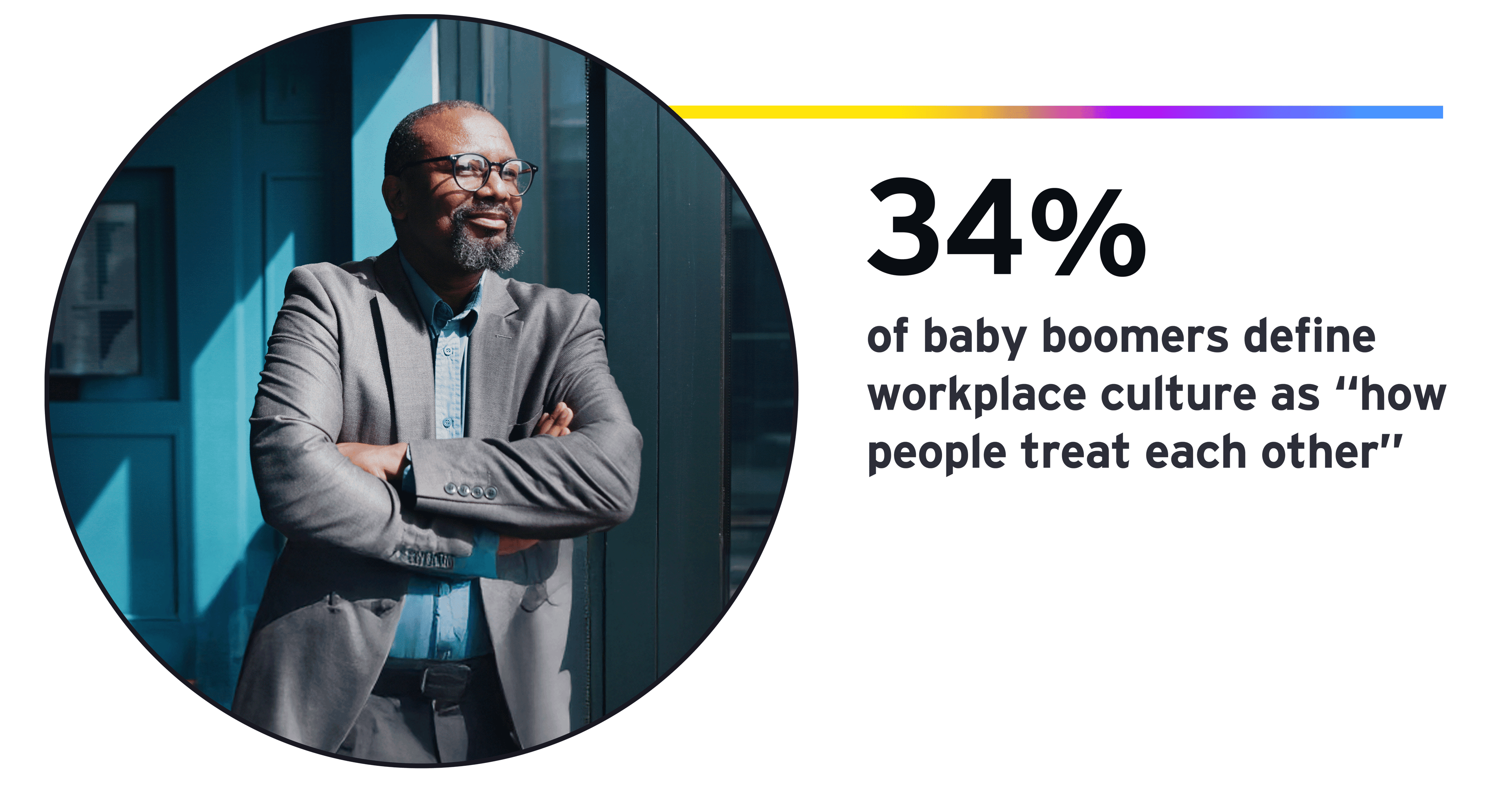
When asked to define workplace culture, the single largest response – and the largest response for each generation – is “how people treat each other” (29% overall, 28% Gen Z, 26% millennials, 32% Gen X and 34% baby boomers).
This ranks above leadership and management style (21%), work environment (21%), seeing the company’s mission and values in action (15%) and feeling the company prioritizes career growth (12%).
Millennials and Gen Z focus on values
Nearly half of Gen Z (48%) and millennials (47%) want to work for companies that reflect their values, vs. 44% for all respondents. In 2022, 45% of Gen Z and 42% of millennials said the same.
In addition, 22% of all US professionals – and most significantly, 30% of millennials – say they plan to leave their company within the next year because it does not align with their values. This is relatively unchanged from 29% in 2022.
Professionals want flexibility, but generations disagree about how to define it
Forty-two percent of professionals say some form of hybrid work (flexible or fixed) would be among their top priorities when accepting a new role.
However, each generation has its own distinct definition of workplace flexibility:
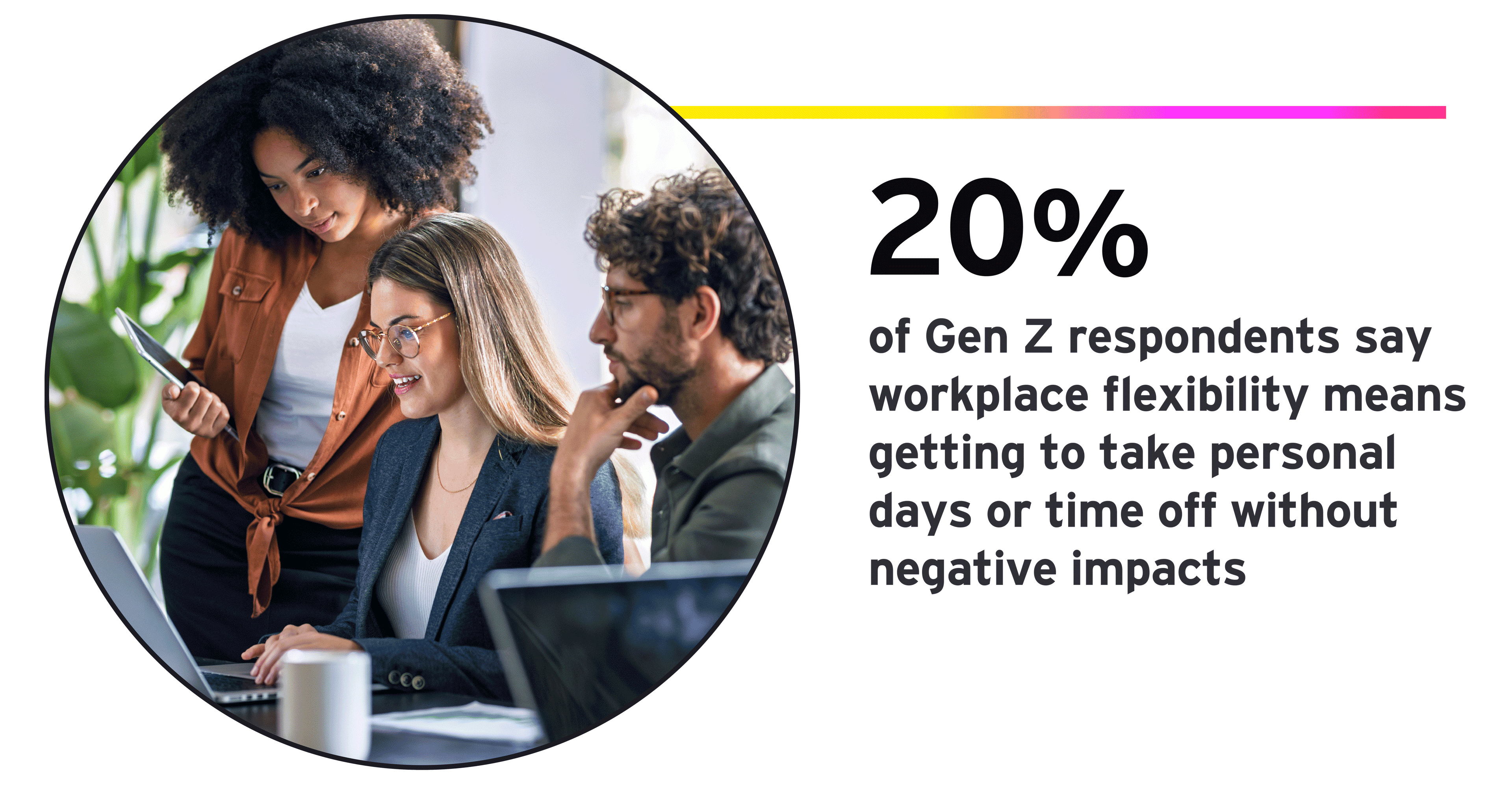
- One in five (20%) Gen Z respondents says it means getting to take personal days or time off without negative impacts (vs. 15% each of millennials, Gen X and baby boomers).
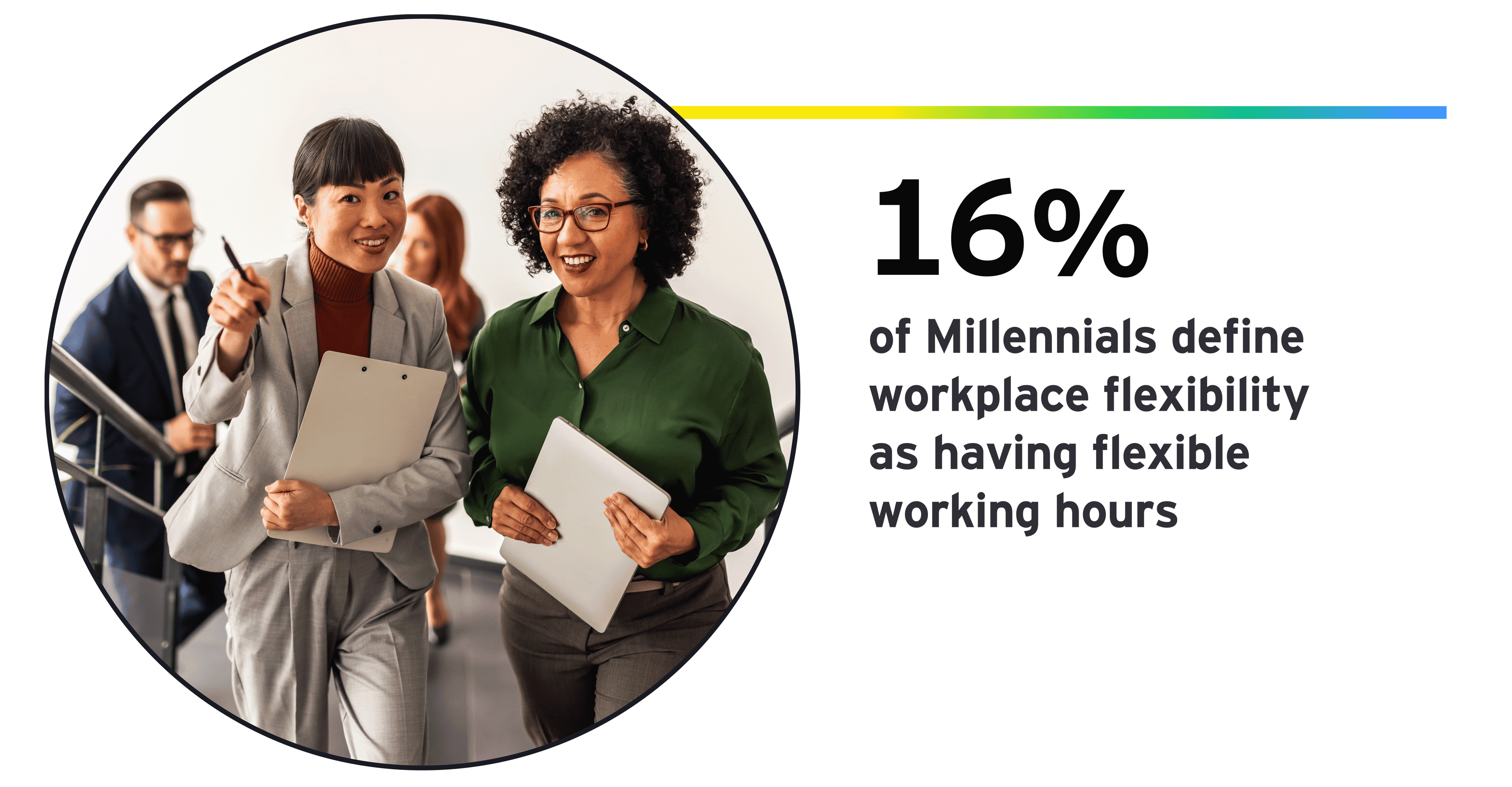
- Millennials define it as having flexible working hours (16% vs. 14% of all respondents).
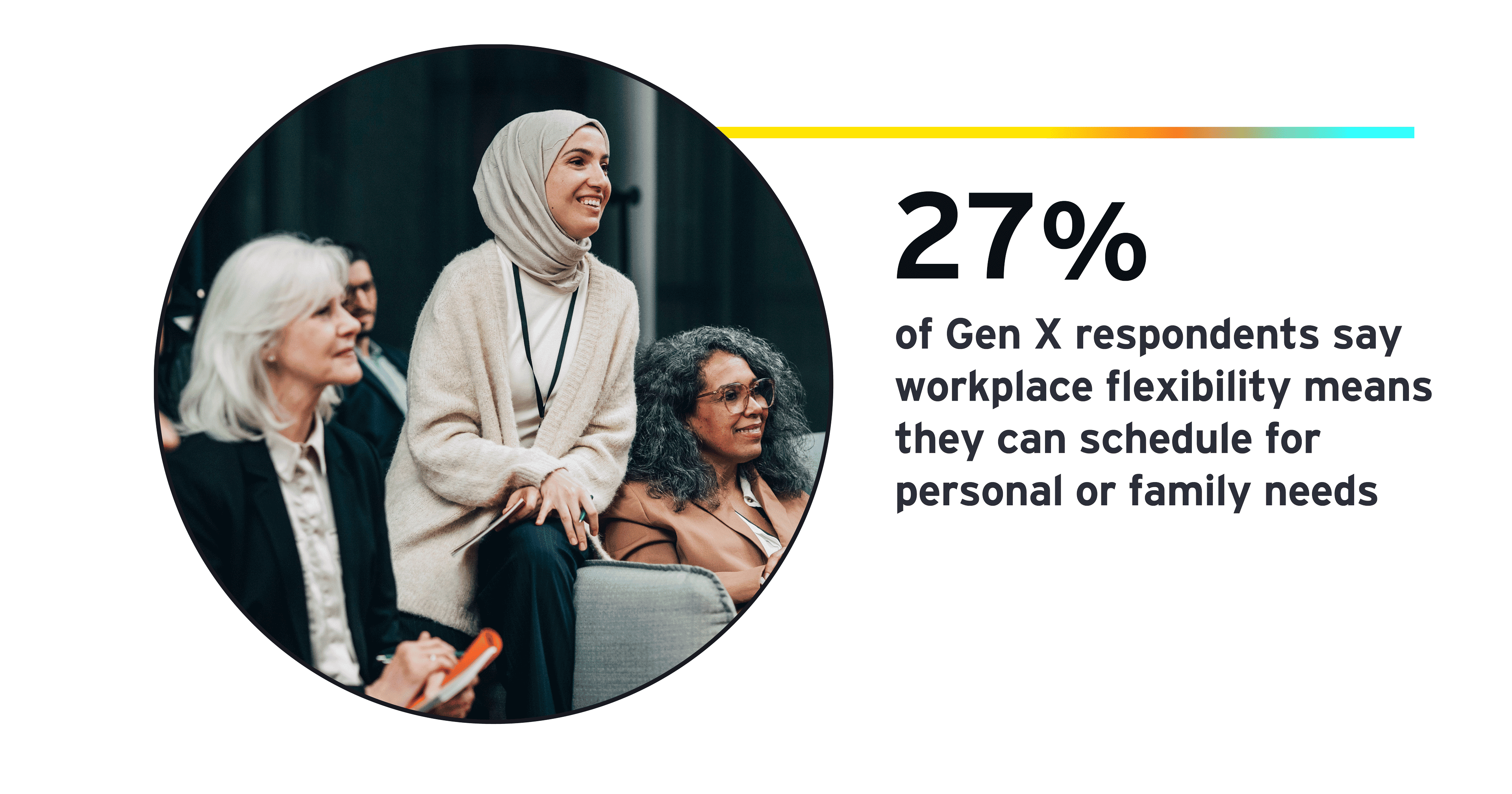
- Gen X believes it means they can schedule for personal or family needs (27% vs. 25% of all respondents).
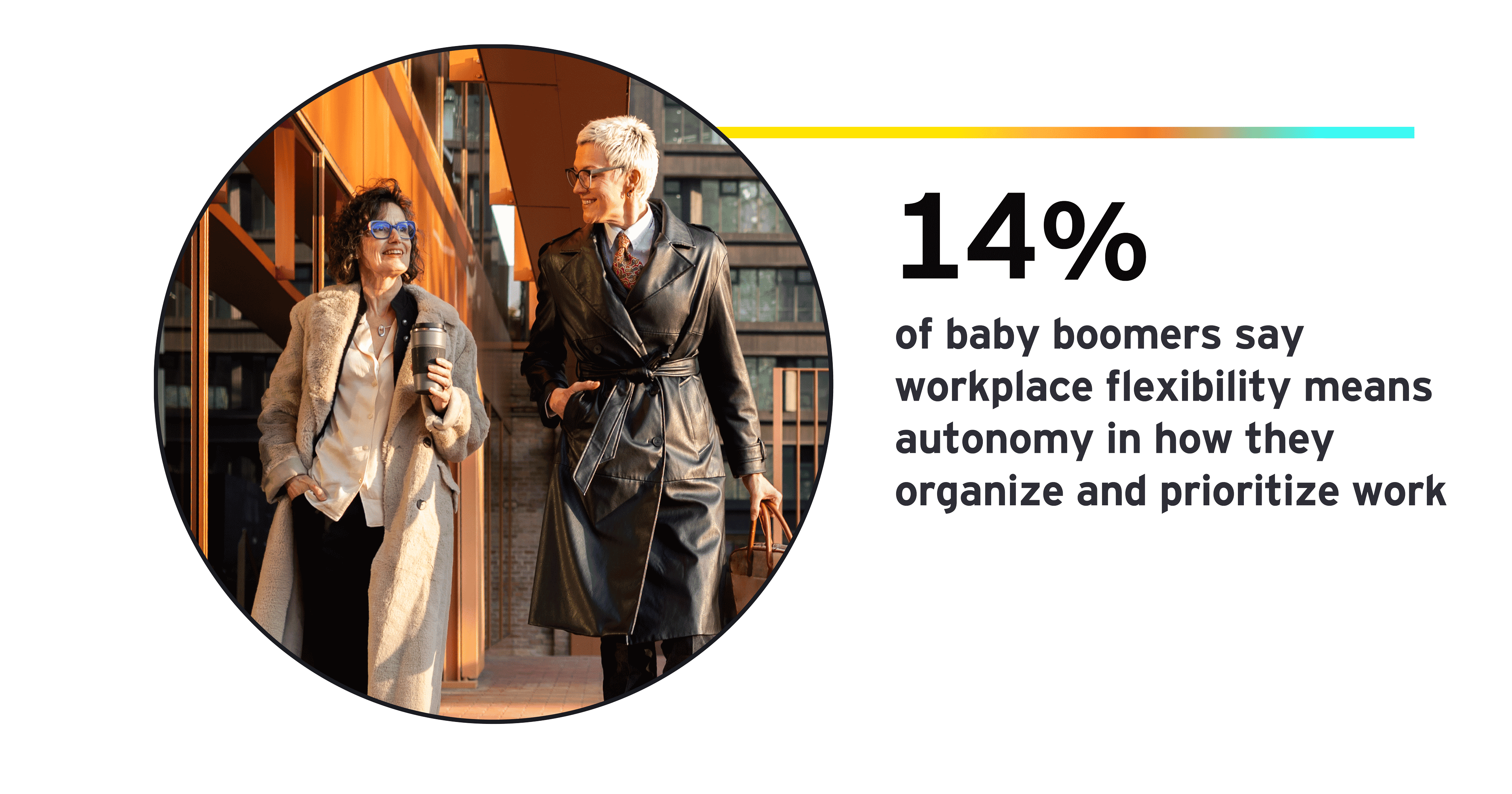
- Baby boomers say it is autonomy in how they organize and prioritize work (14% vs. 11% all respondents).
Learning and development is a priority for all generations, but they don’t feel the investment from their employer
Only 36% of all respondents feel their company is investing in their professional growth and development.
- Baby boomers are least likely to say their employer is investing in them (29%); however, it’s not for a lack of their own desires or ambitions. They want to grow in their career but are unsure where to start (19%) and feel stuck and unable to grow (11%).

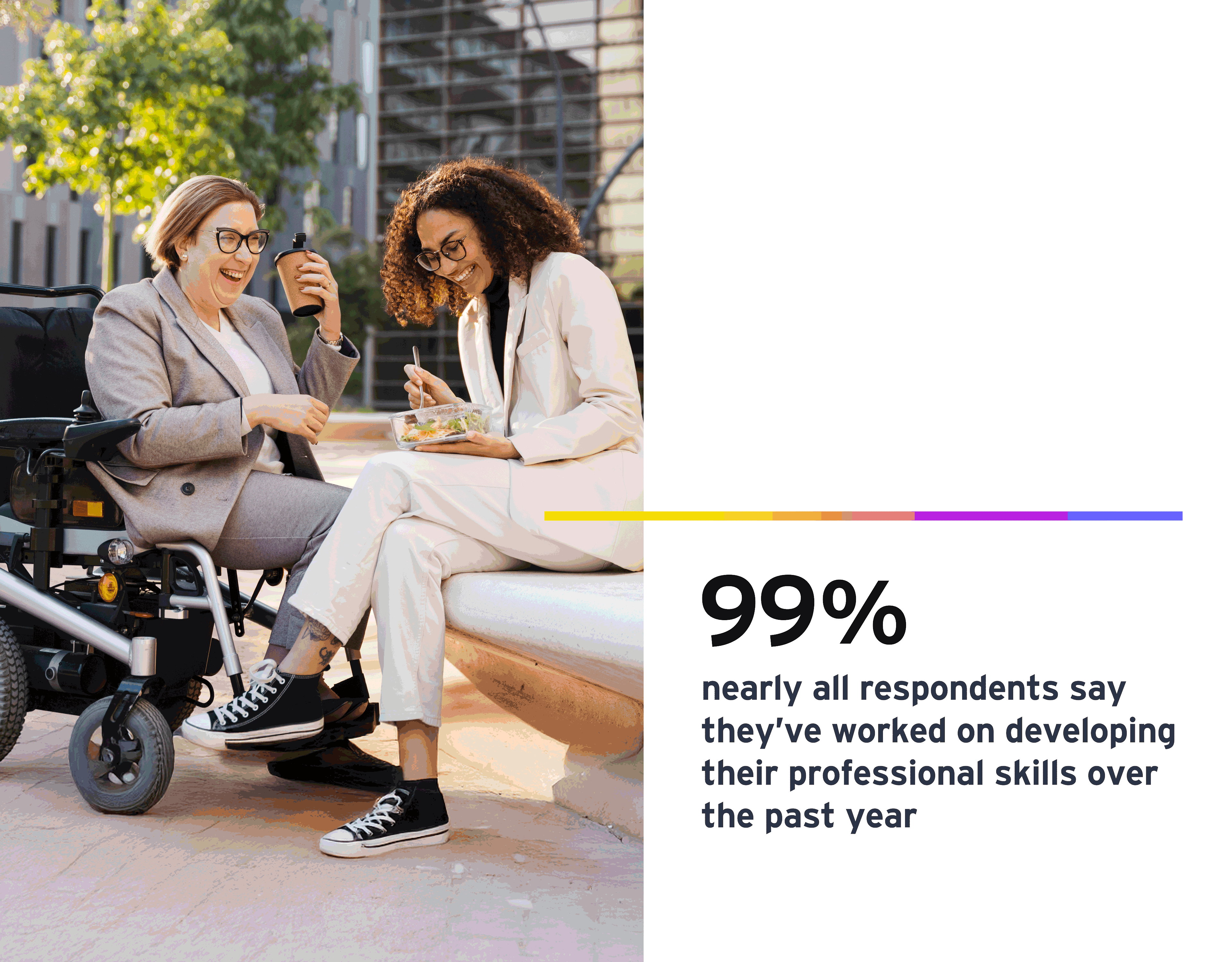
- Gen Z is most likely to say their employer is investing in them (41%) and nearly all (99%) say they’ve worked on developing their professional skills over the past year.
They stand out for actively improving their emotional intelligence (43%, vs. an average of 32% among millennials, Gen X and baby boomers) and relationship skills (42%, vs. an average of 33% among millennials, Gen X and baby boomers).
- Millennials are the generation most likely to say they are focused on honing their leadership and management skills (45%), followed by Gen Z (41%).
For Gen Z, compensation is no longer the main priority
- Gen Z is less likely to rank pay as a top factor when accepting a new job compared with other generations (57% pay, 37% benefits vs. an average of 74% pay, 41% benefits among millennials, Gen X and baby boomers).
- Gen Z is most likely to say they would choose a job that offers factors other than pay, including opportunities to transition to a new area of their company’s business (18% Gen Z, vs. 14% all professionals) and learning and upskilling (24% Gen Z, vs. 21% all professionals).