


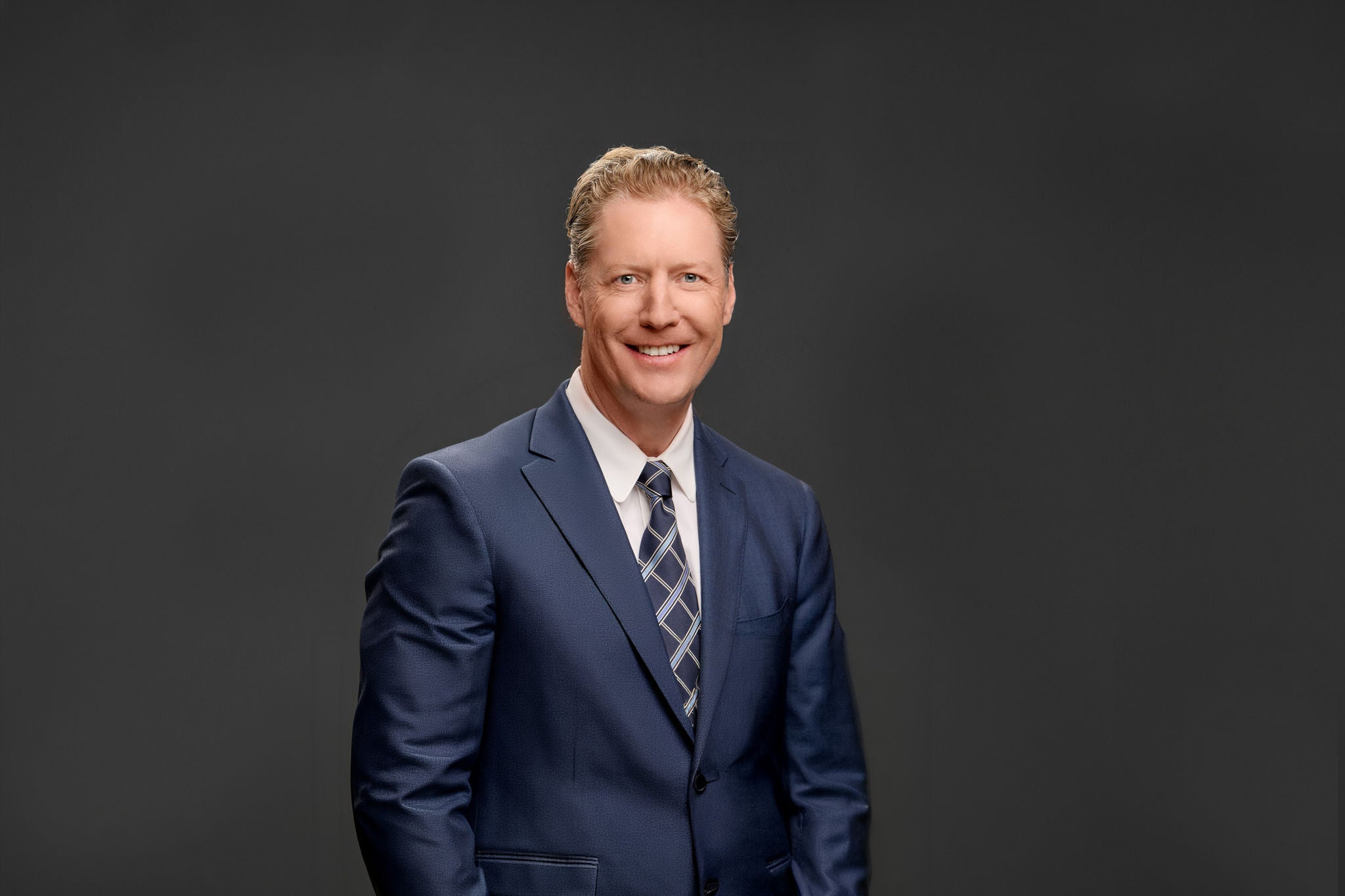


A Photograph of Patrick Hatcher

CFO Patrick Hatcher follows a disciplined approach to growth

As part of our Real leaders. Real stories. series, the Performance Food Group CFO shares how a focused growth strategy drives long-term value.

In brief
  • Careful due diligence, thoughtful integration and cultural fit help drive PFG’s expansion strategy. 
  • Lateral moves guided him along his path to the C-suite. 
  • Customer focus and adaptability shape future strategy for PFG.

CFO Patrick Hatcher follows a disciplined approach to growth

Patrick Hatcher, Executive Vice President and CFO of Performance Food Group (PFG) — one of the United States’ largest food-away-from-home distributors — has become an expert in leading finance with an eye toward growth, both for the companies he’s worked for and in his own professional life. His finance career included stints in treasury, financial planning and analysis, and international finance before he landed his first CFO role in PFG’s Vistar segment. But along the way, his drive to differentiate his experience also led Hatcher to executive roles in sales and operations management, as well as a stint as Vistar’s President. Now, as PFG’s CFO, Hatcher says his foundational knowledge across all aspects of the distribution business has been invaluable not only in leading PFG’s finance team but also in serving as a key leader in orchestrating PFG’s acquisition strategy.

Growth through acquisitions — bold but never rushed

Hatcher has been instrumental in acquisitions that have helped PFG expand its national footprint to become the $63 billion company it is today. Through its three distinct operating segments — Performance Foodservice, Vistar and Core-Mark — the company distributes a wide array of food and other consumables to restaurants, convenience stores and other retail formats across the United States. Since Hatcher took over as CFO, acquisitions have included Cheney Brothers — a Florida-based broadline distributor that bolstered PFG’s operations in the Southeastern United States — Cash-Wa Distributing and José Santiago, Inc., along with a handful of additional transactions representing a nearly $4 billion increase in revenue growth altogether. 

Throughout this strong pace of dealmaking, Hatcher and PFG have taken a disciplined approach that carefully balances the goals of the enterprise with the appropriate level of autonomy for the acquired organizations. Rigorous due diligence before the acquisition helps PFG identify risks and potential challenges. “People want to move faster during due diligence, but you have to take your time to understand all the opportunities and the risks,” Hatcher says. He also cautions against rushing integration. “The last thing you want to do is integrate [acquisitions] too fast, disrupting their business model, or harm their culture by making them conform to your systems and structure. You may accelerate synergy gain from that approach, but there is the potential to cause longer-term harm to the company that you just bought.”

For Hatcher, culture is a primary focus from beginning to end. “If you buy a company that isn’t a good cultural fit, it’s hard to realize the economic benefits,” he says. “We’re buying assets that we think are a good strategic fit in terms of geography or capabilities for each of our segments. We are also very focused on integrating them in a way that allows us to realize those benefits while enabling them to retain their core strengths.”

Oftentimes, those core strengths and their culture are the reason certain companies are attractive targets. “These companies are doing something really well, and they are usually family-owned, multigenerational companies with established ways of operating their business,” he notes. 

Learning from lateral moves on the path to the C-suite

Hatcher is no stranger to the potential disruption of a merger or acquisition. Earlier in his career, when he worked in finance for Coors, he had an opportunity to lead the integration team when Coors merged with Miller in 2008.


Leading that successful two-year integration effort gave Hatcher valuable experience, but his position was eliminated as part of the restructuring. He soon found a new position with Vistar, the specialty foods subsidiary of PFG. While he started out in finance, he moved into a position as head of sales and marketing after five years. “I intentionally took this position as a development step,” says Hatcher. “I don’t have a classic sales background, but I focused on building a strong team, creating clear priorities for the organization to drive growth and then using data to hold the team accountable.”


Hatcher also believes that gaining a different perspective benefits anyone who wants to learn and develop their skills and gain new experience. “I always tell my team to look to the left and right as they think about their careers,” says Hatcher. “To be successful in this company, you need to know the other segments well, not just the one you work in. Our convenience segment is very different from our food service operations.”


Vistar achieved significant sales and market share growth under his guidance, right up until the COVID-19 pandemic halted economic activity across much of the country and world. Sales declined 65% in one month. “It was a difficult time, but we focused on protecting our people and avoided layoffs,” Hatcher says. “We also took steps to protect our customers because if you don’t have customers, you don’t have a business.”


While guiding the sales organization through the COVID-19 pandemic, he was named Vistar’s Chief Operating Officer in 2021. Running a business operation during the pandemic gave Hatcher new insights into how to make decisions quickly, with limited information. One of the key decisions he had to make was when to begin moving toward business as usual. “With all the good information and disinformation we were getting from the field, I had to convince the team that we needed to start ordering inventory and start selling again,” he says. 

Broadening his portfolio of responsibility

Hatcher’s career trajectory soon took another turn when the CFO of PFG retired, and he stepped into that position. He soon found his sales experience directly relevant to his current role. “I try to tell my sons that it does not matter what role you are in. You’re either selling internally to your employees, or you are selling externally to your customers,” Hatcher explains. For example, he notes that “as CFO, my team often goes on road shows, talking to investors about our strategy, and where it is taking us. We are selling the potential of PFG.”

The broad experience Hatcher has gained has positioned him well to take on another enterprise-wide priority: helping PFG integrate AI into its day-to-day operations. To align AI initiatives closer with organizational goals, the CEO asked the leader of PFG’s AI initiatives to report to Hatcher. “AI is moving very fast, and we’re looking for ways to leverage it more effectively,” he says. “While it is still early in our efforts, we have identified several initiatives that could be promising.” 

Putting the customer at the center

Hatcher credits PFG’s success to its three-year strategies and the company’s ability to weave in initiatives that will deliver on its goals while helping the organization achieve disciplined growth. Focusing on the customer is key to PFG’s long-term planning. “When I sit down with our CEO to talk about new initiatives,” he says, “we ask how this will help the customer. If the answer is ‘it doesn’t,’ we hit the pause button and rethink the initiative.”

When it comes to his own leadership philosophy, Hatcher strives to remain as close as possible to the operations and leadership teams in PFG’s segments. “I work with the business leaders to align on key priorities and goals. My overarching goal is to speed up decisions and not slow execution or create barriers. And then you have to add trust, transparency and accountability. As much as possible, I try to be a true business partner.” 

Summary

Patrick Hatcher, Executive Vice President and CFO of Performance Food Group, has built a career around disciplined growth, cross-functional leadership and customer-focused decision-making. His experience across finance, sales and operations has helped him lead PFG’s acquisition strategy with an emphasis on rigorous due diligence, cultural fit and careful integration to enable long-term value creation. Hatcher’s career also reflects the value of making lateral development moves to gain a broader perspective on sales, operations and crisis management. Today, that perspective helps him shape enterprise priorities, from guiding strategic growth to integrating AI into PFG’s operations.


Related articles

CFO Matters

CFO publication to deliver research-backed, high-quality insights that speak directly to the CFO agenda.

How Minerva Tantoco is shaping ethical AI with humans at the center

From an early fascination with the human brain to leading AI transformation, Minerva Tantoco brings a human centered lens to ethical innovation.

How Lowe’s CFO Brandon Sink takes on challenges with strategic vision

In our Real leaders. Real stories. series, Brandon Sink shares how he brings his work home with him in the best possible way. Learn more.