








EY refers to the global organization, and may refer to one or more, of the member firms of Ernst & Young Global Limited, each of which is a separate legal entity. Ernst & Young Global Limited, a UK company limited by guarantee, does not provide services to clients.
Recent Searches

Get in touch
Talk to one of our tax reporting professionals about auto loan interest reporting.
For 2025, new legislation will allow taxpayers to deduct up to $10,000 of auto loan interest per year on a qualified passenger vehicle. Auto loan finance companies will now need to send an information reporting return to borrowers by January 31 of each calendar year (first reporting due January 31, 2026) and to the IRS.
This will require the collection of borrower information, identification of qualified passenger vehicles and aggregation of payments to perform the required reporting.
What is the new information reporting requirement for auto loan interest?
- This is required by businesses that receive interest payments aggregating $600 or more from individuals on a specified passenger vehicle loan.
- In general, a personal use vehicle is one with a final assembly within the US.
- Beginning January 31, 2026, lenders will need to report payments made by any borrowers who paid interest of $600 or more during the previous calendar year.
- Lenders must collect the name, address and other information regarding the loan and vehicle to report the aggregate of interest paid.
- Taxpayers have a reporting obligation to document their interest payments on their income tax returns, regardless of whether their ability to deduct these payments is restricted by their modified adjusted gross income.
What auto loan finance companies should be considering now
Requirement understanding and compliance
How does the new reporting requirement apply to us, and what specific actions do we need to take to achieve compliance, including legal and regulatory considerations?
Customer communication and training
How are we communicating with borrowers to achieve compliance while providing a positive experience, and how will we educate our workforce about the new requirements?
Data management and system readiness
Do we have the necessary processes and systems in place to collect and store borrower data, identify qualified passenger vehicle loans and support accurate reporting?
Financial implications
What are the financial implications of implementing these new requirements, and what are the potential penalties for noncompliance?
Process efficiency and technology alignment
How can we redesign our workflows and leverage existing technology solutions to seamlessly integrate the new reporting requirements without disrupting operations?
Long-term strategy and vendor partnerships
How does this new reporting requirement fit into our long-term technology and business strategy; should we work with third-party vendors for doc generation and compliance support?
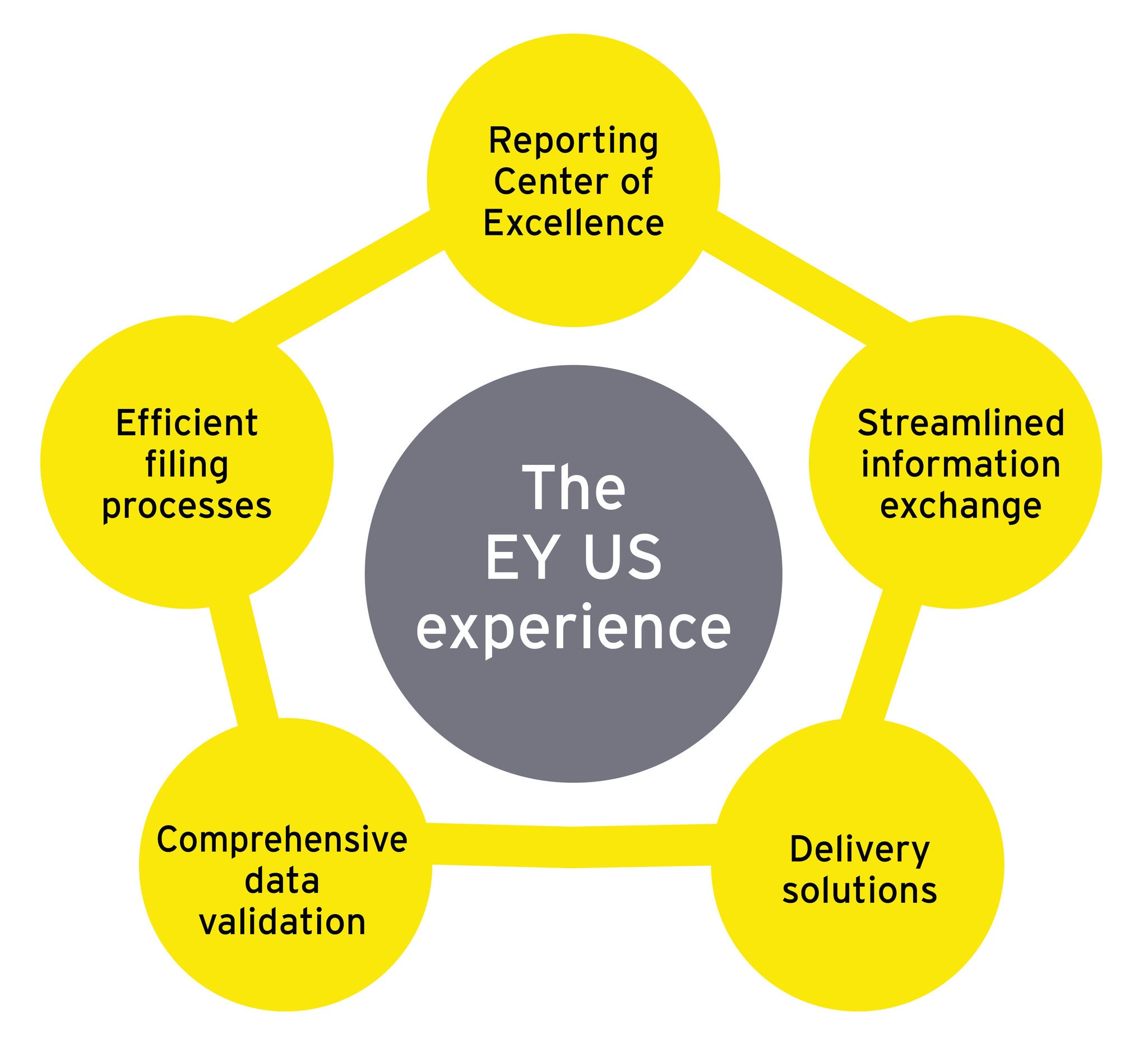
How EY can assist with auto loan interest reporting
We can assist with federal and direct state filings, including extensions and IRS submissions, allowing you to focus on your core business. This includes:
- Validating and analyzing data files to support compliance with regulatory requirements, performing Tax ID Number (TIN) validation and support IRS Filing Information Returns Electronically (FIRE) file validation.
- Serving over 320 clients and producing 1098, 1099, 1042-S and W-2 forms through a dedicated team focused on information reporting.
- Efficiently extracting borrower data, convert into reporting templates and proactively working to identify and correct anomalies through advanced analytics.
- Leveraging a dedicated print/mail team or EY technology for seamless electronic statement to qualifying borrowers.
Why does this matter to an auto loan finance company?
This is significant for an auto loan finance company for several reasons. First, user experience concerns can lead to a loss of users and revenue. Additionally, new reporting requirements may strain internal resources and divert attention from core business operations unless a trusted service provider is utilized. There is also a risk of incurring potential penalties under Internal Revenue Code (IRC) Sections 6721 and 6722, which impose a penalty of $330 per information return for each failure to file and furnish, with a maximum combined potential penalty exceeding $7 million.
Investments in technology and operations are necessary for accurate reporting, achieving compliance and avoiding penalties. Enhanced onboarding and communication throughout the entire customer relationship are also crucial.
About the EY US information reporting and withholding team
- The EY US Information Reporting and Withholding (IRW) team collaborates with multinational and financial organizations to meet their payee, vendor and customer-related regulatory information reporting obligations through a collaborative approach of customer tax operations services and innovative technology applications, while also working closely with businesses to analyze reporting requirements.
- The IRW team provides tax technical advice, process improvement, deployment of EY technology applications and/or broader outsourcing of services* to support organizations with compliance across global tax regimes.
Following people also contributed to New auto loan interest report:
- Uri Benjamin, Partner, Tax, Tech and Transformation, Ernst & Young LLP
- Saul Tilman, Executive Director, Business Tax Services, Ernst & Young LLP
Please contact your local Ernst & Young LLP (EY US) professional to confirm availability.
* Some or all of the services mentioned herein may not be available to audit or independence restricted clients and their affiliates. Please contact your local Ernst & Young LLP (EY US) professional to confirm availability.
Learn more about the new auto loan interest reporting.
Our latest thinking
Ten steps for streamlining your tax information reporting
Financial institutions must begin planning now to improve processes for tax information reporting in preparation for upcoming tax seasons.
How auto lenders can reimagine themselves today for a world of change
The need for auto lenders to keep up as change accelerates amid uncertainty is driving companies’ efforts to refresh their approaches. Read more.
How EY can help
-
Our auto, captive and equipment finance team brings your strategy to life — bridging strategy, operations, tech, data and core business functions.
Read more