Gate 1: Use predictive analytics and AI for smarter decision-making
Data is one of the most underutilized assets in the automotive sector. Most aftersales operations still rely primarily on reactive models, responding to demand only after it materializes. This approach leads to missed revenue, excess inventory and customer dissatisfaction.
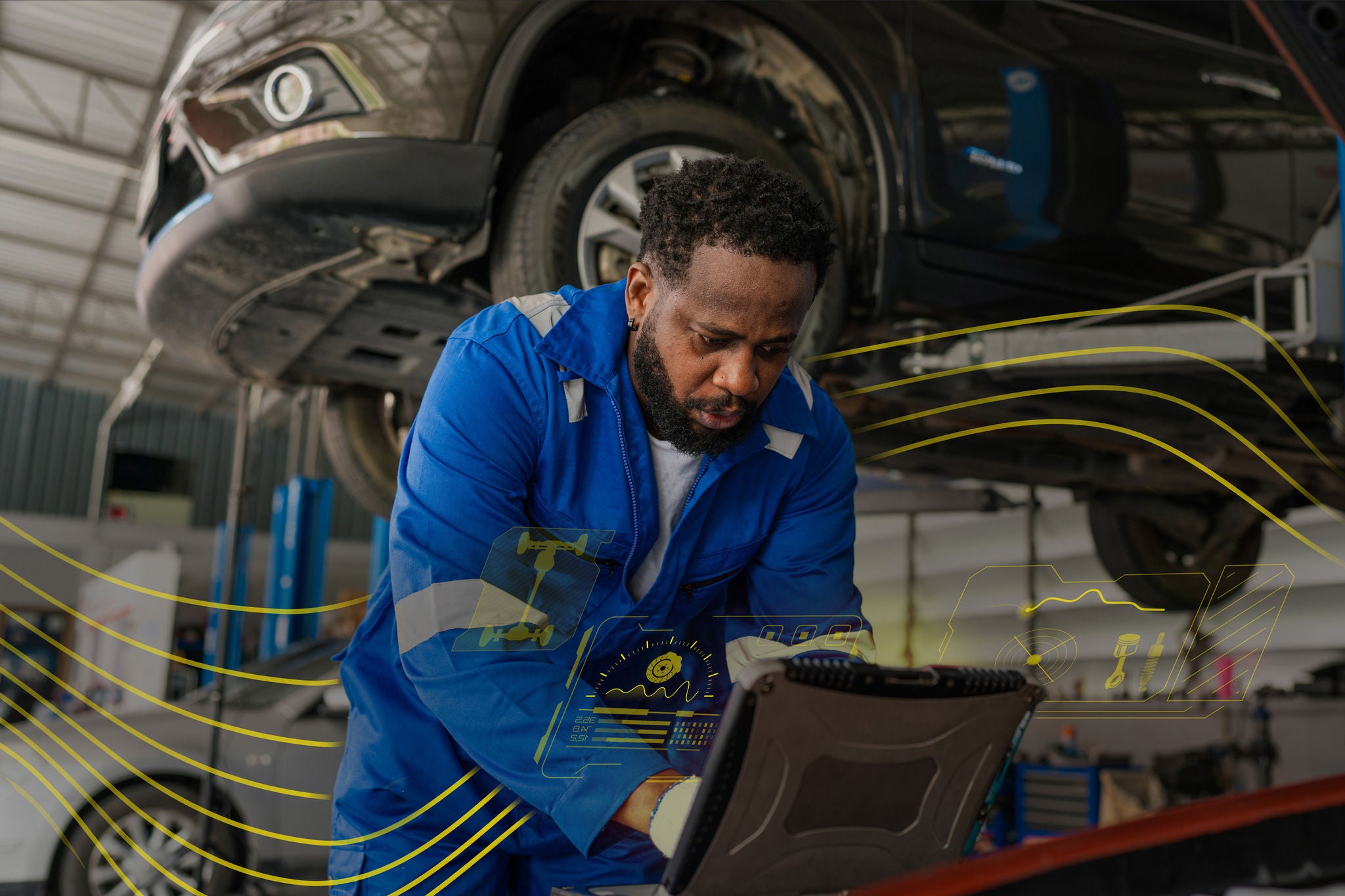
By adopting predictive analytics and integrating artificial intelligence (AI)-based solutions, OEMs and dealers can transition to a proactive model. Generative AI is already used in the buying journey not merely as a chatbot but also as customized marketing and shopping experiences. In the service department, AI vision technology used in multipoint inspections finds leaks, wear, and safety issues in a matter of seconds with a high degree of accuracy. AI used by dealers and fleet managers analyzes sensor data to more accurately predict and map maintenance schedules, preventing parts failures and related downtime, and to refine charging schedules for electrified fleets.
Caterpillar underwent an AI-driven aftermarket transformation, working with Ernst & Young LLP (EY US) that showed how predictive analytics could unlock significant enterprise value. By embedding AI across its global dealer network, Caterpillar optimized parts inventory, improved service efficiency and enhanced customer satisfaction while reducing working capital and boosting service revenue. The initiative empowered dealers with real-time insights and proactive maintenance capabilities, enabling a shift to predictive service delivery. Designed using a scalable, repeatable model, this transformation offers a compelling blueprint for OEMs looking to modernize their aftersales operations and drive sustainable growth.
Caterpillar found success when it defined a clear problem that could be addressed using existing data systems and scaled across regions and product lines. A critical success factor was Caterpillar’s ability to empower not only data science teams but also front-line users by embedding analytics directly into daily operations, ensuring that actionable insights flowed seamlessly across functions — from engineering and service to sales.
Gate 2: Refine logistics and inventory management
Any serious conversation about the automotive aftersales segment must consider the pivotal roles of inventory and logistics. As customer expectations for speed, transparency and availability continue to rise, the ability to accurately forecast parts demand and ensure prompt delivery has become a key competitive advantage. Inventory and logistics are no longer just operational necessities; they are also strategic enablers of a seamless and responsive aftersales experience, from just-in-time replenishment to last-mile delivery.
Recent global disruptions from tariffs, geopolitical conflicts and raw materials shortages have exposed the fragility of traditional inventory models. Excess stock ties up capital and warehouse space, while shortages result in lost sales and dissatisfied customers. To remain resilient, the industry is turning to AI-driven forecasting tools that analyze vehicle usage patterns, regional demand trends and historical data. These technologies help reduce overstock, minimize service delays and improve overall parts availability, making logistics reactive but also predictive and proactive.
Just-in-time inventory practices supported by real-time visibility tools can help balance availability with efficiency. Digital twins and supply chain simulations allow OEMs and suppliers to model disruptions, test responses and refine flows before making physical changes.
To optimize logistics and inventory management, AI-powered third-party risk management platforms enable real-time visibility into supplier networks and logistics flows. These systems continuously ingest and analyze data to detect anomalies and emerging risks such as geopolitical disruptions or supplier delays before they affect operations. Machine learning models dynamically adjust inventory thresholds based on predictive risk signals, improving stock accuracy and reducing shortages and excess. By integrating vendor risk scoring into procurement workflows, organizations can proactively mitigate exposure to high-risk suppliers, enhancing supply chain agility and resilience while keeping operational continuity.
Collaboration across the supply chain is also critical. OEMs must work closely with logistics providers and dealers to improve last-mile delivery, reduce lead times and ensure that high-demand parts are always within reach. Integrating inventory systems with forecasting tools and customer-facing platforms aligns supply with actual demand, not outdated assumptions. When logistics and inventory are refined, the entire aftersales operation becomes more agile, cost effective and customer focused.
Gate 3: Enhance digital customer engagement and aftersales experience
Today’s customers expect seamless, digital-first experiences across every touch point. Unfortunately, many automotive websites, service portals and communication channels are still outdated or disconnected from back-end systems. This disconnect erodes trust and drives customers to third-party service providers.
To compete, OEMs and dealers must invest in digital platforms that support online service scheduling, real-time updates and personalized offers. Customer relationship manager systems should be used to deliver targeted promotions, service reminders and loyalty incentives. Subscription-based services and tiered maintenance plans can further increase customer lifetime value while providing predictable revenue streams.
Digital engagement must also extend to transparency in service timelines and parts availability. Customers want to know when their vehicle will be ready, what it will cost and whether the parts are in stock. Integrating customer-facing tools with inventory and logistics systems can provide this visibility, improving satisfaction and reducing service delays. Ultimately, a digitally enhanced aftersales experience builds trust, increases retention and drives long-term profitability.
Gate 4: Rethink organizational culture and incentives
Technology and tools are only part of the equation: Cultural transformation is equally critical. Many organizations still prioritize vehicle production over service fulfillment, with KPIs and incentives that reflect this imbalance. To unlock the full potential of aftersales, leaders must elevate its strategic importance across the enterprise by aligning performance metrics with long-term service goals. Engineering teams should be incentivized to design vehicles that are easier to service and customize, while sales and service teams must collaborate to achieve a seamless customer experience, from purchase through maintenance.
As organizations integrate AI and data-driven tools into aftersales, rethinking culture and incentives becomes essential to alignment with responsible innovation. Boards and leadership teams must foster a culture that encourages experimentation while embedding ethical guardrails and accountability. This includes shifting incentives beyond short-term performance metrics to reward cross-functional collaboration, transparency in AI decision-making and continuous learning. By promoting a mindset that values both innovation and governance, organizations can build trust in AI systems so that adoption is both scalable and sustainable.
Training and development also play a pivotal role. Service advisors, technicians, and parts managers need the skills and tools to deliver high-value data-informed service. Cross-functional collaboration should be encouraged, breaking down silos that limit innovation and responsiveness. When culture and incentives are aligned with aftersales priorities, the entire organization becomes more agile, profitable and customer centric.
Conclusion
The aftersales segment is one of the most powerful levers of profitability in today’s automotive industry. By unlocking the gates of predictive analytics, logistics optimization, digital engagement and cultural transformation, OEMs and dealers can build a more resilient and intelligent business model.
The window of opportunity is open, but it will not remain open indefinitely. As the industry continues its transition toward electrification, those who act now will be best positioned to maximize the profitability of current platforms and lead the next era of growth.