



Three female friends smiling on a sofa at home, celebrating with juice and coffee, high-quality photo

How beverage brands can win at the moment of choice

Executives should rethink influence marketing for an era where trust, context and AI increasingly shape decisions.


In brief
  • Friends, family and in-store exposure remain the most decisive influences on beverage choice, while ads and social media often play a supporting role.
  • More than a quarter of consumers already use AI tools for beverage decisions, signaling a new layer of influence mediated by algorithms.
  • The effectiveness of influence varies by beverage category and consumer generation, requiring more tailored, credible and inclusive strategies.

To get a new beverage into the hands of consumers, executives face unclear norms about digital marketing in the AI era, raising questions about the nature and effectiveness of influence. As voices that aim to shape decision-making proliferate across platforms and social media, the EY Consumer Beverage Survey reveals key nuances about how trust is cultivated within beverage categories and generations.

The cornerstones of beverage marketing persist: friends and family still matter most, and in store moments remain powerful. But digital influence is a trickier mix of credibility, proximity and relevance, not merely who gets the most attention or most likes. Meanwhile, a meaningful share of consumers, especially younger ones, are already using AI tools in their decision-making — and will do so even more in the future.


As discovery fragments, how can beverage leaders influence decisions in ways that feel authentic, credible and human? It’s not a new question, but it gains new dimensions when your potential customers turn to channels where you have little manageable presence. We find that digital influence works best when aligned to specific categories and life stages, attuned to recent AI developments — not applied broadly. Here’s what the data shows.

The enduring power of peers and proximity — and an emerging new layer

Because of its omnipresence in consumer lives, social media is often assumed to be a leading channel driving beverage choice, as it is for fashion, cosmetics and other products. Yet more than half of US consumers say they would not take advice from influencers or celebrities for beverage decisions. That is true regardless of beverage category, including alcohol, functional, zero alcohol and everyday choices.

While advertising and social media remain important for awareness, they are often confirmatory, not decisive, for consumers. Instead, consumers most commonly learn about new beverages through the recommendations of friends and family, affirming that personal networks remain the strongest influence. Seeing in store displays and being exposed to products at the point of purchase or consumption consistently outrank social media, influencers and online communities.


Yet there’s a new influencer in town — and it’s not as predictable to leverage. Over 1 in 4 consumers are using AI tools to guide their beverage choices (based on personal goals such as increasing hydration or energy or reducing sugar), and many more expect to do so in the near future. The likelihood is even higher among the coveted Gen Z demographic, the consumers of tomorrow. While AI is not replacing human influence and trust, it is reshaping how consumers validate and personalize decisions in ways that we’re just beginning to grasp and that promise to accelerate.


The SEO playbook is very familiar to marketers: users search for keywords, browse and compare results — then hopefully make a purchase. Yet through large language models (LLMs), users express interest conversationally with separate tools that handle the personalized reasoning and recommending — and potentially the purchasing as well in the future — within a black box. Brand will be challenged to deliver LLM-optimized product content, such as neutral expert sources that heavily influence top-of-funnel activities.


Action plan for executives

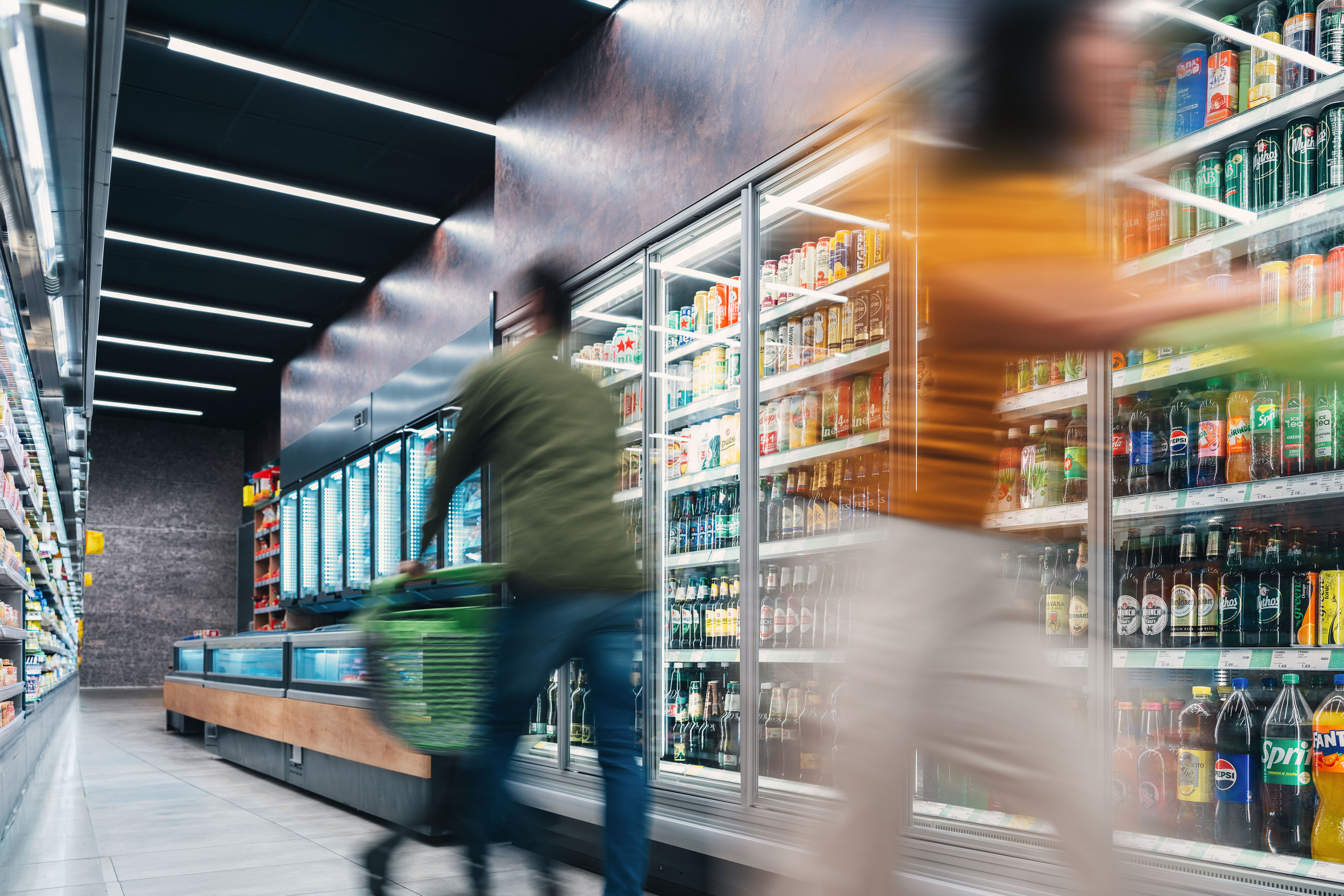
  • To win in the moments where consumers are most receptive to influence, companies may need to rebalance their investment toward point of sale visibility, clear packaging and in store storytelling.
  • It’s also worthwhile to increasingly influence brand visibility in environments that are driven by algorithms, not just human preferences. Beverage companies should ensure their product claims, attributes and data are structured for discovery by LLMs that cite, rank, surface and recommend brands. This includes transparency in ingredients and clarity in functional benefits. Create or optimize a single source of truth about product data that LLMs can rely on, and amplify that knowledge across the public corpus that AI models consume.
43%
of respondents say they are likely to use AI in their beverage decisions in the next year, according to the EY Consumer Beverage Survey.

Where influence varies by generation and category

Within those broad strokes about influence, further nuances can be found in more specific domains — particularly about Gen Z respondents.

They are consistently more open to external influence, including through social media content, influencers, and (as noted) digital and AI driven recommendations. They are also more likely to report feeling social pressure around beverage choices — 21%, almost double the 11% among all respondents. This dynamic most acutely manifests in alcohol related settings, making influence more emotionally and socially complex for this cohort. It reinforces the importance of inclusive, nonjudgmental brand messaging, especially for these emerging consumers.

And where consumers are open to influence, they expect different signals depending on the category:

  • Alcoholic beverages: entertainment over expertise. For alcoholic beverages, consumers who are open to influencer input prioritize humor, personality and entertainment value. Credentials and expertise rank lower, suggesting that alcohol influence is more about cultural relevance than authority.
  • Functional beverages: credibility matters more. For functional beverages, the pattern reverses. Consumers who consider influencer input place greater importance on relevant knowledge or credentials, alignment on health and wellness alignment, and shared values. This reflects the higher perceived risk and complex decision-making associated with functional claims.

Simpler products that are easier to explain, justify and recommend can be more discernible by consumers — and the AI tools they use.

We’re also seeing more flexibility in how beverages are perceived within energy and health and wellness, with some successfully rebranding from one category to another. Women or athletes, for example, can define health and wellness differently. Featuring prebiotics and fiber, some new sodas assume a middle position between sugar-free, no-calorie options and their extra-sweet counterparts — highlighting the importance of ingredients — while others are tied to helping with hydration and athletic performance, typically associated more with energy.

Action plan for executives

  • Consider moving away from one size fits all marketing strategies toward category specific influence models, with message, messenger and moment more clearly aligned. Be cognizant of evolving preferences within the energy and health and wellness categories for different groups based on their own priorities, such as lower sugar or different ingredients, and reflect that in your LLM-focused channels as well.
  • Consider simplicity, clarity of benefit and relevance for when consumption occurs earlier in product development. Beverages that are easier to explain or justify, or that feel good to recommend, are more likely to benefit from peer led growth. These are dynamics that affect influence and can reduce the friction in decision-making, and they can amplify organic influence more effectively than promotional spend alone.

What this means for beverage companies

As influence fragments across peers, platforms and technology, the data points to a more nuanced influence ecosystem in which trust outweighs reach and context matters more than channel. Who speaks the loudest is no longer the most influential. Beverage companies must interrogate who is believed, when and why. Five recommendations stand out:

Summary

Beverage influence is not defined by who is loudest, but by who is believed in the moments that matter — and sometimes that can be AI tools. As voices proliferate across digital platforms and social media, winning brands focus on clarity and credibility. Those that design products and messages for real-world decisions — and for AI-driven discovery — will be best positioned to earn trust and grow organically.

About this article

Related articles

How GLP-1 is driving a new era of alcohol industry innovation

A new wave of intentional consumption is challenging alcohol brands to innovate across formats, pricing and partnerships. Learn how to respond.

Supply chain as a strategic asset for consumer beverage leaders

Changing consumer preference is transforming the back-office supply chain to a front-office strategic asset and critical competitive advantage.

Trends in the Beverage Industry: Navigating Change and Innovation

Explore key trends shaping the beverage industry, from changing consumer preferences to the role of innovation and technology in navigating market challenges.