






EY refers to the global organization, and may refer to one or more, of the member firms of Ernst & Young Global Limited, each of which is a separate legal entity. Ernst & Young Global Limited, a UK company limited by guarantee, does not provide services to clients.
How EY can help
-
Discover how EY's Smart Factory platform embeds manufacturing excellence by arming the shopfloor with dynamic predictive data analytics, virtual reality & AI.
Read more
Often in uncertain economic environments, companies slow their technology investments to a trickle. But during the COVID-19 pandemic, 92% did not halt technology investments. This speaks to the value of a digital supply chain in helping enterprises navigate disruptive forces and respond faster to volatile supply and demand.
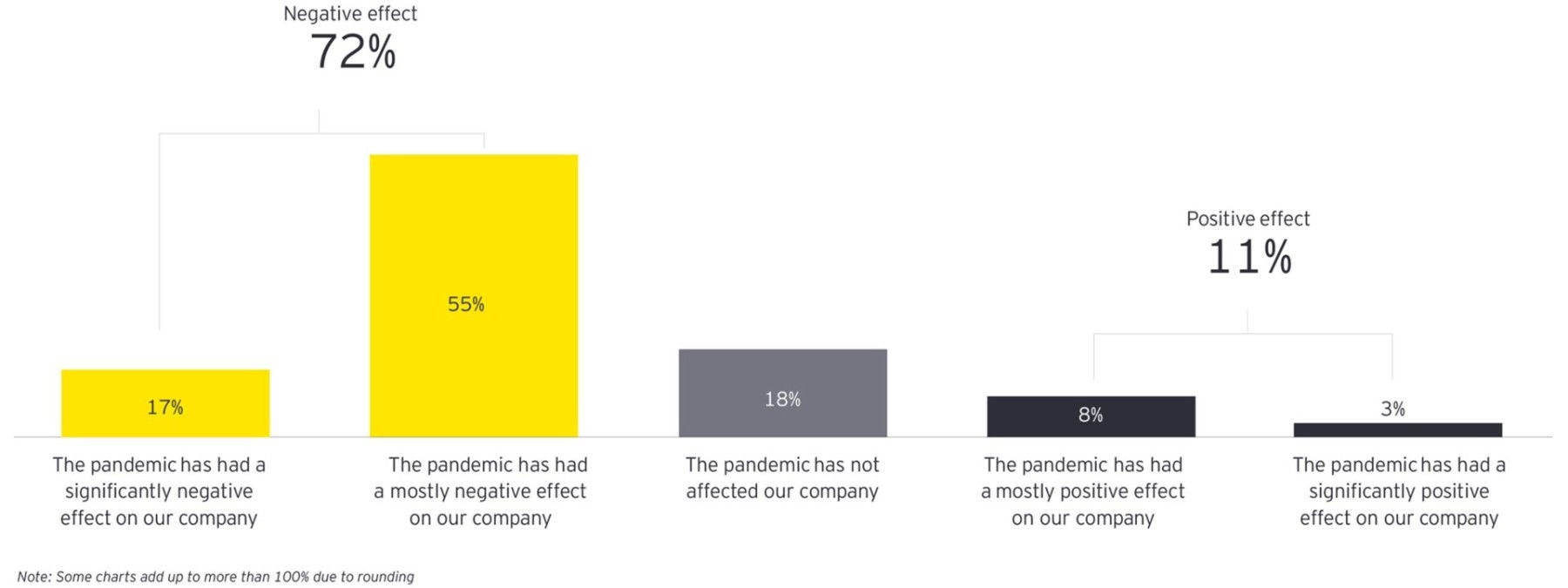
There were some clear winners by industry during the pandemic, with 11% reporting positive effects, including increased customer demand (71%) and bringing new products to market (57%). These companies were mostly in the life sciences sector and the positive effects may be largely because the products they produce are essential. The pandemic also required some life sciences companies to double down on creating essential new products such as COVID-19 tests or vaccines. Other sectors, particularly consumer products, couldn’t keep products on the shelves in the early days of the pandemic since toilet paper, canned goods, flour and other staples were in high demand.
Some sectors were hit particularly hard, however. Among survey respondents, all automotive and nearly all (97%) industrial products companies said the pandemic has had a negative effect on them. In addition, 47% of all companies reported the pandemic disrupted their workforce. While many employees were asked to work from home, others — especially in factory settings — had to adapt to new requirements for physical spacing, contact-tracing and more personal protective equipment (PPE). Industrial products and high-tech manufacturing companies invested overwhelmingly in technology to reduce employee exposure to COVID-19 in more labor-intensive industries. These were just a few examples of changes affecting supply chains across various sectors.
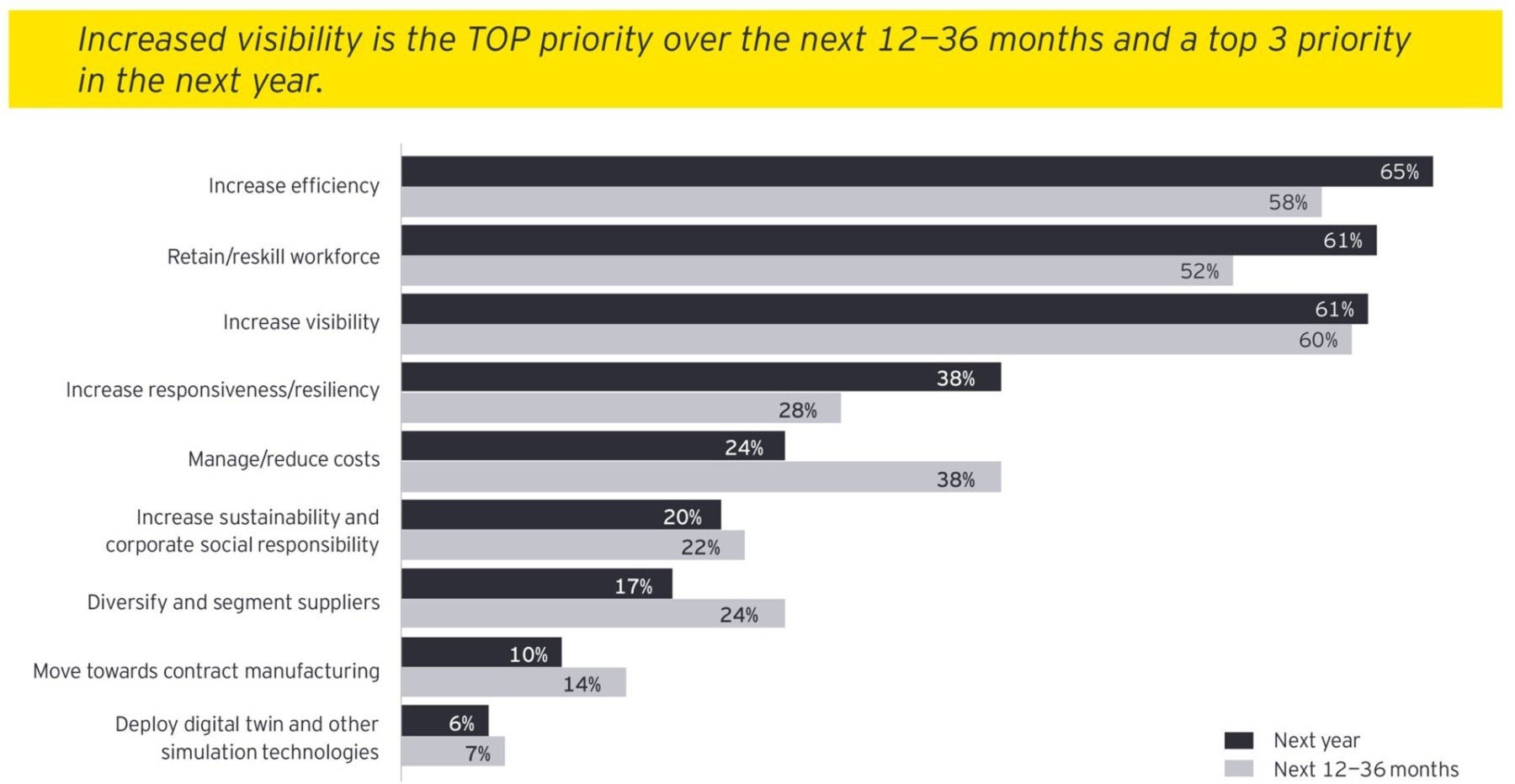
However, some positives came out of the disruption. For example, supply chain finally got a voice with CEOs and boards, and much-needed investment in technical capabilities such as real-time visibility and resilience. The pandemic also forced supply chains to develop new agility to carry forward — for example, many organizations built advanced analytics to do dynamic SKU rationalization rather than doing one off spreadsheet exercises when inventory would get too high, or the next crisis requires optimization. And as a result, a high-performing supply chain is now perceived as a competitive necessity.