How CAOs and controllers are forging the future of finance

Related topics

Finance transformation is reshaping the function with a focus on AI in finance, new skills and strategic agility.


In brief
  • As finance faces talent shortages, rising complexity and rapid AI change, CAOs and controllers are stepping into a more strategic, future-shaping role.
  • Leaders are redefining the function by building modern skills, strengthening governance and embracing responsible AI to boost agility and trust.
  • By aligning talent, technology and tone at the top, finance teams can accelerate transformation and influence enterprise decisions more than ever before.

The EY Center for Executive Leadership convened the Fortune 100 CAO and Controller Leadership Network (CCLN) in late 2025, with 30 companies represented, to discuss emerging priorities in finance, including the American Institute of Certified Public Accountants (AICPA) developments, board readiness and practical approaches to artificial intelligence (AI) adoption. Agility, collaboration and strategic alignment remained consistent themes as finance leaders navigate increasing complexity.

To kick off the discussion, Kristin Valente, EY Chief Client Officer, provided opening remarks with perspectives she’s hearing from other C-suite executives regarding AI’s impact and focus on the enterprise. For example, CIOs are focused on educating leadership about the technology’s complexity, and CFOs are driving AI adoption beyond experimentation. This framing set the stage for a discussion about how finance leaders can translate their company’s AI priorities into actionable operating principles, positioning data architecture investments as key enablers of a faster close process, better forecasting and trustworthy reporting, all of which are top of mind for boards and CEOs.

Developing the next generation of finance leaders

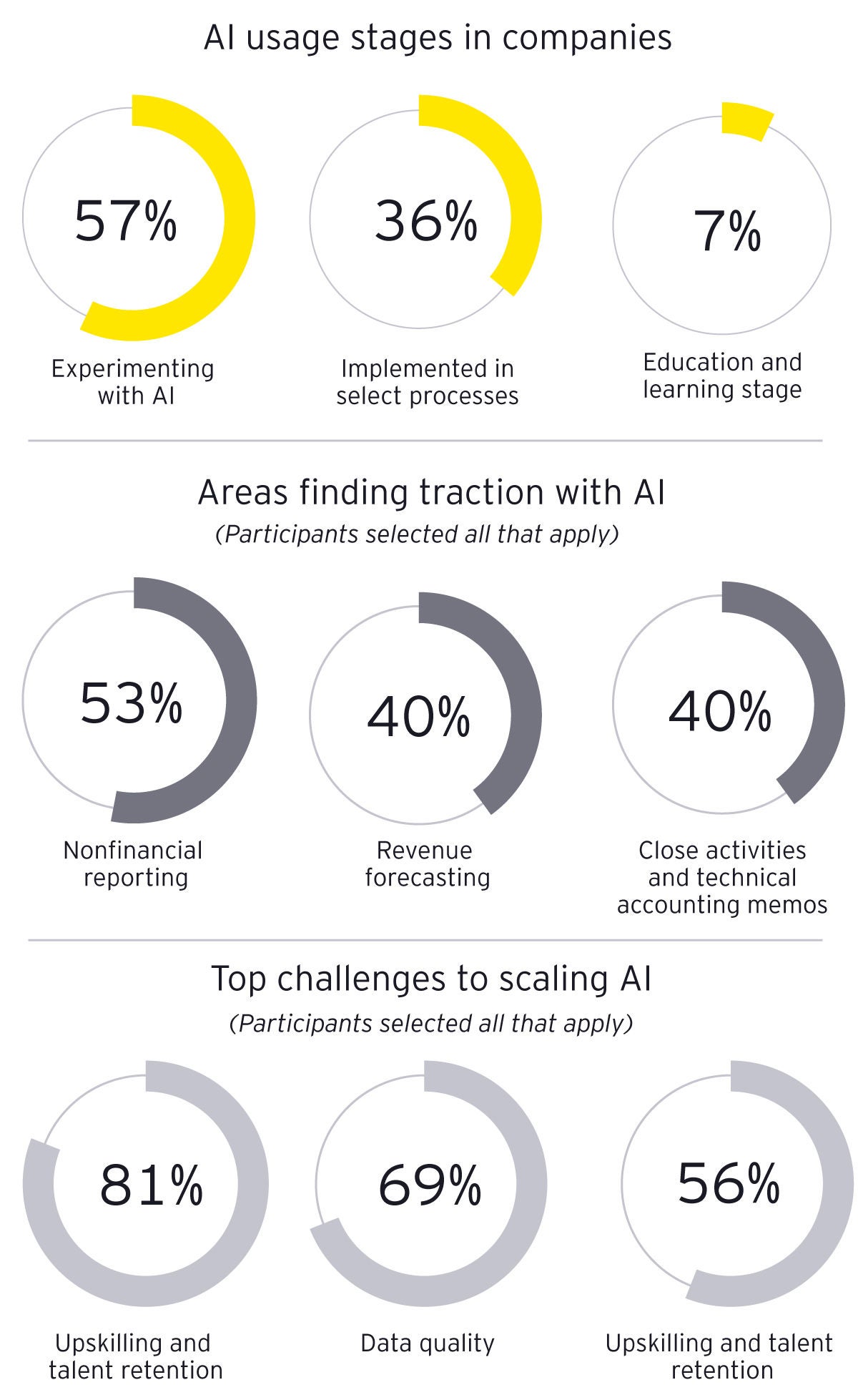
Tom Hood, the AICPA’s Executive Vice President for Business Growth and Engagement, joined the network to address ongoing workforce pressures, including declining entry into the accounting profession and rising retirements. While AI is advancing, it will not address talent shortages in the near term, reinforcing the need to strengthen the profession’s pipeline.

To that end, the group discussed the critical need for finance professionals who bring the right mindset, skill set and sense of leadership, combining deep technical expertise with broader skills in analytics and technology and strategic communication. According to Hood, the AICPA is collaborating closely with both employers and academic institutions to accelerate upskilling, deploy more real-world accounting simulations and enhance workplace accounting programs to drive recruiting and retention.

Participants also described recruiting struggles and the need to expose teams to key drivers like data science and external perspectives. To address these concerns, savvy CAOs and controllers are creating skills matrices for their teams, leveraging learning and development opportunities and external speakers to help shift longstanding mindsets and measuring progress through practical outputs.

In addition, Hood also spoke to the rising regulatory complexity around CPA licensing at the state level. For instance, as of January 2026, nearly half of all states have eliminated or revised the once-universal requirement of 150 hours in college credit for those who seek to obtain a CPA license.1 While many see this effort to reform licensing as an impactful effort to stem the talent shortage, others are concerned about the inconsistencies in this growing patchwork of regulations. Calling state licensing issues yet another “structural barrier” to robust recruiting and retention, he noted that the AICPA is working with state authorities across the country to gain clarity and offer guidance.

Board service: raising the bar for readiness

As the discussion moved to the board priorities and service journey, Pat Niemann, EY Americas Center for Board Matters (CBM) Leader, highlighted how boards are intensifying their focus on capital strategy, technology oversight (especially AI and cyber), risk, talent and sustainability. For example, many boards are establishing tech committees to reduce audit committee overload and deepen technology governance. Boards also expect management to demonstrate agility, engage in robust scenario planning and enhance company readiness to proactively navigate uncertainty.

For prospective board candidates, either now or a few years from today, Marla Oates, Managing Director with Russell Reynolds Associates executive search firm and Dan Clifford, EY Americas CBM Board Network Leader, emphasized the importance of personal branding, building relationships with executive recruiters and leveraging nonprofit board service as a pathway to corporate board member roles. Additionally, utilizing your personal network, preparing your board bio and having open conversations with your leadership team about your board ambitions can lead to valuable opportunities that may arise through back-channel discussions.

According to Niemann, board service typically requires around 200 hours per year or roughly 10% of an executive’s time, though this varies by company, board focus and industry. Although it is crucial to weigh your bandwidth for board service, there are potential benefits it can unlock for you while in your current leadership role. For instance, board service can enhance your strategic communication capabilities and enterprise mindset and expand networking opportunities.

AI in finance: a practical approach

To kick off our discussion on the implications of AI, the group discussed some of the logistical implications of AI, including the need for explicit consent, robust guardrails and human oversight. These principles are especially crucial in sensitive environments like audit and client service. With that in mind, several participants spoke about their organization’s risk tolerance around AI, with some companies embracing the technology and others remaining cautious due to legal and compliance considerations. Participants also agreed that while AI does offer important gains in productivity for audit and finance, it must complement, not replace, professional judgment, keeping a “humans in the loop” focus at the forefront.



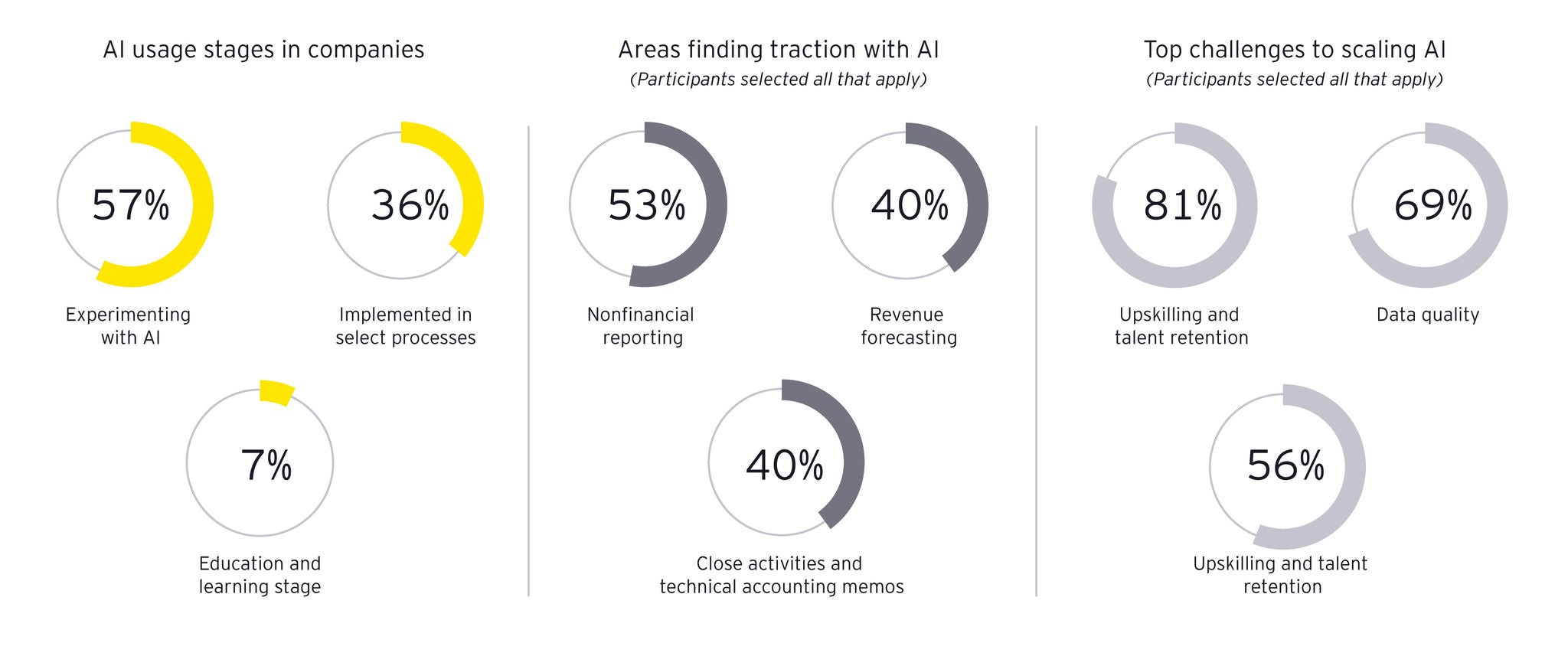
As we moved further into our discussion on AI and finance, Myles Corson, EY Global Financial Accounting Advisory Services (FAAS) Leader and the network’s sponsor, highlighted the prevalent fear of missing out (FOMO) with some executives feeling they are falling behind in AI adoption compared to their peers. Despite this perception, he added, the polling was consistent with other polls, with a significant number of companies still in the early stages of experimentation and implementation, suggesting that the perception of how rapidly AI is being adopted may be overstated.

To demonstrate leading practices, a member walked the group through a company-specific AI assistant that helps their team tackle writer’s block and streamline technical documentation, calling it an “electronic colleague” that has dramatically accelerated their personal productivity. This executive also emphasized the importance of strong prompt design on the front end and human oversight through fact-checking on the back end, also suggesting that actively training your AI agent to learn and adopt your writing tone and style is key. They further shared that the company’s CFO has been instrumental in championing AI adoption and encouraging experimentation within the finance team. This CFO exemplifies the idea that bold leadership and having the right tone at the top are crucial for AI trust and adoption. Ultimately, the company’s regimented approach to managing AI risks through strategic prompting, validation, experimentation and collaboration drives the iterative improvement needed to scale AI confidently as talent challenges continue.

Another CCLN member shared their experience with an AI-powered policy assistant that relies on a comprehensive data lake, emphasizing training, validation and the reality that accuracy improves only through iteration. Corson provided an example of multi-agent validation as a practical way to reduce hallucinations and increase trust in AI outputs.

Ultimately, the group agreed that while AI is a powerful enabler of finance efficiency and productivity, successful AI adoption requires the right tone from the top, an experimentation mindset and a culture of continuous learning.

Key actions for CAOs and controllers

As CAOs and controllers navigate the evolving landscape of finance, they must adopt proactive strategies to harness the potential of AI and develop their teams. The following key actions can help finance leaders drive meaningful progress and prepare their organizations for a tech-focused future.

  • Establish responsible AI frameworks: Develop and implement clear guidelines for responsible AI use in finance, including consent protocols, guardrails and human oversight checkpoints. This approach will foster trust and drive compliance with both legal parameters and client expectations.
  • Create a comprehensive skills development plan: Identify the essential skills needed for your finance team to thrive, combining deep accounting knowledge with broader competencies in analytics, technology and strategic communication. Invest in targeted upskilling initiatives and promote peer learning opportunities to enhance these skills.
  • Leverage AI in core finance functions: Where appropriate in accordance with the company’s risk tolerance, focus on scaling AI applications in areas where finance already excels, such as reporting, forecasting, close processes and technical documentation. Implement formal validation processes and track improvements in cycle time and quality to demonstrate the value of AI initiatives to the board and C-suite.

Summary 

Across the network, CAOs highlighted how rapidly the finance landscape is evolving and the expanding opportunities — and pressures — that come with it. By fostering agility and deeper collaboration within and beyond the finance function, CAOs can help their teams thoughtfully identify where AI can support the work in practical, responsible ways. The discussion also underscored the importance of clear governance and targeted skill development to keep finance teams resilient and prepared for what is ahead. Carrying these insights forward strengthens the organization’s ability to navigate a tech-driven future with clarity, credibility and strategic influence.

About this article

Related articles

How CFOs plan to leverage AI for growth and productivity in 2026

CFOs discuss the challenges and opportunities of integrating AI in finance. Discover key strategies to navigate AI adoption in your organization.

How CFOs can lead finance transformation in a data-driven world

Alex Curran, CEO of Aptitude Software, shares how CFOs, CTOs and CIOs align on strategy and use data to support finance transformation. Listen now.

25m 41s

How can the financial controller transform to shape the future with confidence?

The EY DNA of the Financial Controller Survey provides insights for financial controllers and senior finance leaders looking to drive success. Learn more.