


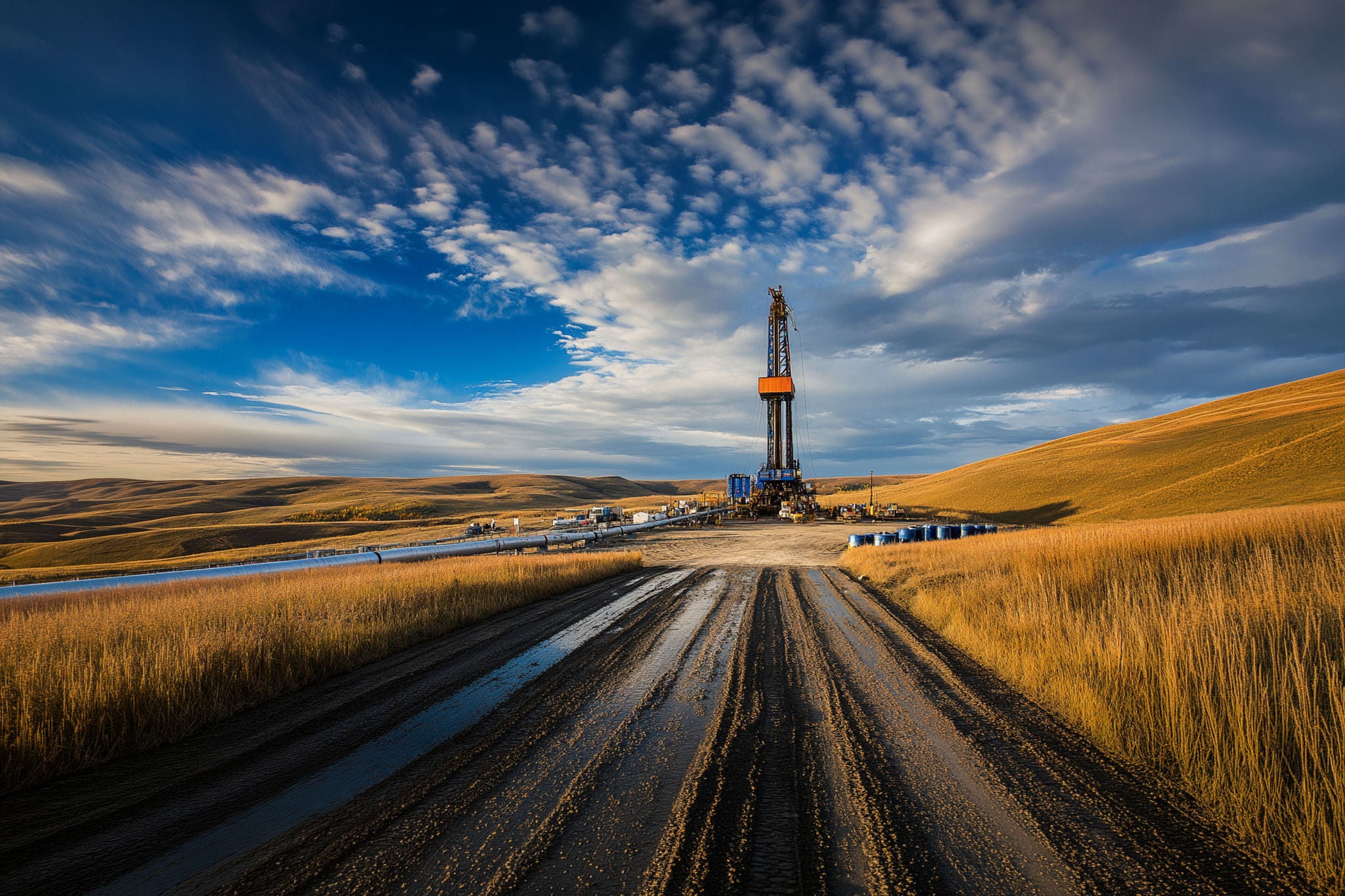





A drilling rig in action on a remote oil field, with heavy machinery and pipelines spread out across the landscape.

Driving modern, strategic and resilient land services in oil and gas

Integration, technology and talent can elevate land services into a strategic advantage.


In brief
  • Embracing technology and integrated workflows is essential for oil and gas companies to thrive in an increasingly complex energy landscape.
  • Modern land services require a strategic partnership approach, blending internal expertise with external capabilities to drive efficiency and innovation.
  • The future of land operations hinges on data-driven decision-making, where AI and GIS transform traditional processes into proactive, agile systems.

This article is co-authored by:

  • TJ Armstrong, Ernst & Young LLP Oil & Gas and Chemicals Senior Manager

Modernizing land services is no longer optional. As oil and gas companies seek efficiency, risk reduction and agility, land functions must evolve — aligning technology, workflows and talent with the demands of a changing energy landscape.

Modern land services: the foundation for future competitiveness

Land services sit at the heart of oil and gas operations. They manage the leases, contracts, rights, obligations, owner relations and geospatial information that guide decisions across exploration, development and finance. In doing so, land teams also represent the organization to key external stakeholders. Yet many organizations still rely on fragmented systems, manual processes and institutional knowledge concentrated among specialists. These legacy approaches slow performance, increase risk and limit adaptability.


As market pressures intensify, modernization has become a strategic priority. Updating land operations through workflow optimization, technology adoption and workforce development can unlock productivity, reduce uncertainty and create competitive advantage.


Modernization is not a destination. It’s a continuous capability journey — one that is difficult to sustain with static internal teams alone. Long‑term land services partners provide continuity, scalability and access to emerging skills that allow organizations to modernize at pace without disrupting core operations.


Why oil and gas land modernization matters now


Land functions touch nearly every part of upstream operations but historically lag in technology investment and talent development. Critical processes often remain spreadsheet driven and dependent on tribal knowledge. Meanwhile, land teams now coordinate with finance, legal, operations, regulatory bodies, partners, surface owners and mineral owners, while also responding to real-time shifts in business needs.


Against this backdrop, modernizing land services requires integrated process execution. Processes such as lease and surface rights management, land payments, acreage reporting, division order creation and maintenance, contract tracking, and owner relations are often fragmented across systems and organizations.

GIS as a decision-making engine for land teams

When these workflows operate in isolation, critical information becomes disconnected. Lease terms may not align with drilling schedules, ownership data may not connect to payment obligations, and spatial context may sit outside core land systems. Integrating these workflows — supported by consistent data, connected platforms and aligned operating models — creates a cohesive land ecosystem that improves visibility, reduces risk and enables more proactive decision-making. “When land data, workflows, and geospatial insight are disconnected, risk hides in the gaps. Integrating GIS with land systems turns information into foresight, so teams can anticipate issues instead of reacting to them,” says TJ Armstrong an Ernst & Young LLP Senior Manager in Oil & Gas and Chemicals Business Consulting. The result should be a process that allows teams to more effectively anticipate issues, avoid disruptions and capture value.”

A geographic information system (GIS) becomes essential for enabling real-time geospatial decision-making. Integrating a GIS with land systems unlocks such capabilities as visualizing ownership, obligations and lease expirations; aligning development plans with regulatory and environmental considerations; consolidating land and non-land spatial data; and providing a shared source of truth.

Transforming land services with technology and AI

Technology, especially artificial intelligence (AI), is reshaping land services. AI can extract data from leases, predict obligation and payment triggers, identify compliance risks, and analyze large data sets to support better decisions.

Perhaps the highest potential for impact is owner relations management. AI enabled workflows can help track ownership changes, improve communication with interest owners, reduce payment errors and proactively address discrepancies. Modernizing owner relations creates efficiencies while strengthening trust with stakeholders.

But modernization doesn’t end with AI. Companies are also investing in document automation, integrated processes and workflows across land and accounting systems. Additionally, workflow orchestration tools and stronger data governance frameworks can be pivotal in rethinking how land services get done. Combined, these tools support creating a more efficient, transparent and resilient operating model.

How talent enables land modernization

Technology opens the door to tremendous capability, but it cannot transform land services alone. A modern talent strategy is essential. Land operations require new skills, including data literacy, digital fluency and cross-functional collaboration. Companies must upskill teams, redesign roles, bring in new technical talent and blend internal capabilities with external support where appropriate.

Managed services can play a meaningful role here, helping companies modernize their department while gaining immediate access to specialized skills that are increasingly difficult to source and retain — without carrying the full burden of recruitment, training and attrition. By shifting execution‑heavy activities to a trusted partner, companies can redeploy their internal land professionals toward higher‑value, judgment‑based work that directly impacts asset value and risk management.

Modern land services consulting agreements increasingly use commercial models that align costs to outcomes — allowing organizations to pay for value delivered rather than static headcount. This creates transparency, predictability and shared accountability, where managed services are viewed as a strategic lever, not a tactical outsourcing decision.

Designing the oil and gas land function of the future

Modernizing land services is an ongoing transformation that enables oil and gas companies to operate with greater agility, accuracy and confidence. By aligning technology, integrated workflows, GIS capabilities, data governance, owner relations and a forward-looking talent strategy, organizations can strengthen their competitive position and prepare for the future.

Summary 

A modern land function is not built solely through systems and tools — it is sustained through an operating model that blends internal leadership with long‑term partners who provide execution excellence, innovation and resilience. The companies that win the next era of energy will be those that turn their land services function into a strategic engine — one capable of supporting growth, navigating uncertainty and creating lasting value.

About this article

Authors

Related articles

How AI is evolving in oil and gas: insights from industry insiders

AI and GenAI are reshaping oil and gas operations, driving efficiency and scalability. Learn more from industry innovators.

The COO’s new agenda: Future-proofing oil & gas and chemicals assets

Leading COOs are reshaping operations by integrating technology, workforce and ecosystem partnerships to drive resilience, performance and value.

How AI drove data optimization for oil and gas capital projects

Discover how AI boosted efficiency and accuracy in oil and gas project management and helped a firm streamline engineering processes. Learn more.

How to turn planning churn into integrated clarity in oil and gas

Discover how integrated planning can enhance agility and responsiveness in the oil and gas sector. Take steps to unlock new growth opportunities.

Manu Rao + 1

EY Future of Energy Survey

Explore how energy companies are evolving in technology adoption and workforce readiness, addressing challenges and bridging the investment-expectation gap.

Scaling AI for maximum impact in oil and gas

Moving from use cases to enterprise-wide AI in oil and gas is more than a technology challenge. It requires anchoring on value, feedback and innovation.