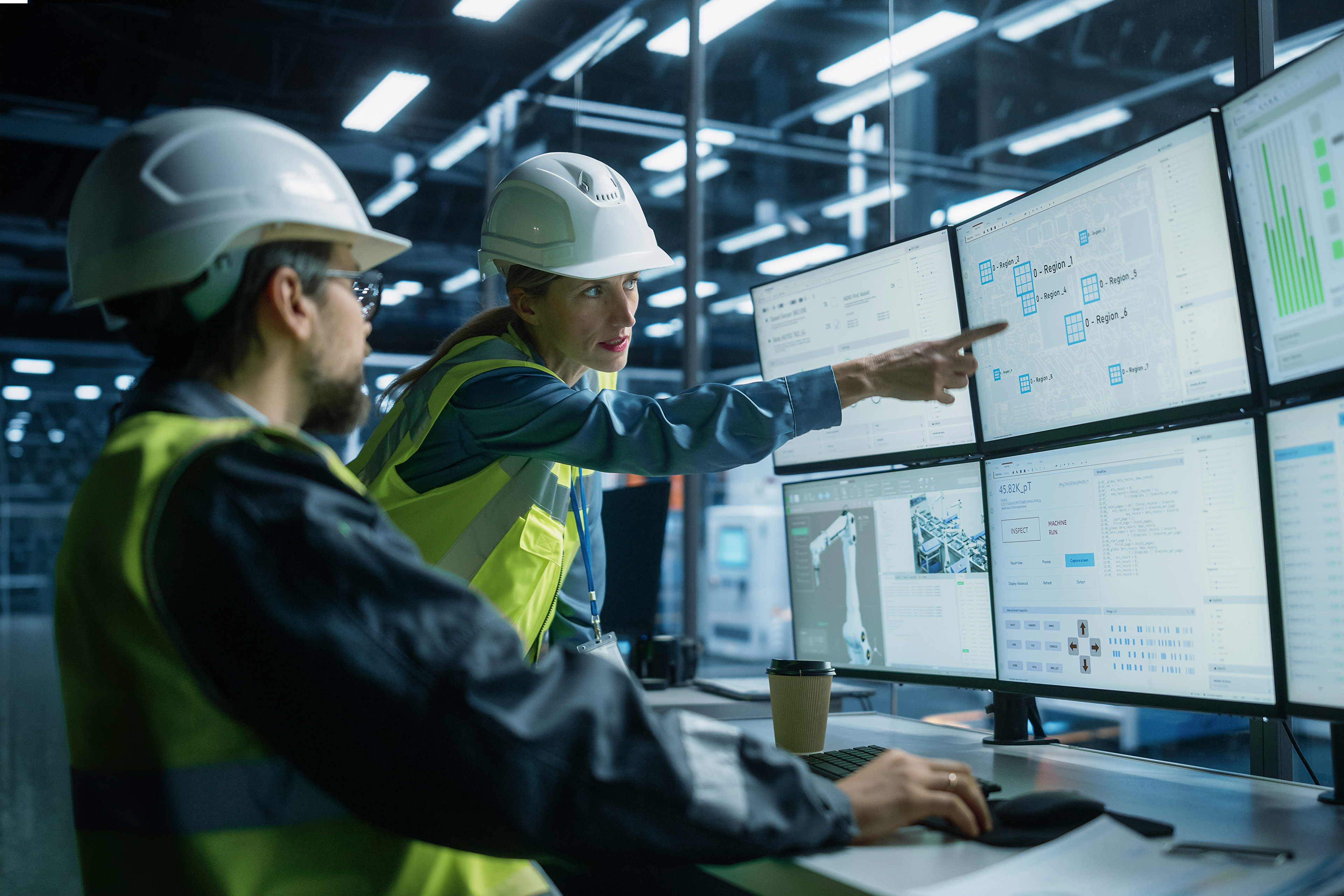
Diverse Team of Engineers Collaborating on Manufacturing Project in a Research Facility.

Building resilient supply chains for the next era

Companies can build resilient supply chains by embedding risk earlier in product design and sourcing decisions.


In brief
  • Companies are reconfiguring supply chains to reduce disruption risk, but the shift can add cost, complexity and sourcing constraints. 
  • Design-to-resilience (DtR) embeds supply risk considerations into product design, helping teams balance resilience, cost and performance earlier. 
  • AI and digital tools can scale these decisions, helping companies build supply chains that are both more resilient and more competitive.

Resilience — a company’s ability to adapt strategy and maintain its fundamental promises in the face of disruption — has risen to the top of the supply chain leader agenda. Companies reconfigured supply chains over the past several years as disruptions — from the COVID-19 pandemic and conflict in the Middle East to tariff uncertainty — have exposed the risks of relying too heavily on distant suppliers, concentrated production hubs and long global logistics networks. Public incentives and emerging industrial policy have reinforced the shift, with legislation such as the CHIPS and Science Act, Inflation Reduction Act and Infrastructure Investment and Jobs Act in the US and ongoing European Union efforts to develop more strategic autonomy of supply chains. Taken together, policymakers are encouraging investment in domestic and regional manufacturing capacity.


As companies respond to these shifts, many are wrestling with the costs inherent in re-designing supply chains that have evolved over decades of increasing globalization. There is no simple formula for balancing resilience with cost. The right answer depends on a company’s competitive strategy and geostrategic risk appetite, the value it promises customers, and the economics of each potential supply-chain configuration.


In practice, most companies have decided that de-risking the supply chain is worth the cost. According to the EY-Parthenon CEO Outlook, 75% of CEOs have localized or plan to localize at least part of production to the country of sale, and more than half plan to configure supply chains for specific regions.1 Key investment and trade metrics point to major supply shifts in the United States-Mexico-Canada (USMCA) trade zone, which accounts for 30% of global GDP.2 US manufacturing construction spending more than doubled from 2021 to 2025,3 Mexico surpassed China as the largest US source of imports as of 2023,4 and foreign direct investment into Mexico reached record levels in 2025, led by US investment.5

All these recent shifts have enabled companies to reduce reliance on distant suppliers, limit exposure to regulatory uncertainty and improve agility in meeting local demand. But these changes also mean accepting uncompetitive regional pricing and duplicating tooling and supplier development costs. Localizing a supply chain also requires a supply base and labor pool that can compete with global benchmarks — capabilities that can take decades to develop.

Design-to-resilience as a lever for supply chain risk

In addition to the cost and macro constraints mentioned above, sourcing teams’ ability to execute their ideal strategy is often constrained internally by upstream product decisions or legacy supplier relationships. To address this, leading companies are turning to design-to-resilience (DtR). 

DtR helps break down internal constraints by engaging procurement and design teams early in the product development lifecycle, allowing them to solve for resilience alongside cost and performance. The approach can include collaborative supply chain scenario modeling, joint development of product roadmaps and category strategies, and supplier negotiations.

Collaborative supply chain scenario modeling

Design and procurement teams have long used design-to-cost, margin improvement and value engineering exercises to improve financial and product performance. Leading industrial companies are now adapting those same methods to strengthen resilience.

For example, one manufacturer, in collaboration with the EY-Parthenon Long-Term Value Engineering lab, developed a dynamic simulation model that captured country of origin for every component in the bill of materials — see Figure 1. The model drew on a comprehensive data set of country-specific process and labor rates. The company used it to simulate nearshoring and offshoring scenarios at the subcomponent level, quickly estimating part cost, logistics and tariff impacts for each scenario. What could have taken months through a traditional global request for quote was completed in weeks, with enough precision to align on a path forward for supply chain strategy.

Figure 1: Example of DtR modelling applied to an automotive component

Supply chain of automotive connecting rod


Aligning product roadmaps with procurement strategy

Beyond joint scenario modeling for individual products, DtR can be embedded into long-term planning for entire platforms or product lines. In our experience, more than 60% of an industrial product’s cost is locked in early in the design lifecycle. The same is true for supply chain risk: Decisions made long before tooling kickoff can embed exposure into the supply chain. DtR is most effective when applied at the beginning of a product’s lifecycle.

Effective sourcing strategies should be developed alongside the long-term product roadmap. Too often, the work happens sequentially: The product team sets the roadmap, and procurement builds its strategy around decisions that are already made. A DtR approach develops category strategy in parallel with the product roadmap, helping teams make upstream product decisions that better balance resilience, cost and performance.

For example, a sourcing manager might identify that a proposed battery design requires a specific grade of cobalt from a sub-supplier with known quality concerns. The sourcing manager, Tier 1 supplier and design engineer could then collaborate on an alternate design using a less risky sub-supplier. This is value analysis/value engineering applied to resilience rather than cost reduction. This upstream collaboration between design and supply chain can apply to any product design decision, but it is most effective for platforms likely to underpin future product lines.

Traditional cost take-out levers, such as complexity reduction, can also be combined with resilience levers in a DtR context. Consider 10 fasteners, each nearly identical but sourced from different supplier locations with unique tooling. They can be standardized to one common design and multi-sourced to two or three preferred supplier locations, building contingency into the supply chain while reducing complexity and tooling costs.

Supplier negotiations

DtR can also mitigate tariff risk on parts already in production. A common challenge for industrial procurement teams is evaluating supplier requests for tariff cost recovery while preserving long-term partnerships and avoiding an undue share of tariff costs.

Physical part teardowns and spectroscopic analysis are key tools in the DtR toolkit. For instance, when applied to assemblies with metal components, such as steel, aluminum or copper, they can reveal precise material composition. That insight enables a fact-based discussion of appropriate tariff recovery amounts per Harmonized Tariff Schedule (HTS) code, promoting fairness in supplier relationships and helping avoid overpayment for tariff exposure.

For example, aluminum is categorized by the U.S. International Trade Commission (USITC) using more than 60 HTS codes, each defined by alloy composition, dimensions or manufacturing processes.6 Each HTS code is subject to a different base tariff rate, and although Section 232 tariffs apply uniformly across aluminum products, exclusions are negotiated at the HTS code level. Preparing for negotiations with an accurate picture of material weight by HTS code, informed by spectroscopic analysis and physical part teardowns, is more effective than relying on supplier-provided or internal data, which may be incomplete or inaccurate.

AI and technology as accelerators for DtR

Technology can help apply DtR levers at scale. Digital twins have gained traction in supply chain risk modeling and can be adapted to assess cost and tariff impacts across broader reconfiguration scenarios. Drawing on the same cost data used in single-part simulations, they can extend the analysis from individual components to the full supply network.

AI can further embed resilience into the design process. Complexity reduction studies often require comparing engineering drawings across thousands of components to identify consolidation opportunities. AI-powered clustering algorithms can extract relevant attributes, assess similarities and suggest which components can be standardized or eliminated.

Embedding resilience where product decisions begin

DtR requires more cross-functional collaboration early in product design, which can affect development velocity. However, for industrial companies delivering complex products at scale, that short-term trade-off may be necessary to create long-term, sustainable value. Success will likely depend on evolving the operating model — not just the sourcing strategy.

Companies that make that shift can move resilience from a reactive sourcing exercise to an embedded design discipline. By connecting product, procurement and technology teams earlier, they can make smarter trade-offs, reduce exposure to disruption and build supply networks that are better prepared for what comes next.


Ryan Simerlink, Manager, Ernst & Young LLP, contributed to this article.


Summary 

DtR helps build resilient supply chains by embedding supply risk earlier in product design and sourcing decisions. With AI and digital tools, companies can better balance resilience, cost and performance while turning supply chain durability into a competitive advantage.

About this article

Authors

Related articles

Geostrategic Analysis: July 2026

Read the July 2026 Geostrategic Analysis for our take on geopolitical developments and the impact of these political risks on international business.

The AI valuation shift: a point of view for industrial CEOs and their deal teams

AI is driving premium M&A valuations for industrial and manufacturing companies that have AI capabilities and “gap discounts” for those that don’t.

A winning strategy for industrial firms in asymmetric globalization

Industrial firms face “asymmetric globalization.” Leaders can win by regionalizing supply chains, building resilience, and modernizing talent. Learn more.