


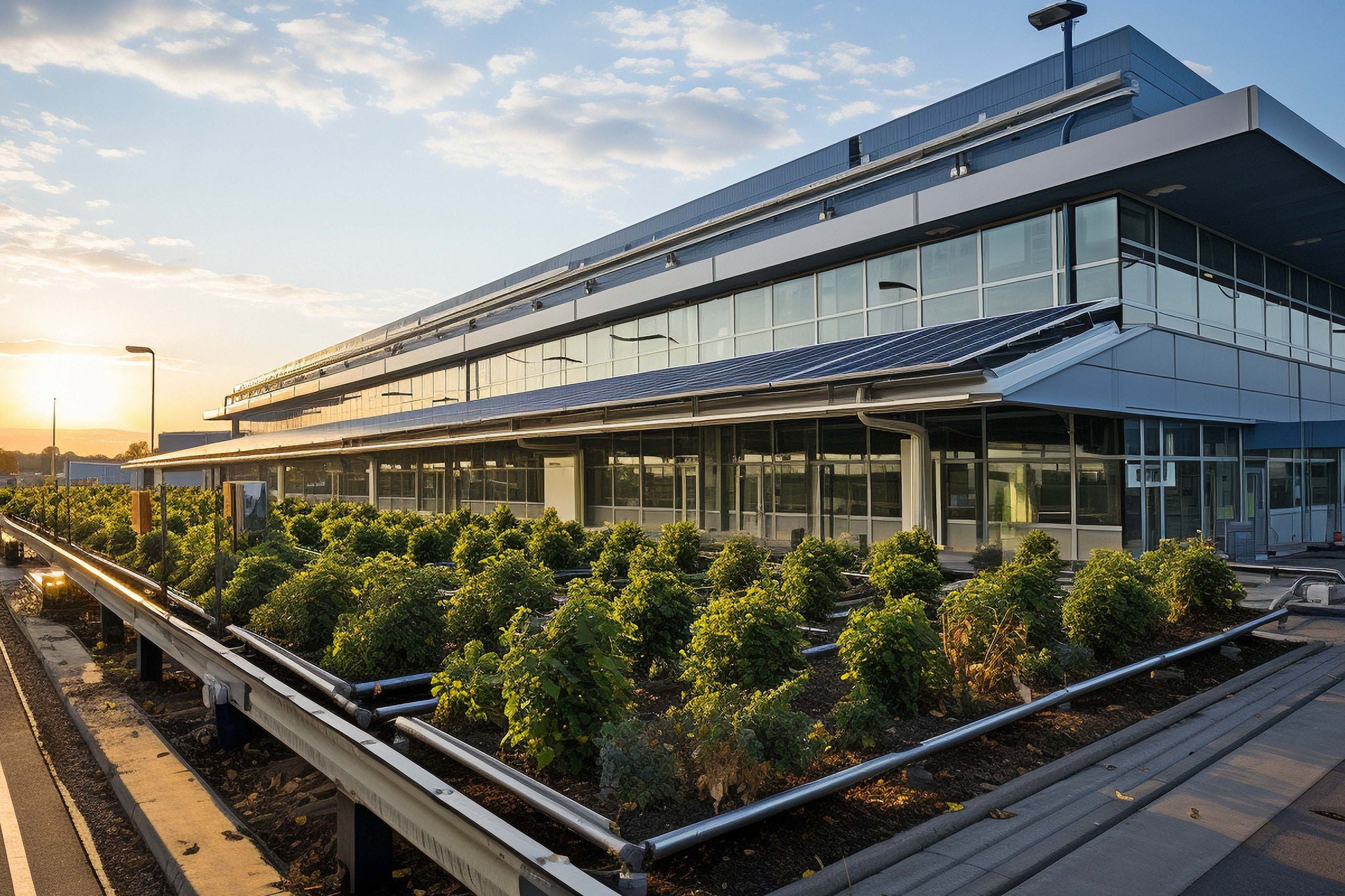




Green plants in planter in front of large industrial building with solar panels

How industrial companies can reignite sustainability performance

As progress on sustainability slows, industrial companies need a redesigned model that empowers teams to drive impact, not just compliance.


In brief
  • Industrial sustainability has stalled as focus on compliance-driven reporting disrupts purpose and progress.
  • Restoring momentum requires a new operating model built on strategic placement, shared ownership, strong leadership and broader technical capabilities.

For most of its history, corporate sustainability was anchored in purpose.

It brought leaders together to confront social and environmental challenges and to pursue solutions with meaningful impact and enterprise value. By the late 2010s, that purpose translated into real momentum: investor enthusiasm rose as investors saw new solutions to old problems using sustainability, advocacy from sustainability leaders reshaped expectations across industries, annual sustainability reporting became standard practice, and frameworks such as the Global Reporting Initiative (GRI) and the Sustainability Accounting Standards Board (SASB) spread quickly. For a moment, it appeared that a blueprint for system‑level change had taken shape.

But, as we look at the world in 2026, that momentum has noticeably slowed. After the Corporate Sustainability Reporting Directive (CSRD) took effect in 2021 and compliance pressures grew, many organizations shifted their focus away from delivering meaningful progress and toward meeting regulatory obligations. This trend is particularly evident within the industrial sector, which takes compliance seriously. Progress on key sustainability targets is moving at a slow pace, a reality reflected in measures like greenhouse gas (GHG) emissions from road transportation increasing 1.5%–2% per year over the past five years.¹ Further, industrial companies are being pushed to invest even more in staff and technology simply to manage compliance risks tied to reporting requirements, while tariffs and inflation tighten margins and constrain sustainability teams’ capacity to make meaningful progress on core objectives.


In light of this strategic and personnel shift, we looked at those models where the organization is delivering impact. Viewed collectively, a sustainability organization is best positioned to deliver its greatest impact when it sits where strategic decisions are made, not where it must react to them.


Even amid regulatory and geopolitical distractions, sustainability’s long-term value is real — not a bubble — and companies that focus on it now are “buying low” for future advantage.


Which begs the question: how can industrial organizations rethink their operating model and their approach to sustainability to reignite opportunity and impact?

Positioning sustainability for maximum impact

Integrate sustainability with strategic decision‑makers

Leaders should start by reassessing whether sustainability is positioned to influence the company’s most business‑critical strategic issues. In industrial organizations, many of those issues lie in operations and downstream — in how products are used by customers and across the broader value chain. When sustainability is placed too far upstream or buried in compliance‑oriented functions, it loses the ability to shape the company’s direction and strategic decisions. Positioning the sustainability organization closer to commercial leadership, such as the chief innovation officer or head of corporate strategy, gives it meaningful influence over operations, innovation and long‑term competitiveness. The extent to which sustainability is elevated in the organization often reflects strategic clarity among leaders regarding the manner and extent to which sustainability brings value to key stakeholders, such as investors or customers. Last, recognize that the function in which sustainability resides brings bias: an innovation officer owning sustainability will likely result in less focus on sustainability in operations, for example.

Case study

At a large heating, ventilation and air‑conditioning company, sustainability sits under a business unit leader responsible for sustainable products rather than as a standalone corporate function. This positioning gives the team direct access to customers and enables faster testing of new business models aligned with product innovation. Following a major organizational transition, the company doubled down on innovation to address material customer challenges such as climate resilience and operational performance. By embedding sustainability within the product organization and focusing on the most material issues, the company has reinforced the link between sustainability, customer value and growth — demonstrating how sustainability can function as a driver of competitive advantage rather than primarily a reporting exercise.

Build enterprise‑wide ownership for sustainability

Sustainability achieves its greatest impact when ownership is shared across the organization. In industrial companies, where impact often comes from operations and product use, progress can stall when finance, HR, procurement, commercial teams and other functions are left out. For example, achieving sustainability targets often requires significant capital expenditures, making the finance organization, particularly financial planning and analysis, a critical partner. Across many organizations, the informal “dotted‑line” relationships that once linked sustainability to these functions have eroded as reporting demands intensified. Without those cross‑business ties, sustainability teams are left isolated and unable to influence the operational, commercial and financial decisions that ultimately determine outcomes. Reversing this trend requires rebuilding shared ownership across the business and re‑establishing clear responsibilities for each team that contributes to sustainability outcomes. As outlined in the EY Sustainable Operating Blueprint, the dual facets of establishing strategic clarity on sustainability within the organization as well as embedding sustainability in operations are key to making companies sustainable.

Elevate sustainability oversight and leadership

The same reset is needed at the leadership and governance level. High‑performing sustainability organizations benefit from active sponsorship by influential executives and clear accountability across senior leadership. In many companies, the sustainability governance structures originally established by senior executives or cross‑functional committees were created with strong intent, but gradually weakened as reporting demands grew. Over time, these groups became procedural rather than strategic — meeting out of obligation rather than purpose and lacking the authority needed to guide decisions. Reinvigorating sustainability governance requires strategic clarity: why are we here and what is our purpose? Companies should clarify the specific decisions these groups are responsible for, review existing governance structures, refresh charters and define expectations for executive participation. For example, one company’s steering committee meets two to three times a year to make strategic decisions, approve annual plans, review progress toward goals and provide feedback and support for next steps.

Case study

At a global industrial automation company, the chief executive officer appointed a former division president as chief sustainability officer, reporting directly to the chief executive officer. Backed by decades of experience and deep executive relationships, the chief sustainability officer operates effectively in an “influence, not execute” capacity and has driven stronger sustainability performance than peers led by more junior leaders.

Expand sustainability capabilities

Even with the right structure and governance, organizations cannot deliver meaningful impact if their sustainability capabilities remain concentrated solely in regulatory reporting. Years of disclosure requirements have shaped hiring and training around compliance, leaving many teams strong on reporting but lacking the technical and commercial skills needed to drive performance. This gap is especially limiting for industrial companies, where progress relies on skills such as financial modeling, decarbonization planning, climate risk, operational excellence, sustainable supply chain and green‑finance tools, as well as expertise in product innovation and manufacturing technology — areas that shape sustainability outcomes across design, materials, operations and downstream use.

Industrial companies should take a two‑pronged approach to build these capabilities:

  1. Invest in continuous learning beyond reporting.
    Partner with talent development to provide high‑quality external training across finance, engineering‑adjacent topics, climate science, supply chain and product innovation for sustainability teams. For many industrial organizations that cannot hire specialist talent, upskilling existing staff is essential to broadening contribution and accelerating results.
  2. Hire for diverse skill sets, not only reporting knowledge
    Avoid narrowing job requirements to compliance and reporting. Seek candidates with backgrounds in engineering, product design, operations, supply chain or corporate finance and integrate these skills into the sustainability model to expand problem‑solving capacity and avoid reinforcing a reporting‑centric profile.

Expanding skill sets and diversifying talent shifts sustainability from a reporting obligation to a performance‑driving capability, one positioned to shape products, operations investments, customer outcomes and long‑term competitiveness.

Putting it into practice

  • Position sustainability within commercially oriented leadership (for example, strategy, innovation, product) so it can influence operations, resiliency and customer value creation.
  • Rebuild shared ownership across finance, HR, procurement, operations and commercial teams, verifying sustainability is embedded in the decisions and investments that determine outcomes.
  • Strengthen governance by clarifying decision rights, refreshing charters and confirming influential executives actively sponsor sustainability and hold the organization accountable.
  • Invest in upskilling and hire for diverse technical and commercial knowledge so sustainability teams have the skills required to drive performance.

Done together, these steps reconnect sustainability’s purpose to performance and restore momentum where it matters most for industrial companies.

Emmett Burns also contributed to this article.


Summary 

Sustainability performance in industrial companies has slowed as teams become anchored in compliance rather than impact. Reclaiming momentum requires rethinking placement, ownership, governance and skills. When sustainability operates alongside strategic leaders, is supported across the business, guided by strong governance and equipped with deeper technical capabilities, it can shift from reporting output to real operational and commercial value.

About this article

Related articles

How business can drive sustainability in volatile political landscapes

In this episode of the Sustainability Matters podcast, guests discuss the private-public collaborations to drive sustainability. Listen now.

26m 36s

How midsize manufacturers can benefit from outsourcing sustainability

Explore how midsize manufacturers can leverage outsourcing to enhance sustainability efforts, streamline compliance and access specialized knowledge.

How can aviation afford its sustainability aspiration?

To achieve net zero in 2050, the aviation industry must overcome geopolitical risks, high costs, and supply chain issues. Learn more.

Raman Ram + 1