An empty stadium with blue seats is captured at sunset.

Why fraud risk is a growing threat to the sports industry today

With nearly $1 billion in sports fraud identified, athletes, sports teams and leagues must navigate new risks from betting and identity theft.


In brief
  • Sports fraud risk is increasing across professional and collegiate athletics, with schemes becoming more sophisticated and directly targeting athletes and teams.
  • The rise of name, image and likeness (NIL) rights has created new opportunities for athletes but also heightened vulnerabilities to fraud.
  • Strategies like real-time monitoring and fraud education help secure athletes’ earnings and safety, while teams protect athletes and their reputation.

In the last 20 years, nearly $1 billion in potential fraud losses has been identified in sports1   — a figure that continues to rise as the threat landscape continuously evolves. In today’s high-stakes world of professional and collegiate sports, the real contest isn’t just on the field — it’s in the relentless battle to protect athletes’ personal earnings and the reputations teams and leagues have built. This battle is intensifying as the industry grows, new regulations emerge and technology transforms how athletes, teams and leagues engage with fans and sponsors.

How sports fraud targeting athletes is evolving

In 2021, Ernst & Young LLP’s (EY US’s) Forensic & Integrity Services team published a report outlining the fraud risks to athletes. Since then, the risks facing athletes have dramatically shifted. With record revenues and unprecedented visibility, athletes face a rapidly evolving risk landscape. What was once limited to financial scams now includes sports betting fraud, identity theft and even direct attacks on athletes’ homes and personal safety. This all comes in addition to the age of Name, Image and Likeness (NIL) rights and an entirely new class of athletes (students) that are being targeted by wrongdoers. The playbook for fraudsters and organized crime is growing more complex every year, and the risks have multiplied at every level of sport.

Key insights:

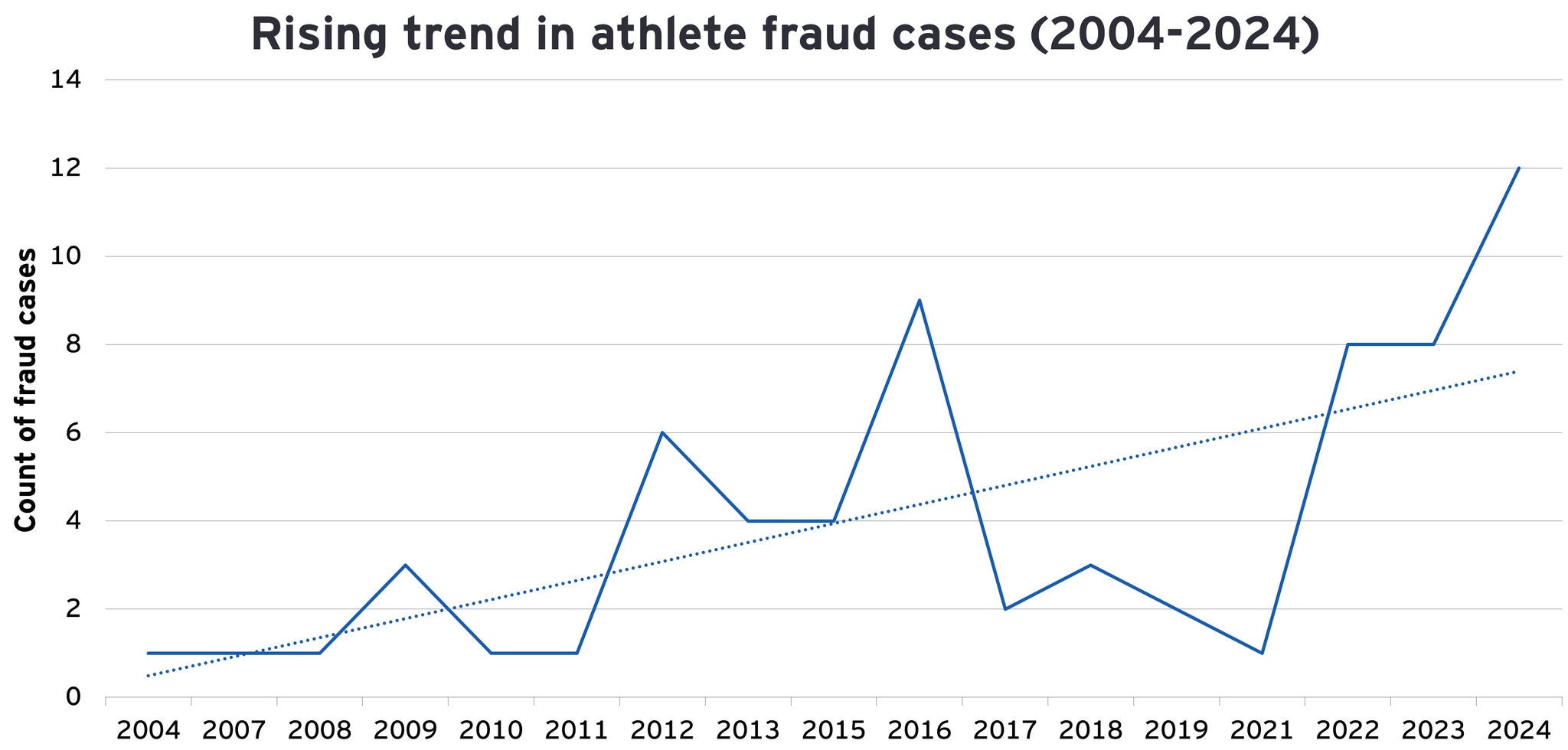
From 2004 through 2024, athletes and teams identified in legal proceedings claimed to have suffered more than $974 million in alleged losses — a figure that continues to climb. Notably, over 40% of these losses were reported in just the past six years,2 underscoring the accelerating pace of fraud. The true toll is much higher of course, as many cases are resolved privately or go unreported because of fear of bad publicity.3

Rising sports revenues are increasing fraud risk for athletes

As the sports industry reaches record revenue levels, the financial incentives to steal from athletes and profit illicitly has never been higher. To underscore the scale of the problem, the data tells a compelling story — losses attributed to fraud have surged across nearly every major sport.


Leagues and collegiate athletics have rebounded from the COVID-19 pandemic’s impact and are now achieving unprecedented revenues — driven by surging media rights fees,4 expansion and innovative monetization strategies in ticketing,5 merchandising6 and partnerships7. This growth, combined with rapid advances in technology and the globalization of sports, has transformed the risk landscape and created new vulnerabilities.

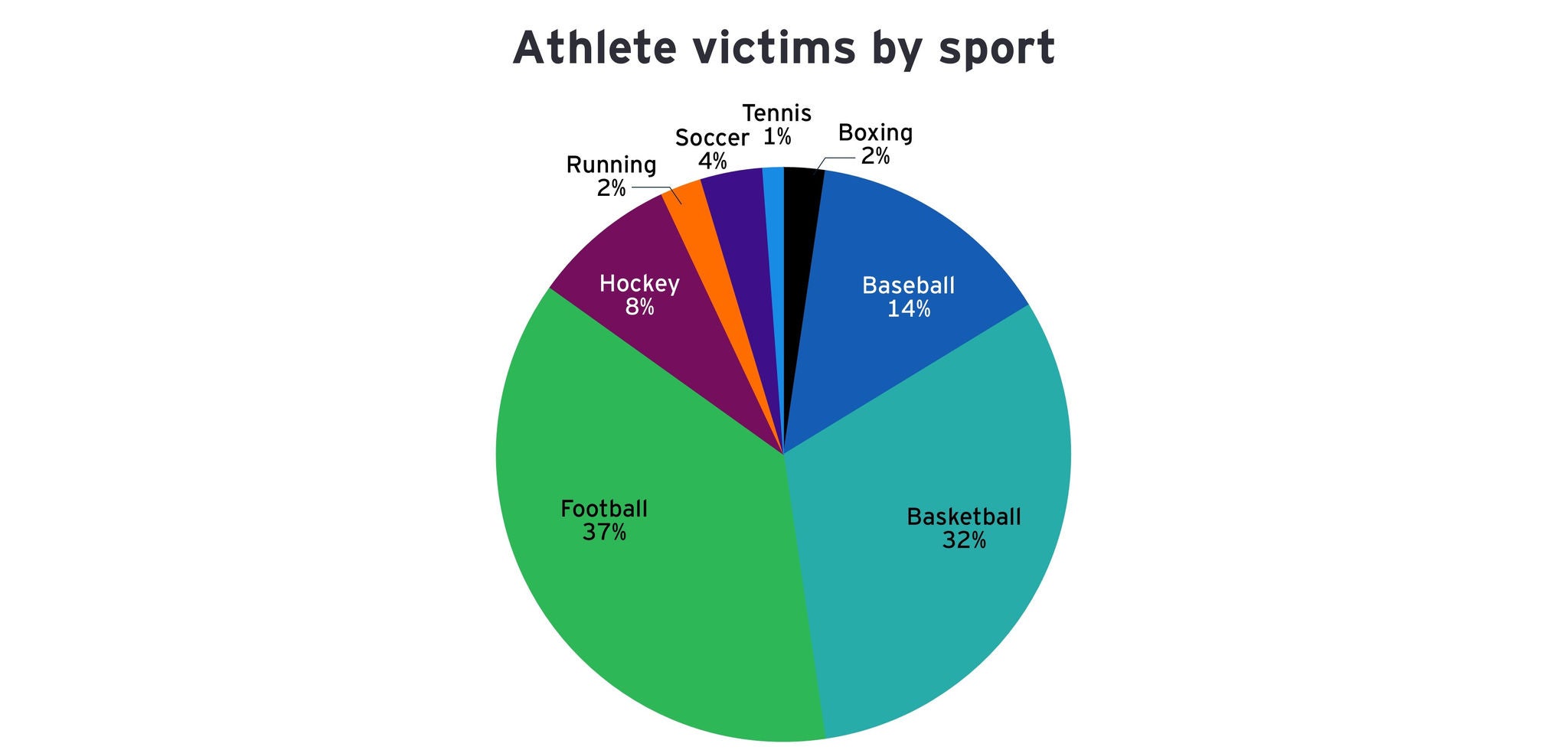
Victims span nearly every major sport, with football representing 37% of cases — likely due to its large roster size.8 Some schemes targeted individual athletes, while others targeted a group.9 Some of the notable recent cases and wide-ranging criminal indictments have implicated professional and collegiate teams and athletes in football, basketball and baseball, each illustrating the diverse methods and perpetrators involved. Of the $974 million in potential fraud targeting athletes, $216 million (22%) was related to cases involving athletes from multiple sports.10

The rapid expansion of legalized sports betting has created new avenues for both legitimate business and fraudulent activity. As betting becomes more mainstream and technology enables new forms of engagement, athletes are exposed to increasingly sophisticated fraud schemes — ranging from financial scams to match-fixing and insider threats. The combination of soaring revenues and the proliferation of sports betting has amplified both the opportunities and risks facing athletes and teams today.

The impact of fraud extends well beyond the immediate financial loss. In the past decade, athletes from boxing and football cited fraud as a contributing factor in their bankruptcies.11 And while public figures draw attention, the private toll on athletes is likely much larger. Many cases are resolved privately, never reaching law enforcement often because of fear of bad publicity and some athletes choose not to pursue claims. As a result, the public numbers almost certainly understate the real scope of the problem.


NIL rights and new fraud risks for collegiate athletes

In recent years, collegiate athletics has undergone a dramatic transformation. Landmark changes — including a Supreme Court case, high-profile settlements and numerous states passing new legislation — now allow athletes to receive direct compensation, ushering in new opportunities and risks. With annual revenues and athlete valuations soaring, schools, athletes and stakeholders are navigating a patchwork of evolving regulations and oversight. The rapid growth of NIL collectives and media partnerships has fueled concerns about pay-for-play and exposed athletes to the types of fraud schemes previously limited to professional athletes.

As college athletes gain national visibility and market their NILs, universities are restructuring support systems, but these changes also open the door to the same threats and fraudulent opportunities seen at the highest levels of sports. Companies have now formed apps and websites that allow athletes to accept payments for promotion on social media. In many cases, college athletes are promoting products or businesses without much, if any, due diligence. While these changes may support student athletes, they also expose them to the same risks — fraud, identity theft and exploitation — that have long plagued professionals.

The expanding threat spectrum: Common sports fraud schemes targeting athletes and teams today 

Athletes today are confronted with an expanding array of threats as perpetrators continually devise new ways to exploit their trust and relationships. These risks include not only traditional fraudulent schemes — such as rigged poker tournaments, extortion, embezzlement, identity theft and misappropriation of earnings — but also newer forms of malfeasance, like sports betting fraud and unauthorized use of NIL. Physical safety concerns, including stalking, harassment, break-ins and robberies have intensified as athletes’ public profiles and compensation have grown. A common thread runs through these cases — fraudsters often gain access by leveraging personal relationships or posing as trusted professionals, then capitalize on limited oversight and the complexity of athletes’ financial affairs. The steady inflow of substantial earnings can mask improper outflows and fraudulent investments, allowing schemes to go undetected.

We’ve identified the following recurring patterns: 

  • Individuals posing as financial professionals to misappropriate funds for personal gain
  • Unauthorized and overly risky investments made by representatives, often with undisclosed conflicts of interest
  • Unauthorized use or misappropriation of earnings and cash by trusted parties — including representatives or family members — for personal expenses or cash withdrawals 
  • Exploitation of NIL — both authorized and unauthorized 
  • False advice and undisclosed conflicts from representatives

Beyond financial loss, athletes face intensifying physical and digital security threats. High-profile cases — including break-ins at the homes of athletes — underscore the risks that come with increased public profiles and compensation. The proliferation of social media has further amplified these dangers, with at least 52 stalking cases since 2020 and a surge in online abuse and harassment.12 The rise of lucrative NIL deals and heightened visibility for collegiate athletes have brought these risks into the college arena, emphasizing the importance of proactive security measures and intelligence capabilities for teams and leagues.


Sports betting violations and integrity risks involving athletes : 

As the risk landscape broadens, the lines between victim and perpetrator have also blurred. The rapid rise of sports betting has fundamentally changed the risk landscape for every major sports league — professional and amateur alike. No longer are athletes the sole focus of concern; coaches, training personnel and other affiliates have also become involved in betting-related violations. Since 2018, in US collegiate athletics alone, at least 175 infractions of sports betting policies were identified, with 17 active investigations13. While this represents only a small portion of all events, several high-profile cases have drawn national attention, including the firing of a baseball coach in 2023 and the announcement that 41 athletes from one state alone have been suspected of breaking betting rules.14

Recent incidents illustrate the breadth and seriousness of these violations:

  • In 2025, the head coach of a basketball team, baseball player and several others were arrested and indicted in federal courts for allegedly arranging fixed poker games with criminal organizations and sharing insider information used to place sports bets.15
  • At least 39 former men’s college basketball players across at least 17 schools were involved in gambling schemes across the 2023–24 and 2024–25 seasons, which included accepting bribes from third parties, manipulating the game and sharing information with third parties.16
  • In 2024, a basketball player was banned for life for betting on games, intentionally limiting his own participation in games for betting purposes and disclosing confidential information to sports bettors.17
  • Two baseball pitchers were charged for their alleged roles in a scheme to rig bets on the pitches they threw in games, dating back to 2023.18

The use of cryptocurrency and prediction markets further complicates oversight, increasing the risks of money laundering, match-fixing and ambiguous gambling practices due to weak regulation. These challenges blur the lines between fair play and financial temptation, demanding stronger oversight, education and proactive measures from leagues, teams and athletes.

How athletes and sports organizations can protect against sports fraud

Athletes and sports organizations face a growing range of risks — from financial fraud to physical security threats. As the environment around sports evolves, proactive steps are essential to safeguard against these dangers and maintain integrity. 

Key protective measures include:

  • Due diligence: Conduct thorough due diligence on third parties and affiliated entities to identify potential risks.
  • Monitoring: Track gambling activity and set up real-time alerts for potential violations.
  • Compliance and financial assessments: Perform regular audits and assessments of compliance and financial processes and procedures.
  • Education and training: Provide targeted education and ethics training on gambling and fraud risks to back-of-house employees and athletes.
  • Controls: Enforce strict access controls to safeguard sensitive player data.
  • Program evaluation and advisory: Work with experienced counsel and forensic professionals to evaluate your program and advise in areas where additional safeguards could be implemented.
  • Financial reviews: Encourage athletes and affiliated personnel to regularly review their financial activities, with support from teams or leagues, and to disclose any irregularities or misconduct to appropriate officials. 
  • Contracts: Confirm that all representatives, sponsors and investment managers sign formal contracts that grant audit rights. 
  • Stay current: Stay informed on sports betting regulations and certify compliance.
  • Physical security: Engage professionals to perform physical security assessments of team facilities, arenas and athletes’ homes to identify potential weaknesses and reinforce the safety of athletes.

Reducing sports fraud risk through oversight and accountability

The sports industry is a unique business. Unlike other professions, athletes reach their peak earnings more quickly, and while their average career earnings are substantial, the average career length is not. As a result, issues of fraud often come to light once athletes retire and their steady flow of income has decreased. Given the significant amount of money in sports, the unfortunate reality is that fraud may remain undetected for the foreseeable future and, ultimately, contribute to the steady increase of athlete victims for many years to come. With diligence, regulation, increased monitoring and more responsibility shown by financial professionals, there is hope that these trends can be reversed. 

What steps will your organization take to protect its athletes and reputation?

The following Ernst & Young LLP professionals contributed to this article: Christina Mitarotonda, Ryan Jones and Scott Burrows.


Summary 

Fraud targeting athletes and teams has reached alarming levels, with nearly $1 billion in sports fraud losses identified since 2004. The landscape of risks is evolving, driven by factors such as increased sports betting, identity theft and the introduction of NIL rights. High-profile cases highlight the vulnerability of athletes, who face threats not only from external fraudsters but also from potential violations of betting regulations. To combat these challenges, it is crucial for athletes and sports organizations to implement proactive measures, including thorough monitoring of gambling activities and enhanced education on fraud prevention strategies.

About this article

Authors

Contributors

Related articles

How technology is impacting gaming compliance programs

Explore how technology, AI and data analytics transform gaming compliance programs for AML, fraud and risk management.

How can athletes fight the growing risk of being targeted by fraud

Professional athletes have reported nearly $600 million in fraud-related losses over the last 15 years.

2026 M&E trends: simplicity, authenticity, and the rise of experiences

Discover 2026 media and entertainment trends: frictionless streaming, authentic content, AI innovation, and immersive experiences shaping the future.