What is slowing adoption: integration, safety and ROI
The transition to autonomous warehousing will not be uniform across all organizations or industries. Many organizations will need to overcome significant challenges, which could include customizing systems to adapt to existing warehouse layouts or handle fragile or irregular items. Most autonomous warehousing system deployments may also need to address time-consuming compatibility checks for software integration, particularly organizations that rely on legacy systems that may not easily connect with modern automation platforms.
Autonomous warehousing systems will also need to incorporate procedures for human intervention, particularly for exception handling. While autonomous systems excel at repetitive tasks, unusual situations such as damaged goods, unexpected inventory discrepancies or equipment malfunctions still require human judgment and intervention. This limits true end-to-end automation.
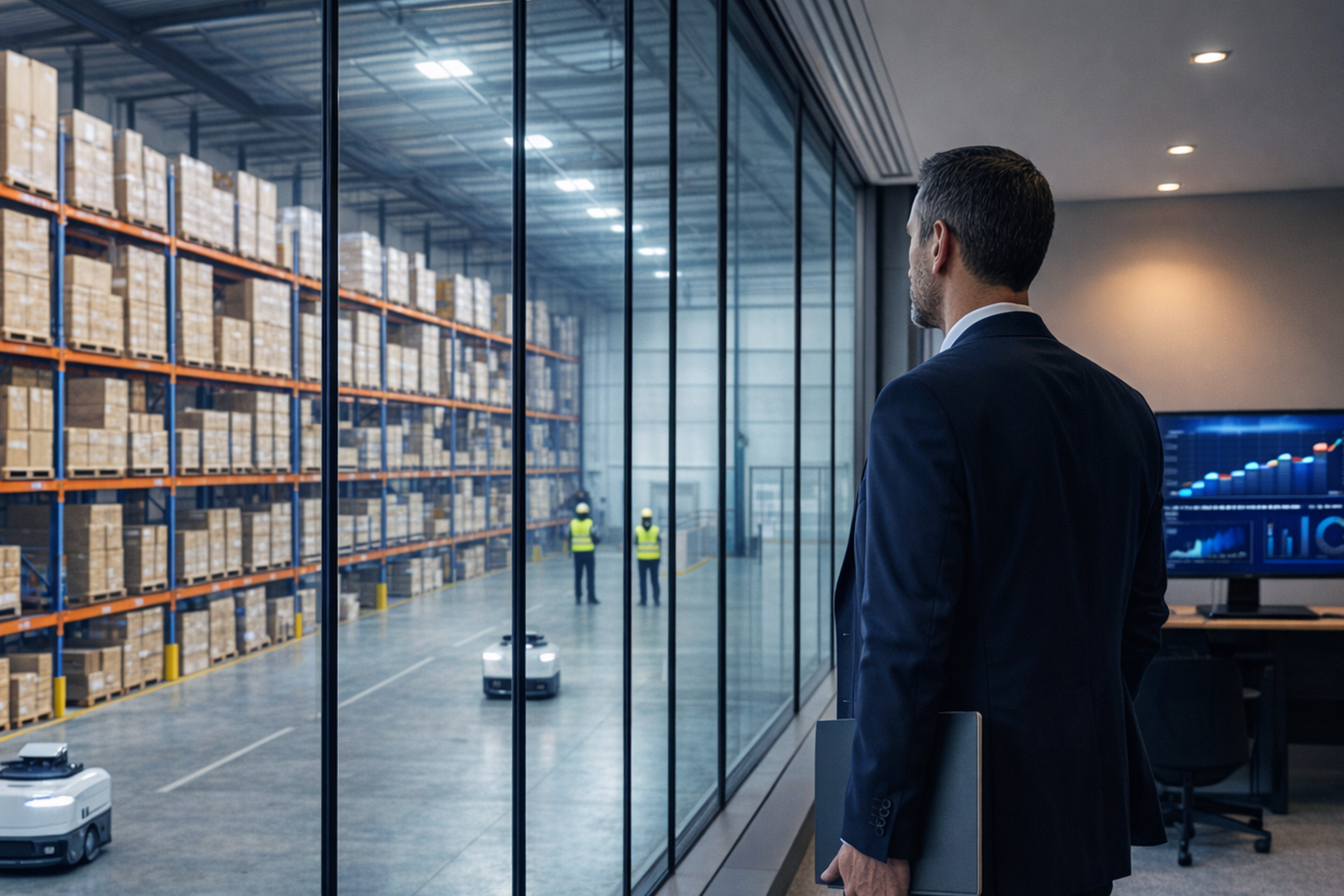
Safety concerns also need to be addressed, particularly in warehouse operations that will place humans and robots in shared spaces. The potential for accidents or near misses exists, even with advanced sensors like LIDAR and geolocation. To that end, organizations will need to establish safety protocols and real-time monitoring to minimize risks. As a leading practice, organizations may need to do as much as possible to separate human activities from heavily automated areas.
At the same time, organizations need to be careful not to over-automate operations, instead focusing on areas where automation is viable and cost-effective with tasks that provide a clear ROI. These include transporting items between warehouse zones, providing support for packing, replenishing and sorting inventory, and overall pallet handling. KPIs in these areas are relatively straightforward and address utilization, reliability, uptime and order cycle time. Organizations that try to automate areas where it does not make sense will have a difficult time realizing a suitable ROI.
Companies also need to take steps to protect the facility and warehousing operation from cybercriminals. To that end, many need to update their cybersecurity protections to also include further vectors for potential cyber attacks, such as interconnected devices in an autonomous operations environment. Most rely on standard preventive measures, which might not be enough against determined bad actors seeking to gain control over robots in a warehouse.
Where warehouse automation is headed next
As more companies adopt autonomous warehousing, the focus will shift from isolated, stand-alone systems for tasks such as transport, packing, replenishment, sorting, inventory management and pallet handling to platforms that deploy and enable seamless communication and collaboration between robots, software and human workers. This evolution will enable greater flexibility, adaptability and efficiency, creating a harmonized system that will further optimize warehouse operations.
Moreover, this evolving technology will open the door for new advancements that integrate robotics, AI and human workers. Forward-thinking companies that leverage these innovations will position themselves to build a skilled and efficient labor force for the future, reduce operational costs, and significantly enhance safety and security. Within four to six years, autonomous warehousing could radically transform supply chain operations, setting new benchmarks for speed, accuracy and customer satisfaction. Companies that act now will be poised to seize market leadership in this space.
Even with advances in autonomy, however, organizations will still need talented labor. Preparing for an autonomous future will require all organizations to upskill their workforce and design workflows that fully integrate human workers with teams of robots and AI agents.